Directing
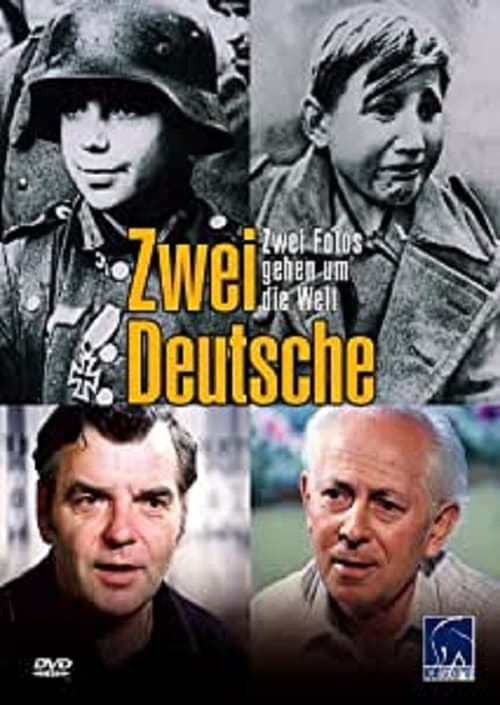
What became of Hitler’s last array, born in 1928, visited 40 years later?
A consciously modern depiction of working women in East Germany – labourers and managers in a garment factory talk about relationships and family planning, raising children and career qualifications, women’s rights and equality in the socialist (meritocratic) society. In conversations with a doctor, the women also have a chance to voice their personal concerns, as well as their feelings about the birth control pill, a subject that caused a stir at the time.
Palucca follows the legendary Dresden dancer and dance teacher Gret Palucca (1902–1993) as she introduces her students to dance as an art form. It also features excerpts from her solo performances, with which she significantly influenced the visual language of modern expressive dance starting in the 1920s.
In 1986, 60% of all machine tools in the GDR were produced by WMW "Fritz Heckert" in Karl-Marx-Stadt. This documentary introduces some of the Heckert workers, especially the youth brigade around Detlef Kalweit.
The central song and dance ensemble of the Soviet military stationed in East Germany goes on a tour of the country. The dancers and musicians talk about their experiences in East Germany and their admiration for German classical music, which includes not only Richard Wagner, but also newer talents such as Arthur Honegger and Paul Hindemith.
Documentary about a youth work brigade working on the construction of a tower block in Berlin-Marzahn
Entertainment in the GDR is the subject of this film, a wide field with many critical but also successful aspects. Examples from various kinds of entertainment are selected, to give an impression and interesting information about entertainment in the GDR, by whom it is made and by whom judged.
Documentary focuses on women farmers from the village of Worin. Even on International Women's Day, March 8, these women do not want to hand over responsibility for their animals to the men. Everyday observations are explored in depth in conversations with the LPG chairman Bernhard Grönert.
Documentary about director Konrad Wolf and the making of his film "Mama ich lebe"
High up north, in the Stralsund People’s Dockyard, Gitta Nickel encounters a youth brigade whose members speak frankly: “I’m 27 now. Judging from my own example I can say: it’s been nothing but work, really nothing. I can really say that about me, stark and stiff.” Stralsund as the focal point of socialist conditions of value creation: A ship may be completed every two weeks, but housing, let alone leisure facilities aren’t. The diagnosis: The quality-of-life to performance ratio is less than ideal. The brigade’s team spirit, though, is still strong, even if, as some think, there are some shortcomings on the “ideological side”.
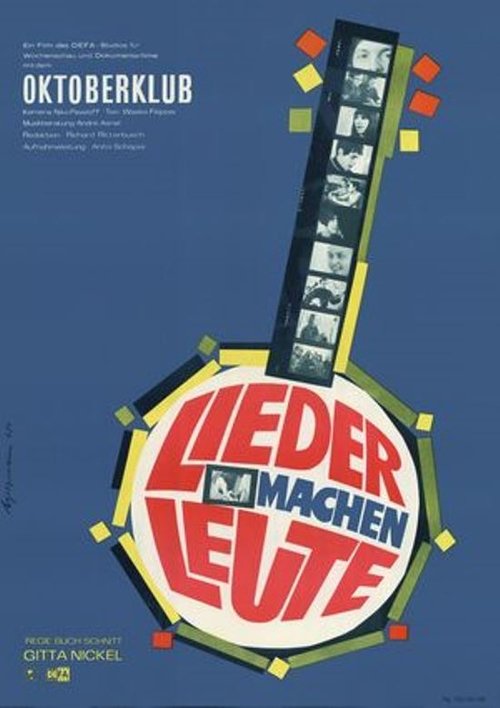
Documentary short about the East German Oktoberklub.