
Maxim Mironov
Acting
Known For
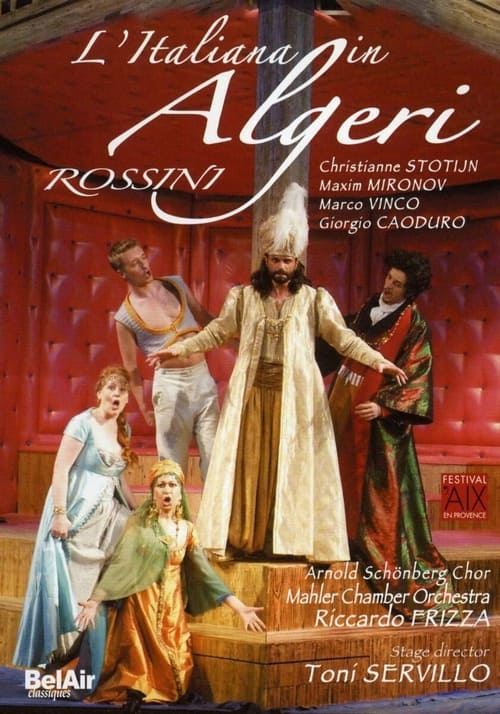
Live performance, Festival d'Aix-en-Provence, July 2006. 'L'italiana in Algeri' (English: 'The Italian Girl in Algiers') is an operatic dramma giocoso in two acts by Gioachino Rossini to an Italian libretto by Angelo Anelli, based on his earlier text set by Luigi Mosca. It premiered at the Teatro San Benedetto in Venice on 22 May 1813. The music is characteristic of Rossini's style, remarkable for its fusion of sustained, manic energy with elegant, pristine melodies.
Rossini: L'Italiana in Algeri - Festival d'Aix-en-Provence
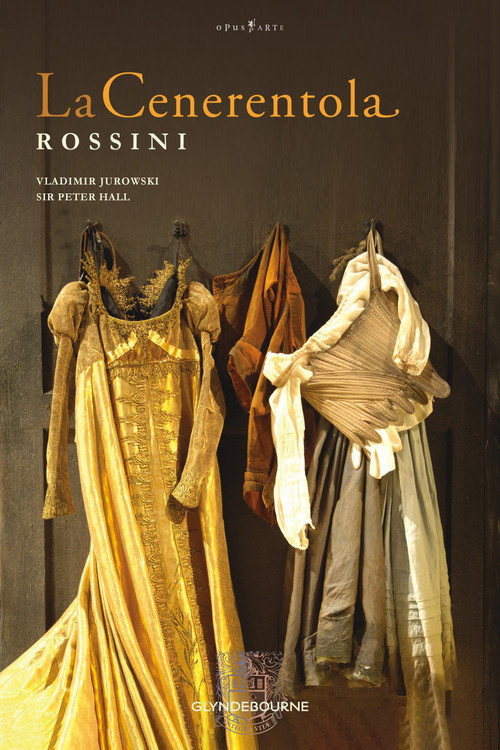
In late 18th-century Italy, in the mansion of Don Magnifico, the young and pretty Angelina works as a maid. Teased by her two frivolous half-sisters, Clorinda and Tisby, Angelina believes she is in love with a young valet and goes to the ball. Dressed in her finest finery, she meets the man who is in fact the Prince and flees from him after giving him a bracelet that will allow him to recognise her a little later. The masks come off, and kindness and love triumph! ‘La Cenerentola’ is the last opera buffa composed by Gioachino Rossini for an Italian audience. A dramma giocoso in two acts, with a libretto by Jacopo Ferretti, freely adapted from Charles Perrault’s fairy tale ‘Cinderella’ (1697), omitting the magic in favour of a realism tinged with humour and social criticism. Premiered for the Rome Carnival at the Teatro Valle in Rome on 28 January 1817. Recorded live at Glyndebourne Opera, Lewes, East Sussex, on 2 and 4 June 2005.
Rossini: La cenerentola
A feathered thief, a servant wrongly sentenced to death and a corrupt, power-hungry politician: those are the protagonists of Rossini’s semi-serious opera whose overture, with its drum rolls and oboe solo, is one of the best-known pieces in the history of music. La gazza ladra (The Thieving Magpie) is set in a time of great social upheaval. When Ninetta is accused of stealing a silver spoon, a series of unfortunate events begins that initially makes the happy ending expected from an opera semiseria seem highly unlikely. What sort of world is it where a person can be executed for the alleged theft of a spoon? Tobias Kratzer, successful as a director throughout Europe, now debuts in Vienna with Rossini’s opera that received its first performance in 1817 and traces the uncertainty felt by people in a politically and socially destabilised world.
Rossini: La gazza ladra
Including world-class artists such as Bryn Terfel, Cecilia Bartoli, Anne Sofie von Otter, Jose Cura, Simon Keenlyside and Agnes Letestu, this 50-minute sampler will give you a taste of many beloved classics in opera and ballet.
The Blu-ray Experience: Opera & Ballet

Maometto II (or Maometto secondo) is an 1820 opera in two acts by Gioachino Rossini to an Italian libretto by Cesare della Valle. Set in the 1470s during a time of war between the Turks and Venetians, the work was commissioned by the Teatro di San Carlo in Naples. Della Valle based his libretto on his earlier play Anna Erizo. The name of the title character, Maometto II, refers to the real-life Ottoman Sultan and conqueror of Constantinople Mehmed II, who lived from 1432 to 1481.
Maometto secondo
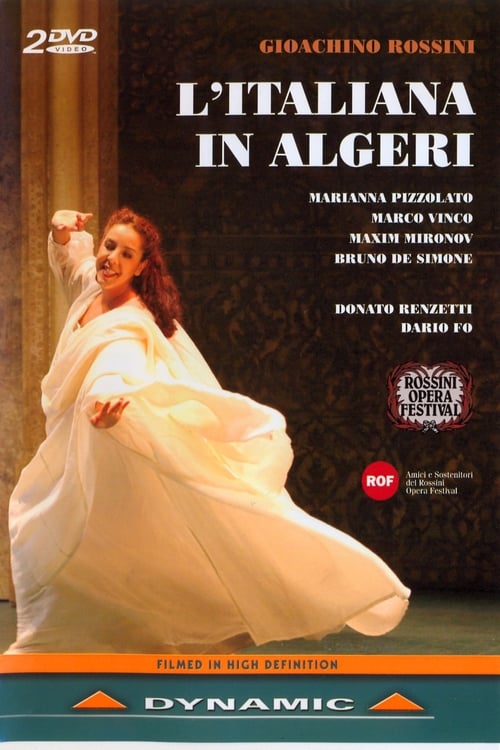
L'italiana in Algeri (The Italian Girl in Algiers) is an operatic dramma giocoso in two acts by Gioachino Rossini to an Italian libretto by Angelo Anelli, based on his earlier text set by Luigi Mosca. The music is characteristic of Rossini's style, remarkable for its fusion of sustained, manic energy with elegant, pristine melodies. “L'italiana in Algeri (The Italian Girl in Algiers)” is a two-act opera buffa by Gioachino Rossini, with a libretto by Angelo Anelli. It premiered at the Teatro San Benedetto in Venice on May 22, 1813. “L'italiana in Algeri” is the first opera buffa that Rossini wrote shortly after his first full-length work, “Tancredi.” Recorded live at the Teatro Municipale Romolo Valli in Reggio Emilia, Italy, on Sunday, February 22, 2026, at 3:30 P.M. (Central European Time).
Rossini: L'italiana in Algeri
The Monte Carlo Opera presents Mozart's legendary Don Giovanni, with a libretto of Lorenzo Da Ponte, in a performance conducted by Paolo Arrivabeni and staged by Jean-Louis Grinda.