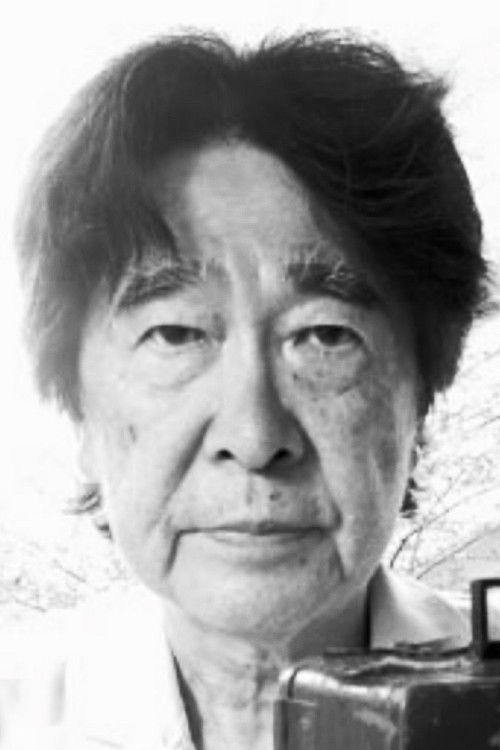
Jun'ichi Okuyama
Directing
Biography
OKUYAMA Jun’ichi (1947, Tokyo) graduated from Tamagawa University. He consistently offers a radical expression of cinema itself, using diverse and wide-ranging techniques.
Known For
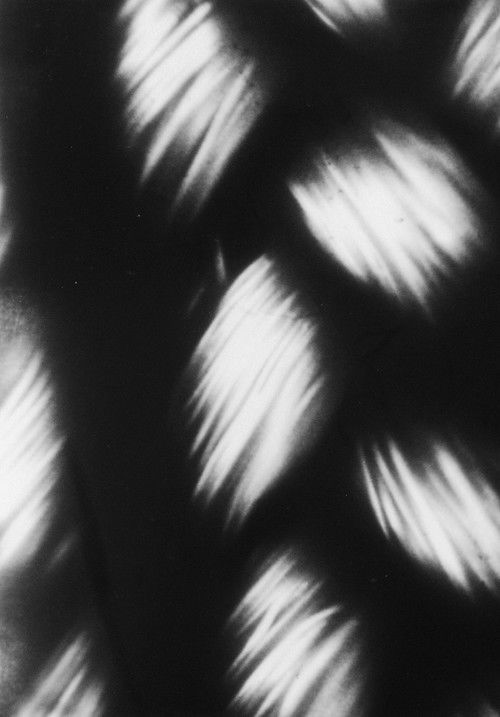
For this film, I followed the negative development instructions to the letter to develop a Super-8 positive. Osmography stems from the desire to create a new version of My Movie Melodies. The image overlaps with the soundtrack, and optical recording was used to reproduce the sound.
Osmography
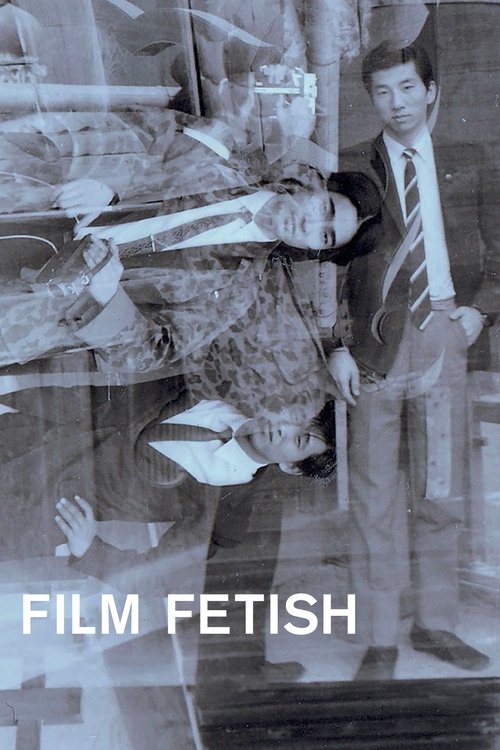
For some eight years, Kaneko Yu followed Japanese avant-garde director Okuyama Jun'ichi, observed him making and showing his films, and collecting printed materials.
Film Fetish
Short film by Japanese filmmaker Jun’ichi Okuyama.
A Sun-Picture Movie
Short film by Japanese filmmaker Jun’ichi Okuyama.
DEV-18
This work is a digital compilation of the 9.5mm One-Man Film Festival held in 2019. Now, 9.5mm has become a mythical format that most people are unfamiliar with. This is not surprising, as its heyday was over 80 years ago. For a while, the only information available about the author, who was born after the war, was in books. However, because there is a feed hole in the center of the film, the screen size is almost 16 mm. This unique structure is a major attraction. Hand crank equipment was also used at the 9.5mm One-man Film Festival 2019. A motor that squeaks and groans due to lack of oil, or that stops and starts, A lamp that goes on and off due to poor contact, etc. It was a tense screening.
9.5mm & I

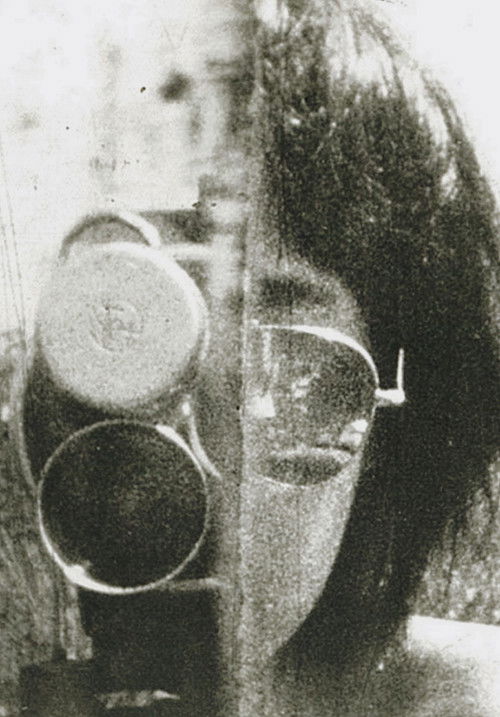
For this film, Okuyama made a camera with two lenses. One of the lenses films the filmmaker from behind while the other films him from the front. He thus obtains two images of him, superimposed on the same film.
At a Same Time, Exposed Both Sides
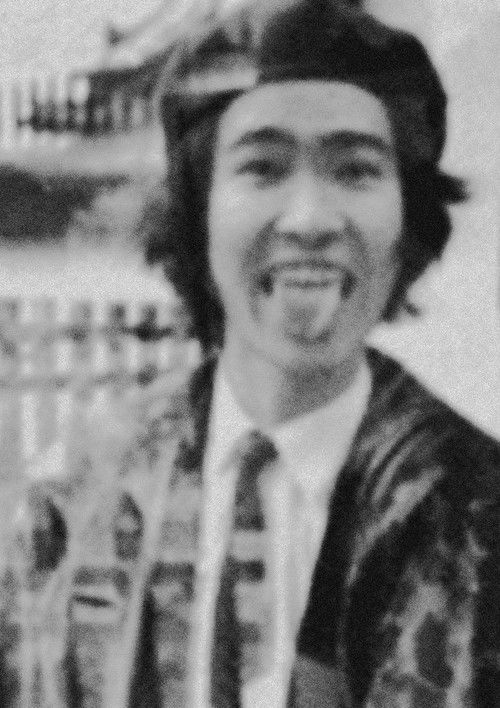
A typical university study trip. The camera is the gun, the lens is the muzzle. While moving with this in mind I shot a lot 8mm continuously. Stop-motion documentary with a keen sense control the camera freely, swinging the timing to press the shutter subtly adjust to the subject and boldly change. It produced unique movements and images.
Bang Voyage
Short film by Japanese filmmaker Jun’ichi Okuyama.
E&B
Raw material spliced into projection film, paper, leaves, vinyl, 6mm audio tape. Depending on hair, etc. the film breaks during projection. The film gets shorter with each projection, the author wrote this {Disappearance Movie} and named it.
Cut-Off Movie
Camera and film inter-relate: the camera is massaged by the film at 24 frames per second, the film is massaged by the camera.
Cinemassage
Short film by Japanese filmmaker Jun’ichi Okuyama.
Sightseeing Film
One of the early works of Japanese filmmaker Jun'ichi Okuyama.
Mouth Bug

An infinite horizon line and the image of continuous waves... Experimentation with the vertical displacement of the image of a 35 mm film. 35mm film has four perforations per image. If the perforations are offset from the projector window, the image is split in two on the screen: for example, in a face image, the eyes are at the bottom and the mouth is at the top; The image has two displaced parts. To avoid this mistake, this multi-image movie uses collage. The filmmaker assembles an image by perforation (the normal technique is an image by 4 perforations). Therefore, there is never a vertical shift in the projected image.
Movie Watching
Short film by Japanese filmmaker Jun’ichi Okuyama.
Zero-Man co LTD
Short film by Japanese filmmaker Jun’ichi Okuyama.
Dick-Dick Train Prick Express
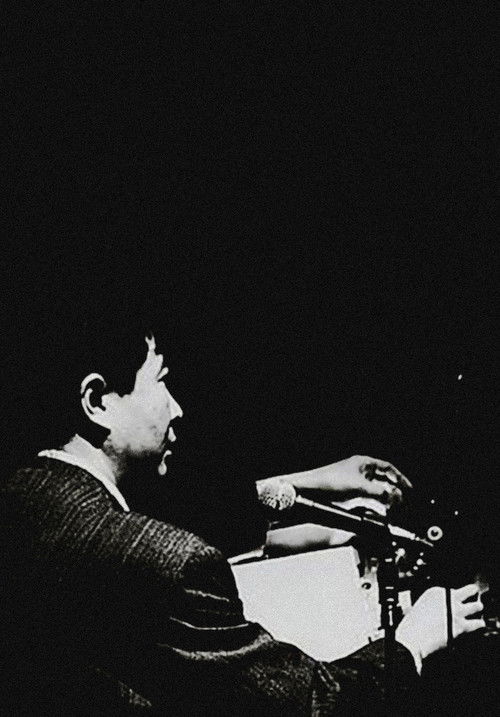
At the screening venue, making a film while it's being projected. It is the {original live film}. Painting on a loop of snooker film, screening will be held. Even now, sometimes, in 16mm, do a live performance. It is a long-lasting work.
Wakka (Being Painted)
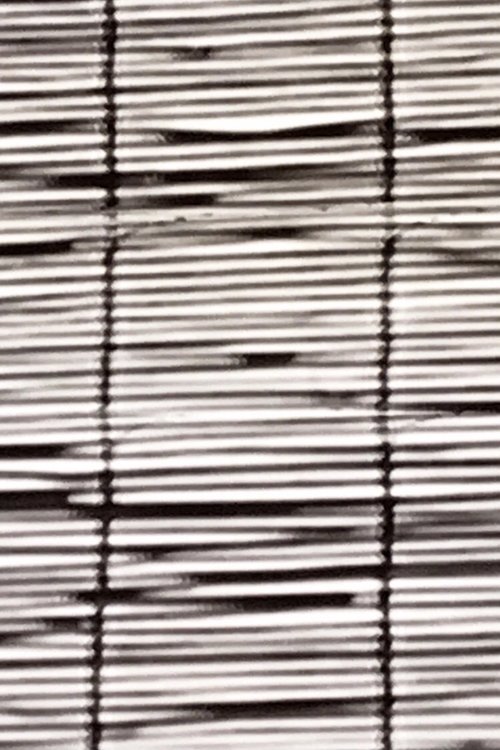
This work is based on the theme of "cinematic time on film." Suddenly, I noticed the musical scale of the curtain hanging on the window in my room. The film was shot with a modified 16mm camera. The footage even made it onto the soundtrack. On film, the picture and sound are the same and it's perfectly synchronized. However, due to the structure of the projector, the sound reproduction part is separated from the image,. The picture and sound on the screen are out of sync. However, if you organize the preceding sounds into a phrase, the misalignment on the screen appears to be perfectly synchronized.
Sync Pic

Okuyama made a negative print from the original negatives. As opposed to the usual purposes of film, this negative projection allows us to reconsider the various processes inherent in filmmaking.
Touch of Inga
The mood of the man on the left side of the screen (the artist himself) is captured in a long take, represented on the screen on the right, for example, stroking a dog's head with your right hand. When the shot falls to the ground, the man on the left looks entranced. The calculated shots were taken separately for the left and right sides. It was completed without editing. The impressionable high school days symbolically depicted. It is a multi-part work divided into two parts. First film by Japanese filmmaker Jun’ichi Okuyama, filmed in 1964 on 8mm (regular 8).
Nothing
Short film by Japanese filmmaker Jun’ichi Okuyama.