Jun'ichi Okuyama
Directing
Biography
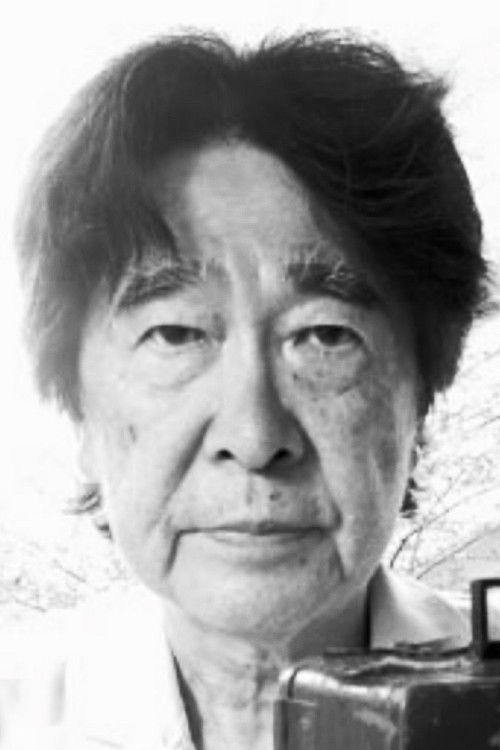
OKUYAMA Jun’ichi (1947, Tokyo) graduated from Tamagawa University. He consistently offers a radical expression of cinema itself, using diverse and wide-ranging techniques.
Known For
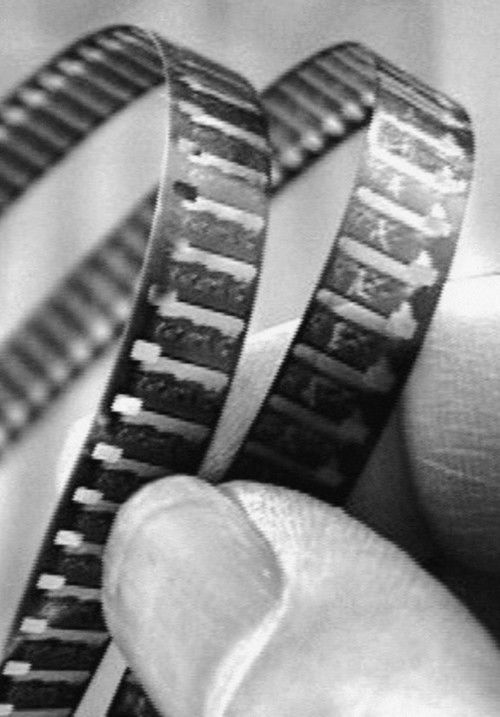
A 16mm wide film without perforations. I pull it by hand and send it off. If the speed is a little slow, you may slip. It melts from the heat of the projector. The visuals are the melted footage was re-shot. It has an image of a multi-layered structure. Screening prints are only used once and then become trash. The original "disposable film."
No Perforations

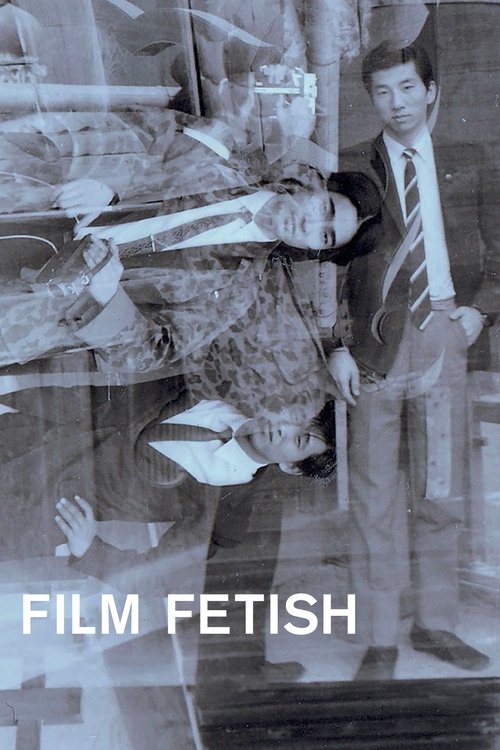
For some eight years, Kaneko Yu followed Japanese avant-garde director Okuyama Jun'ichi, observed him making and showing his films, and collecting printed materials.
Film Fetish

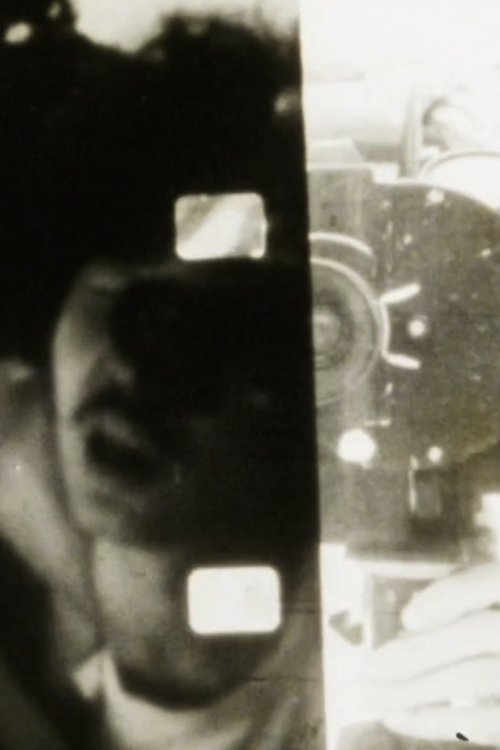
An infinite horizon line and the image of continuous waves... Experimentation with the vertical displacement of the image of a 35 mm film. 35mm film has four perforations per image. If the perforations are offset from the projector window, the image is split in two on the screen: for example, in a face image, the eyes are at the bottom and the mouth is at the top; The image has two displaced parts. To avoid this mistake, this multi-image movie uses collage. The filmmaker assembles an image by perforation (the normal technique is an image by 4 perforations). Therefore, there is never a vertical shift in the projected image.
Movie Watching
Short film by Japanese filmmaker Jun’ichi Okuyama.
1/24

In this film, the image produces the sound, the "image sound". The filmmaker takes pictures of landscapes, incidents. The various images are used to cover a wide range of sounds. The main melody is the radiographic image of a comb.
My Movie Melodies
Short film by Japanese filmmaker Jun’ichi Okuyama.
E&B

Raw material spliced into projection film, paper, leaves, vinyl, 6mm audio tape. Depending on hair, etc. the film breaks during projection. The film gets shorter with each projection, the author wrote this {Disappearance Movie} and named it.
Cut-Off Movie
The film runs like the scenery seen from the train. The images flow, then stop, it starts moving again. A man and a woman meet. Colorful carp swimming gracefully. A view of castle walls with perforations. A miscellaneous and elusive image thread the screen. The image gave up movement and eventually began to dissolve... A work that I rediscovered projecting film.
Stop Motion

"Jun'ichi Okuyama is a cinedoer." Jun'ichi Okuyama plays making a film from the material and accidents that gradually disrupt the natural recording of the camera. It all starts and ends with the noise of the projector. Landscape sequences gradually undergo interference and rhythmic interruptions of one hand, of a reel in motion and then of a crack passing through the photogram from one side to the other, are all tangible signs of the presence of the filmmaker. The universe breaks up and recomposes in this back and forth between reality and its "in the movie" reflection.
A Man Playing Movie

Live performance with two projectors. Human beings become shutters, if you flutter two fan in front of the lens. According to the movement, the eyes wink on the screen.
Human Flicker

For this film, I followed the negative development instructions to the letter to develop a Super-8 positive. Osmography stems from the desire to create a new version of My Movie Melodies. The image overlaps with the soundtrack, and optical recording was used to reproduce the sound.
Osmography

This work is based on the theme of "cinematic time on film." Suddenly, I noticed the musical scale of the curtain hanging on the window in my room. The film was shot with a modified 16mm camera. The footage even made it onto the soundtrack. On film, the picture and sound are the same and it's perfectly synchronized. However, due to the structure of the projector, the sound reproduction part is separated from the image,. The picture and sound on the screen are out of sync. However, if you organize the preceding sounds into a phrase, the misalignment on the screen appears to be perfectly synchronized.
Sync Pic

After directing Kami eiga (Paper Movie in 1972, which used paper film), I ended up with a dead track with Kanko eiga (Sightseeing Movie of 1973). Ideas no longer arose. I realized that I needed a fresh start to make films, and I thought that carefully studying the object that is a second, the most basic unit of time, would allow me to do things again, to find a new way of living. That's why it can be called an exercise. It's a film in which I say to myself: it's a film; that's how the second is, that's what happens when a photogram is over. When the twenty-four photograms are passed, the film is finished. I had fun making this movie. It is a film for which nothing knows anything about the cinema or begins to study it. It tells us what the film is, and how it is done.
Le Cinéma

Sky and earth. The image begins to move slowly. The sound of water moving in and out of the distance. The image begins to fluctuate, while rotating, it will come off the frame. Everything swings. A moment when you just drop by. Installation and performance work.
Swing Movie

Two rolls of raw film. I took a sandwich photo with paper tape What can be seen and what cannot be seen? What is captured and what is not captured? Why was the opaque paper tape. Will it be transparent when photographed? We approach one of the mysteries of film.
Sandwiches

Short film by Japanese filmmaker Jun’ichi Okuyama, premiered at the Image Forum Festival in 2012.
One Frame per Second
Short film by Japanese filmmaker Jun’ichi Okuyama, premiered at the Image Forum Festival in 2013.
If you look through it
This is an experimental film about the anti-halation layer of film. Normally, the antihalation layer is not projected onto the screen, as it disappears during development. That's why the author really wanted to see it on the big screen. However, films with this layer on the base side have been discontinued for some time now. After exhausting all means, we managed to obtain a 16mm raw film (400 ft) from about half a century ago. The project was produced from the perspective of "film archaeology." The author will also be appearing as a narrator, providing narration, singing, and sound effects. Also, the term "Hilm" for film, which has been completely forgotten in modern times, has been revived.
Raw Hirumu Ura

For this film, Okuyama made a camera with two lenses. One of the lenses films the filmmaker from behind while the other films him from the front. He thus obtains two images of him, superimposed on the same film.
At a Same Time, Exposed Both Sides

Dancing man. A woman clapping her hands to the rhythm. Narrow down your theme communication between men and women rhythmically expressed. People's movements stripped down to the bare minimum, the start and end points of the movement. A composed work by just two photos. Inspired by cinematic expression before the birth of cinema, it was made using a simple method.