Hiroki Okamura
Directing
Known For
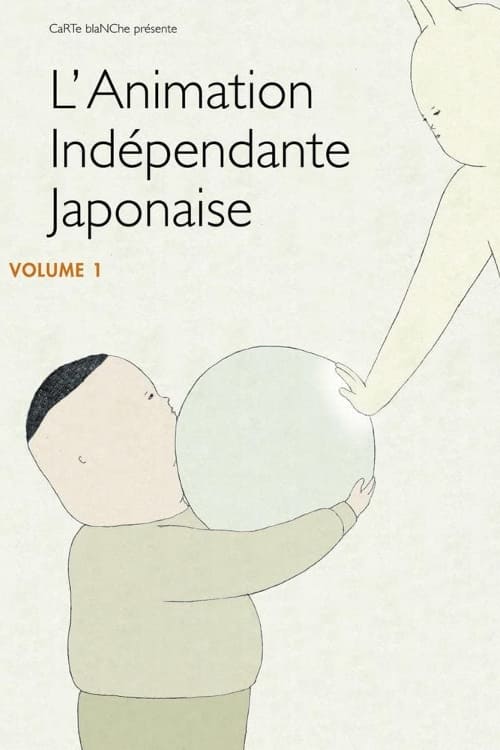
A compendium of independent Japanese animation, featuring a wide range of experimental techniques from drawn animation to pixilation.
Japanese Independent Animation, Volume 1
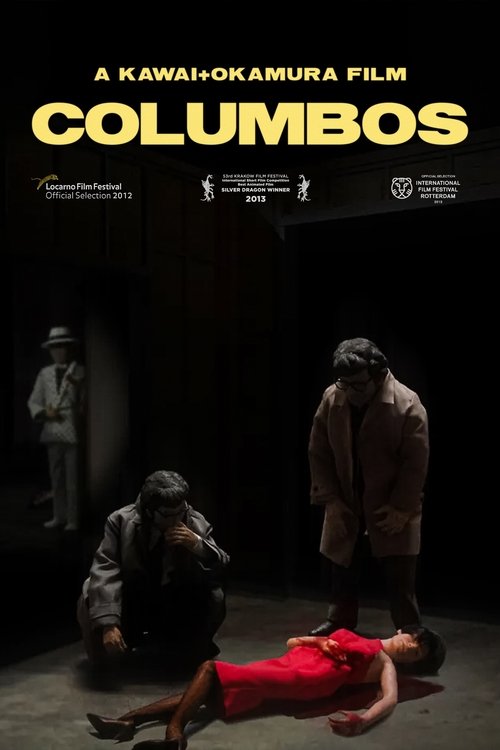
A re-imagining of Columbo with puppet animation.
Columbos

A TV show that is so unclear to whom and where it is broadcast. A strange room where the recording and editing is taking place. A middle-aged gentleman like a wax figure sits on a turntable and grabs the microphone as the director signals him to do so. A reading about the mysterious genre "Ficfyon" has begun. 'What the heck did we not have time for?' The monologue of a man sitting in the audience and continuing to talk about his story will soon move into Ficfyon prophecies about the 2000s.
Airs

The noise of the badly projected cathode ray tube image cleared up and a news program called "Ficfyon 7" appeared on the monitor. Professor Kim Wilson, an expert on the mysterious genre of "Ficfyon" was introduced as a guest, and the host asked him questions about the current state of "Ficfyon." The professor's answer was not in words, but a mysterious gesture. With the presenter's astonished expression, the images on the monitor split and repeat like a matryoshka. Eventually, the program ends as if nothing had happened, but the strange loop continues afterwards...
ficfyon7
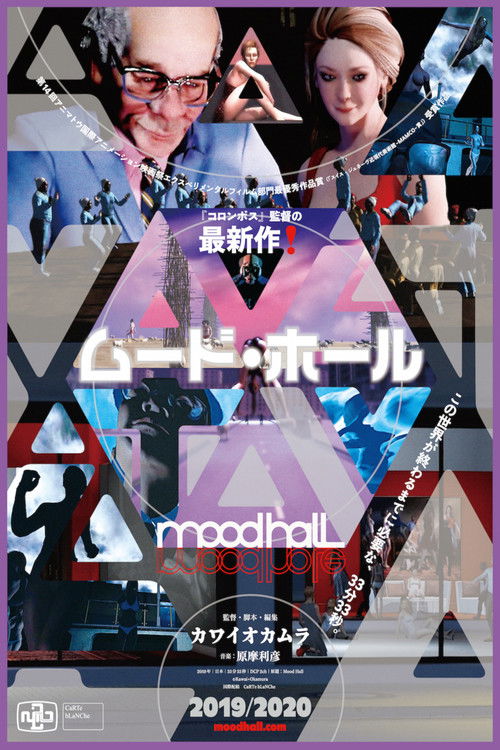
Earth on the verge of extinction. Mood Hall — the enigmatic game played amongst the survivors in the post-apocalyptic world. Mysterious middle-aged and older gentlemen and beautiful women. Little People. Giants. Deserts. The bottom of the pool. A high-density labyrinthine world consisting of experimental, artistic, adventurous, half sci-fi and half mystery sketches. A masterpiece of cinema that eschews words and invites you into a world of seeing and hearing only! “Mood Hall” was first presented in 2016 as an installation work in Kawai+Okamura’s retrospective exhibition. “Mood Hall” was made into a movie with music by Marihiko Hara in 2019. In 2022, the music of “Mood Hall” was completely recomposed by Kazumichi Komatsu. Reconstructed by Komatsu’s bold analysis, “Mood Hall” was renamed “Mood Hall side B.”