Camera
Polizeiruf 110 is a long-running German language detective television series. The first episode was broadcast 27 June 1971 in the German Democratic Republic, and after the dissolution of Fernsehen der DDR the series was picked up by ARD. It was originally created as a counterpart to the West German series Tatort, and quickly became a public favorite.
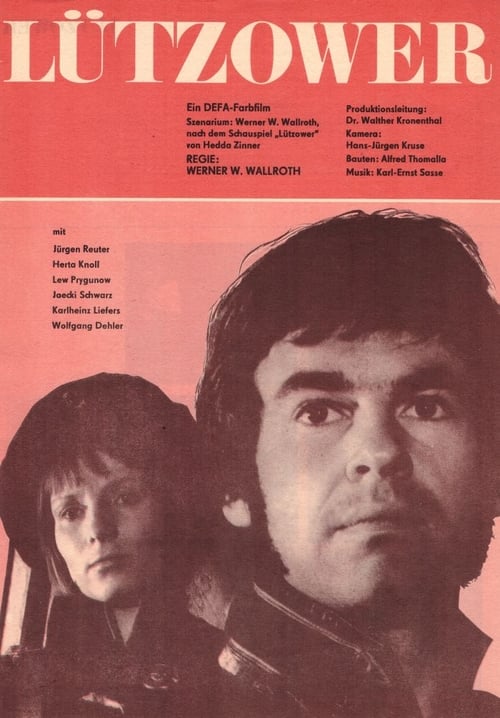
During the Napoleanic Wars, members of the Prussian Lützow Free Corps steal a French war chest from the house of collaborator Kerstinn, but their captain Friesen is captured and sentenced to death. But Friesen is saved by French Sergeant Fleuron and they flee the occupied city together. Kerstinn's daughter Marie is disgusted by her father's disloyalty and has also fallen in love with Friesen. When she learns about a trap that is being set for Lützow Free Corps, she sets out to warn them with the help of her father's clerk Püttchen, a Lützow sympathizer.
In a small village in West Prussia in the 1870s, Germans, Poles, Gypsies and Jews live together as neighbors. One night Johann, a German mill-owner, secretly opens the dam gates and floods the mill of his Jewish rival Levin. After his business is ruined and his calls for justice go unanswered, Levin leaves town.
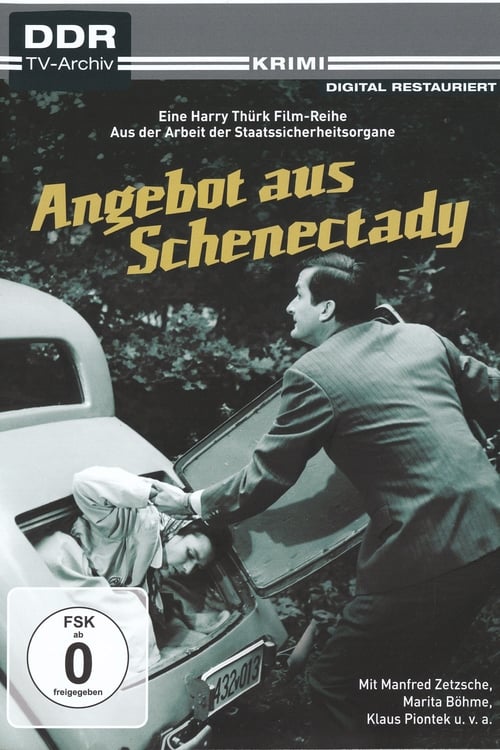
Dr. Grunert, electronics specialist from the GDR, gets a visit from an old acquaintance from war times. Both worked back then on navy torpedoes. His former colleague wants to poach Grunert – to Schenectady, the headquarters of the largest American electronics company. With alleged war crimes, he tries to blackmail Grunert, but quickly it becomes clear where the true criminals are sitting: In influential positions of the American industry. Grunert underestimates the scrupulousness of his opponent and invites him to a remotely located country home to clarify things. The Ministry for State Security is already on the trail of the matter and saves the engineer from a dangerous solo action.
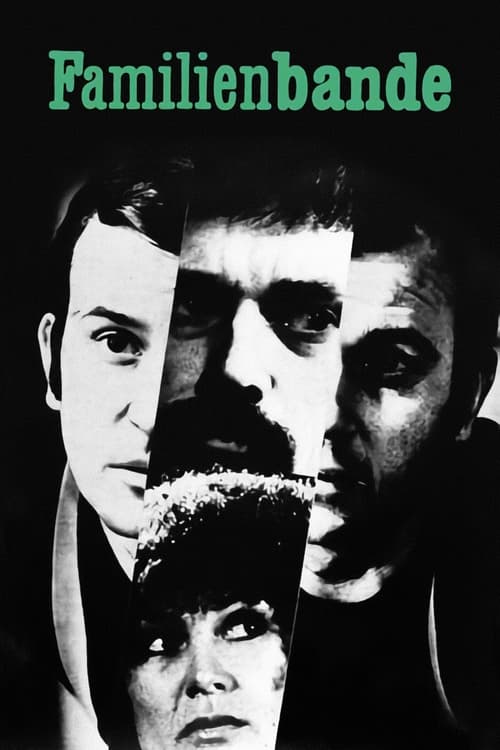
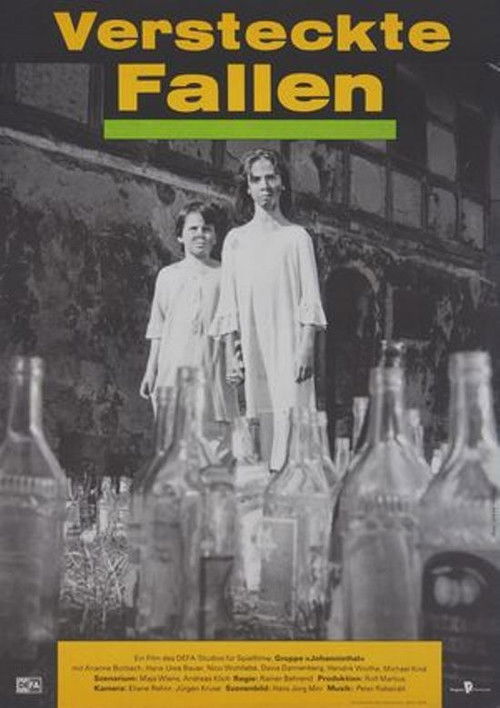
Edith and Wolfgang have led a fairly harmonious family life for many years, together with their son Danilo. Edith has long since got over Wolfgang's infidelity twelve years ago, which resulted in a daughter. Every now and then he visits 12-year-old Sandra, simply fulfilling his fatherly duties. But suddenly the girl appears at the door.
South America at the beginning of the 1980s. A man is on the run from a group of armed pursuers. He does not manage to escape and is shot down mercilessly. Young Maria witnesses the cruel event and asks her friend, the journalist Oswaldo, to find out about the backgrounds of this case. The police also start to investigate the case and find out that a mysterious German farm is involved in the shooting. But the farm lies in an exterritorial area, thus the police officers cannot investigate any further.
When Angelika moves to Leipzig, she is forced to rent a room at Mrs. Häublein’s for a start, since her parents will not follow until a few months later. Fellow tenant Thomas, a philosophy student, is not at all enthused about his new, pretty housemate. Because of Angelika he has to move into a smaller room. Furthermore, he is annoyed at her many male acquaintances, without sensing that his aggression might be prompted by jealousy. When Angelika’s father comes for a visit, he asks Thomas to keep an eye on his daughter. Thomas takes this assignment very seriously and finally realizes that he has fallen in love with Angelika.
The story of a young German boy and his father who befriend a Jewish family during WWII.
Kasper Mai, an export merchant and comrade with a “clean” record, discovers he is the prince of Hohenlohe-Liebenstein. His royal grandmother designates him as the heir to her estate. A private trip to her reveals that she does not want a NATO airbase built on her land. The GDR and his grandmother thus find a common interest, and a clever lawyer from the East works against other family members looking to settle their debts with the estate money.
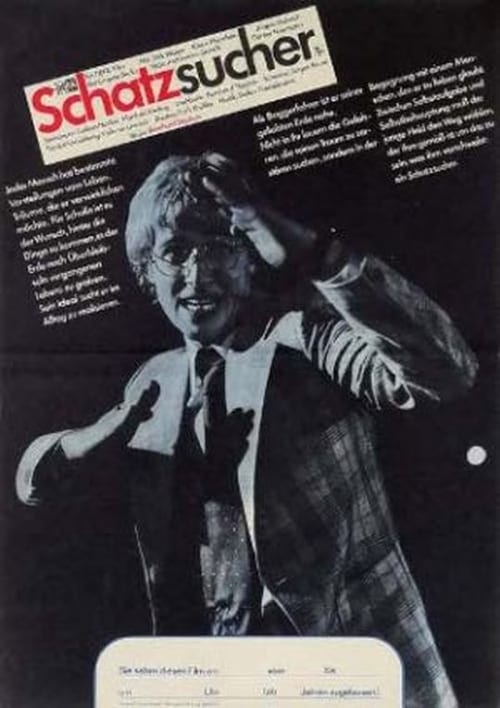
The 18-year-old construction worker Schultzendorf, known as Schulle, sets off for Berlin from his home town of Ankershagen. He is taken with the Marzahn construction site. He dreams of making archaeological finds there. He searches every excavator load for treasures, which not only earns him ridicule, but also the anger of his colleagues because he delays the work. They try to change his mind and get him a wife. This fails, but Schulle finds one himself - the slightly older Helga, who needs his help to get away from her divorced husband. Once she has succeeded in doing so, she breaks away from Schulle, whose youthful impetuosity unsettles her.
Test film for a 70mm film stock produced in East Germany.
This story of the miller Florian, who gave all his money to the war against Napoleon, is loosely based on a true story. After the war, Florian's reimbursement is challenged, and he must also pay taxes on his destroyed mill. He resists the tax collectors and takes off to Vienna, where he intends to defend his rights. On the way, he rescues the Duchess of Guastalla from assault. She also wants to go to Vienna, as His Majesty Franz II is trying to contest an heir in her favor. With cunning, luck, and dagger, Florian fights his way through a slew of nobility and their secret police.
A conference is to be held once again to discuss the construction of a new dam, which Professor Paul Satie rejects. During a train journey, he spontaneously leaves the train. Here in Wolfsgrün, from 1948 to 1950, he helped build the old, now far too small dam as a youth brigadier. He and the others who helped build it have erected a monument to this. A monument with his name on it. Is that perhaps why he is against the new dam?
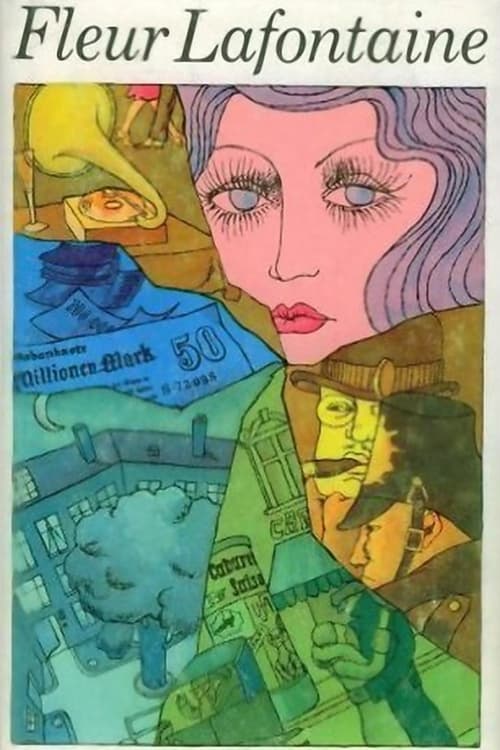
Berlin, 1948: Paralyzed and robbed of her memory, Fleur regains consciousness after a serious fall. The doctor treating her recognizes that her problem is of a psychological nature and encourages her to face up to her past. The daughter of a brothel owner is reluctant to look back: on a hapless childhood, her relationships with bon vivant Dr. Goldner and the politically committed locksmith Philipp (Hilmar Thate) as well as the difficult period of fascism... This exciting journey into the German past is based on Dinah Nelken's novel "Das angstvolle Heldenleben einer gewissen Fleur Lafontaine".
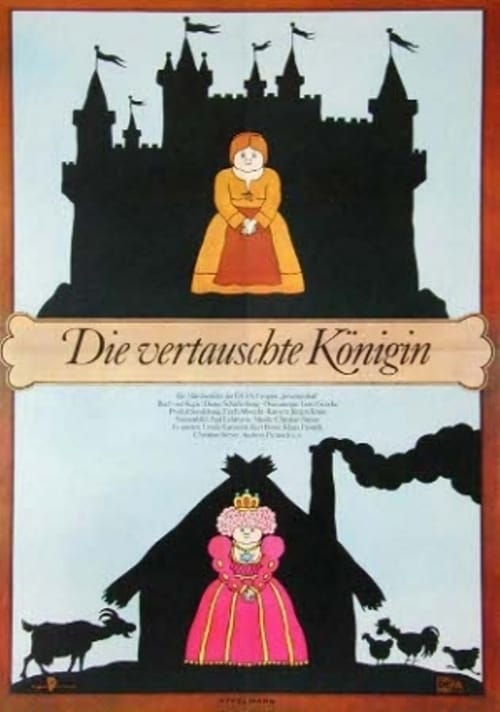
A tale about the evil queen who gets swapped with a simple and nice woman.
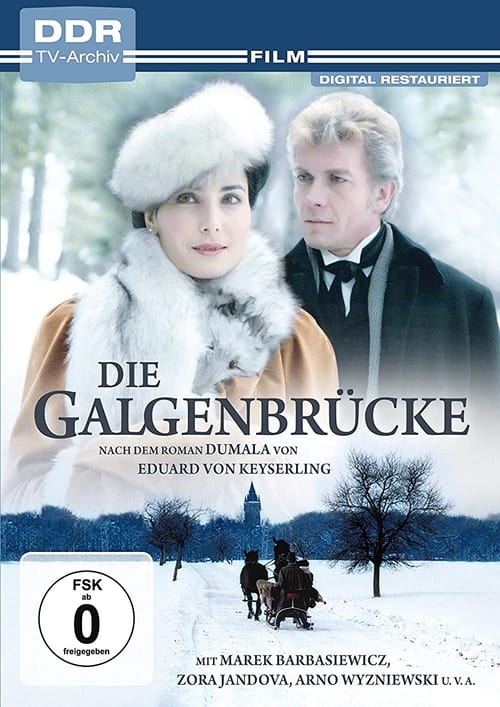
In the wintry Baltics, a century is drawing to a close and with it the era of the old Junker aristocracy. Pastor Erwin Wenger falls in love with the beautiful Baroness von Werland. This love plunges him into serious conflicts of conscience, especially as he does not appear to be the young woman's only admirer. Her husband, the ailing Baron von Werland, seeks to be close to the pastor. And it is not only the baron's health and the old castle that increasingly deteriorate, but the man of God's moral stability also begins to waver ...
The worker Frank Raban lives with his wife and young daughter in a room in his mother's apartment. He builds his own home and sometimes procures materials illegally. When an after-work bricklayer wants to be paid in forum checks, Frank strikes outraged and ends up in front of the public prosecutor. His brigade vouches for him. His two West Berlin brothers Markus and Olaf help him out with money, but the price is high. Markus runs an antiques business - with stolen art treasures from the GDR. He uses the family ties to the East for his burglaries. When a museum guard is murdered by Markus and Olaf, Frank tells his wife everything. She tries to convince him to turn himself in to the police.
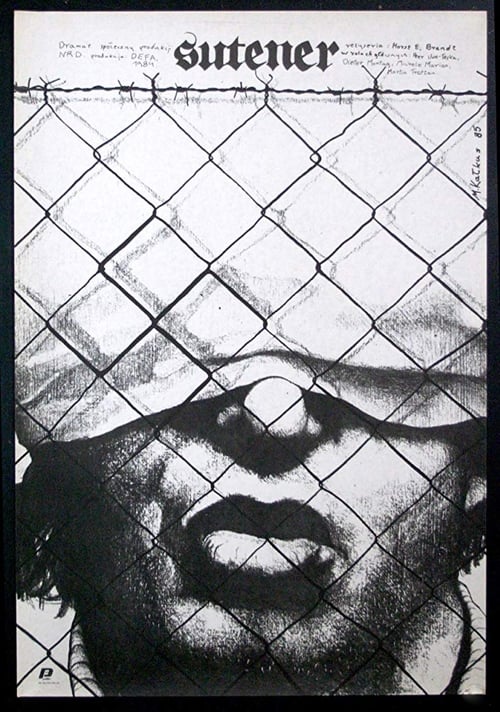
Berlin in the early 1930s. Bello is an unemployed young man who loves the underage Frieda. In order to earn a living for both of them, Frieda goes on the streets. An inspector from the political department takes advantage of this to blackmail Bello into providing informer services. But that's not all. A jealousy murder among pimps, whose victim is a high-ranking Nazi, is blamed on the Communists, and Bello is supposed to be the key witness. He refuses. When the Nazis come to power, they reopen the case to turn the murdered man into a martyr. Bello still refuses. He now believes he is safe because Frieda is now of age. But he pays for his refusal with his life.
In three episodes about six people, the film takes on the topics of relationships, difficult social engagements , and love in the German Democratic Republic.
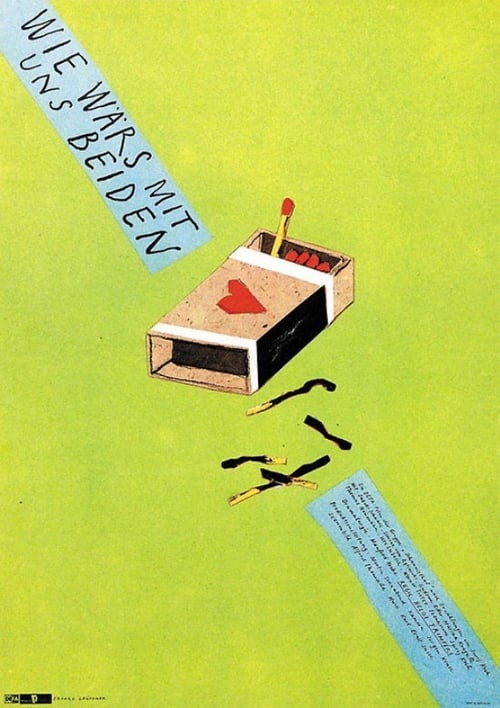
Claudia and Georg Rattey, a married couple, have everything what people in their mid-thirties might wish for: a car, a farmhouse for vacations on the weekends, and their son Oliver. But their contentedness does not turn into happiness but into an inner void: Claudia and Georg have nothing left to say to each other and just live alongside each other. One day, they discover a ten-year old burglar in their half-finished vacation home.