FEEL IT.STREAM
Nicolai Gedda

Nicolai Gedda

Acting

Biography

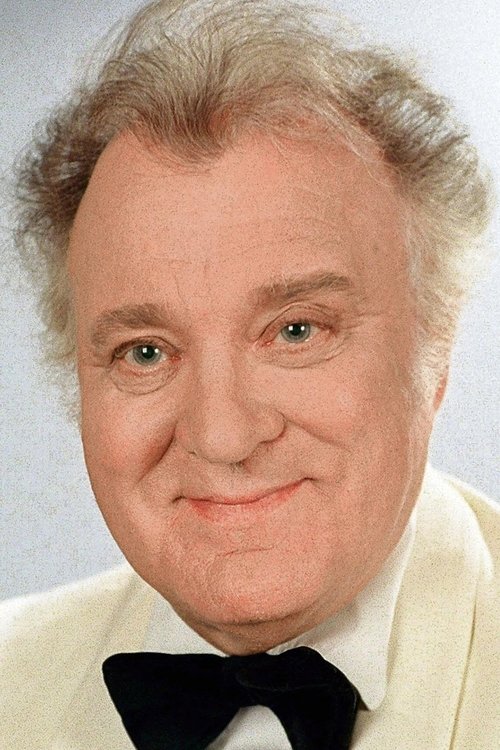
Harry Gustaf Nikolai Gädda, better known as Nicolai Gedda (11 July 1925 – 8 January 2017), was a Swedish operatic tenor. Debuting in 1951, Gedda had a long and successful career in opera until the age of 77 in June 2003, when he made his final operatic recording. Skilled at languages, he performed operas in French, Russian, German, Italian, English, Czech and Swedish, as well as one in Latin. In January 1958, he created the role of Anatol in the world premiere of Samuel Barber's Vanessa at the Metropolitan Opera. Having made some two hundred recordings, Gedda is one of the most widely recorded opera singers in history. His singing is best known for its beauty of tone, vocal control, and musical perception. Gädda, who later changed the spelling of his surname to Gedda, was born out of wedlock in Stockholm to a Swedish mother and a half-Russian father. He was raised by his aunt Olga Gädda and his adoptive father Michail Ustinov (a distant relative of Peter Ustinov), who sang bass in Serge Jaroff's Don Cossack Choir and was cantor in a Russian Orthodox church. Gedda grew up bilingual in Swedish and Russian, and from 1929 to 1934 when his family were living in Leipzig, Germany, he learned German. At the age of 5 Gedda took part in a vocal quartet in the orthodox church in the city. They returned to Sweden in 1934, and the boy attended Katarina Secondary School and the Södra Grammar School. In school he learned English, French and Latin, learning Italian on his own after leaving school. Gedda worked first as a bank teller in a bank in Stockholm and was obliged to support his parents financially; his sleeping arrangements were an alcove off the kitchen in their Stockholm apartment. One day he told a customer – a member of the Royal Opera House Orchestra – that he was searching for a good singing teacher, and the client recommended Carl Martin Öhman, a well known Wagnerian tenor from the 1920s, who is also credited with discovering Jussi Björling. Öhman was enthusiastic about Gedda and took him as a pupil, at the beginning without payment, because Gedda was at the time supporting his parents. Two months later his progress was such that he obtained a grant and then won the Christine Nilsson Prize. After a few months he obtained a scholarship and was later able to pay for Öhman's singing lessons. At the Royal Academy of Music and Opera School in Stockholm Gedda was in the class of Kurt Bendix and Ragnar Hyltén-Cavallius from 1950 to 1952. Gedda made his debut at the Royal Swedish Opera in Stockholm as part of the vocal quartet in the premiere of Der rote Stiefel by Sutermeister in November 1951. In April 1952, at the age of 26, Gedda made his triumphant debut in a principal role in Stockholm, performing Chapelou in Adolphe Adam's Le postillon de Lonjumeau, alongside Hjördis Schymberg. The 'Ronde du Postillon' in the opera, ("Mes amis, écoutez l'histoire"), is considered one of the most difficult tenor arias in all of opera, as it calls for a demanding high D from the soloist. An early appraisal of Gedda's singing was offered by Walter Legge, after first hearing him sing for the role of Dmitry in a planned recording of Musorgsky's Boris Godunov. ... Source: Article "Nicolai Gedda" from Wikipedia in English, licensed under CC-BY-SA.
Known For

No image
7.3

No description available.

Die Drehscheibe

1964
Le Grand Échiquier
8.0

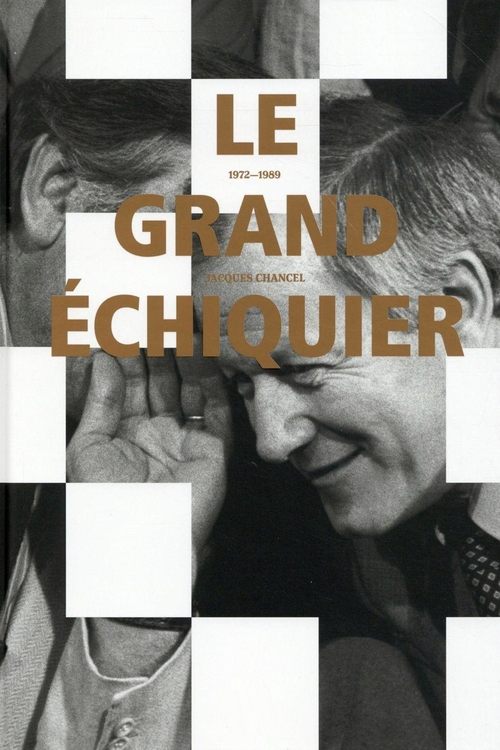
Le Grand Échiquier is a French variety television program created and presented by Jacques Chancel. It aired at 8:30 pm on the first channel of the ORTF from January 12, 1972 to July 12, 1972, then on the second color channel of the ORTF from September 1972 to December 1974, and finally on Antenne 2 from January 1975 to December 21, 1989. The program returned to France 2 on December 20, 2018 and is hosted by Anne-Sophie Lapix.

Le Grand Échiquier

1972
The Bell Telephone Hour
8.0

“The Bell Telephone Hour” was a musical variety show that aired on “NBC” TV from 12 January 1959 to 14 June 1968 that showcased the best in Broadway, Classical, Concert, Jazz and Popular music each week. The series had its’ own house band appropriately named the “Bell Telephone Orchestra”. The show also had its’ own theme song being the “Bell Waltz” composed by “Donald Voorhees” who was also the show's Orchestra conductor. Some of the greatest violinists of the 1960’s performed on this show that aired in the old “Black & White” format. Some of these great violinists included “Erica Mornin”, “Isaac Stern", "Michael Rabin", "Ruggiero Ricci", "Yehudi Menuhin" and "Zino Francesacatti". From time to time some of the great singers and bandleaders of the 1960’s would perform on the show as well. Some of these were “Bing Crosby”, “Gordon MacRae”, “John Gary”, “Leslie Uggams”, “Mary Martin”, “Nelson Eddy”, “Patti Page” and “Roy Rogers”. The TV show followed on the heels of its’ predecessor with the same name on “NBC” radio that aired from 29 April 1940 to 1958 on Monday nights at 8 PM. The name of the show was derived from its’ Major sponsor “Bell Telephone Laboratories”. The TV version began airing on Friday nights at 8:30 PM once a month. It later was given it’s same time slot now airing every other week alternating with another show on the other weeks such as News shows and specials. The show time slot changed quite often over the years. In September 1960 it aired at 9 PM and in September 1961 it moved to 9:30 PM. In October 1963 it moved to Tuesday nights at 10 PM, September 1965 it moved to Sunday night at 6:30 PM and in September 1967 it made its' final move back to Friday night at 10 PM.

The Bell Telephone Hour

1959
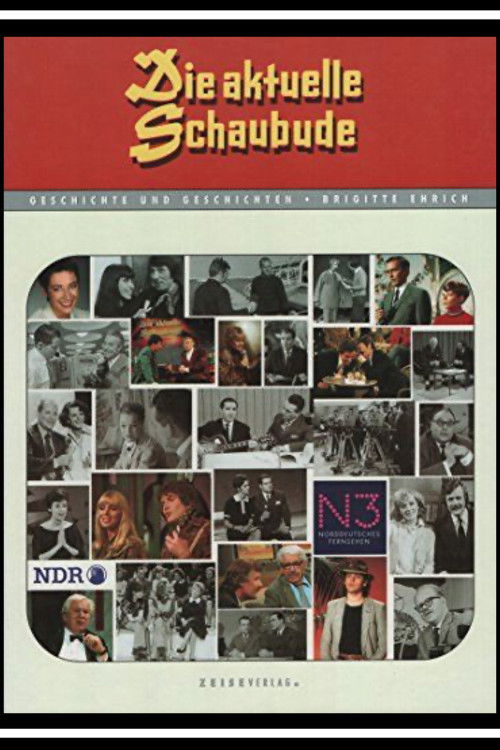
Aktuelle Schaubude
8.0

No description available.

Aktuelle Schaubude

1957
No image
7.0

No description available.

Einer wird gewinnen

1964
No image
N/A

No description available.

Melodien für Millionen

1985
No image
N/A

No description available.

Musik liegt in der Luft

1991
No image
6.0

No description available.

Anneliese Rothenberger gibt sich die Ehre

1971
No image
N/A

No description available.

Da Capo

1986
No image
7.0

Wolfgang Amadeus Mozart's Magic Flute is undoubtedly one of the most multi-layered, profound, complicated, and therefore also most difficult to stage works in the entire opera repertoire. In terms of genre, it can only be understood if it is seen as a mixture of four things: a philosophically profound drama of ideas with countless encryptions, a naïve fairy tale, a bawdy comedy, and a crude Punch and Judy show. It is based on the intersection of the traditions of Baroque magic opera, Italian buffa, and Viennese Singspiel, where all manner of wonders are conceivable and permissible. Peter Ustinov's production appeals to all those who love a primarily fairy-tale-like interpretation; the atmosphere is traditional and conventional. An outstanding ensemble of singers has been assembled.

Die Zauberflöte

1971
Lady Macbeth of Mtsensk
4.5

A young woman, married to a wealthy man, but miserably lonely; trapped within a world ruled with an iron fist. Katerina is driven by a lust for life and for love. Her husband, though, is impotent; her father-in-law a tyrant. No wonder, then, that she longs to free herself from this yoke. When Sergei starts work on the family estate, she sees in him a chance for salvation. However, their subsequent affair marks the beginning of a descent into crime.

Lady Macbeth of Mtsensk

1992
Candide
7.5

No description available.

Candide

1991
No image
N/A

No description available.

Lieder, Arien und Geschichten

1964
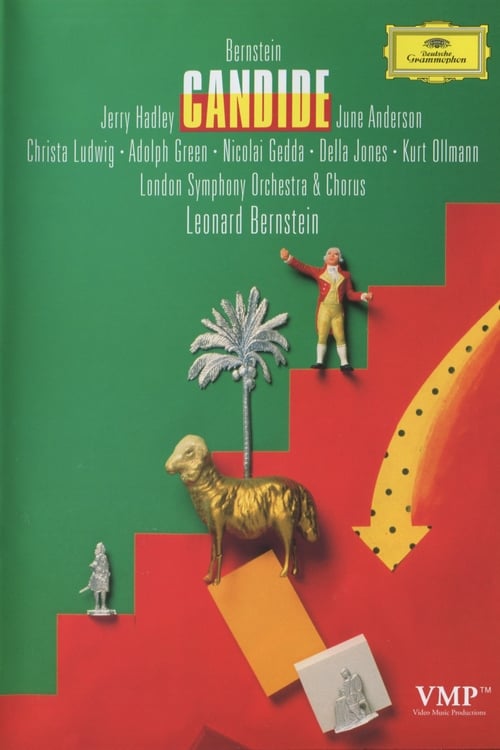
Leonard Bernstein - Bernstein - Candide
N/A

This is the historic concert performance of the final operatic version of Bernstein's Candide. It was recorded on December 13, 1989 at the Barbican Centre, with Leonard Bernstein conducting the London Symphony Orchestra and Chorus, with a stellar cast of operatic stars gracing the solo parts. The programme lasts a full 2hrs 27 mins. It marks the end of a long and tortured journey for the musical/operetta that spent much of its first 35 years as an orphan in the musical wilderness.

Leonard Bernstein - Bernstein - Candide

1989
Boris Godounov
7.5

A possible impostor torments a newly crowned medieval czar who may have ordered the real successor's death.

Boris Godounov

1989
The Metropolitan Opera Centennial Gala
N/A

In celebration of its 100th anniversary in 1983, the Metropolitan Opera hosts a four-hour performance uniting some of the world's most spellbinding opera singers and conductors. The event includes a ballet from Samson et Dalila and boasts incredible classical performances from Kathleen Battle, Plácido Domingo, Jose Carerras, Leonard Bernstein, Marilyn Horne, Leona Mitchell, Luciano Pavarotti and many more.

The Metropolitan Opera Centennial Gala

1983
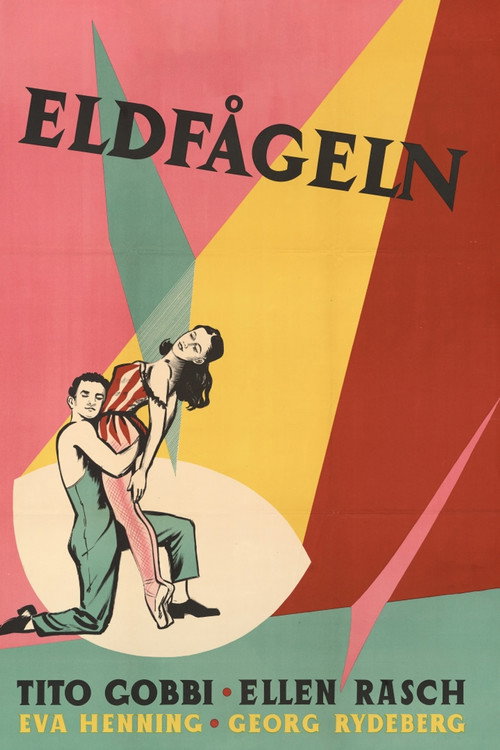
The Firebird
5.0

Italian singer Mario Vanni visits the Royal Opera in Stockholm and fall in love with ballet dancer Linda Corina.

The Firebird

1952
No image
7.0

No description available.

Bühnenbild mit Dame

1982
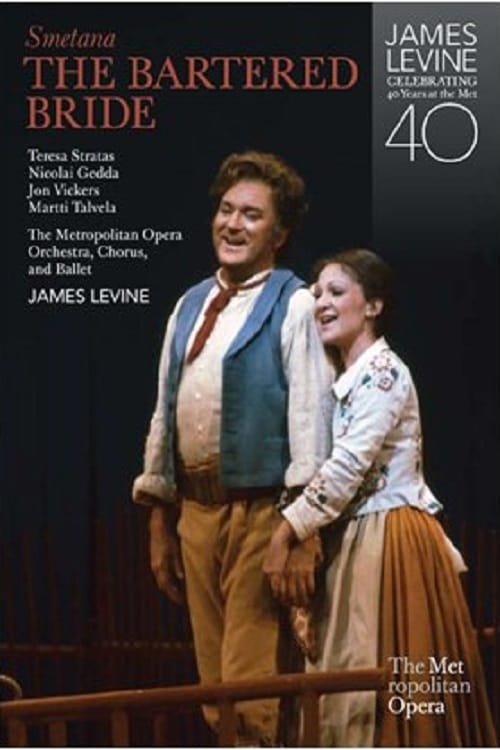
The Bartered Bride - The Met
N/A

This MET production of Bedrich Semtana's classic folk opera boasts a superb cast, including Nicolai Gedda, Jon Vickers, Teresa Stratas, and Marti Talvela. The staging and mis-en-scene is traditional and very well done. Everyone seems to be enjoying this presentation. Although not to the same standard as today's HD productions, this is still a wonderful way to get to know this delightful opera.

The Bartered Bride - The Met

1978
No image
7.0

The world of an operatic singer is documented in a film portrait of world-renowned Swedish-born tenor Nicolai Gedda. One of the greatest singers of his day, Gedda has recorded more than 80 record albums of opera, operetta, oratorios, and recitals. The documentary follows Gedda in rehearsals and performances in New York, San Francisco, and in European cities, as he tells about his life as an opera singer, relating the personal satisfactions and frustrations of being an opera star and traveling around the world.

The World of Nicolai Gedda

1971