Hans-Albert Pederzani
Writing
Known For
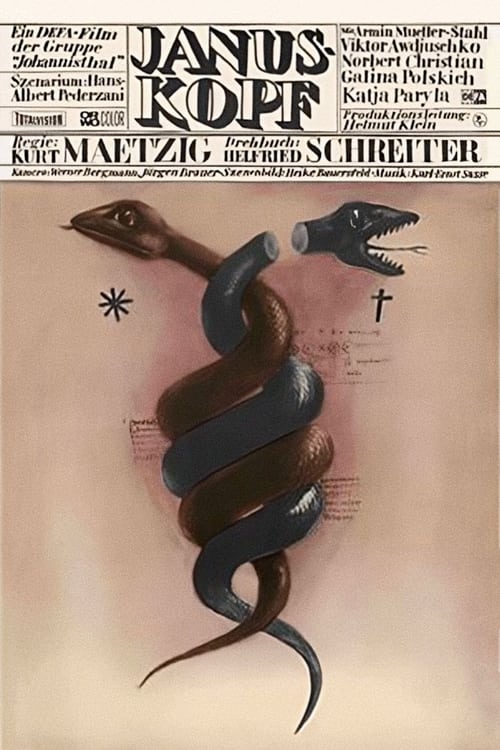
World-famous geneticist Professor Hülsenbeck is a man of integrity who refuses to mix science and political gain. When his findings are being used to harm humanity, he immigrates to the USA in 1933 in protest against Nazi racial politics.
Janus Head

Fritz Weineck, a worker′s son from Halle, loves music – and dreams to make a living out of it one day. When his friend Alfons, a World War I veteran, gives him a trumpet as a gift, Fritz seems to come closer to fulfil his dream. But then, Fritz realizes that after the end of the German empire workers still have to desperately fight for their rights, and decides to use his instrument for political means: At a meeting of militant workers, he uses his trumpet as a signal horn. But Fritz suffers a severe setback when a comrade dies in the fight for an arms depot because of his fault.
The Song of the Trumpeter
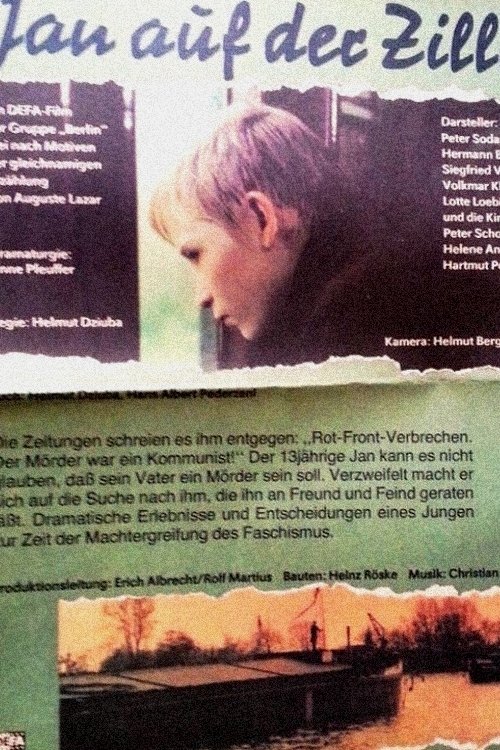
1934, Germany. Jan is a 13 year old boy, who is raised without a mother. His father, a communist, is accused of a political murder, and predicted to be shot by the police when he was on the run. Jan lives with his aunt and finds a friend, Max, who wants to help him to find out what really with his father happened. During a conspirative gathering Max is shot by SA (Nazi paramilitary) and Jan succeed to escape in a barge. Erika, the daughter of the captain of the barge, and a boatman hide him. They try to help Jan to escape from police and find his father, who really survived.
Jan on the Barge
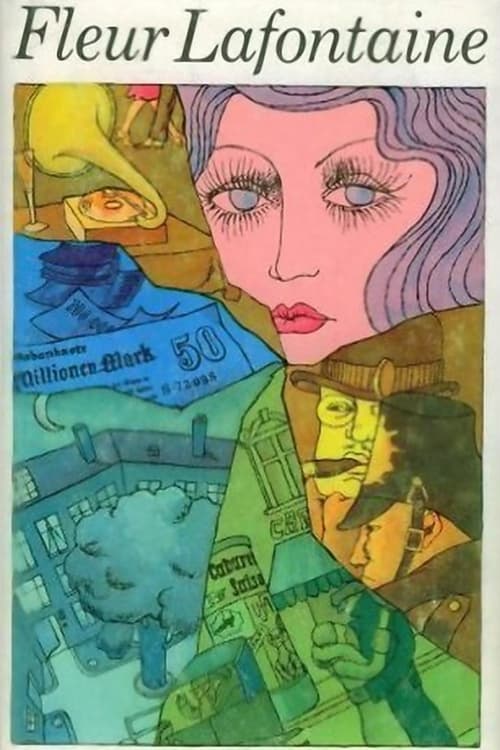
Berlin, 1948: Paralyzed and robbed of her memory, Fleur regains consciousness after a serious fall. The doctor treating her recognizes that her problem is of a psychological nature and encourages her to face up to her past. The daughter of a brothel owner is reluctant to look back: on a hapless childhood, her relationships with bon vivant Dr. Goldner and the politically committed locksmith Philipp (Hilmar Thate) as well as the difficult period of fascism... This exciting journey into the German past is based on Dinah Nelken's novel "Das angstvolle Heldenleben einer gewissen Fleur Lafontaine".
Fleur Lafontaine
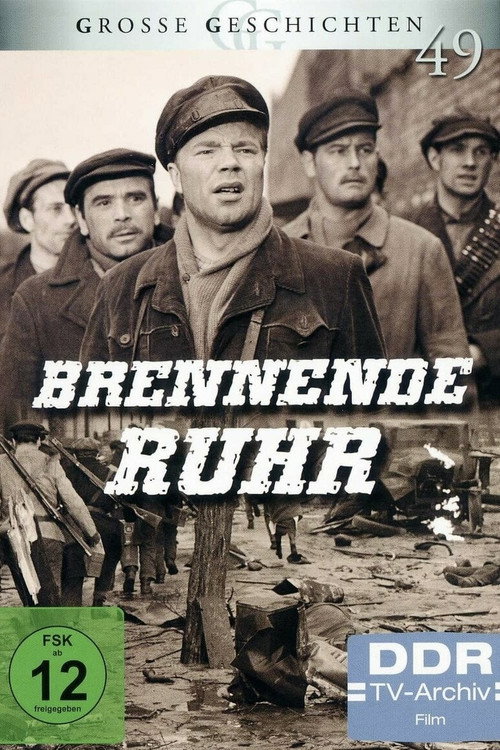
The events during the Kapp-Putsch 1920 in a small German town in the Ruhr district. The main protagonist is Ernst Sukrow, a student who sympathises first with the bourgeois forces but finally decided to join the communists in their fight.
Brennende Ruhr

In an act of friendship and solidarity between two mining towns in 1929, the locals of Kryvyi Rih, Ukraine, give their flag as a gift to the locals of Bergstedt, Germany in this GDR propaganda film. This quickly takes on a symbolic meaning for the miners in Bergstedt as the Nazi party demands that this Soviet gesture be erased and the flag be replaced with their own. The miner and communist party functionary Otto Brosowski publicly declares it his duty to defend this flag against every danger, and he keeps his promise despite his family being threatened by torment and torture.
The Banner of Kryvyi Rih

Using the example of three generations of a Hamburg working class family, the rise of the working class from the founding of the Wilhelmin Empire to the First World War, over the time of the Weimar Republic and National Socialism to the destruction of the Third Reich.
Verwandte und Bekannte

A wrestler finds his political interest and activism through sport. However, this is extremely dangerous during the Nazi era and the workers' sports movement starts a resistance against the Nazi regime...
Einer von uns
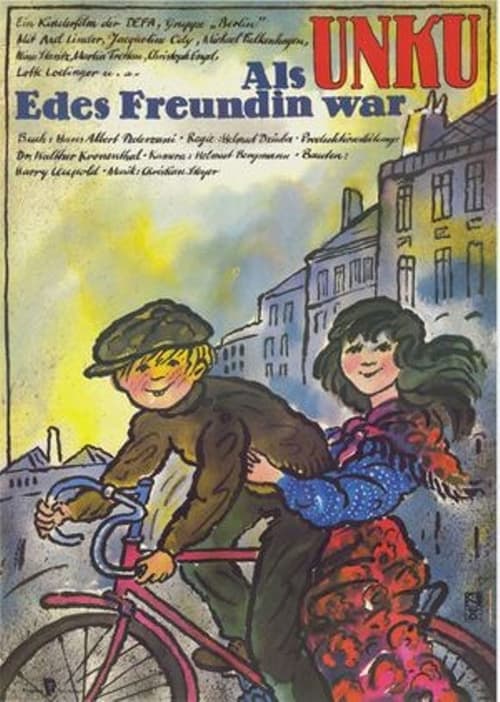
Ede falls in love with Unku, a girl from a travelling circus. Love cannot run smoothly however because Unku is a Gypsy. Various adventures take place before love is finally allowed to run its natural course.
When Unku was Ede's Girlfriend

"Je oller, je doller", say the roommates of pensioner Otto Panke, because they often see him together with the young Manuela, who likes to invent "dream jobs" for her life and dreams of an "exclusive life". But for Otto, the noticeable sympathy for the pretty, quite professional woman is simply "soul kinship". And since both have an extremely large degree of imagination, they are special, extraordinary - to a certain extent "spider fix"! The problem of the two is that they often get into tricky situations that threaten to get messy and they get a lot of problems. But as is the case with good stories: in the end, everything aims at a happy happy end...
Spinnefix

Johann Gottfried Schadow is only in his early twenties when he is put in charge of the royal sculptor's workshop in Prussia's capital Berlin. He is supported in this position above all by the fair ladies.
Künstler, König und Modell

Maria is a record saleswoman by profession. She is lucky to have a job, because the year is 1930 and a major economic crisis has hit the world, accompanied by an army of unemployed people, especially in Germany. Maria is aware of her good fortune; in order to secure it, she has to do without many things. What business owner would employ an unmarried woman with a child in times like these? When Maria became pregnant, she, like many other women, had to become "active" and do something about this "misfortune". So she seeks "help" from a female doctor, trusting in her youth and hoping for better times when family happiness could come true for her.
Maria und der Paragraph
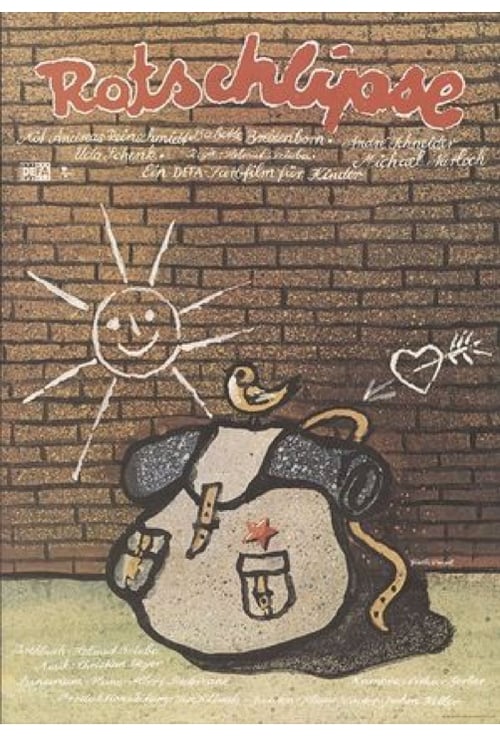
A group of children are trying to organize a pioneers detachment.
Red Ties
Berlin in the golden 20s. Like no other, the singer and cabaret artist Claire Waldoff found the right words for what the so-called “little people“ thought and felt. Her heartfelt songs with heart and snout triggered storms of enthusiasm and made Claire Waldoff famous. Kurt Tucholsky gave her the nickname "Sparrow of Berlin". With the beginning of the 1930s and the Nazi regime in Germany, the popularity of the Berlin original declined.
Claire Berolina
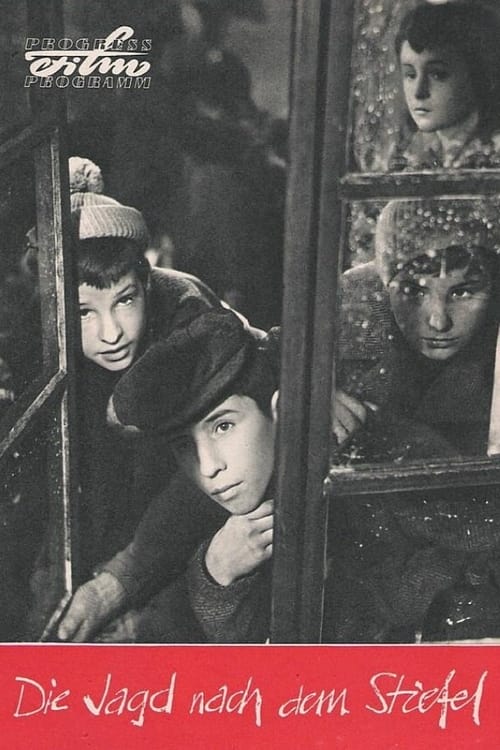
Germany 1932, constant fights between Communists and Nazis tear the country apart. When a Communist is found dead, the police accuses another Communist being his murderer. But the Communist youth group follows another trail - the murderer left a characteristic boot print at the scene of the crime.
The Hunt for the Boot

Using the example of three generations of a Hamburg working class family, the rise of the working class from the founding of the Wilhelmin Empire to the First World War, over the time of the Weimar Republic and National Socialism to the destruction of the Third Reich.
Verwandte und Bekannte
No description available.
Die Insel Gottes
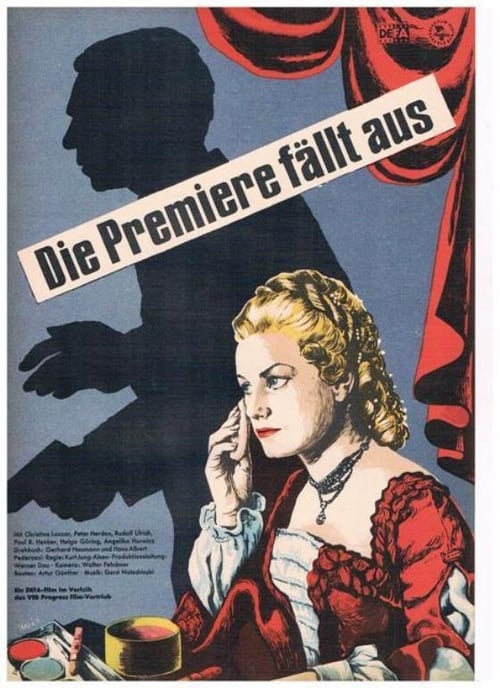
Research results of enormous value are stolen from the experimental laboratory of a chemical company in the fictitious town of Bärenfurt in the GDR and seized at the Berlin sector border. The trail leads to the agent "Haas" at the Bärenfurt municipal theater. Captain Jentsch is at the theater to uncover his identity and arrest him. A murder takes place during the "Fiesco" premiere. Many people are suspects, including the head of the theater, Born, who is engaged to the actress Vera and has a conspicuously apolitical attitude. It is no easy task for the security officers to distinguish between reality and appearance in this milieu. Through precise work, they succeed in unmasking the perpetrator and arresting him after a chase through the theater.
Die Premiere fällt aus
No description available.