Acting
Polizeiruf 110 is a long-running German language detective television series. The first episode was broadcast 27 June 1971 in the German Democratic Republic, and after the dissolution of Fernsehen der DDR the series was picked up by ARD. It was originally created as a counterpart to the West German series Tatort, and quickly became a public favorite.
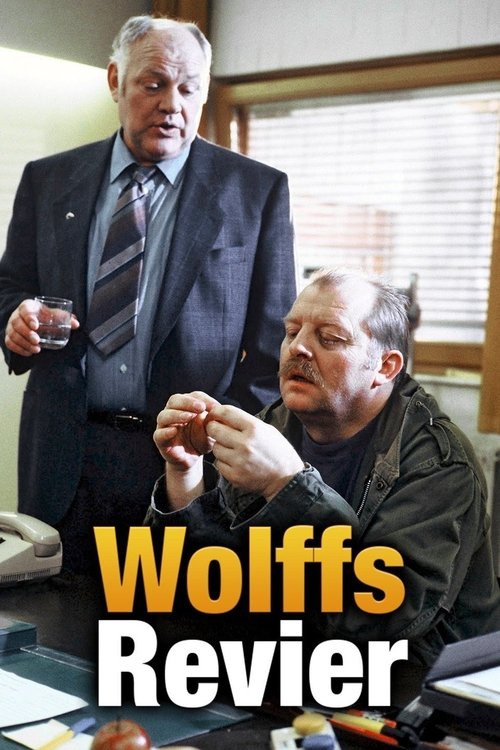
Wolffs Revier is a German television series.
No description available.
18-year old Georg and 13-year old Barbara have been playing together as children. Play becomes love later, which leads to a catastrophe , as their parents are hostile leading to file a report to the court, as Barbara is still under age.
In 1864, American soldiers massacre a Cheyenne village at Sand Creek. Disgusted by the massacre, Harmonika, one of the soldiers, deserts the army and is captured by the Indians. At first, the Cheyenne hold him responsible for the murder of the wife and the son of their chief Grauer Esel, but soon Harmonika obtains the tribe′s confidence.
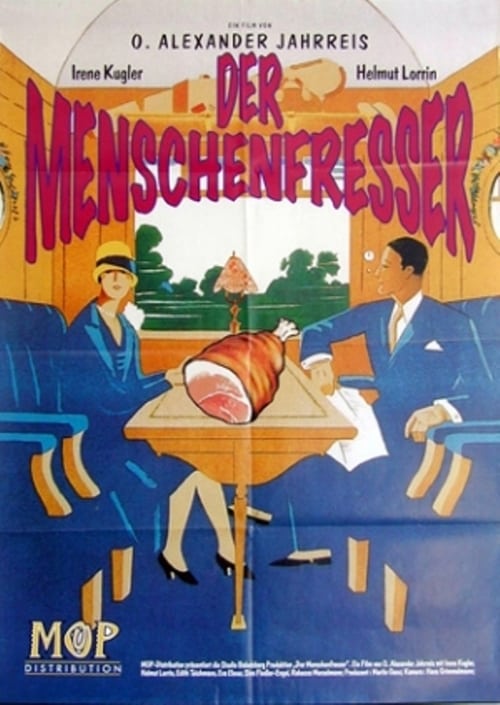
A crime writer on a train to Berlin shares her compartment with a mysterious man who claims to be a cannibal. Initially intrigued, she tries to humorously dismiss his claim while her imagination sparks a new novel featuring Detective Rosa Roth, who investigates a similar case. As the journey progresses, the writer’s confidence fades, replaced by fear and mistrust. The man’s behaviour becomes more unsettling, especially after a young girl reports inappropriate comments from him. In the dining car, he claims to have eaten a fellow passenger and reveals his tools are nearby. Despite her fear, the writer is drawn to learn more about his methods, blurring the lines between her novel and reality. Ultimately, her fantasy merges with reality, leading to dire consequences.
After the death of their father, 18-year-old Helene Raupe (“coccoon”) and her younger sister Asta come under the guardianship of the youth welfare office in East Berlin. Helene fails miserably as a fishmonger, fashion assistant and bus conductor, all jobs ordained for her by the authorities. The young woman really only “emerges” in her fantasies, where she can escape from her dull, normal life.
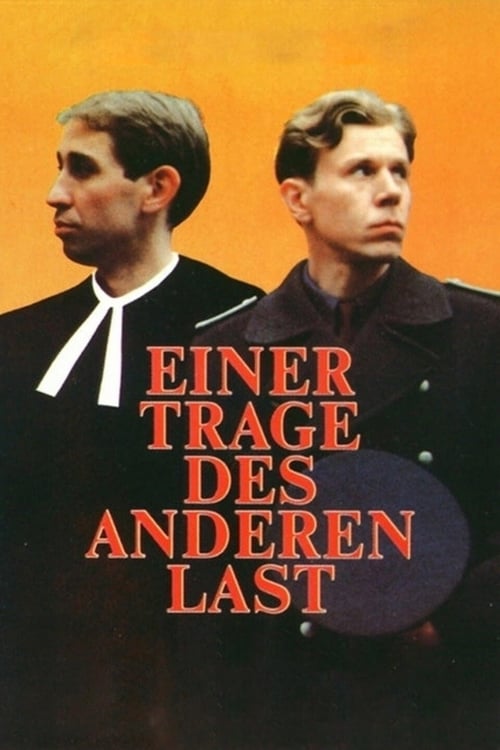
At the beginning of the 50s, two extremely disparate men meet in a private sanatorium for consumptives: an officer in the People's Police, Josef Heiliger; and a young Protestant curate, Hubertus Koschenz. On account of their consumption, they have to share a room. Initially, this is the only thing they have in common. The film explores Hubertus's struggle with his sexuality within the context of both the church and the socialist state.
Bad planning and shortages prevail on an East German construction site. Foreman Hannes Balla uses unconventional methods to overcome the problems. New Socialist Unity Party secretary Werner Horrath is charged with bringing the rough-and-ready builder crew into line. The task seems doomed to fail as the two men compete for the affections of young engineer Kati Klee. But when she gets pregnant by married man Horrath, he is in danger of being expelled from the party, and Balla takes his side...
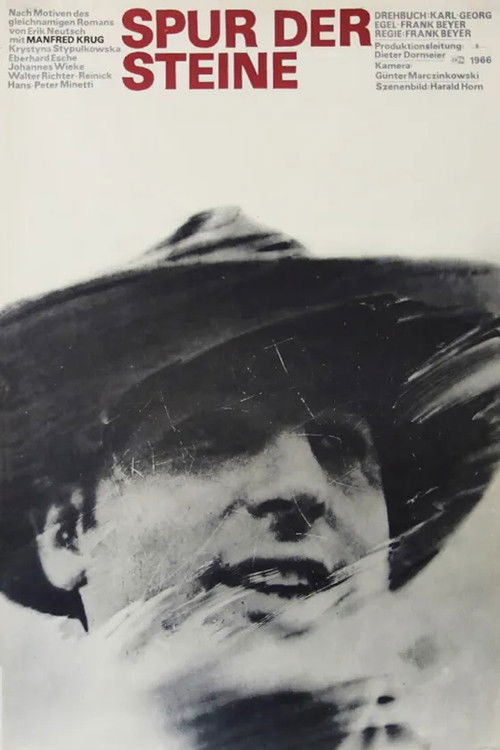
Was it an act of sabotage or willful negligence? The non-party engineer Heinz Solter is suddenly arrested and accused of approving a defective pipeline that caused a half million loss to his company. At first, the case seems clear-cut for the state prosecutor, but when he probes deeper, he discovers that Solter had acted against his better judgment due to the pressure from his career-driven and authoritarian boss.
South America at the beginning of the 1980s. A man is on the run from a group of armed pursuers. He does not manage to escape and is shot down mercilessly. Young Maria witnesses the cruel event and asks her friend, the journalist Oswaldo, to find out about the backgrounds of this case. The police also start to investigate the case and find out that a mysterious German farm is involved in the shooting. But the farm lies in an exterritorial area, thus the police officers cannot investigate any further.
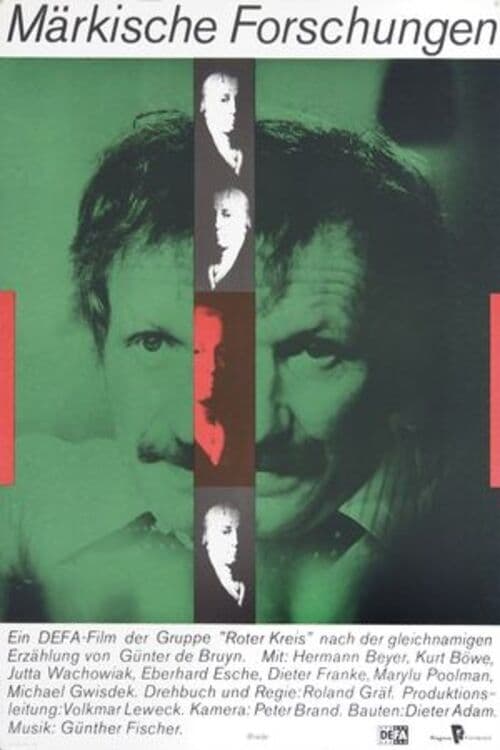
The starting point of the story is a scandalous affair that took place in West Germany at the end of the 1950s. It began with the unexpected death of a member of the Bundestag who was known to the public as a well-paid lawyer and influential man in politics. What was not known, however, was that he mysteriously died of poisoning in a foreign hospital for the poor. It was concealed that the deceased, as a contact person for a Swiss arms company, represented a West German arms contract worth 2.5 billion marks. The Military Counterintelligence Service tried everything to conceal the explosive events...
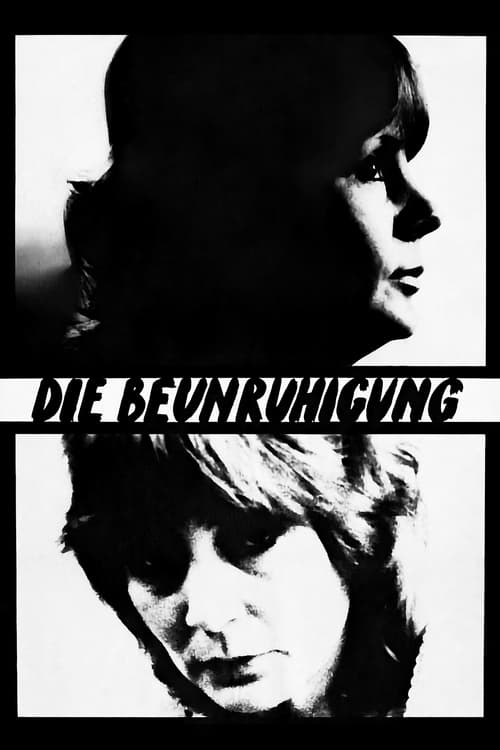
Inge Herold is in her mid-thirties. She is divorced and lives with her 15-year-old son. She works as a psychologist and social worker and is involved with a married man. Suddenly, Inge finds out she may have breast cancer, which would mean an operation the very next day. The 24 hours before the planned surgery puts her under enormous psychological pressure and she begins to reevaluate her life. With heightened awareness of matters of everyday life, she realizes that what she previously considered meaningful, was actually void of any real meaning.
Set against the backdrop of post-unification Germany, the film explores the breakdown of relations in a decaying social structure.
In a backwater town, opera director Andrej Wischnewsky is supposed to put on a production of Mozart's "Don Giovanni".
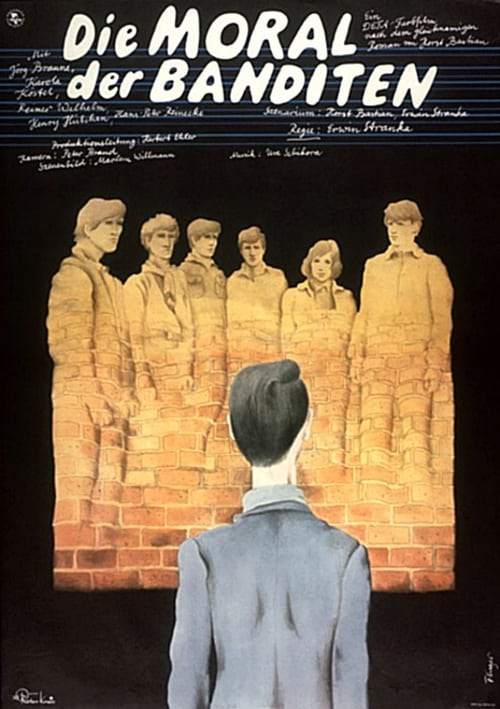
In a post-war village, children and young people come together to form a gang to do justice their own way. They go astray, commit crimes and have to realize that the 'objective chance to change life' does not necessarily coincide with their own subjective views and their implementation.
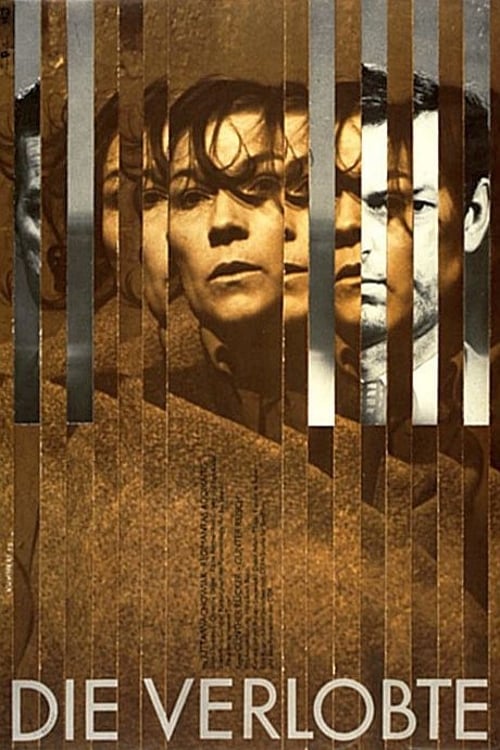
The wrenching story of a woman sentenced in 1934 to ten years in prison for antifascist activities. The love between her and her fiancée enables her to survive the tribulations of her time in prison, where she is one of few political prisoners.
In 1960, farmer Walter WagemĂĽhl learns from the West that his life is coming to an end. In order to pass the farm into loyal hands, he sends his adopted daughter Catharina to the East to marry his prudent nephew Ewald. The surprising request puts him in a huge quandary. He is about to take his final exams and the university officials have earmarked an academic career for him. But Ewald wants nothing more than to become chairman of the socialist cooperative in Hullerbusch. And now this too...
The main character Otto, the "best man", is a copy of the illustrious Mister Bean. He takes on an apprenticeship as a building-worker, which makes him a member of a building brigade. At the same time Otto tries to start a love affair, which he handles even clumsier. Never the less Otto makes progress with the lady in question, a single mother, who apparently doesn't mind. Actually he wanted her sister, but a retired Leninist party member changes his mind. This gives him the courage to persevere in his work, albeit with the helping hand of the obligatory retired party member. And behold, in the end Otto invents a new method of building, which saves the brigade many hours of work.
10-year-old Kathy Montag moves to a big city in Brandenburg. Before that, she lived in the Harz Mountains together with her father Peter. Her mother has died a few years ago. The girl finds her new home very exciting, and since Kathy takes an interest in everything she encounters, she keeps finding herself in peculiar situations such as a brigade party or the shooting of a historical epic movie. Her classmates consider her an oddball and even her father is unhappy about his daughter′s development.