Lamberto Puggelli
Directing
Known For
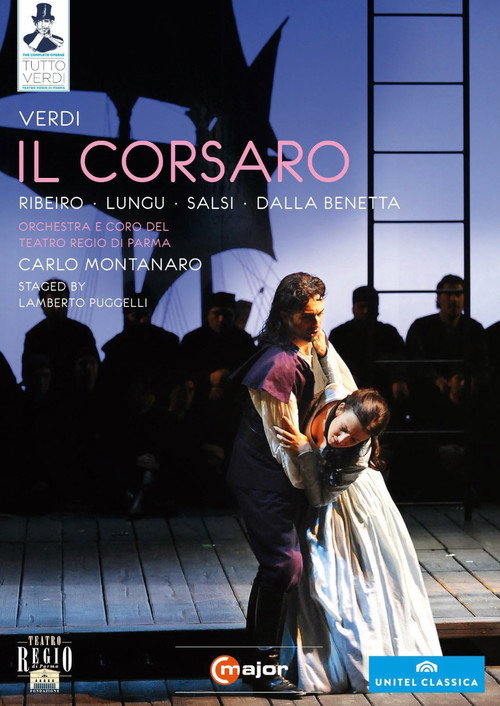
The corsair Corrado, having taken refuge on an island in the Aegean Sea, decides to launch an expedition against the Muslims, during which he is taken prisoner. Gulnara, the favorite of Pasha Seïd, falls in love with Corrado and helps him escape after murdering Seïd herself. Meanwhile, Medora, Corrado’s beloved, has poisoned herself upon hearing the false news of her lover’s death. She dies in the arms of her lover, who has returned too late. Corrado, in despair, throws himself into the sea, while Gulnara collapses, overcome by grief. “Il corsaro” is a lyric drama (“melodramma tragico”) in three acts by Giuseppe Verdi, with a libretto by Francesco Maria Piave, based on Lord Byron’s poem “The Corsair.” It premiered on October 25, 1848, at the Grand Theatre in Trieste. The opera was taken off the bill after three performances and replaced by “Macbeth.” From the “Tutto Verdi” box set of 27 Verdi operas. Recorded live at the Teatro Regio in Parma on October 19 and 21, 2008.
Verdi: Il corsaro
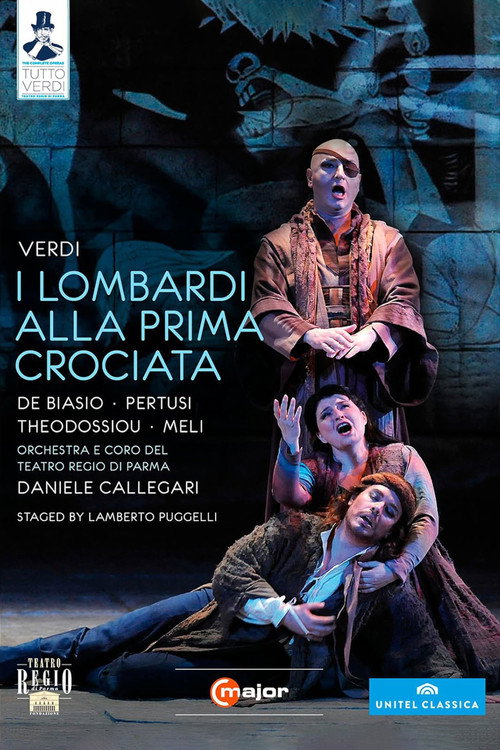
I Lombardi alla prima crociata (The Lombards on the First Crusade) was Verdi’s fourth opera and received its first performance at La Scala, Milan, in February 1843. The grandiloquent subject matter is fleshed-out with broad-brushed musical and dramatic effects and lavish choral scenes created a correspondingly impressive impact. A great success in Milan, it spread to the rest of Europe within a matter of only a few years.
Verdi: I Lombardi alla prima crociata
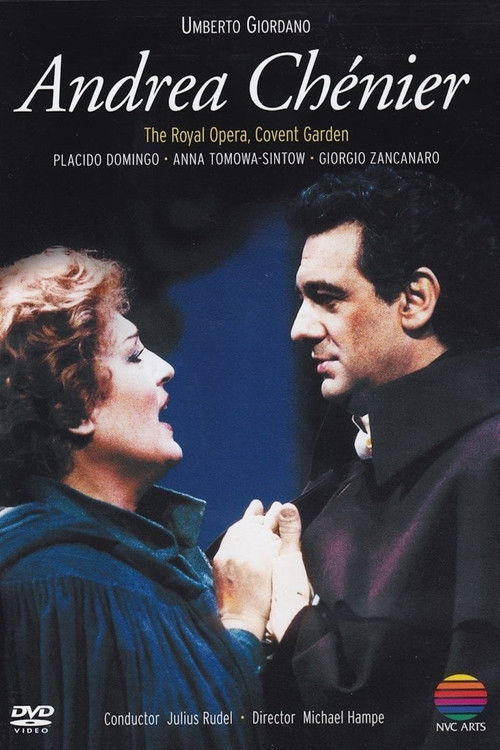
Live from ROH 1985. Giordano's Andrea Chenier is one of the greatest of verismo operas, full of heart-stopping big tunes and powerful emotional situations. If it is not as well-known as it should be, it is because in summary it sounds a little too like Puccini's Tosca: there is a tussle between political opponents over a woman, an attempt to save a condemned man, a tenor aria about writing poetry on the eve of execution. The difference is that Gerard (Giorgio Zancanaro) is not a villain like Scarpia, he is an idealist whom the French Revolution has betrayed as much as it has his rival the poet Chenier (Placido Domingo). His temptation to abuse his power to seduce the virtuous Maddalena (Anna Tomowa-Sintow) is a momentary one, though its consequences are terrible. There is a streak of post-Wagnerian decadence in much of this--Maddalena is at least as much in love with death as she is with Chenier, and the final love duet has a deeply sinister aspect. -- From Amazon.co.uk
Andrea Chénier
Francesco Cilea's Adriana Lecouvreur concerns a doomed love based on a real story about an actress involved in a famous love triangle. Mirella Freni sings the title part in this production that was broadcast on television originally in 1989. Gianandrea Gavazzeni conducts the orchestra. Live from La Scala, 1989
Adriana Lecouvreur
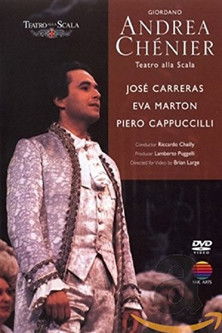
Live from La Scala Saturday 06 July 1985