Directing
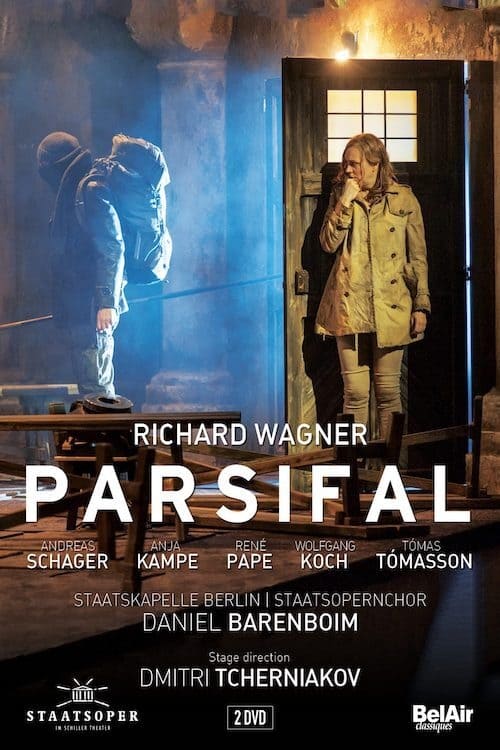
Wagner’s mystic masterpiece Parsifal at the Staatsoper Berlin, staged by Dmitri Tcherniakov and conducted by Daniel Barenboim. Wagner’s last opera, Parsifal is a medieval epic story marked by Christian, Buddhist and esoteric references. It is about redemption and renewal, but this new production by Russian director Dmitri Tcherniakov adds a jarring note : revenge. This “Festival Play for the Consecration of the Stage” is similar to a Medieval epic, a blend of metaphysical dreams and esoteric battles with constant spiritual references. This new production is directed by Dmitri Tcherniakov, conducted by Daniel Barenboim and sung by an international cast of excellent singers: Andreas Schager, Anja Kampe, Wolfgang Koch, René Pape, Tomas Tómasson and Matthias Hölle.
Glenn Gould is a global star for whom everything is going according to plan and who seems to be able to do whatever he wants. In a music studio near Central Park, he meets photographer Eleanor Weismann, the pregnant wife of composer Georg Weisman, and falls head over heels in love for the first time in his life.
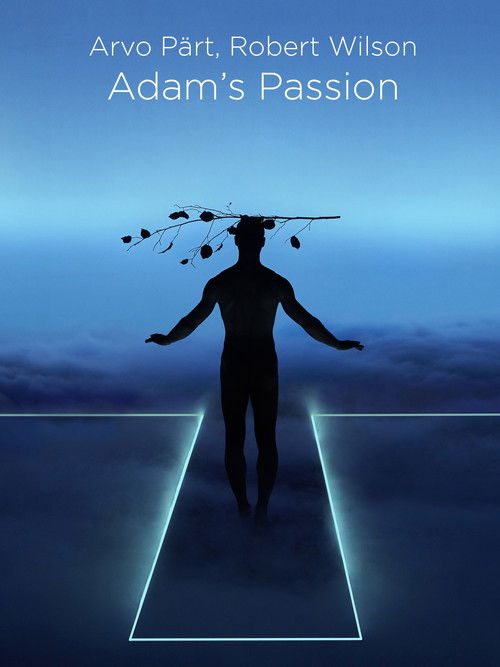
Adam’s Passion is the moving first collaboration between two “masters of slow motion who harmonize perfectly with each other” (Frankfurter Allgemeine Zeitung). In the spectacular setting of a former submarine factory, American director and universal artist Robert Wilson creates a poetic visual world in which the mystical musical language of the Estonian composer Arvo Pärt can cast its meditative spell. Three of Pärt’s major works – Adam’s Lament, Tabula rasa, and Miserere, as well as Sequentia, a new work composed especially for this production – are brought together here using light, space, and movement to create a tightly-woven Gesamtkunstwerk in which the artistic visions of these two great artists mirror each other.
No description available.
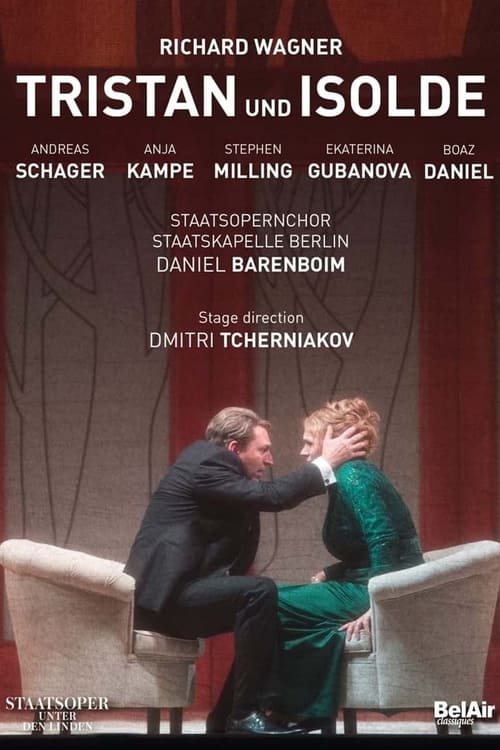
Rediscover one of the world’s most famous operas with Dmitri Tcherniakov’s modern staging at the Staatsoper Berlin. Performed repeatedly at the opera, the story of Tristan and Isolde is known far and wide—a love potion, a challenge to the king, a tragic destiny—its themes have become staples of the musical repertoire.
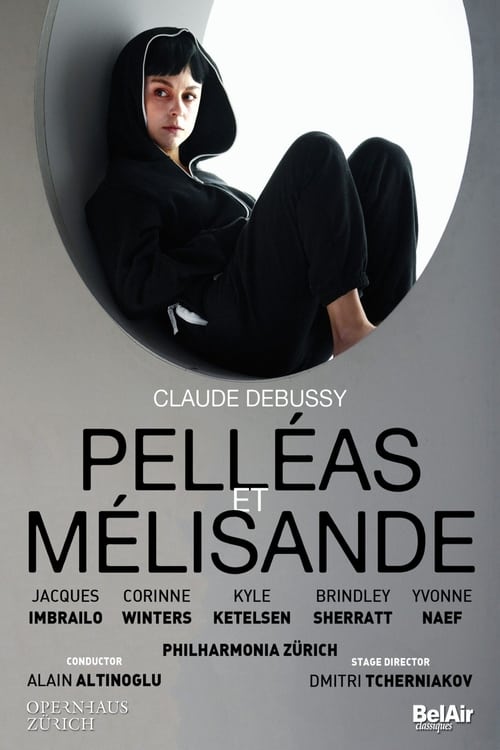
In this strikingly modern 2016 production from the Zurich Opera House, Tcherniakov transposes the opera’s intrigue from forest and castle to living room and psychiatric office. The love story of the original work remains riveting, but Tcherniakov brings an unexpected psychological element to his mise en scène, with Prince Golaud as a psychiatrist and Mélisande as a young woman suffering from PTSD. You’ve never seen Pelléas like this!
The purity of classical dance meets the opulant exoticism of the Maharajas' India in this 150-year-old ballet, glorified by Nacho Duato for the Mikhailovsky Ballet.
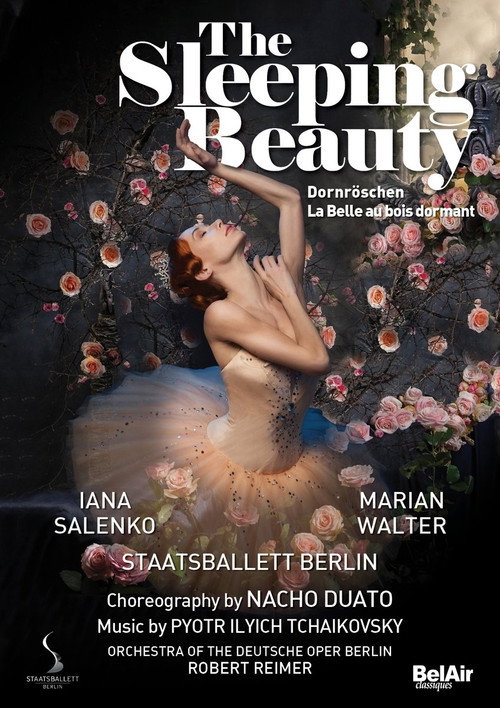
When she is finally released from an evil spell by the kiss of a young prince, the Sleeping Beauty awakes and is – inspite of a hundred years of sleep – as beautiful as a young woman. The love of the prince is simply stronger than the curse that rests on the haunted princess. The artistic director of the Staatsballett Berlin, Nacho Duato, has brought new life to this beloved classic, which itself is over a hundred years old and for which Tchaikovsky has composed the unforgettable music. The ballet Sleeping Beauty follows in its plot the French version by Charles Perrault: At her baptism Princess Aurora is cursed by the evil fairy Carabosse. On her 16th birthday the curse becomes reality. Aurora pricks herself on a spindle and falls into a hundred-year-long sleep. Finally, Prince Desiré finds the way to Aurora’s bed and kisses the princess awake. The inevitable end: a fairytale wedding.
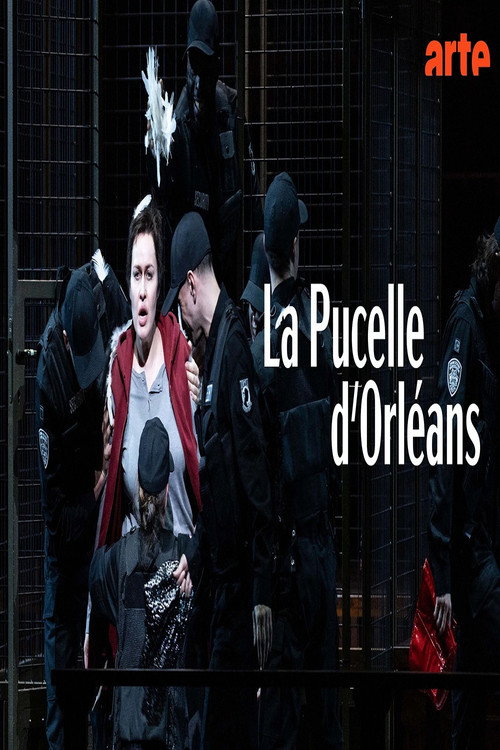
In a court trial, Joan of Arc is charged with high treason ... Dmitri Cherniakov presents a modern reinterpretation of Tchaikovsky’s least frequently performed opera, set entirely in a courtroom, with soprano Elena Stikhina in the title role.
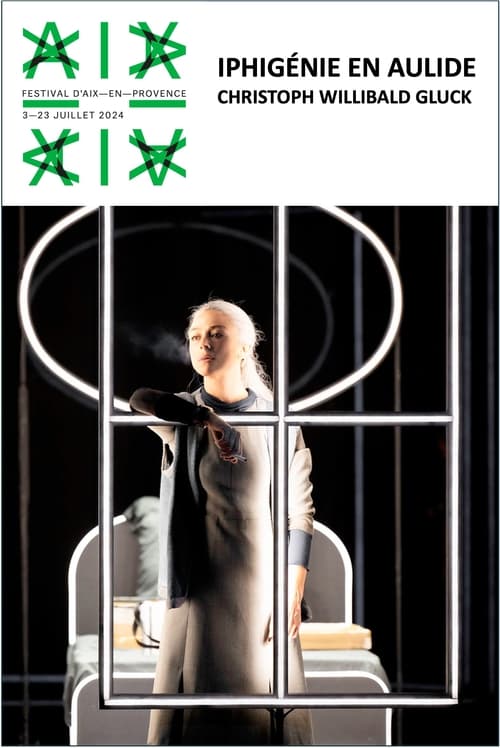
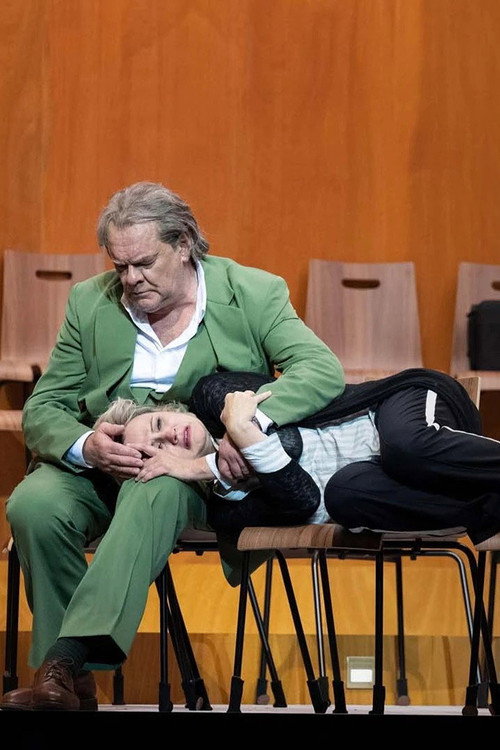
A decade before the French Revolution, in a country riven with bitter polemics, Gluck throws the history of opera into confusion by raising it to an unheard-of peak of tragic intensity. Experiencing his two Iphigenias in a single evening goes beyond the norms of operatic life: it is to enter the very heart of the curse on the family of King Atreus of Mycenae, to follow a logical destiny through a cycle of endless violence. How does the victim of Aulis become the murderess of Tauris? That is the burning question that Dmitri Tcherniakov must adress, plunging the spectator into the midst of a household haunted by the dead and setting in train an implacable process of dehumanization, with parallels to our world today. Conducting Le Concert d’Astrée, Emmanuelle Haïm drives this dual tragedy to the summit of its expressive power, leaving humanity to be translated through arias of the utmost poignancy.
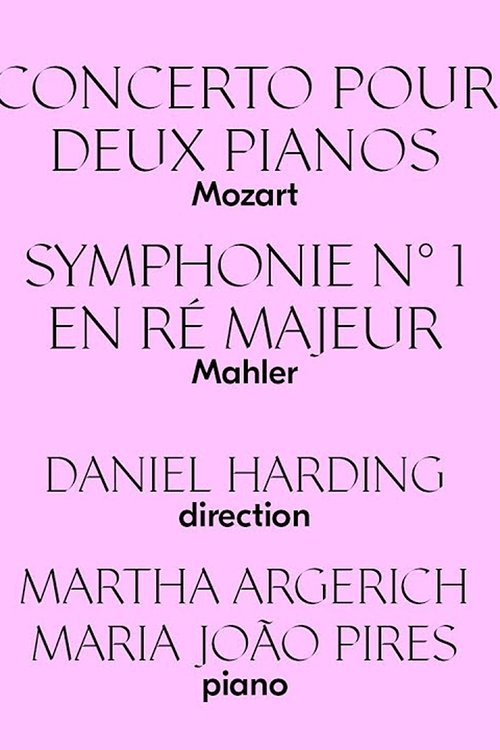
Star pianists Martha Argerich and Maria João Pires join British conductor Daniel Harding and the Orchestre de la Suisse Romande in Geneva's Victoria Hall to perform two major works by Mozart and Mahler. Programme: W. A Mozart: Concerto for Two Pianos in E flat major Gustav Mahler: Symphony No. 1 in D major
The second part of Richard Wagner’s monumental tetralogy in Dimitri Tcherniakov’s new production. He has thoroughly modernised the material and set the action in a research institute in the 1970s. Christian Thielemann is conducting *Der Ring des Nibelungen* at the Berlin State Opera, standing in for the house conductor Daniel Barenboim, who is unwell.
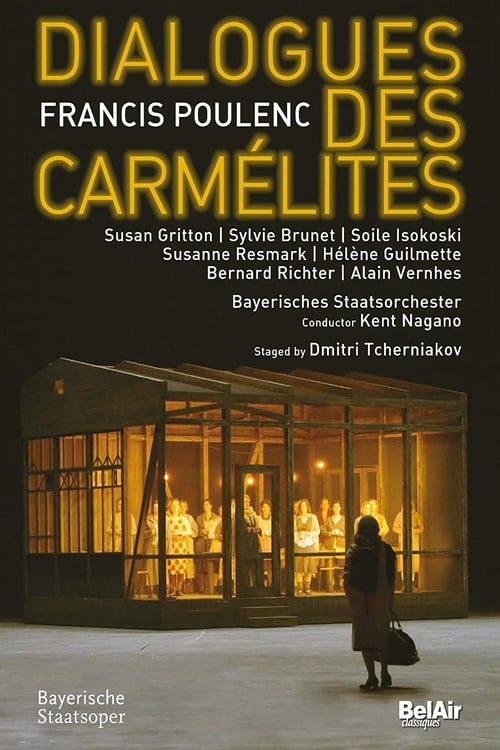
The first ever performances in Munich, this production was entrusted to Dmitri Tcherniakov, whose worldwide reputation is underpinned by productions like Eugene Onegin and Macbeth at the Paris Opera and Don Giovanni at Aix-en- Provence. The superb international cast includes a fine Blanche de la Force in Susan Gritton and an excellent Madame de Croissy by Sylvie Brunet, who was favourably compared to Rita Gorr in the press.
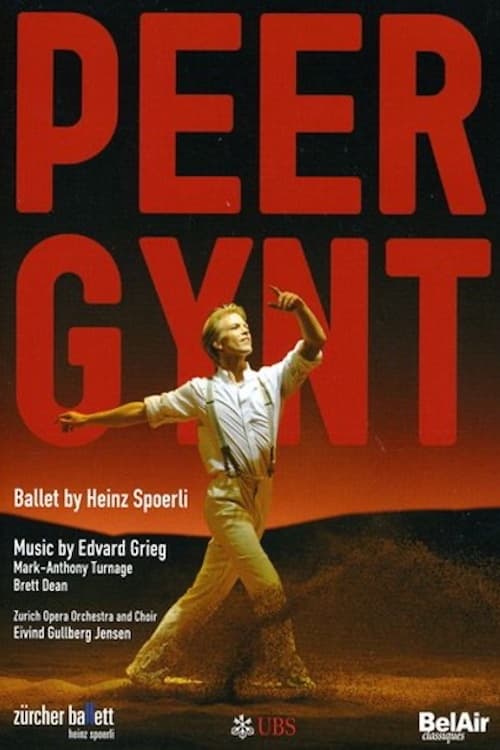
A dramatic, energetic adaptation of Heinz Spoerli's ballet based on Grieg's Peer Gynt by the Zurich ballet. Marijn Rademaker is excellent as the title character, clearly telegraphing the emotional range required. Each of the characters and the dramatic scenes are supported by the orchestral passages and songs provided by Grieg; some spoken word passages extracted from the Ibsen play.
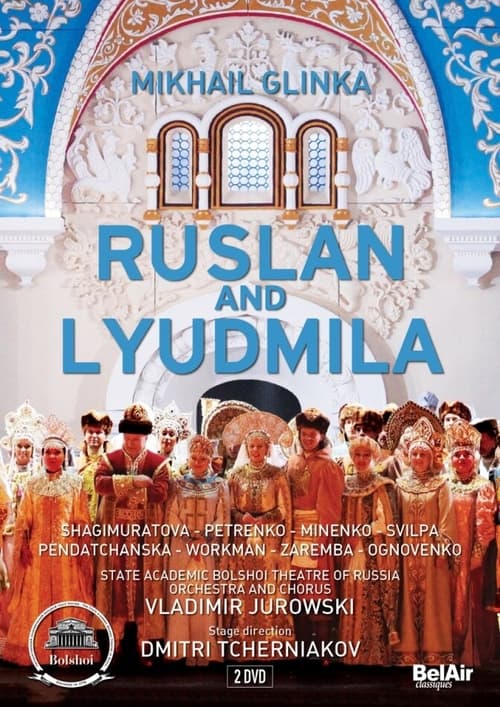
The reopening show of the historical stage of the Bolshoi Theatre by Jurowski and Tcherniakov. "Ruslan and Lyudmila", opera by Mikhail Glinka, has particular relation with the Bolshoï Theater, it held more than 700 representations throughout the history and nine different productions. Logically the fable of Mikhail Glinka (from a poem of Pushkin), symbol of the Russian opera, opened the season 2011-2012 of the majestic Moscow s opera, after its long renovation. This reopening inspired the director Dmitri Tcherniakov, who signed the direction of this new production. The new devices of the Bolshoi Theatre and its two giant screens are fully exploited in a spectacular staging. Tcherniakov transposes Glinka s opera at the 21th century with contemporary ambitions because of the "modernity of the subject", trying there to put forward "the deep feelings of the characters , exposing the protagonists to very modern temptations: a "harem" for Ruslan, a Thai massage for Lyudmila.
To celebrate the 100 years of the festival Arena di Verona and the 200th birthday of Giuseppe Verdi, two separate productions of Aida were staged. This modern version was staged by La Fura dels Baus.
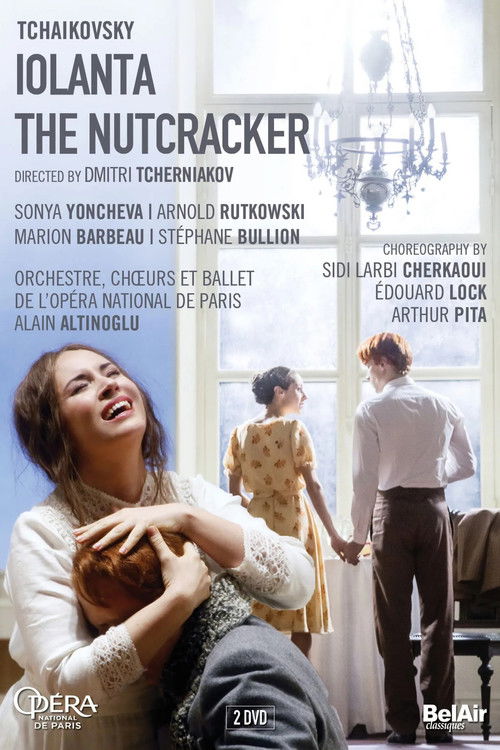
To bring together again, for the first time since their premiere on a December evening in Moscow, Tchaikovsky’s opera Iolanta and ballet The Nutcracker, was the audacious challenge that Russian stage director Dmitri Tcherniakov accepted for the Palais Garnier in Paris in March 2016 : a revolutionary production, which was to become one of the key events of the Paris Opera season.