Acting
No description available.
Günter Walcher, 40-years-old, is a hardworking, apolitical West German businessman caught in a moral conflict. He is offered a promotion to become the head of a division—on the condition that he find a reason to fire Zacharias, a communist and the work council chairman.
Saniye is offered a career advancement by her boss as a wedding present. But instead of being happy, the previously modern young woman suddenly feels the need to become a mother. Her fiancé Tom is not enthusiastic about Saniye's reproductive instinct. The two of them suddenly embark on a fatal journey into the all-promising, passionless world of fertility medicine, with their relationship falling by the wayside.
October 1918: Karl Liebknecht is released from prison and Berlin workers celebrate his release. Although WWI is almost over, the German Kaiserreich in vain sends its last reserves to the slaughter. The working class is in a rebellious mood; the uprising of Kiel’s sailors against war and militarism sets off a call for revolution led by Liebknecht. On November 9, Liebknecht declares the Free Socialist Republic of Germany. But pro-Kaiser military and right wing Social Democrats oppose him.
Four-part miniseries about the theologian Thomas Müntzer, who became a revolutionary and opponent of Luther during the Peasant War in 1525.
Twelve-year-old Isabel and her mother, who was a famous political singer, had to escape Chile after the 1973 military coup. Isabel’s father stayed behind fighting in the underground. For six years, they have lived in a new apartment building in East Berlin. At first, the neighbors made an effort to welcome them, but later became more distant. Isabel does not feel at home in the strange country. Not even her friendship to Philip, the neighbors’ son, can change her mind. Almost every day, Isabel sits on the stairs waiting for a letter from her father, from whom she has not heard for many years.
Soldier Ignaz Wolz returns from WWI with an immeasurable hatred of capitalist war profiteers. He decides to start his own revolution, but tries to stay away from the organized class struggle. He steals from the rich men and divides the wealth among the poor. One day, Wolz is arrested and sentenced to life in prison; seven years later he is released due to mass protests. More than ever, it is hard for him to fit in. He severs ties with his former companions, who reject his ideas, and leaves Germany.
The deportation of 4000 Jews from Budapest to Auschwitz in July 1944, as told by George Tabori, and how the narrator’s mother escaped it, owing to coincidence, courage and some help from where you’d least expect it.
Daniela – a single mother, whose boyfriend left for the US – believes wholeheartedly in Cuba's revolutionary new order. Meanwhile, in Florida, a plot is afoot. Under the command of an American officer, four Cubans ex-patriots and a Guatemalan land on the Cuban coast to prepare a US invasion of the island. Daniela's superior, the corrupt Cuban officer Palomino, is secretly helping the invaders and the young woman becomes entangled in the intrigue.
Private detective Fritsch from Munich had received a lucrative assignment: he was to obtain proof of inheritance for a Mr. Seligmann from Canada; this would bring the client a sum of five million dollars. He is therefore looking for an old document that was hidden in a valuable painting that disappeared decades ago. The starting point is a trail that leads to a town in Poland. The painting in question is said to have disappeared there in the final years of the Second World War. But the object of desire cannot be found here, and a new clue points to a grave in Frankenthal in the German state of Rhineland-Palatinate. Fretsch then found out that the painting must probably be in the villa of a personality with significant influence in the economy and politics of West Germany. Fretsch manages to get in touch with the wife of the presumed new owner of the painting and to find out the secret of his rise to multimillionaire status. But the people concerned use their resources to counterattack.
Two adolescents, Sauly and Mick, get to know each other while hitchhiking and stick together for the long haul. They both want to reach the ocean, which is some thousand kilometers away. An old car picks them up, but the trip ends shortly thereafter in a sleazy motel. At the bar, a man named Landolfi approaches them. He explains to Sauly that he must have sold his guardian angel to a man by the name of Miller in the city of Prince. Though the boys do not believe in guardian angels, Sauly slowly succumbs to his own fears. He would like to have his guardian angel back again. On their trip, Sauly becomes sick. Mick works on a farm to pay the doctor's bills. Once Sauly is well, they travel farther - until they reach Prince. In this mysterious city, all of the people are named Miller, and once Sauly and Mick finally are at the ocean, they meet Landolfi once more.
The "Astoria", an English luxury liner, collides with a freighter shortly before the end of its voyage and threatens to sink. Captain Mitchell, successful and envied, sets in motion an expensive rescue operation. He manages to avert a catastrophe and bring the passengers and the ship to safety. But the shipowner considers the operation excessive, calls Mitchell a coward and fires him. His career seems to be over. When his friends and his fiancée also make fun of him, he devises a cunning plan of revenge.
The paths of many people cross before Christmas Eve. Each of them has their own special story to tell on this day... On the morning of December 24, the doctor at the children's clinic leaves the hospital with a happy heart. The parents of little Matthias have reconciled with each other. As a farewell gift, the porter gives her a chocolate Santa Claus, which is to be passed on many times that day: at one or two fleeting encounters, as a nice gesture for other people. Fate plays a bit of a servant Ruprecht and distributes his gifts. Two lonely hearts are in a hurry to escape the hustle and bustle of the festive season. An accident brings them together. In exchange for a bottle of champagne to mark the shock, the sweet chocolate man switches to Ilse's divorced husband, who is drawn back into the bosom of the family at the same time every year.
In the 22nd Century, antiquities command huge prices. A woman uses a time machine to travel back the the 19th Century in order to buy paintings from Vincent Van Gogh before he was famous. Will she be wealthy upon her return?
A little boy tries to keep a huge Newfoundland dog in his family's apartment.
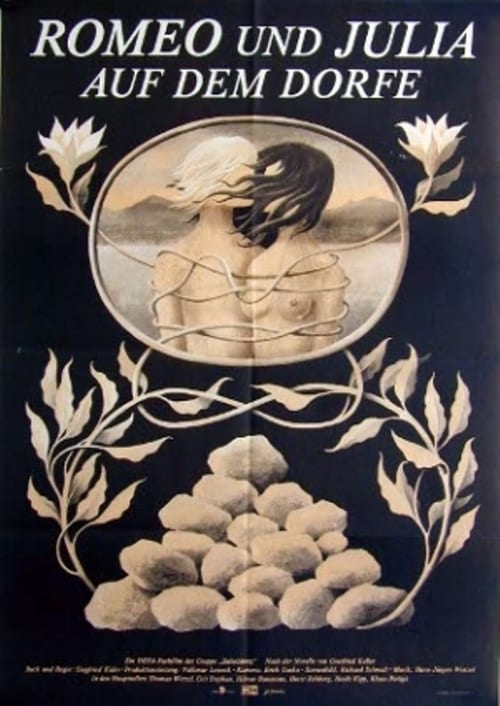
Two farmers, Grimm and Melcher, were once on friendly terms, but a petty argument over a piece of land has since turned them into implacable enemies. Their two children- Veronika and Fabian- used to be childhood friends. When they meet again as young adults, they instantly fall in love, despite the bitter feud between their families. With no hope for a future together, the two seek to end their lives in this retelling of the classic story by Shakespeare.
Historical television comedy around Friedrich Alfred Krupp, whose connection to the imperial court and the influence of Kaiser Wilhelm II. to the Krupp family. Not yet 50 years old, the "cannon king" dies in 1902. The emperor holds a memorial speech sown with threats against the "inner enemies". Telltale secret files emerge, strange amorous adventures are in the game.
Second-hand car sales man Willenbrock has everything that he could ever wish for. He is married, has two lovers, a cottage in the German city Grünen, and a BMW. Yet one day while at his cottage he gets mugged and his life is drastically changed. Little by little the world he once felt safe in falls apart around him.