FEEL IT.STREAM
?

Mike Peters

Acting

Biography

Mike Peters was an Army Air Corps Officer who has been leading battlefield tours for more than twenty years. He joined the Army in 1980 at the age of 16 as a Junior Leader and progressed through a busy career to become a Regimental Sergeant Major. He was commissioned from the ranks in the year 2000. Mike's final job was as a Major working as a staff officer in the Attack Helicopter Force. Mike has extensive operational experience in Northern Ireland, Macedonia, Bosnia, Kosovo and Iraq where he served during both Gulf wars. He has recently returned from a tour in Afghanistan. This experience and knowledge of tactics, give him a soldier's eye for ground and the implications of terrain on the weapon systems of your chosen period. He has a passion for military history which he combines with his own military experiences when working as a battlefield guide. He strives to place his audience on the field of battle with enough insight to understand the realities of battle, while helping them to imagine what the soldiers of the day saw and felt. This focus allows the listener to look at the battle from the inside out; this is of course every battlefield guides aim. The campaigns of Wellington are Mike's favorite subject area although he is equally at home working with groups on the battlefields of the Great War. Most recently he has begun to specialize in leading Australian and New Zealand groups over the ANZAC battlefields of Flanders. Intimate knowledge of modern Air Assault operations also enables Mike to focus on the detail of the parachute and glider operations of World War Two. He regularly leads tours visiting the Landing Zones of Sicily, Normandy, Arnhem and the Rhine crossing. Mike enjoys touring with school groups or adults and is regularly to be found on the continent working for Anglia Tours or leading battlefield studies with military groups. He regularly contributes articles to military journals and magazines. Mike is also a published author – he wrote 'Glider Pilots at Arnhem' – a book on the exploits of The Glider Pilot Regiment during Operation Market Garden. He has also worked as a presenter with Battlefield History TV, being involved in films on Pegasus Bridge, The Glider Pilot Regiment, Operation Market Garden and the Waterloo campaign. His latest book is on the British Airborne landings on Sicily. Mike was awarded his guild badge by the late Richard Holmes in November 2005 and was Vice Chairman of the guild from 2010-2011. Mike was appointed Guild Chairman in late 2011.
Known For

No image

On the 22nd of August 1914 the recently deployed BEF fought and delayed the German First Army of Von Kluck in around the industrial coal mining town of Mons. After 2 days of hard fighting the 3rd and 5th Division of II Corps, assisted by the Cavalry division, having borne the brunt of the battle withdrew South West in the direction of Paris. Whilst this battle was in reality a minor Corps action, when taken in the context of the Great War, it showed that the British regular soldier was more than a match for the German army when he was properly led and not vastly outnumbered by guns and men. This film shot on the battlefield tells the story of this 2 day battle bringing out the heroism and skill of the”Old Contemptible s “in delaying and escaping from Von Kluck’s attacking force of 6 Infantry and 5 Cavalry Divisions.

Mons 1914

2014Movie
No image

While the Allies were nearing panic as the Germans approached Paris, Marshal Foch quickly realised the German intent and that the Schlieffen plan was unravelling. In a master piece of military diplomacy he persuaded Filed Marshal French to join the Attack on the exposed flank of the Germans as it wheeled to the east of Paris. The battle was indeed a miracle, with the British playing a key part alongside the French in halting the German advance and driving them back behind the next river – The Aisne, where the Allied attack crossed the river and up onto the open ridges of the Chemin des Dames. The Germans held firm and Field Marshal French ordered the BEF to dig-in as a temporary measure but the line moved but little here in the next four years.With neither army able to make headway against modern small arms, the machine gun and quick firing artillery in a conventional frontal battle, the armies raced to redeploy into the uncontested ground north to the sea.

Battles of the Marne & the Aisne

2015Movie
No image

Following the Battles of Mons and Le Cateau the already near exhausted British Expeditionary Force, who had been marching and fighting for six days without a break , embarked on a nine day epic march across France. They headed back to the safety of the far side River Marne south of Paris rather than to the traditional haven of British Armies – the Channel Ports.The BHTV team of historians and battlefield guides take us to the scene of some sharp rear guard actions fought during the Retreat from Mons including the great cavalry actions at Cerizy and Nery, where the mounted British soldier established domination of his German counterpart. As they travel the highways and byways of France they analyze the decisions made by the commanders in that fog of war that together spelt the end of the Schlieffen Plan and set conditions for the 'miracle of the Marne'.

Néry and the Retreat from Mons

2014Movie
No image
6.5

On 11 July 1346 Edward III's Anglo/Welsh army landed at St Vaast in the Cotentin Peninsula. Over 12 months this army won 3 major battles Caen, Blanchtaque and Crecy and captured Calais, which would remain in English hands until 1558.This campaign was the first major chapter in the story of what was later called the 100 years War.This campaign is not only notable for the military victories of Edward and his army but for the way it reshaped warfare on the continent, the English had arrived as a major military player. The use of Chevauchee employed by Edward's army whilst not new was used in an intelligent manner to bring the French to battle. Once the French were brought to battle Edward's Army, consisting mainly of yeoman archers and infantry, was able to beat and destroy the French Army consisting mainly of nobles by a combination of leadership, tactics, discipline, courage and technology (The Long Bow).

100 Years War: Crecy 1346

2013Movie
No image

Following on from Hougoumont and D'Erlon's Attack, Part III starts just as the great battle reaches its crisis point. Marshal Ney launched thousands of France's finest heavy cavalry against Wellington's thinning lines who had already taken a terrible battering on the Mont St Jean Ridge. Wave after wave of armoured horsemen broke against the steady squares of British, Dutch/Belgian and German troops. The crisis, however, took a further turn for the worse as the key bastion in Wellington's centre, the fortified farm of La Haie Sainte, fell to the French onslaught. The way to Brussels was now open and Wellington muttered, 'Give me Blucher or give me night'. With the situation looking bleaker by the second for Wellington and his troops, Napoleon fatefully hesitated to complete the coup de grace as the Prussians had closed in on his right flank at the Village of Plancenoit. Would the Young Guard be able to hold Blucher's men? There was all still to play for.

Cavalry Charge: La Haie Sainte & Plancenoit - The French and Prussian Attacks

2011Movie
No image
UpcomingDate TBD

Following on from Ligny and Quatre Bras, Part II starts by focusing on the concentration of the Allies on the ridge of Mont St Jean and the plans of the opposing armies. While the guns of the Grand Battery thundered in the centre, French columns bore down on the Hougoumont chateau and farm complex, which protected Wellington's flank held by the Guards and their German allies. Thus began an epic 'battle within a battle' that sucked away valuable troops from Napoleon's main attack, causing Wellington to declare that 'the battle turned on the closing of the gates at Hougoumont'.Meanwhile D'Erlons Corps attempted to bludgeon its way through Wellington's centre, not knowing that the British and Dutch line was in waiting on the reverse slope. Upon seeing the French advance, the British released a disciplined volley of musket fire that checked the French. A further brilliantly timed charge by the Household and Union Cavalry Brigades finally saw the French off.

The Waterloo Collection: Hougoumont and D'Erlon's Attack

Movie
No image
1.0

On the 6th June 1944, Maj Howard’s Coy of the OX & Bucks LI carried out one of the greatest and most successful small unit actions in history in capturing the two Orne Bridges as a precursor to D Day. The initial part of the film traces the development of the British Airborne Forces to the stage where they can play a major part in the allied plan to storm Hitler’s Fortress Europe. The BHTV team then tell the story of this heroic action and the equally heroic follow up actions of 7 Para in holding the bridges against the might of 21st Pz Div. This action exemplified the British soldier at his best whether in The Glider Pilot Regiment, The Glider Infantry ( Ox & Bucks)or the Parachute Regiment, all showed courage skill and commitment.

Assault on Normandy: Pegasus Bridge

2010Movie
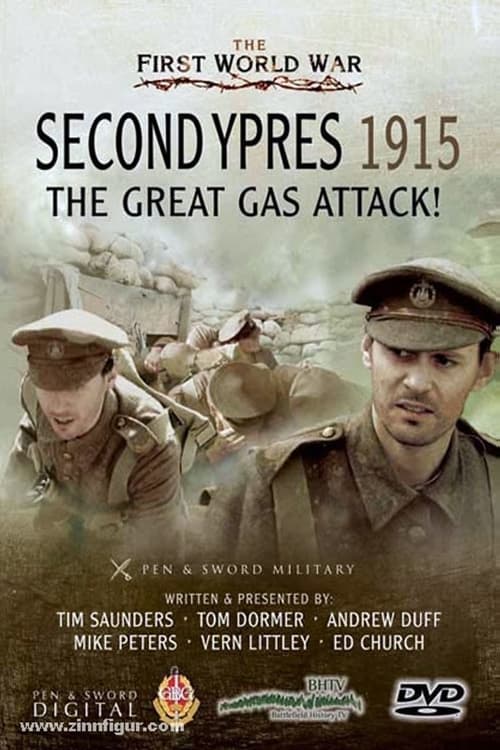
Second Ypres 1915: The Great Gas Attack

The Second Battle of Ypres was fought from 21 April–25 May 1915 for control of the strategic Flemish town of Ypres in western Belgium, following the First Battle of Ypres the previous autumn. It marked the first mass use by Germany of poison gas on the Western Front. For the first time a former colonial force (the 1st Canadian Division defeated a European power (the German Empire) on European soil, in the Battles of St. Julien and Kitcheners' Wood. In the now established BHTV style, the BHTV Team join a selection of historians on the ground to explore the actions of Second Ypres and analyse the significance of what was the first former colonial victory on European soil, the first major use of a terror weapon and the knock on effects of the virtual destruction of the BEF. The team explain the bravery shown by the troops on the ground and the horrors they faced from the advancing German gas clouds.

Second Ypres 1915: The Great Gas Attack

2015Movie
No image

Jumping in to Drop Zones eight to ten miles from Arnhem on the second day of Operation Market Garden was always going to be difficult for Brigadier “Shan” Hackett's 4th British Parachute Brigade. With little information on how 1 Para Brigade's battle went the day before or what faced them on the ground the stage was set for an epic battle. John Waddy, v company commander in 156 Para Battalion and a team of Arnhem experts cover the ground where 4 Para Brigade fought with 9 SS Pz Div in the woods to the west of Arnhem in what was to be an unequal but heroic battle; the result of a flawed concept and plan.Driven back the Brigade was withdrawing across LZ P when the Polish heavy lift gliders swept in to cause. Captain Quirepel was awarded a posthumous Victoria Cross for his action in helping stem the enemy advance long enough for the Paratroopers to escape across the railway embankment by nightfall.

Operation Market Garden: Arnhem - Battle of the Woods

2012Movie
No image

With 2 Para isolated at the Arnhem Bridge and both 1 and 4 Para Brigades thwarted in their attempts to fight their way into Arnhem and falling back, what became the Oosterbeek Perimeter started to form around Divisional HQ at the Hartenstein Hotel. Beaten but not defeated, the remnants of 1st Airborne Division fought a grim battle with the SS supported by reinforcements and armour rushed to Oosterbeek from all over the West. Veterans and experienced battlefield guides vividly relate their experiences and take the viewer to the scene of the action. The seven days of grim and bloody fighting in the Oosterbeek Perimeter was amongst the hardest fought of all the battles in the West. It was one that the SS veterans of the Eastern Front in the Hohenstaufen Division christened the Hexenkessel or “Witches Cauldron”. All the while the the airborne soldiers were waiting for XXX Corps to arrive from the south, with the enemy pressing ever closer.

Operation Market Garden: Arnhem - Battle for the Oosterbeek Perimeter

2012Movie