Directing
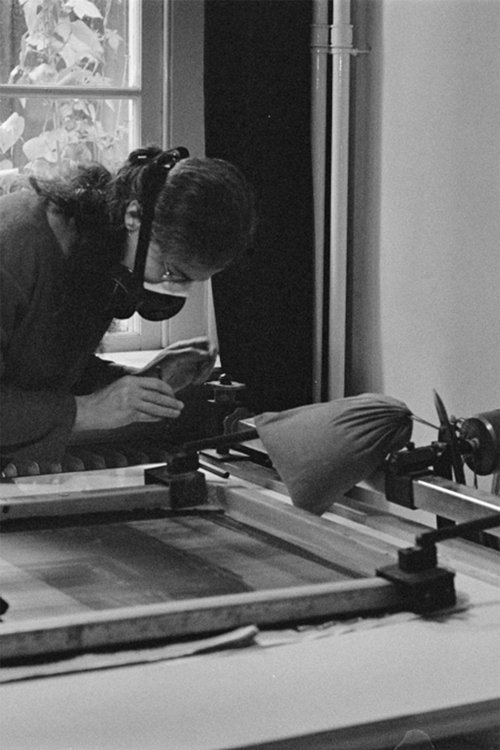
“It all begins with how you feel on a bridge… You see how other people are busy and how you experience it yourself and so it becomes something about people.” The artist Marian Plug speaks to filmmakers Stansfield/Hooykaas while composing her large and intricate silkscreen “The Bridge.” After filming the many different types of bridges around Amsterdam, they interview workers who clean, paint and repair the bridges. Anchored by a buoyant electronic soundtrack by British composer Delia Derbyshire (known for her groundbreaking work with the BBC Radiophonic Workshop), the filmmakers brought Derbyshire to Amsterdam for the shoot, so that they might create ideas together and so that she could experience the rhythms of the city. The film explores different ideas of work, connection and positioning: a bridge means something different to a builder, an architect or someone walking over it.
The title of this video work, ‘Running Time’, refers to its duration. A figure running in landscape from infinity towards and past the camera is foreshadowed by a repeating image of himself. The soundtrack, treated similarly to the image, is made from recycling loops of a heartbeat. Both image and sound progress from the unidentifiable to the recognizable. In close relation to other works from this period, the central focus is on the pattern of lines that function as the basic building blocks of the video image, structuring visual representation in a significant way.
Art film part of the REWIND + PLAY, An Anthology of Early British Video Art box-set.
Short film by Madelon Hooykaas and Elsa Stansfield.
Short film.
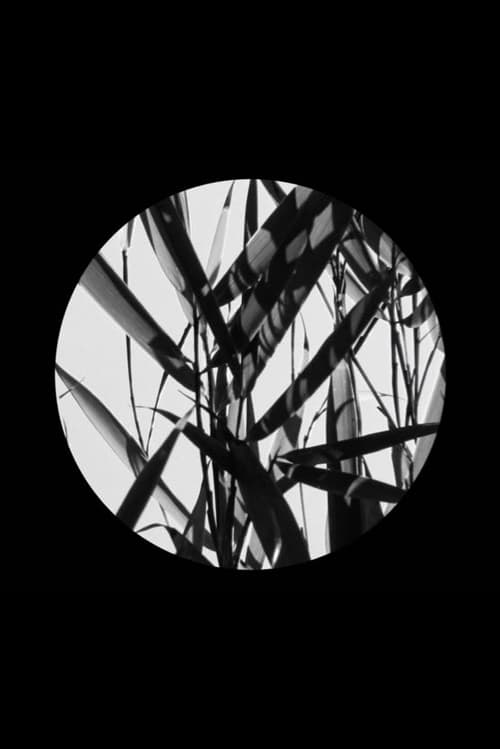
‘The Force Behind its Movement’ is structured in four parts, corresponding with the cardinal directions – West, South, East and North. These parts/directions have in common that they appear through or because of the wind. The work opens with the text: ‘We only see the fluttering of the flag. The force behind its movement remains invisible.’ Next, the camera, attached to a wind vane, moves around chaotically. Curtains are waving softly, affecting our view of a block of flats. The camera determines our view, literally, by alternatively focusing and moving out of focus. Then the curtain flaps in front of a screen, which shows Marilyn Monroe wearing a number of tulle shawls. This cover aimed at revealing more than it covered. But the tulle curtains prove exactly the opposite, because the viewer in fact reverts to being a voyeur again.
A poetic meditation honouring the friendship and creative working relationships between Madelon Hooykaas, Li Yuan-chia (†1994) and Delia Derbyshire (†2001). Inspired by the Japanese concept TEN-CHI-JIN, meaning sky-earth-person, it draws from images, text and sound by the three artists and footage from the Hubble Telescope. Soundtrack by Caro C.