FEEL IT.STREAM
France Gall

France Gall

Acting

Biography

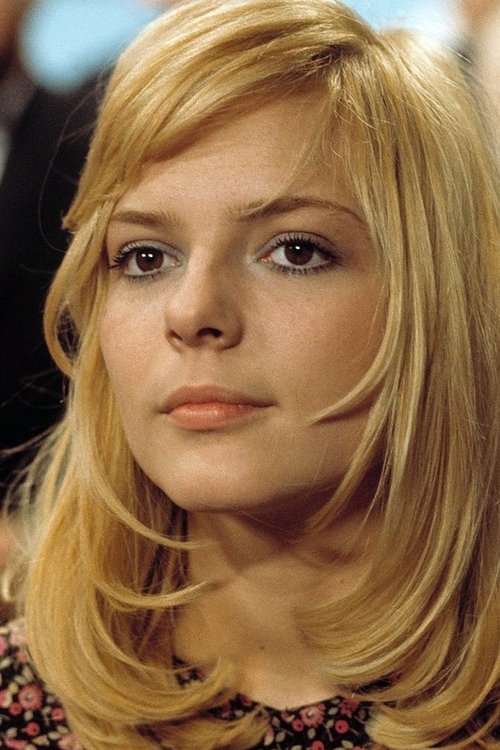
Isabelle Geneviève Marie Anne Gall (9 October 1947 – 7 January 2018), known professionally as France Gall, was a French yé-yé singer. In 1965, at the age of 17, she won the tenth edition of the Eurovision Song Contest with the song "Poupée de cire, poupée de son", representing Luxembourg. Later in her career, she worked with singer-songwriter Michel Berger, whom she married in 1976. Her most successful singles include "Résiste", "Ella, elle l'a" and "Évidemment". Gall was born in Paris on 9 October 1947, to a highly musical family. Her father, the lyricist Robert Gall, wrote songs for Édith Piaf and Charles Aznavour. Her mother, Cécile Berthier, was a singer as well and the daughter of Paul Berthier, the co-founder of Les Petits Chanteurs à la Croix de Bois. The only daughter of her family, France had two brothers: Patrice and Philippe. In spring 1963, Robert Gall encouraged his daughter to record songs and send the demos to the music publisher Denis Bourgeois. That July, she auditioned for Bourgeois at the Théâtre des Champs-Élysées in Paris, after which Bourgeois wanted to sign her immediately. France was subsequently signed to Philips. At the time, Bourgeois was working for the label as artistic director for Serge Gainsbourg and assumed this role for Gall as well. He encouraged her to record four tracks with the French jazz musician, arranger and composer Alain Goraguer. The first airplay of Gall's first single "Ne sois pas si bête" ("Don't Be So Stupid") occurred on her 16th birthday. It was released in November and became a hit, selling 200,000 copies. Gainsbourg, who had released several albums and written songs for singers including Michèle Arnaud and Juliette Gréco, was asked by Bourgeois to write songs for Gall. Gainsbourg's "N'écoute pas les idoles" ("Don't listen to the idols") was Gall's second single; it reached the top of the French charts in March 1964 and stayed there for three weeks. At the same time, Gall made her live debut, opening for Sacha Distel in Belgium. She teamed with Distel's business manager Maurice Tézé, a lyricist, which allowed her to create an original repertoire, unlike the majority of her contemporaries who sang adaptations of Anglophone hits. Elaborate orchestrations by Alain Goraguer blended styles, permitting her to navigate among jazz, children's songs, and other genres. Examples of this mixed-genre style included "Jazz à gogo" (by Alain Goraguer and Robert Gall) and "Mes premières vraies vacances" (by Jacques Datin and Maurice Vidalin). Gall and Gainsbourg's association produced many popular singles, continuing through the summer of 1964 with the hit song "Laisse tomber les filles" ("Leave the girls alone") followed by "Christiansen" by Datin-Vidalin. Gainsbourg also secretly recorded Gall's laughter to use on "Pauvre Lola", a track on his 1964 album Gainsbourg Percussions. Having previously resisted, Gall gave in to her managers at the end of 1964 and recorded a single intended for children. The song "Sacré Charlemagne", written by her father, and set to the music of George Liferman, was a hit in 1965, peaking at number one in France and number five in Turkey. ... Source: Article "France Gall" from Wikipedia in English, licensed under CC-BY-SA.


Known For

Champs-Elysées
6.8

No description available.

Champs-Elysées

1982
Vivement dimanche
3.6

No description available.

Vivement dimanche

1998
No image
7.3

No description available.

Die Drehscheibe

1964
Midi Première
9.0

Midi Première is a French variety show presented by Danièle Gilbert, directed by Jacques Pierre and broadcast from January 6, 1975 until January 1, 1982 on TF1. The program was generally broadcast between 12:15 p.m. and 12:55 p.m., then giving way to the 1:00 p.m. TV news. However, the broadcast schedule could change, depending on the guests, and the setting where the recording of the program was shot. Certain performances by artists who have become cult like the one where Ringo jostles with a demonstrator in interpretation (1977), that of Dalida with the title There is always a song with the soundtrack that does not start, twice, at the right speed (1978), Claude François and his Clodettes, who, in the provinces, are unable to join "the set" in order to interpret his song, the latter being taken by the crowd of delirious fans (summer 1977) . The group Supertramp performed there with the title "Dreamer" on March 8, 1975.

Midi Première

1975
Sacrée soirée
5.7

No description available.

Sacrée soirée

1987
Eurovision Song Contest
7.2

The Eurovision Song Contest is an international song competition, organised annually by the European Broadcasting Union (EBU) and featuring participants representing primarily European countries. Each participating country submits an original song to be performed on live television and radio, transmitted to national broadcasters via the EBU's Eurovision and Euroradio networks, with competing countries then casting votes for the other countries' songs to determine the winner.

Eurovision Song Contest

1956
Les Rendez-vous du dimanche
6.0

A talk show presented by Michel Drucker

Les Rendez-vous du dimanche

1975
Le monde est Ă  vous
N/A

No description available.

Le monde est Ă  vous

1987
Numéro un
7.5

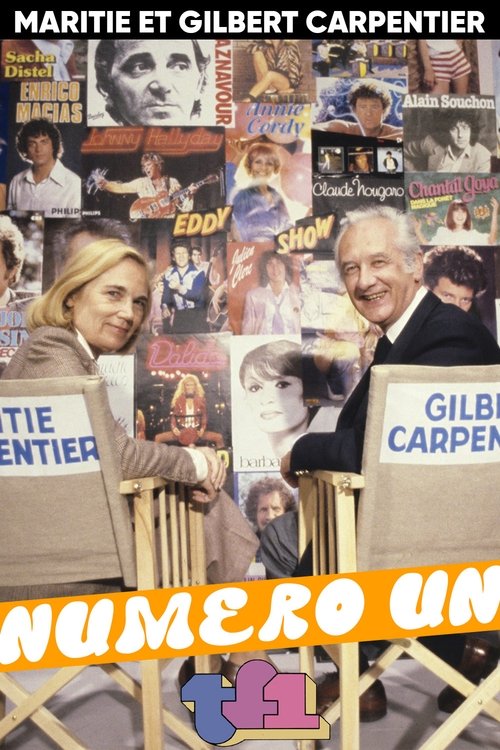
A French variety show.

Numéro un

1975
Le Grand Échiquier
8.0

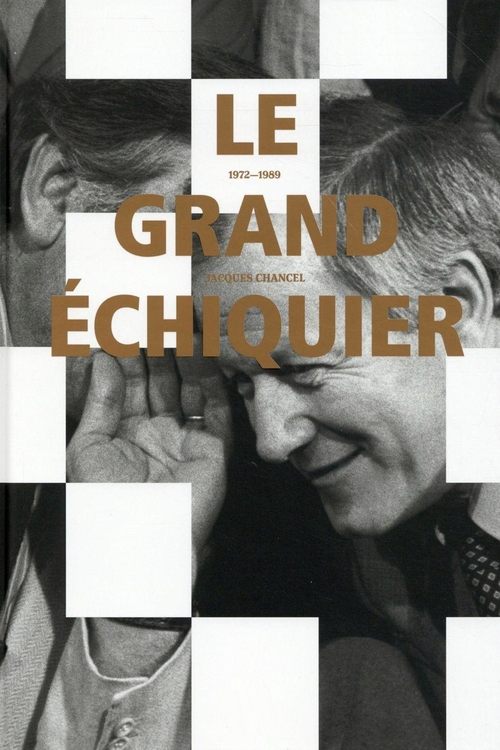
Le Grand Échiquier is a French variety television program created and presented by Jacques Chancel. It aired at 8:30 pm on the first channel of the ORTF from January 12, 1972 to July 12, 1972, then on the second color channel of the ORTF from September 1972 to December 1974, and finally on Antenne 2 from January 1975 to December 21, 1989. The program returned to France 2 on December 20, 2018 and is hosted by Anne-Sophie Lapix.

Le Grand Échiquier

1972
No image
6.0

No description available.

Midi trente

1972
Fan School
7.2

Host Jacques Martin invites different talented children from various backgrounds to showcase their beautiful voices. The participants entertain and wow the audience with their lovely performances.

Fan School

1977
Discorama
8.0

No description available.

Discorama

1959
No image
N/A

The ZDF-Hitparade, or Hitparade for short was one of the most popular and most well-known music television series presenting mostly German Schlager.

Die ZDF-Hitparade

1969
Taratata
7.8

Taratata was a French TV show showcasing live and pre-recorded footage of current rock acts. Presented by Nagui since its début in 1993, the show was initially shown on France 2. The show often involved surprise and unlikely duets, as well as brief interviews with the artists. Taratata was cancelled in 2000, but returned in April 2005 on the public French network France 4 once a week on prime time, France 3, and late night once a month France 2 and Virgin Radio. Artists including Devendra Banhart, Katie Melua, and Ayo made their French TV debut on the show. The show's chief lighting technician, Jean-Philippe Bourdon, was awarded two Sept d'or in 1994 and 1995. The show featured unique duets and highlights new artists and uses different presenters for each episode. These aspects, and the general emphasis on original music, led the Conseil supérieur de l'audiovisuel to identify Taratata as a uniquely creative show on French TV in April 2009. The show aired throughout Europe on TV5MONDE Europe on Saturday nights. The show is also franchised to Dubai Television in Arabic with an almost identical format to its French counterpart. On 31 May 2013, France Télévisions announced that the show was cancelled. Despite the announcement, the show will continue in a web only format and that a concert will be oragnized at Zénith de Paris on 10 October 2013. The last show was recorded on 13 June 2013 and was broadcast on 12 July 2013.

Taratata

1993
No image
6.0

No description available.

Samedi soir

1971
Victoires de la musique
3.3

No description available.

Victoires de la musique

1985
No image
7.0

No description available.

Musik aus Studio B

1961
Stars 90
6.2

No description available.

Stars 90

1990
No image
N/A

No description available.

Système 2

1975
France Gall | Feel It Stream