Andrew Duff
Acting
Biography
Andrew Duff was educated at Christ Church Cathedral Choir School and Dauntseys School. It was whilst he was at school and visiting his parents in Cyprus and India that his interest in history generally, and military history in particular, were kindled. He was commissioned from Sandhurst into the Royal Anglian Regiment. He served with 3 Royal Anglian (the successor regiment to the Essex, Bedfordshire and Hertfordshire Regiments) in UK, Germany, Cyprus, N Ireland and Belize, commanding companies on operational tours in Cyprus, N Ireland and Belize. He also carried out regimental tours of duty as Adjutant/Training Officer of the Bermuda Regiment and as Training Major of 5 Royal Anglian. As a staff officer he did tours in Military Operations, Intelligence and Security, Exercise Planning and finished his regular service as the officer responsible for the Arctic Warfare Training and Operations of the UK Element of the Allied Mobile Force. On leaving the Regular Army he settled in Wiltshire and joined the Territorial Army (TA) serving with HQ 5 Airborne Bde and then HQ 16 Air Assault Bde. Since leaving the TA he has been able to indulge his lifelong interest in Military History by becoming a Battlefield Tour Guide and has conducted successful tours for schools, military groups and adults. Andrew is a badged member of the Guild of Battlefield Guides Andrew is the Executive Producer and a Director of Battlefield History TV. Contact anduff@battlefieldhistory.tv
Known For
The most implacable opponents of the British and Canadians fighting in Normandy were the largely teenage soldiers of the Hitlerjugend. From D+1 through to attacking back into the Falaise Pocket, this unique division constantly thwarted Montgomery's plans and exacted a terrible price on the Allies for every mile gained. Formed from 'volunteers' from the Hitler Youth Movement in the aftermath of Stalingrad, this division of boys, aged 17 on recruitment into the SS, came of age and were declared fully operational just before D Day. Coming from a fully militarized society they made exceptional and highly committed soldiers but with officers and non-commissioned officers from the Leibstandarte commanding them, they were to become a ruthless and brutal arm of the Nazi fighting machine that battled towards the Eastern Front. Both Hitlerjugend's alleged atrocities and their remarkable doggedness in battle made them a loathed but grudgingly respected opponent to all who fought them.
12th Hitlerjugend Panzer Division
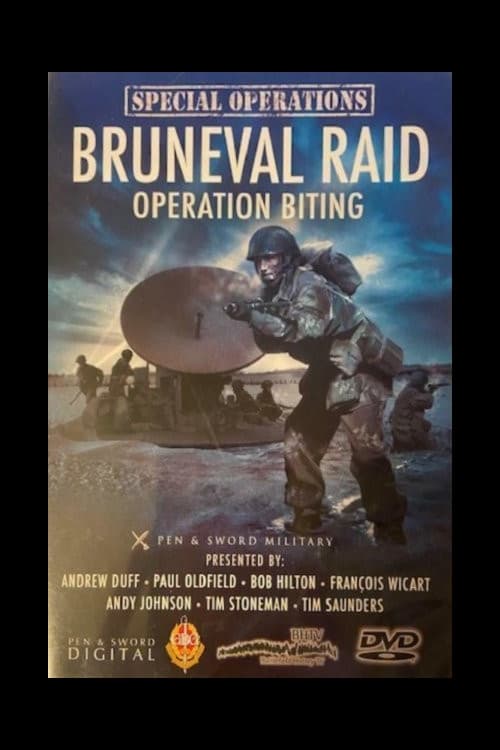
In 1941 Dr RV Jones realised that the Germans had developed their own radar system that would account for increasing RAF bomber casualties. An enemy Würzburg system was located on the cliffs of Northern France at Bruneval. An operation was planned to seize it involving all three Services, including the newly raised C Coy, 2 Para, commanded by Major John Frost. The planning went well but the rehearsals were all disastrous. As the narrow window of moon and tide approached it was decided 'to bash on'. Nine of the twelve sticks of Paratroopers were dropped by 51 Squadron and the Germans were caught napping. However, they quickly responded and the Paras had a serious fight on their hands to keep the enemy at bay while the experts, who the Paras had orders to kill rather than let fall into enemy hands, dismantled the radar. With the enemy closing in the job was done and the force withdrew. It seemed that they may be caught but they made it to their badly delayed landing craft.
Bruneval Raid: Operation Biting
On 11 July 1346 Edward III's Anglo/Welsh army landed at St Vaast in the Cotentin Peninsula. Over 12 months this army won 3 major battles Caen, Blanchtaque and Crecy and captured Calais, which would remain in English hands until 1558.This campaign was the first major chapter in the story of what was later called the 100 years War.This campaign is not only notable for the military victories of Edward and his army but for the way it reshaped warfare on the continent, the English had arrived as a major military player. The use of Chevauchee employed by Edward's army whilst not new was used in an intelligent manner to bring the French to battle. Once the French were brought to battle Edward's Army, consisting mainly of yeoman archers and infantry, was able to beat and destroy the French Army consisting mainly of nobles by a combination of leadership, tactics, discipline, courage and technology (The Long Bow).
100 Years War: Crecy 1346
The German paratroopers established a reputation in Crete as an elite force. A battalion commander now led a new Fallschirmjäger regiment, deployed to Normandy in the spring of 1944 to the very area where the US Paratroopers were to drop on D Day. This DVD will tell the story of this regiment, one that was more like a pocket division than a regiment, and its six day battle around the base of the Cotentin Peninsula to prevent the effective link up between Omaha and Utah Beaches.Using the established and popular style of expert interviews, pieces filmed on the ground where the battle happened, illustrated with contemporary re-enactment footage and numerous maps, the story of the part played by the 6th Fallschirmjäger in the key engagements against the 101st Airborne Division around Saint-Come-du-Mont, the flooded marshes and the key town of Carentan will be told in graphic and controversial detail.
The Germans in Normandy: 6th Fallschirmjaeger
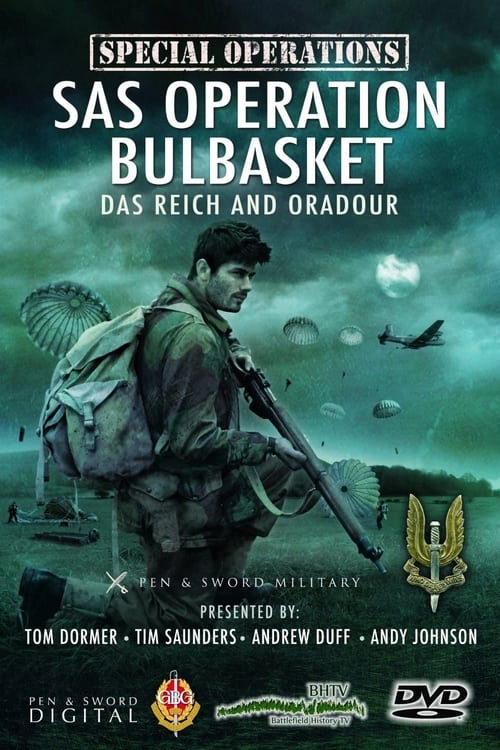
In 1944 prior to D Day the allied planners realised it was vital to isolate the Normandy Battlefield from reinforcements. In particular it was essential to delay or stop the movement of 2 SS Pz Div (Das Reich) from the south of France. The initial plan called for the French Resistance to interdict the French Railway system to stop their movements. Doubts over the effectiveness of the resistance led to the deployment of 1st SAS to do the task. This programme covers both the deployment of a troop of B Sqn into the Poitiers, in what was known as OP BULBASKET, to delay the Das Reich and the movements and actions of the Das Reich as they move through the Dordogne and Vienne Regions culminating in the massacre at Oradour. Part 2 of this programme will cover the SAS actions in delaying the Das Reich.
SAS Operation Bulbasket: Part 1 - Das Reich and Oradour
The English Civil War (1642–1651) was a series of armed conflicts and political machinations between Parliamentarians (Roundheads) and Royalists (Cavaliers) over, principally, the manner of England's government. The first (1642–46) and second (1648–49) wars pitted the supporters of King Charles I against the supporters of the Long Parliament, while the third (1649–51) saw fighting between supporters of King Charles II and supporters of the Rump Parliament. The war ended with the Parliamentarian victory at the Battle of Worcester on 3 September 1651. This programme charts the lead up to the war and its outbreak, setting the scene for the following programmes in the series.
The Background and Outbreak of the English Civil War
With 2 Para isolated at the Arnhem Bridge and both 1 and 4 Para Brigades thwarted in their attempts to fight their way into Arnhem and falling back, what became the Oosterbeek Perimeter started to form around Divisional HQ at the Hartenstein Hotel. Beaten but not defeated, the remnants of 1st Airborne Division fought a grim battle with the SS supported by reinforcements and armour rushed to Oosterbeek from all over the West. Veterans and experienced battlefield guides vividly relate their experiences and take the viewer to the scene of the action. The seven days of grim and bloody fighting in the Oosterbeek Perimeter was amongst the hardest fought of all the battles in the West. It was one that the SS veterans of the Eastern Front in the Hohenstaufen Division christened the Hexenkessel or “Witches Cauldron”. All the while the the airborne soldiers were waiting for XXX Corps to arrive from the south, with the enemy pressing ever closer.
Operation Market Garden: Arnhem - Battle for the Oosterbeek Perimeter
During the Napoleonic Wars the British Army realised that it needed skirmishers, as a result it raised 2 Rifle Regiments both armed with the icon Baker Rifle. This programme explains how the Riflemen of the 95th Rifles were dressed and equipped. It is an ideal accompaniment to our Series on the 95th Rifles.
95th Rifles - Dress and Equipment
After the victory at Salamanca Wellington's Army had mixed fortunes and by the the winter of 1812/3 was back in Portugal. Wellington took advantage of the winter to re-equip and retrain his army for his final master stroke in Spain. In June 1813 Wellington launched his whole army in a rapid push NW towards the Spanish/French border outflanking the French. At Vittoria he beat the main French Army on 21st June and pushed the remainder into the Pyrenees on The French border. He was now able to prepare for the invasion of France. In all these actions and leading the Army were the Light Division containing the 3 Battalions of the 95th Rifles. It was during this period that they had some of their toughest and bloodiest actions that showed them to be an elite formation.
95th Rifles: 1812 to the Pyrenees
This film tells the story of Col Rudder’s 2nd Ranger Bn and their heroic attack on the gun battery at Pointe du Hoc, which covered both Omaha and Utah beaches. Despite their thorough training scaling techniques that included sectional aluminium commando ladders, rocket grapples and ropes experienced commanders predicted a disaster. In the event bad weather, navigational errors and communications failure meant that less than 200 Rangers were delivered to the foot of the cliffs late and under enemy fire. Small groups of Rangers battled their way up ropes and ladders, with grenades bursting around them, to scale the muddy unstable cliff. A handful of men spread out and cleared the stunned defenders but, as often is the case, seizing the objective was only a part of the battle. Isolated for over 24 hours, with no relief from the near disaster at Omaha, the Rangers fought on against increasingly determined German counter-attacks.
Assault on Normandy: Pointe du Hoc
This programme follows the deployment of the main body of the SAS, the Recces on targets, the raids carried out both by the SAS and the bombing attacks they called in. As the SAS created havoc to the railway system the Germans were hunting them down. Eventually by the use of torture and information by collaborators the Germans tracked them down to their camp near Verrieres. The majority of the SAS were killed or captured. Those captured were later murdered by the Germans.. Their actions tied up large numbers of Germans in guarding the railways and imposed a severe delay on the movements of the 2nd SS Pz Div to Normandy. A few brave men had an impact on the liberation of France out of all proportion to their numbers
SAS and the Normandy Campaign: Operation Bulbasket
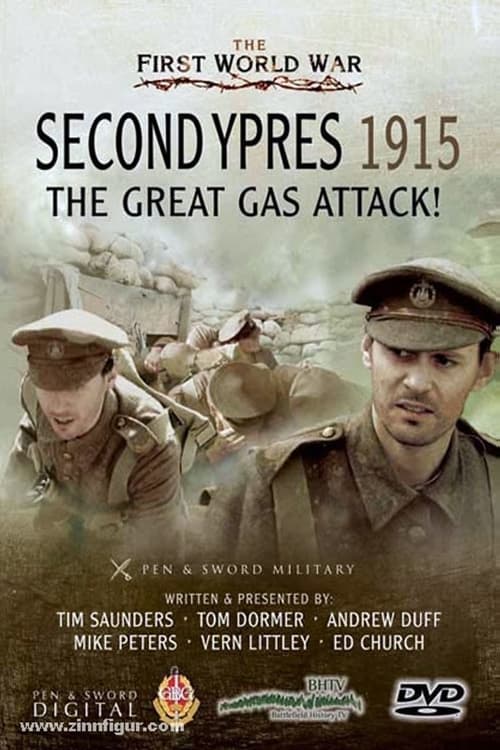
The Second Battle of Ypres was fought from 21 April–25 May 1915 for control of the strategic Flemish town of Ypres in western Belgium, following the First Battle of Ypres the previous autumn. It marked the first mass use by Germany of poison gas on the Western Front. For the first time a former colonial force (the 1st Canadian Division defeated a European power (the German Empire) on European soil, in the Battles of St. Julien and Kitcheners' Wood. In the now established BHTV style, the BHTV Team join a selection of historians on the ground to explore the actions of Second Ypres and analyse the significance of what was the first former colonial victory on European soil, the first major use of a terror weapon and the knock on effects of the virtual destruction of the BEF. The team explain the bravery shown by the troops on the ground and the horrors they faced from the advancing German gas clouds.
Second Ypres 1915: The Great Gas Attack
This film tells the story of one of the most contentious combats of WW2, the actions of Kamfgruppe Peiper during the Battle of the Bulge.From the outset the King Tigers of December 1944, in poor winter weather, could not cut through the forest roads as the smaller Panzers had done in 1940 but were slowed down by determined resistance by small groups of American GIs, Obersturmbannfuhrer Jochan Peiper, commander of the elite spearhead, the Leibstandarte's 1st Panzer Regiment advancing west on one of the Division's three rolbhans became increasingly frustrated by enemy resistance and poor roads. Eventually anger boiled over into atrocity and the murder of US soldiers and Belgian civilians at Malmendy and elsewhere along the route. Experienced soldiers, historians and film makers analyse events on the very ground where they happened, stripping away legend and obfuscation of all kinds to present the facts for the viewer to make their own decision..
Battle of the Bulge: Kampfgruppe Peiper
95th Rifles 1809 to Salamanca is the second DVD in 95th Rifles trilogy of films and part of The Peninsular Collection from BHTV . The DVD explores the history of the 95th Rifles, who were masters of the battlefield and particularly skilled in skirmishing. Held in high esteem by the French and Allies alike, they played a momentous role in the outcome of the Peninsular War. Following the events set out in the Salamanca DVD, this film serves as a prequel to explain the years leading up to the Battle of Salamanca, starting with the aftermath of Sir John Moore’s retreat to La Corunna in the winter of 1808/1809.
The 95th Rifles 1809 - 1812
69 Infantry Brigade had a highly successful landing and now had to fight its way through German defences to its objectives eight miles away. It was here that the veteran warrior, Sergeant Major Stan Hollis, continued the actions that led to him receiving the only D Day Victoria Cross.Meanwhile, 231 Infantry Brigade,were attempting to recover the situation and fight through German strong points towards Arromanches and Point 54 ridge. These battles lacked the coordination between infantry and tanks achieved by 69 Brigade and were up against field grade German infantry. Hours behind schedule, the village of Ryes was taken. This allowed the much delayed second wave consisting of 56th and 151 Infantry Brigades to deploy and exploit the early successes, reaching the outskirts of Bayeux by dusk. Meanwhile, in the west, the hard pressed 231 Infantry Brigade and 47 Commando continued its advance through enemy held territory to Port en Bessin, Arromanches and the Longues sur Mer Battery.
Assault on Normandy: Gold Beach - Battle for the Beachhead
On the 22nd of August 1914 the recently deployed BEF fought and delayed the German First Army of Von Kluck in around the industrial coal mining town of Mons. After 2 days of hard fighting the 3rd and 5th Division of II Corps, assisted by the Cavalry division, having borne the brunt of the battle withdrew South West in the direction of Paris. Whilst this battle was in reality a minor Corps action, when taken in the context of the Great War, it showed that the British regular soldier was more than a match for the German army when he was properly led and not vastly outnumbered by guns and men. This film shot on the battlefield tells the story of this 2 day battle bringing out the heroism and skill of the”Old Contemptible s “in delaying and escaping from Von Kluck’s attacking force of 6 Infantry and 5 Cavalry Divisions.
Mons 1914
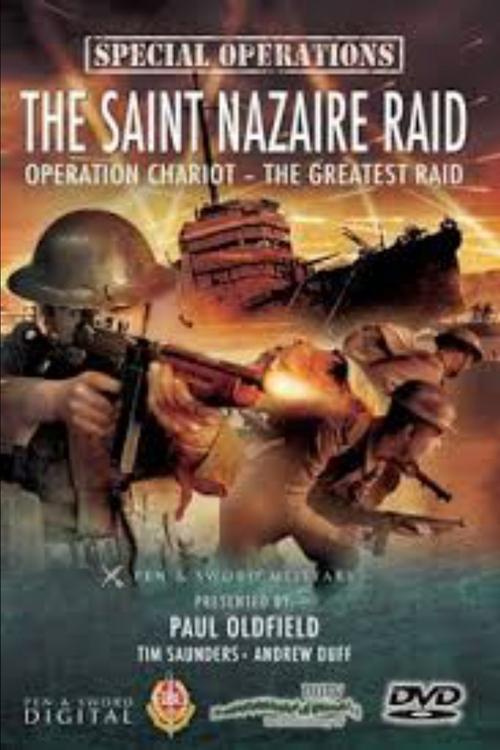
Building on the success of various Commando Raids during 1941, Headquarters Combined Operations moved up the scale of size and complexity by electing to attack and deny the only dry dock that could take a German battleship for repairs, the Normandie Dock at St Nazaire on France's Atlantic coast. However the port was miles up a well defended estuary. To deliver an explosive charge big enough to demolish the massive lock gates, an old ship HMS Campbeltown was converted to look like a German destroyer, so as to bluff their way into the heart of the port where it would ram the lock gates.The Commandos were to fan out across the dock to demolish pumps and winding gear to comprehensively deny the dock to the Kriegsmarine for a significant period of time. Under cover of dark the bluff worked well, up to a point, Campbeltown rammed the gates but the Commandos found that the Germans were alert and had great difficulty in reaching their objectives.
The Saint Nazaire Raid: Operation Chariot - The Greatest Raid
In 1415 a small English Army consisting mainly of Yeoman English and Welsh archers defeated and destroyed a much larger French army consisting mainly of the nobility of France at Agincourt. This film follows Henry Vth's campaign from his landing near Harfleur, his costly successful siege and his desperate attempts to cross the River Somme and escape to Calais culminating in the Battle of Agincourt on 25th Oct 1415. The BHTV team of military historians take you through the battle separating myth from fact to tell the true story of one of the most epic episodes of English history. The story is brought to life with re-enactment footage, maps and is shot on location in France.
100 Years War: Agincourt 1415
Due to the hostile terrain of the Iberian Peninsula Siege Warfare took on an importance here more than anywhere during the Napoleonic Wars. For the French in particular fortresses and fortified towns were the only places they could guarantee the safety of their logistics from the Spanish and Portuguese guerillas. If Wellington was going to liberate Portugal and Spain he would have to overcome these fortified locations. This film looks at the British and French experience during this period and uses the the great sieges of Ciudad Rodtigo and Badajoz to illustrate how both defence and attacks were carried out . The BHTV team use footage from Spain, re enactments, maps and models to bring this much neglected aspect of the Peninsula war to life.
Siege Warfare 1812: Ciudad Rodrigo & Badajoz - The Keys to Spain
Following on from Ligny and Quatre Bras, Part II starts by focusing on the concentration of the Allies on the ridge of Mont St Jean and the plans of the opposing armies. While the guns of the Grand Battery thundered in the centre, French columns bore down on the Hougoumont chateau and farm complex, which protected Wellington's flank held by the Guards and their German allies. Thus began an epic 'battle within a battle' that sucked away valuable troops from Napoleon's main attack, causing Wellington to declare that 'the battle turned on the closing of the gates at Hougoumont'.Meanwhile D'Erlons Corps attempted to bludgeon its way through Wellington's centre, not knowing that the British and Dutch line was in waiting on the reverse slope. Upon seeing the French advance, the British released a disciplined volley of musket fire that checked the French. A further brilliantly timed charge by the Household and Union Cavalry Brigades finally saw the French off.