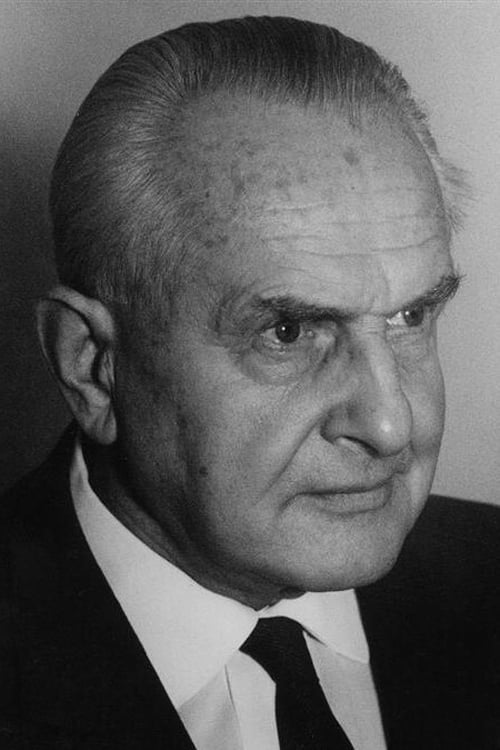
Václav Vydra
Acting
Known For
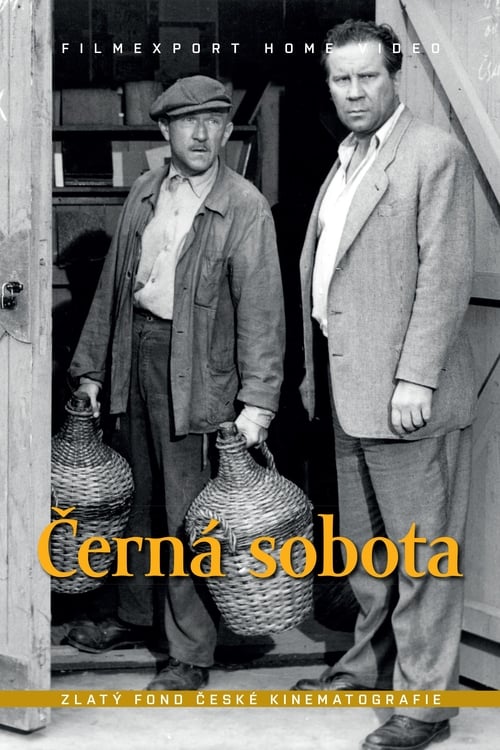
In this crime story, surprisingly, neither the all-powerful criminals nor the spies or saboteurs are pursued, as was once common. The plot is almost mundane: someone unwittingly siphoned off alcohol from a tanker, unaware that it was deadly methyl alcohol, intended for industrial use. Finding out where the poison has been transported and which people it endangers requires painstaking work.
Black Saturday
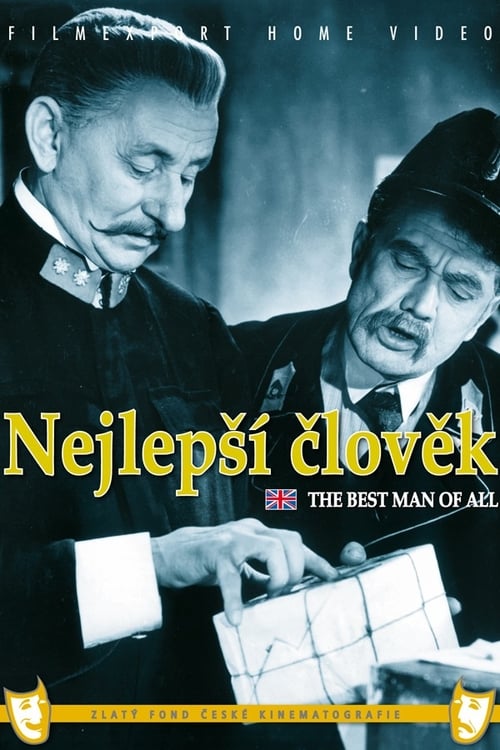
A Czech satirical comedy set around 1900. The inhabitants of the small town of Pětice are excited by a mysterious package that is to be delivered to the best person in the village. Of course, all members of the town council claim the title of best person. In the end, it turns out that it was a cleverly thought-out prank intended to reveal the true character of the "better people" of the town.
The Best Man of All
Amy Dorrit spends her days earning money for the family and looking after her proud father who is a long term inmate of Marshalsea debtors' prison in London. Amy and her family's world is transformed when her employer's son, Arthur Clennam, returns from overseas to solve his family's mysterious legacy and discovers that their lives are interlinked.
Little Dorrit
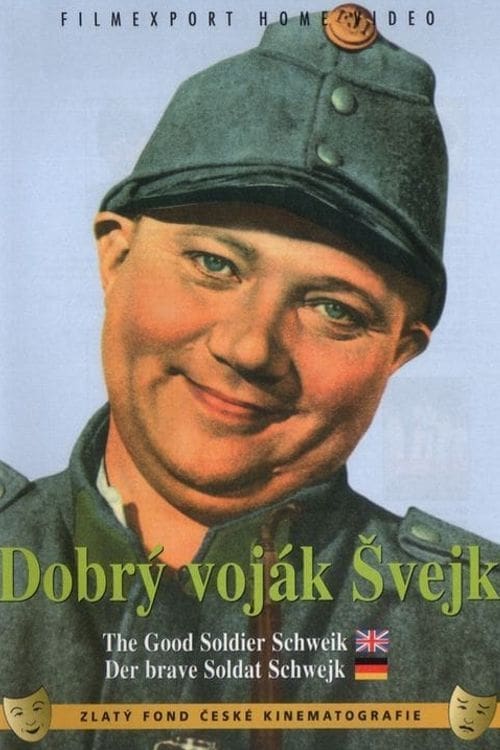
Good-natured and garrulous, Schweik becomes the Austrian army's most loyal Czech soldier when he is called up on the outbreak of World War I -- although his bumbling attempts to get to the front serve only to prevent him from reaching it. Playing cards and getting drunk, he uses all his cunning and genial subterfuge to deal with the police, clergy, and officers who chivy him toward battle.
The Good Soldier Švejk
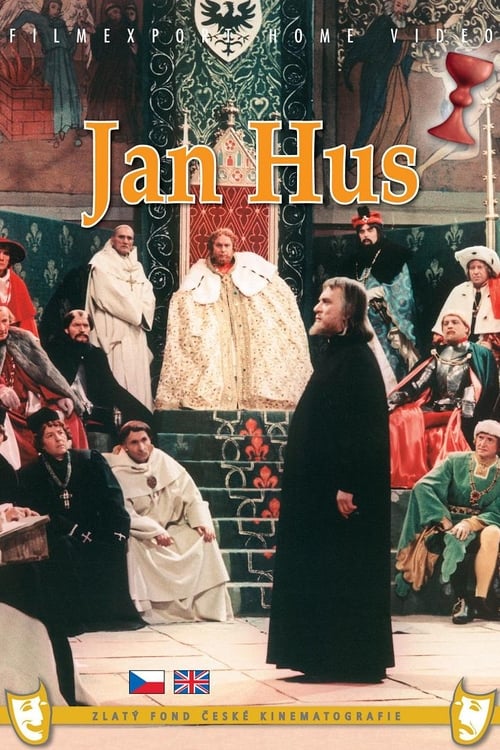
The first part of the "Hussite Revolutionary Trilogy", completed with Jan Žižka (1955) and Proti všem (Against All Odds, 1957). The film captures the period from May 1412 to the summer of 1415, a turbulent time in the Czech Kingdom, during which there were protests in Prague against the sale of "omnipotent indulgences" whose sale throughout the kingdom was announced by Pope John XXIII. The ideological leader of this movement is the preacher Master Jan Hus, whose words, calling for the elimination of church abuses, are listened to in the Bethlehem Chapel by thousands of ordinary Praguers, Czech lords and Queen Sophie, wife of the Czech King Wenceslas IV.
Jan Hus
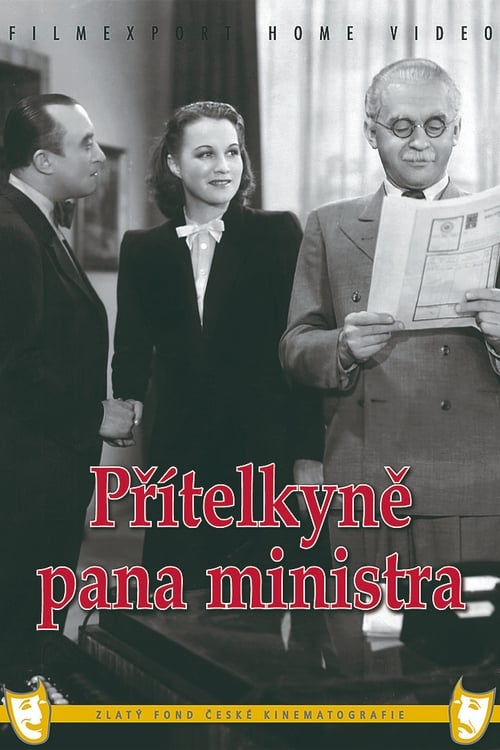
The main character of the funny story is an ordinary typist Julinka Svobodová, who works for the established business firm Hrubý a syn and lives in a sublet with the seamstress Mrs. Pokorná. Although she is poor and sometimes manages to be late, she is still cheerful and pleasant. However, a small coincidence is enough and everything changes. That is when she takes an elevator ride with the Minister of Trade, Dr. Horák, who coincidentally lives in the same building. Mrs. Pokorná, in good faith, hints to the inquisitive landlady that Julinka is the Minister's girlfriend. From the talkative woman, an innocent rumor spreads like wildfire and, surprisingly, it helps the girl in every way...
Přítelkyně pana ministra

An anthology of three absurd, ironic tales inspired by Čapek’s “Tales from One Pocket” and “Fables and Side Stories,” each showing uncanny forces disrupting ordinary lives: in Krejčík’s “Glorie,” a gentle clerk is haunted by a sudden halo; the other two segments by Mach and Makovec similarly blend everyday routines with ironic, supernatural twists.
Of Things Supernatural
A young farmer, Jan Aleš, is drafted from his native Pošumaví to join the army. Since he likes his new environment, he stays with the army as a long-term serviceman. He even successfully passes the exams for the military academy. There he becomes friends with his Slovak colleague Milan Jurčík. He studies diligently, but thanks to Milan he sometimes finds time to go out into the city. That is how he meets the factory owner's daughter, Zdenka, with whom he falls in love. However, her father is not very happy about the promising relationship.
Neporažená armáda
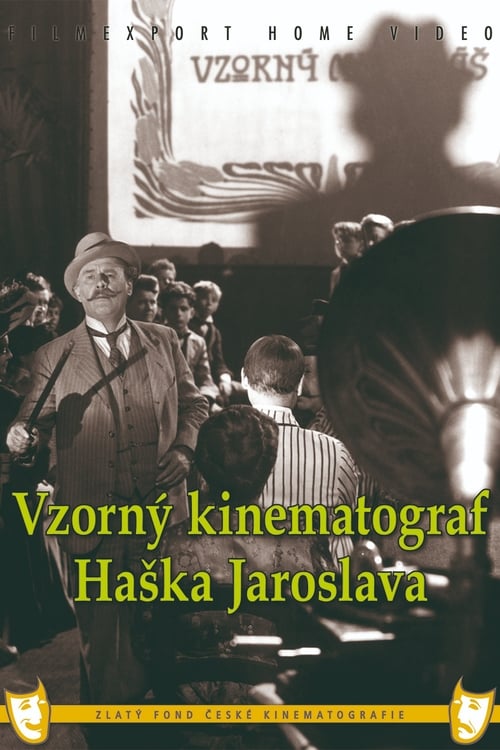
Jaroslav Hašek screens four film stories in the fairground shed around 1900. After period advertising slides and a "newspaper", we see "the first part of a sensational, exemplary, parfuss, salon program - a film from the life of school-age children, shot under very difficult circumstances". The plot of this film takes place partly in a school classroom and partly in a gymnasium toilet, where the primate Chocholka took refuge from a Latin composition. "Exemplary Family Happiness" is the second film that takes the viewer into the family of the municipal official Honzátek, in which many stormy scenes occurred when the hamster, provided by Honzátek Jr., moved into the sofa - a wedding gift from Sister Ema. Equally surprising are two other stories, one of which tells about the "father of the poor", the owner of a company with unrecoverable cash flow and a famous patron, and the other about the fateful consequences of a joint trip between the old bachelor Mr. Hanzlíček and his neighbors.
Jaroslav Hasek's Exemplary Cinematograph
Věra Donátová has graduated from law school and wants to open a law firm. However, she is financially dependent on her parents. Her emancipated mother supports her efforts, but her father gives Věra money on the condition that if her practice is not successful within a year, she will marry the son of Consul Raboch. Věra has no clients. The first case is assigned to her ex officio. Věra visits her client Petr Kučera, known as Tygr, in a prison cell and achieves his release against his will. In an attempt to reform him, she offers him a position as a butler in his office. Tygr invites her to a pub to get acquainted with the mentality of the underworld. Věra likes his sovereign behavior. The one-year deadline has passed and Father Donát is throwing a feast. He wants Věra to choose from several invited suitors. Věra ridicules all the suitors, including Consul Raboch's son...
Advokátka Věra
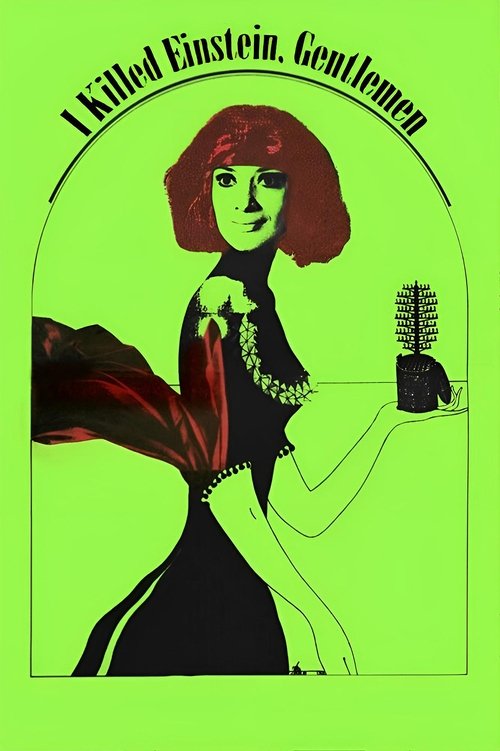
This futuristic science fiction comedy features an atomic bomb blast that causes women to grow beards and lose the ability to have children. A summit meeting is held at the United Nations, with the proposed solution of building a time machine. The decision is made to travel back in time and murder Einstein, with the hopeful result being that without the noted mathematician's research there will be no atomic bombs.
I Killed Einstein, Gentlemen

A look back at old classmates at a high school reunion, discovering how life has fruitlessly slipped through their fingers. And they don't even have a chance to break free from the small-town grip.
Moon Over the River
No description available.
Magdalena
A biographical story about significant Czech dramatist, writer and actor Josef Kajetán Tyl.
Josef Kajetán Tyl
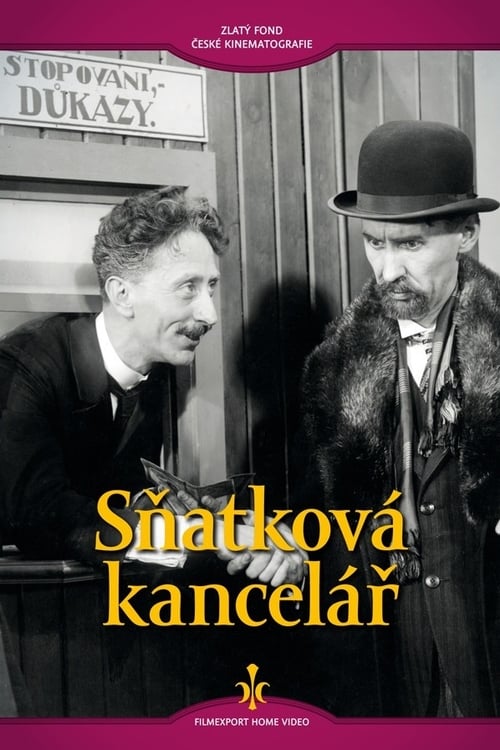
No description available.
Sňatková kancelář
Olga finds her husband Karel Brand, whom she has just divorced, shot dead after returning from the cinema. It appears to be a clear case of suicide, but Lieutenant Dusek of the Public Security Service suspects that it is a murder, which, it is not impossible, as a number of evidences point against it, could have been committed by Mrs Olga. A letter from the dead man to his wife seems to dispel any doubt that it could have been murder. Lieutenant Dusek, however, investigates further. Much more than he, however, learns about the true circumstances from Mrs. Olga's legal advisor, Dr. Klimesh. He learns that the letter is indeed a forgery and that Brand's death is linked to the raids of an anti-state gang. He hesitates for a long time whether to confide in security, believing that doing so would testify in favor of Dusek's theory that the murder was committed by Olga...
Padělek

The film, in individual episodes, captures the fate of Bedřich Smetana from 1856 until the end of his life, from his young years until the moment when, exhausted by human and artistic hardship, he sees the fulfillment of his great dream, the opening of the National Theatre.
From My Life
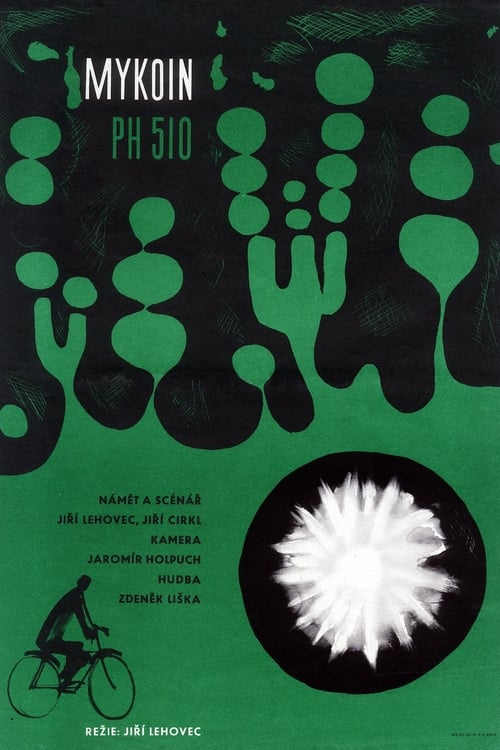
An occupation drama about a group of Czech scientists who, in a remote factory, investigate how to produce the vital penicillin as easily as possible - but for a long time they have been unable to find the only right mould to use as a base.
Mykoin PH 510

Young Matula has succumbed to gambling and he steals money from his parents to finance his passion. His father catches him red-handed and throws him out of the house. Matula roams the world and meets Vávra, also a tramp, who accepts a job as a road-sweeper but he soon dies in a car accident. On his lone wanderings Matula finds a miraculous little key which opens all locks. With its help he acquires a great fortune. He breaks into a bank and steals more money. He then meets the daughter of the cashier who was wrongly accused under suspicion of theft and when he sees her despair, he realises his wrong-doings. Finally he wakes up - it had all been a dream. (According to the censor's certificate).
The Gold Key
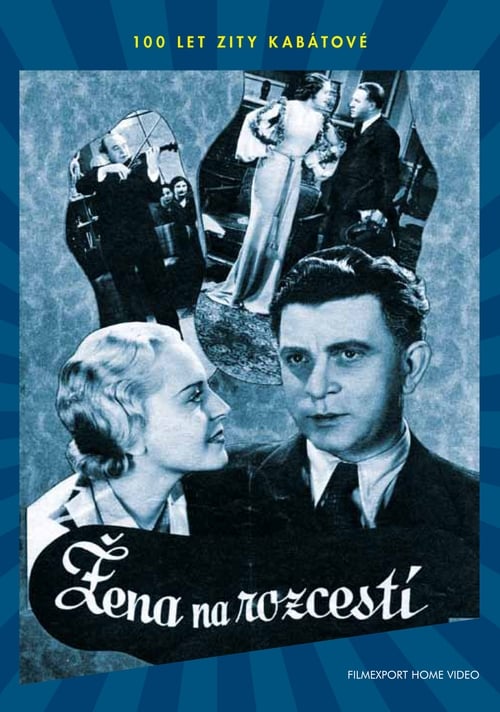
No description available.