Directing
Mother Teresa once said, "If you know how to look, you will find Calcutta all over the world." Kamieńska found those for whom Calcutta was in Poland. The film about the Congregation of the Missionaries of Charity proved to be a turning point in her artistic career. She took up the theme of faith, which had been absent from her work until then, and which would henceforth recur in her subsequent documentaries. In Missionaries of Charity, Kamieńska observes the work and prayer of young nuns. The complementary nature of "ora et labora" in their lives is reflected in the structure of the film. We alternate between places where the sisters help people in need and Mass with Mother Teresa.
About Catholics exiled to Kazakhstan from Germany, Poland, and Ukraine during Soviet times.
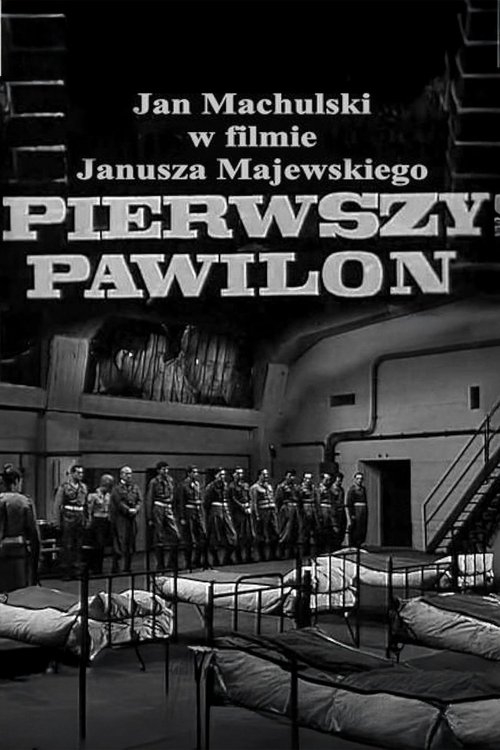
A young scientist is kidnapped and taken to a house where his former mentor, a professor, is conducting experiments on shrinking humans.
A married couple raising a mentally ill son struggles with the thought of putting him in an institution.
A Silent broad comedy about upper class life
The protagonists of the film are rural girls who left their villages in search of work.
The story of a young couple who abandon city life and move to the countryside.
The various phases of work in a spinning-mill, and the harsh working conditions of the women spinners, cause them physical pain and breathing diseases, not compensated by low wages.
The director interviews villagers about their lives post-communism.
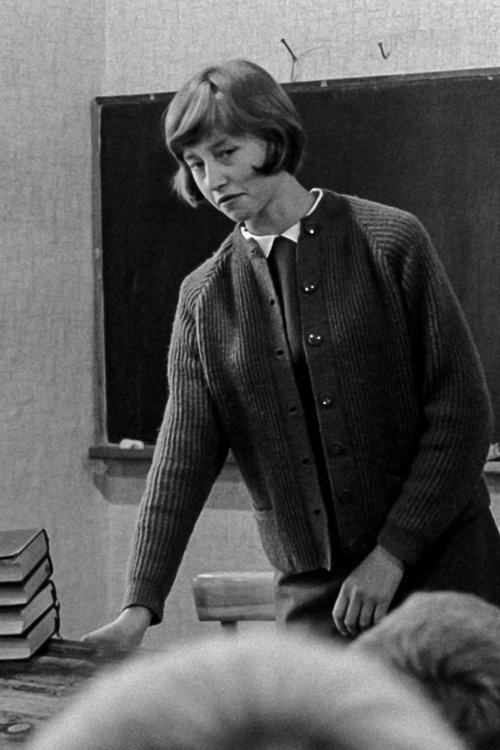
After finishing her training a young woman returns to the village of her birth to teach but encounters resistance from the children's farmer parents.
Documentary about a village that's to be submerged by the building of a dam.
Performances by Poland's most acclaimed jazz bands, punctuated by short interviews conducted by German music journalist Joachim-Ernst Berendt. Appearing consecutively are: Warsaw Stompers, Namysłowski Quartet, Andrzej Trzaskowski Quintet, Krzysztof Komeda Quintet, Bossa Nova Combo and Wróblewski Quartet. The concerts are crowned by the All Star Session, a joint finale with all the performers and the song Family Blues.
Prominent heart surgeon Zbigniew Religa talks about his fears and hopes he had towards this operation, which was the first one successful heart transplant in Poland, made under his supervision. The doctor talks with great respect and affection about his patients and colleagues.
A documentary record of memories of Poles exiled to Kazakhstan. The description of harsh living conditions, terror, hunger and overwork is illustrated with archive photographs and contemporary shots of Kazakh wilderness and towns, where traces of the past regime are still visible.
Film about two old women working many years in the loading, unloading and transporting of bricks.
The outstanding actress Klara Naimska (Zofia Mrozowska) is celebrating her artistic jubilee. Final preparations are underway for the premiere of "Women's House" for its benefit performance. The artist is besieged by journalists, directors and documentary filmmakers. The anniversary makes her reflect on the meaning of her own life and work. The actress, although surrounded by admirers and friends, feels lonely and misunderstood. Her reflections are contrasted with the manner of the manicurist Angelika (Emilia Krakowska), a woman not burdened with popularity and the stresses and sacrifices associated with her. Klara's deliberations are interrupted by a call for the jubilee premiere.
Documentary about a project to find proper shelter and care for abandoned old folk in Polish villages.
Messianic Judaism is a religious movement that differs from mainstream Christianity and from Judaism by combining elements of each into a single faith.
Professor H., obsessed with replacing humans through artificial beings, has created Traumer—an unsettlingly perfect assistant whose cold efficiency conceals an unnatural origin. Believing he has found the ideal subject for his next experiment, the professor plots to transplant Traumer’s brain with that of a distinguished scientist. But the plan unravels when Traumer proves far less obedient, and far more uncanny, than expected.