Olivier D. Asselin
Directing
Biography
A graduate of INIS and the Université du Québec à Montréal, Olivier D. Asselin creates works rooted in sociopolitical reality, both in fiction and documentary. His vision is embodied in short, medium or feature films as well as in web series, which he can, depending on the case, produce, direct, film and/or edit himself. Several of his films have won awards at multiple local and international festivals. He also teaches cinema and is involved in several filmmakers’ organizations. He chairs the board of directors of DOC Québec.
Known For
In the face of the environmental threat presented by the polluting tar sands industry, Pipelines, Power and Democracy reminds us that power doesn't always lie where we think it does. From the hallways of Quebec's National Assembly, where parliamentary power resides, to the campaigns waged by environmental defence groups and the big media splashes made by some activists, director Olivier D. Asselin follows the journeys of four people who adopt a variety of tactics--showing that it still possible to effect change. In documenting recent battles against pipelines in Quebec, the film appeals to our conscience as citizens during a time of great global crises.
Pipelines, Power and Democracy
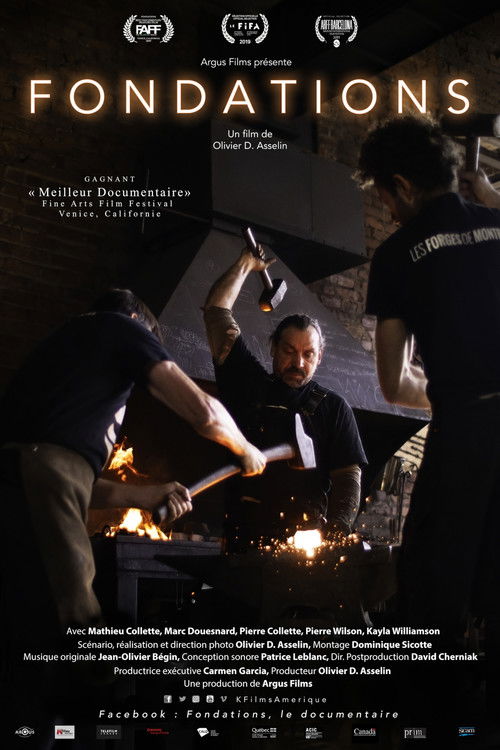
Mathieu Collette, a passionate blacksmith, renovates an abandoned heritage building belonging to the City of Montreal to create a blacksmithing school. Sixteen years later, after turning the building into an internationally renowned center for the transmission of living heritage, Mathieu is threatened with eviction for obscure administrative reasons, in the very year of Montreal's 375th anniversary. What could possibly justify putting one of Quebec's last blacksmiths out on the street, as the bearer of an unparalleled social and heritage project? Filmed over several years, this documentary traces Forges de Montréal's fight against the disappearance of a part of our collective memory.
Fondations

The film tackles the theme of the invasion of machines around us. With the advent of artificial intelligence, people are concerned about the increasing autonomous capabilities of technology. Have we passed the tipping point, and have machines become too powerful to be controlled by humans? While legitimate, these fears conceal the real danger. Beyond technological objects, the machine has infiltrated our very being, our way of thinking and seeing the world.