Sound
In 2017, 100 years after the Bolshevik Revolution, no official event was held in Russia. The central government decided to confine the memory of the Revolution to museums. In this climate of forgetfulness, some scenes detached from reality bring the past to the present. Two young roofers, Nikita and Karl, explore the city, search for historical remains and specific places, climb the roofs. In their wandering they find abandoned buildings and balconies. Katya, an apparently older woman, walks through one of the capital spaces of the revolutionary process: the Champ de Mars, in St. Petersburg. Katya tells about the February Revolution, which ended the Romanov dynasty. It recalls the post-revolutionary period and rescues the figure of one of the most interesting intellectuals and scientists of the time: Aleksandr Bogdanov, author of a utopian science fiction book called Red Star.
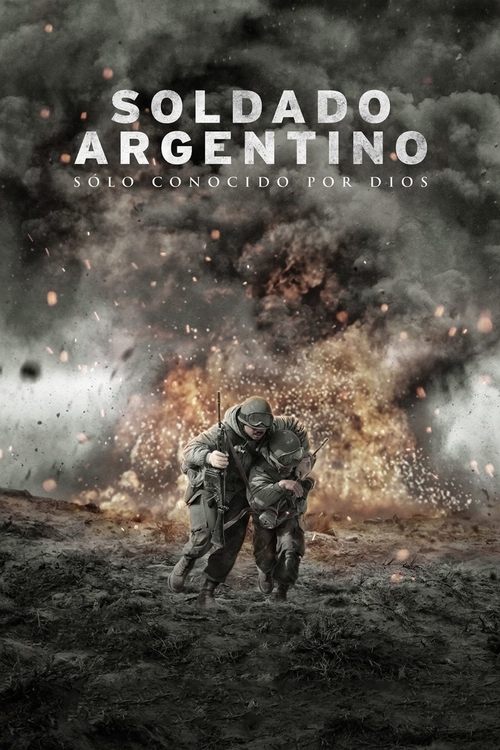
The story is centered on the human drama of three young people from a small town in Traslasierra, Córdoba, who from very different ideological places, are forever transformed by the war in Malvinas Argentinas (Falkland Islands).
Year 1866. Venancio, a young gaucho, embarks on a journey to escape from a curse through a war-torn region desperately seeking salvation among rustlers, priests, shamans and deserters. The stronger his fear is, the more real the legend becomes.
In September 1973, 19 paper mill workers were imprisoned and taken to the Laja police station. Six years later, their bodies were found in Yumbel’s cemetery. After almost 40 years, one of the policemen involved broke the pact of silence they had made the night of the killing, revealing the participation of the Paper Manufacturing Company (CMPC) in the murder. Today, the case is still open and awaiting sentence.
A group of biologist search for evidence of an unseen southamerican bear. There, they hear about the local legend of a bear-man known as the ucumar.
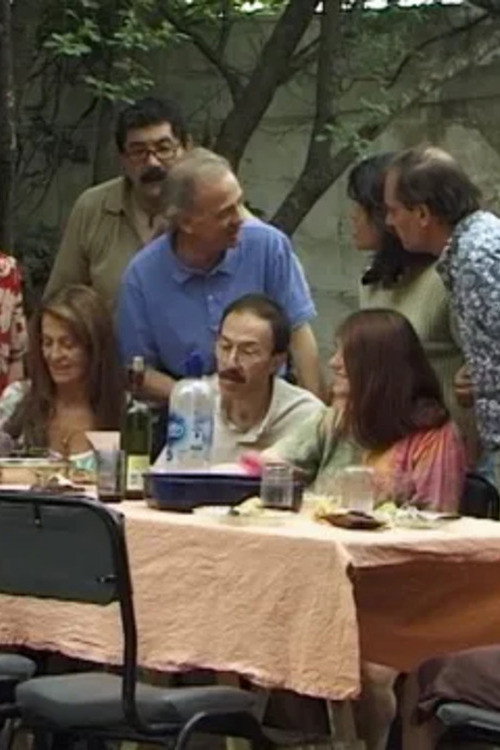
A man steals his psychologist's address book and invites the other patients to a barbecue at his house.
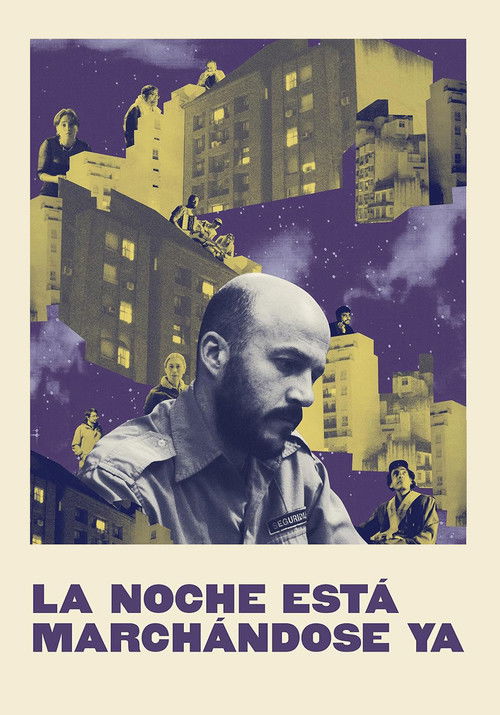
Nina and Fermín spend the night in the neighborhood where their father is a security guard. Between lights and shadows, they walk, play, eat. Nina observes others in silence, as though she were looking at herself in a mirror that is about to break. The night moves stealthily on, while other children watch them from their windows.
I remember the night when the history of my family changed. We received a phone call from Peru saying that my aunt Sibila was in prison accused of forming part of the Shining Path. I was seven years old and my parent's protective silence made me transform her image into a great mystery. She was kept in prison for 15 years. Today she is free and I want to get close to her, to listen and to understand.
Pelu is a thirty-something who barely survives on his salary as a projectionist at a municipal film club. After losing his job, he agrees to stay on as a night watchman and ends up living secretly inside the cinema, accompanied by the films he reviews every night.
On 3 November 1995, the Rio Tercero Military Factory exploded in Cordoba, prompting thousands of projectiles to fire and spread in the surrounding villages, in a tragedy that would leave seven dead and hundreds injured and affected. At the time, Natalia Garayalde was a twelve-year-old girl who lived with her family near the place, and he was still playing filming with the video camera her father had bought, when she recorded the immediate moments of the burst, while her family escaped the explosions, as well as the daily activities of the village in the days and weeks that follow. Twenty-five years later, that material captured from a girl's candid and surprised gaze it becomes a thoughtful and painful testimony about the family, the destruction of a city, the traces of horror, the sinister truth about the case.
In 2017, young Mapuche Rafael Nahuel was killed by police in the Patagonian forest. Site visits, court proceedings – the film unites the elements involved in solving the crime. Meticulously observed: the struggle for civil rights and narrating history.
COMPANIONS deals with the love between people and dogs. It’s made up of scenes of intimacy—caresses, habits, games, cares, stories of coming and loss, of protection, and uprooting. The stories intertwine and make up a map of love and its enigmas.
Ramiro is a bar cook. Hernán is an unemployed technician. Nora is a nurse in a public hospital. Lucia sells books in a bookstore. Four stories and a black and white city with persistent rain. None of them know each other, they are only inhabitants of the same city.
Although she fulfills the role of perfect wife and mother, Lola is not satisfied with the fantasy of happiness during a family vacation in Mar del Plata.
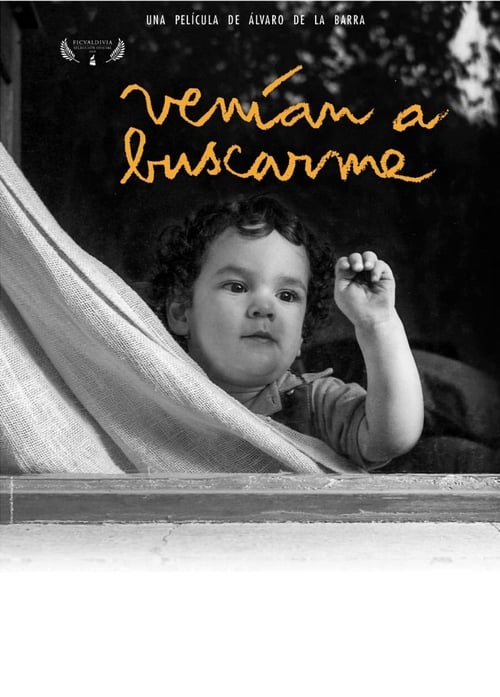
Documentary about the horrors of the Chilean 80's dictatorship from the perspective of a son who has lost his fathers and goes into the quest of finding out more about them
A man works for the first time in his life thanks to the efforts of a neighbor, who has secret intentions.
Eva, a film editor, and her assistant Rami are working on a film about blind people. A melancholy reflection on cinema and images.
A poor boy decides to stop being a poor boy and, together with his friend, tries to run away taking a bag full of money from his boss. The last night in his hometown is a review by way of farewell to the two friends for the places, the emotion and the songs that marked their lives.
César has been a watchman in a chemical factory for more than twenty years. One afternoon he receives a letter from his sister telling him that she has sold the family land in the mountains. César decides to abandon his job and undertakes a trip to that area, with the aim of recovering the urn with Elena's ashes buried there. Walking he faces the mourning veiled for years. The territory of his childhood is no longer the same, the forest fires, the advance of private property have changed everything. But the encounters along the way open him to a world that he had refused to face after living trapped in his job.
This film traces the unbelievable true story of the Calderón family, who built grand movie palaces in Mexico and the U.S., employing thousands to produce incomparable, hugely successful, and often reprehensible populist-genre films that were utterly and uniquely Mexican.