Shizue Tatsuta
Acting
Biography
Shizue Tatsuta was a Japanese actress of the silent and early sound eras. Much is unknown about her life before her acting career. As an actress, she symbolized the "moga" (modern girl) archetype of the era. She appeared in nearly seventy films, including works by Yasujiro Ozu, Mikio Naruse, and Heinosuke Gosho. After about ten years of acting experience, she retired from Shochiku in 1936, at the age of thirty-three. After retiring, she opened a bar in Ginza. She married Aikichi Ikeda, a high-class furniture dealer, and they had a child.
Known For

The three-hour Ai yo jinrui to tomo ni are / Love, Be with Humanity (1931) starts as a satire of alienation in the world of money, develops into a lumberland epic with a forest fire on Sakhalin Island, turns into a tragedy of King Lear dimensions, and manages to amaze the blasé audience with a happy end in the Wild West.
Love, Be with Humanity: Part 1

The three-hour Ai yo jinrui to tomo ni are / Love, Be with Humanity (1931) starts as a satire of alienation in the world of money, develops into a lumberland epic with a forest fire on Sakhalin Island, turns into a tragedy of King Lear dimensions, and manages to amaze the blasé audience with a happy end in the Wild West.
Love, Be with Humanity: Part 2

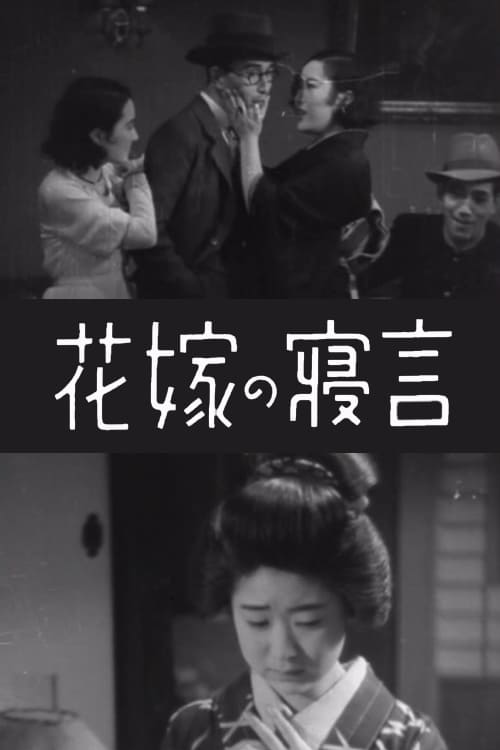
This pair of gentle yet witty and inventive comedies from the director of The Neighbour's Wife and Mine typify both the formal experimentation of early Japanese sound cinema and the social milieux that Shochiku tended to depict. 'Virtually plotless, and feeling more like comic sketches than fully developed stories,' writes Arthur Nolletti, Jr, 'these light comedies, or farces, take a wholly trivial matter (often a socially embarrassing situation) and use it as a springboard for a succession of gags.' Much of the films' distinction comes from the wit of Gosho's direction, the imaginative use of the new sound technology and the charm of the acting, particularly of the heroines (Kinuyo Tanaka in Bride; Hiroko Kawasaki in Groom). Yet in both films, Gosho finds room for some shrewd observation of character and environment, subtly exploring the values and assumptions of the suburban petit bourgeoisie.
The Bride Talks in Her Sleep

Lost film. Two reporters find that they are repeatedly beaten to the scoop by a new female journalist, 'young miss'. They decide to team up with her to investigate a secret club for wealthy voyeurs. Considered to be a lost film.
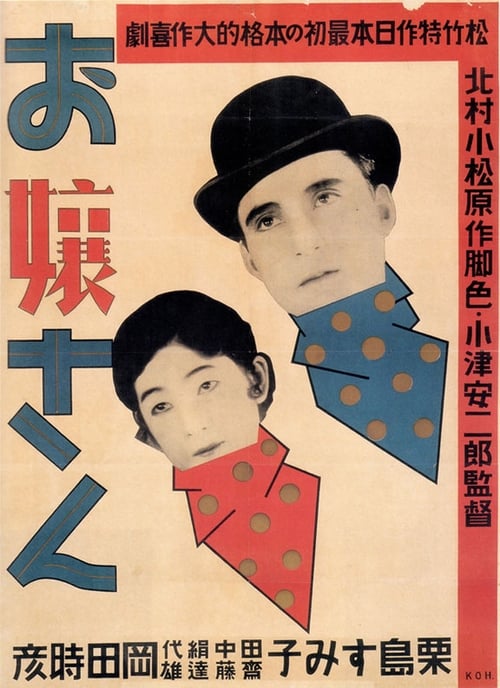
Young Lady
A feature-length work based on Kan Kikuchi’s newspaper novel, adapted for the screen by Kōgo Noda. With performances by stars such as Shizue Ryūda, Kinuyo Tanaka, and Yukiko Tsukuba, alongside handsome leading men like Shin’ichirō Komura, Hikaru Yamauchi, and Ichirō Yūki, the film outshone its contemporaries. The collaboration between director Heinosuke Gosho and cinematographer Mitsuo Miura, recently returned from America, gave rise to a work of first-class quality in the Japanese film world, distinguished by its brilliance and delicacy.
The Model of New Women

Bored in his marriage, a dentist flirts with a young woman on a train. However he soon finds himself embroiled in a series of misunderstandings with his wife, the young woman and her husband. Considered to be a lost film.
A Primer on Marriage

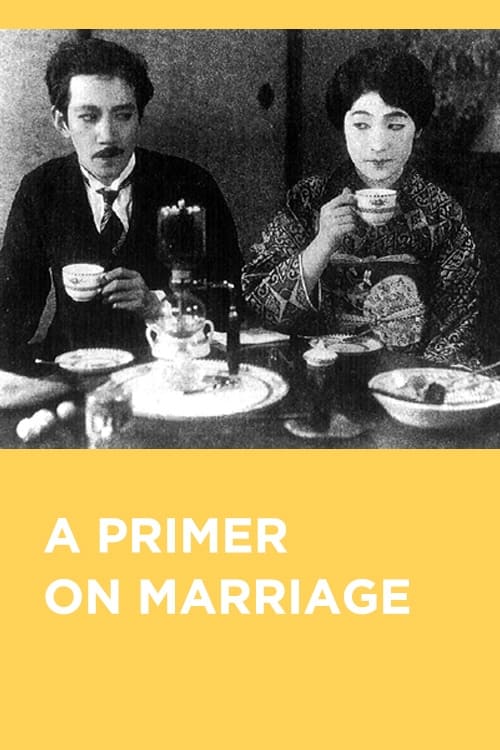
Directed by Mikio Naruse. It is presumed to be lost.
Love and Power
The love of an older sister who worked as a geisha but decided to open a bar under the auspices of a millionaire
Nikutai no bōfū

No description available.
Umi mo yusha
Japanese silent film from 1929.
The Father and His Son
Japanese silent film from 1931.
Sisters: Part 1
Japanese silent film from 1931.
Sisters: Part 2

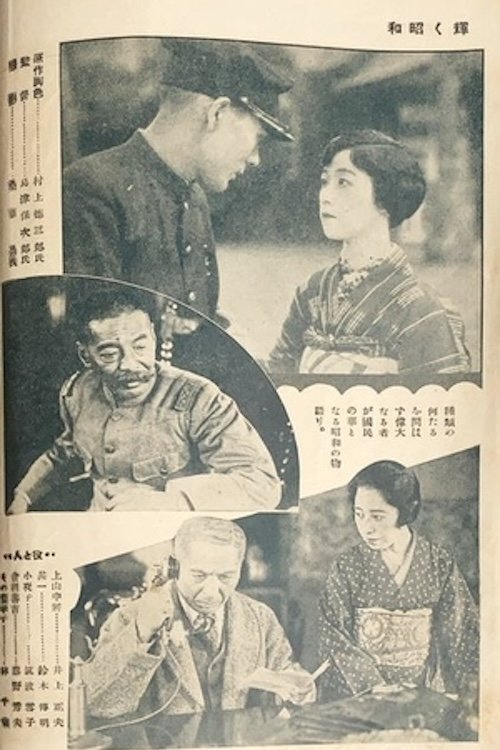
Japanese silent film from 1928.
The Glory of the Shōwa Era
Japanese silent film from 1928.
If Only She...
Short feature by Hiroshi Shimizu.
Stick Girl
Japanese silent comedy from 1930. The directorial debut of Hiromasa Nomura.
The Beating
Japanese silent film from 1930. The second chapter of "The Big City: Labor" (1929).
The Big City: Explosion
Japanese film from 1929.