Directing
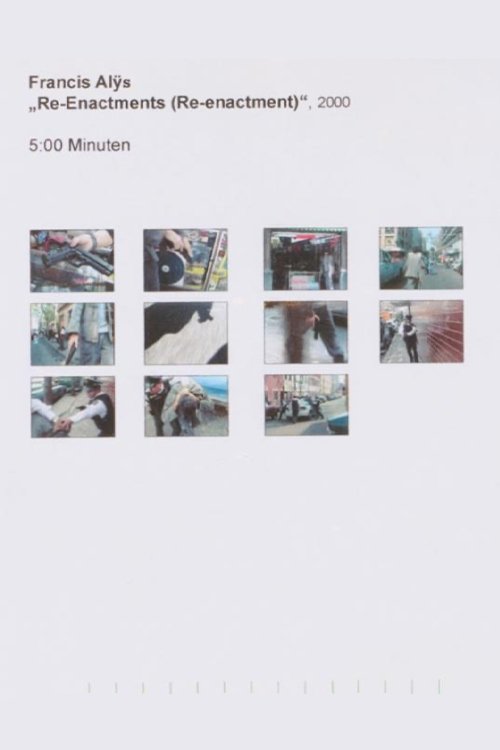
For this work Alÿs purchased a gun in Mexico City then walked through the city streets with the weapon in his hand. After eleven minutes he was arrested by the police. The following day he repeated the action, this time in cooperation with the police. By presenting a record of this dramatic action alongside footage of its reenactment, Alÿs blurs the boundaries between documentation and fiction. Questioning the concept of authenticity, this work demonstrates “how media can distort and dramatize the immediate reality of a moment,” the artist has said. Gallery label from Francis Alÿs: A Story of Deception, May 8–August 1, 2011.
No description available.
The castle must be positioned just far enough from the sea to be completed before the tide reaches it. As the moat is dug by busy spades, the vacated sand forms a growing pile in the middle. Sea water starts to rise into the moat from below. As the waves break gently, closer and closer, the children dig faster to fortify the outer rampart with sodden sand. Even as the defences are being flooded, they work on shaping and firming the castle with hands and feet. The tide soon overwhelms the mini world and smooths the whole thing flat, leaving the children standing ankle-deep in ebb and flow.
Once upon a time Ani was one of the most important cities of the Middle Ages. People started abandoning the city until all life left and silence fell into Ani. Yet, can't we do better than silence?
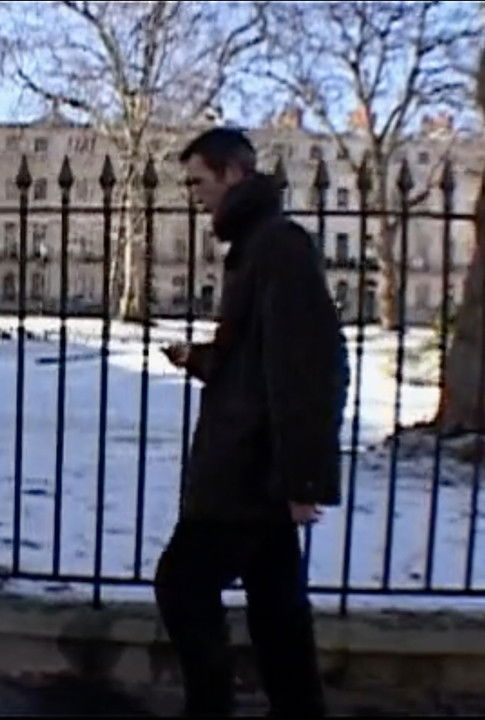
This video performance showcases two works by the artist. In the first, he walks through the streets of London, trailing a wooden drumstick along a series of metal railings, producing a percussive, sometimes bell-like noise. The camera follows behind, focusing on the stick as it strikes the railings. Occasionally, it cuts to wide-angle shots, capturing the awkward and oddly humorous presence of other people. In the second work, titled "Samples II" Alÿs appears even rawer, minimal and radical. He walks around London with a drumstick in hand, creating sounds by playing the metal fences beside him, without a melody. These works are a playful example of one of Alÿs’s ‘interventions’ in the city.
One of Francis Alÿs’ series of performative videos that politicize absurd or seemingly futile gestures, Paradox of Praxis 5 documents the artist’s nocturnal perambulations through Juárez as he kicks a ball of fire along the city’s desolate streets. Transcending metaphor, the eerie mobile conflagration traces out an imaginary map of a devastated city.
A sprite in a blue pinafore, plimsolls, and white facemask flits through Hong Kong, enclosed in a quicksilver bubble of magic. Streets become the dull, slow backdrop to her vividness. Oblivious to storefronts and curious stares, seeing only the yellow lines and the cracks in the pavement, she snakes and two-steps around seams and lines without loss of élan, chanting spells that shade into vague sounds. “Step on a line, break the devil’s spine, Step on a crack, break the devil’s back, Step in a ditch, your mother’s nose will itch, But if you step in between, everything will be keen!” By igniting her route with meaning, she briefly wrests public space from the commercial values this city lives by.
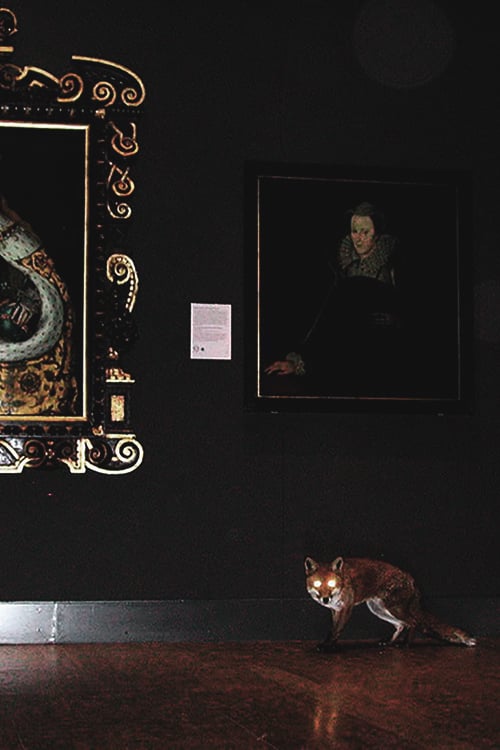
The Nightwatch documents an action realised by Alÿs in 2004 in which he released a fox into London’s National Portrait Gallery in the middle of the night and used the museum’s CCTV system to follow its movements. The institution was chosen because unlike other institutions it does not conceal its CCTV cameras.
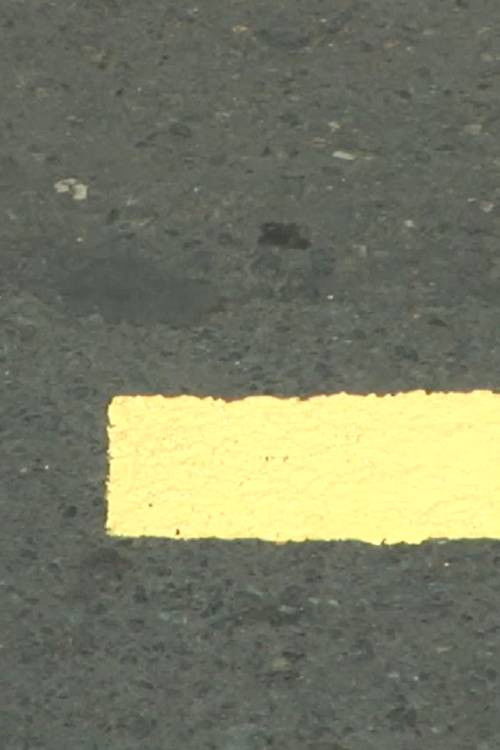
From the 3rd to the 5th of November 2008, 60 median strips erased by the passage of time were repainted in the former Panama Canal Zone.
During the 5th Havana Biennial, artist Francis Alys put on his magnetic shoes and took daily walks through the streets of the city, collecting scraps of metal lying in his path.
Lamma Island, Hong Kong, 2020.
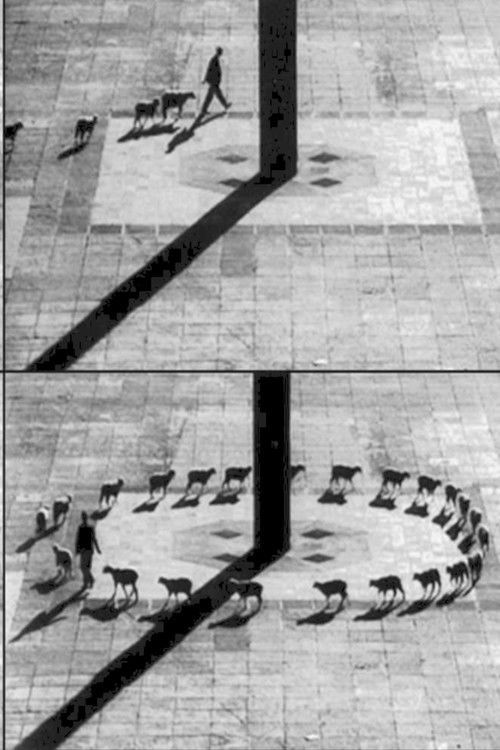
The video shows the artist walking in circles around the flagpole (“Madre Patria”) in Zócalo, Mexico City’s monumental central square, which is flanked by government institutions. This work relates to a storied incident that took place during the Mexican government’s brutal oppression of the 1968 student uprising in Mexico City.
Born in the recent past in school playgrounds and now a national sport, Nzango is a female-only game. The aim is to imitate, or more mysteriously, anticipate, the leg movements of the facing player. The pace is set by both teams singing and clapping in unison, faster and faster. Local variants thrive, ignoring the official rules. This, the girls’ own invention, involves “minus” and “times” signs, the first a mirror image – A’s right leg, B’s left leg – the second a crossed diagonal. And yet all the outsider perceives is a series of lightning confrontations, as pairs, then other formations, hop and kick ecstatically, advance and retreat according to an inapprehensible logic, telepathically improvised, perhaps. What geometry rules the final blur of legs?
"Mixing water from the Red Sea with water from the Black Sea". Trabzon, Turkey-Aqaba, Jordan, 2010.
Outside a stark tent city, this version of the game involves a grid of squares, two across by six long, marked by lines gouged into the arid ground. The player tosses a stone into the grid and starts hopping up one side of it to where the stone lies, careful to land only once in each square or station. When the stone is reached it must be kicked or nudged back down the other side to the start line, still hopping on the same foot. The test is difficult, and few succeed. For as the closing subtitles tell us: ‘In ancient cultures hopscotch symbolizes the progress of the soul from Earth to Heaven. The player hops between Worlds to escape Hell and reach Heaven, from which he will return to Earth reborn and redeemed.’
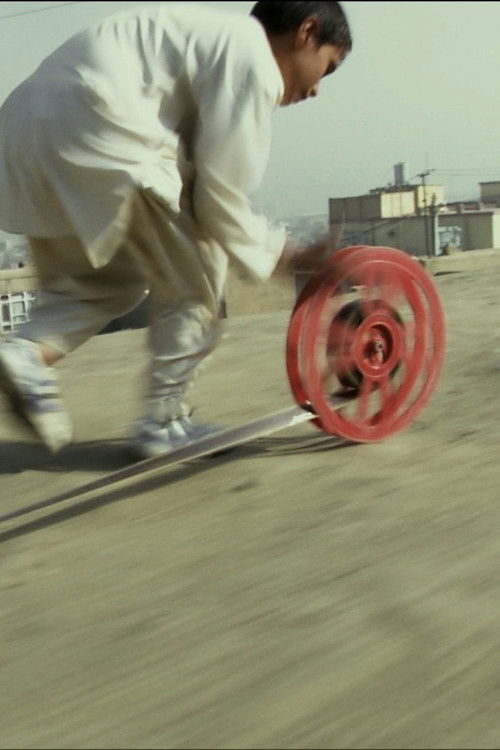
In August 2017, during the final phase of the Fatah (Conquest) Operation, the Iraqi Army pushed Islamic State combatants back from the east bank of the Tigris River in Mosul. With the support of Baghdad’s Ruya Foundation, Francis Alÿs had been working with the inhabitants of the border region between Iraq and Syria, embedded with the armed forces fighting the Islamist militias. On the west bank of the Tigris, which had just been liberated from Daesh control, Alÿs documented a peculiar street game that he had heard of on a previous trip: a soccer game played without a ball, but with great skill, imagination and resistance by a group of young people, in defiance of the barbarous impositions of the Islamic State, an expression of passion and creativity that these young people were more than willing to reenact in front of the camera.
A red VW Beetle drives up a hill, an image which is accompanied by a loud soundtrack of a brass band's rehearsal. The driver is listening to a recording of the rehearsal, and each time the band pauses, he steps off the pedal so the car rolls back down, and the process continued without resolution.
For the 1999 Venice Biennale, Alÿs created an unofficial performance for the occasion, titled Duett. The piece begins with Alÿs entering Venice by train while fellow Belgian artist Honoré d’O landed at the airport, and each man is carrying one half of a tuba. After drifting through the labyrinth of streets, they eventually met three days later and reassembled the musical instrument. The work is emblematic of Alÿs’s exploration of estranged or misplaced halves striving for reconciliation.
Each couple tries to save an orange from gravity. When it falls, the pair is eliminated. This exercise in collaboration involves intimacy: faces are only an orange apart. It involves embraces, though not loving so much as keeping the partner in tension. Pacifying their natural energy with an eerie, giggly humming, the children shuffle like old marrieds at a tea dance, united and separated by a scandalous orange globe. Eyes sockets and cheekbones prove useless against roundness; even the winning couple’s triumph is short-lived.
Kisolo is one of a thousand variants of the global Ur-game, Mancala, a “sowing” game sometimes still played with seeds even when using a board. Its timeless agrarian gestuary follows the combinatorial rules of what is also a “count and capture” game. After ruining several carving knives on digging holes in the hard orange earth, two players squat either side of four rows of six (the third-century pits under a stele in Ethiopia have three rows). First, three stones to each hole, then the players take turns, gravely reciting numbers. The focus is on hands hanging loose and expectant or smoothly reaching, scooping, and distributing – never a moment’s hover – until one player has, somehow, captured all the stones.