Acting
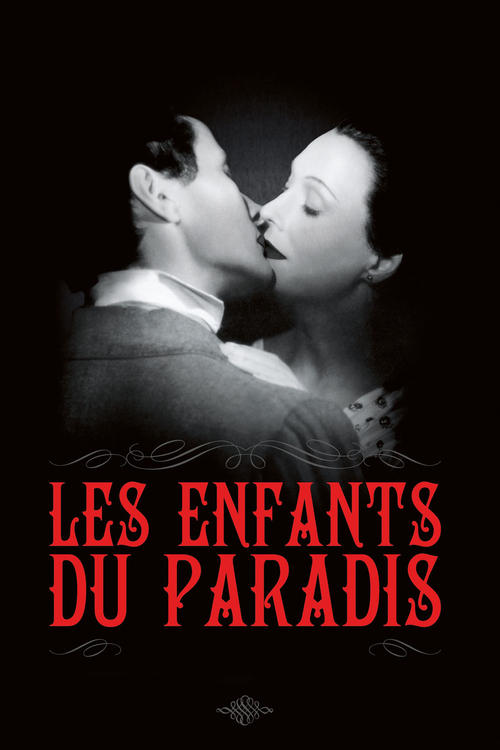
In a chaotic 19th-century Paris teeming with aristocrats, thieves, psychics, and courtesans, theater mime Baptiste is in love with the mysterious actress Garance. But Garance, in turn, is loved by three other men: pretentious actor Frederick, conniving thief Lacenaire, and Count Edouard of Montray.
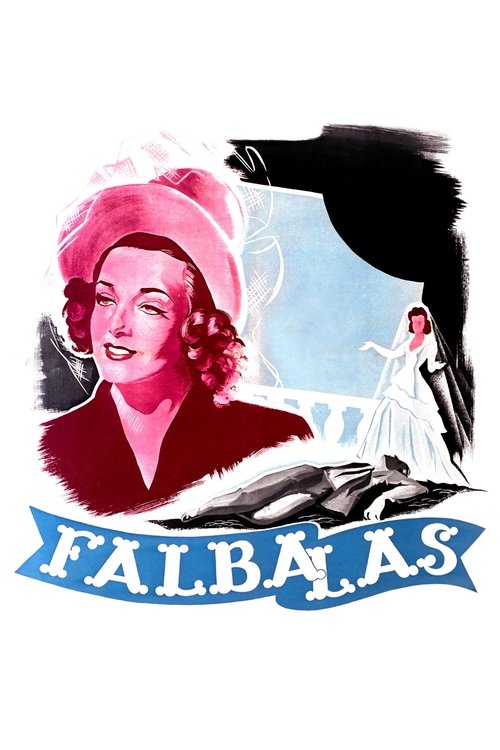
Philippe Clarence, a famous Parisian dressmaker, seduces his friend's fiancee. But, for the first time in his life, this is for real. The film is also a sharp picture of the fashion world.
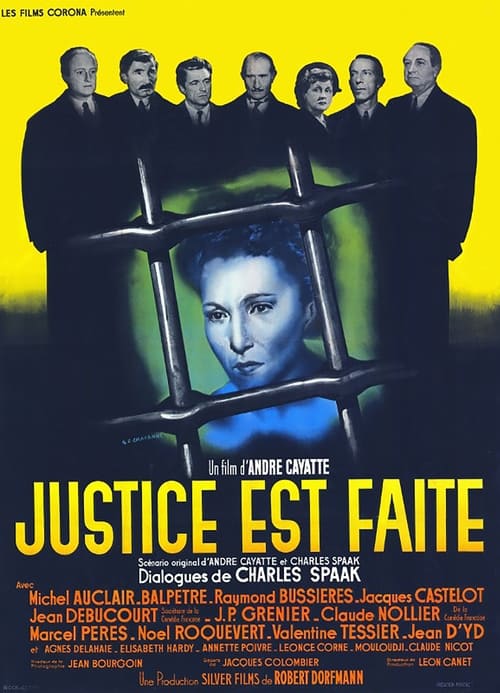
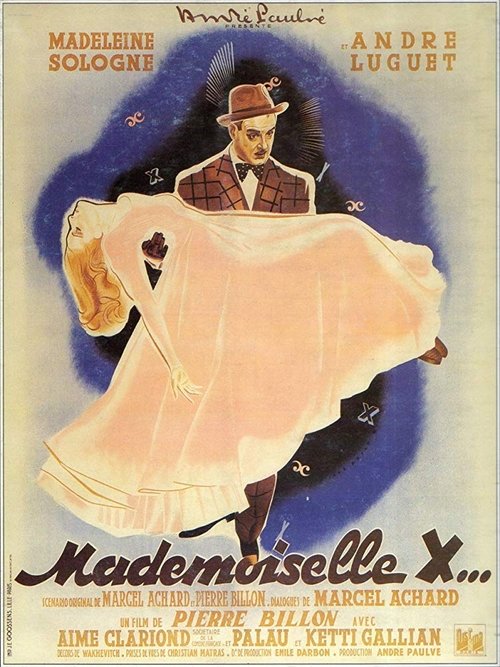
Elsa Lundenstein is accused of having murdered her lover. The jury discusses the case vividly. All members are somehow prejudiced because of personal life experience and subsequently each member reads something different into the presented facts.
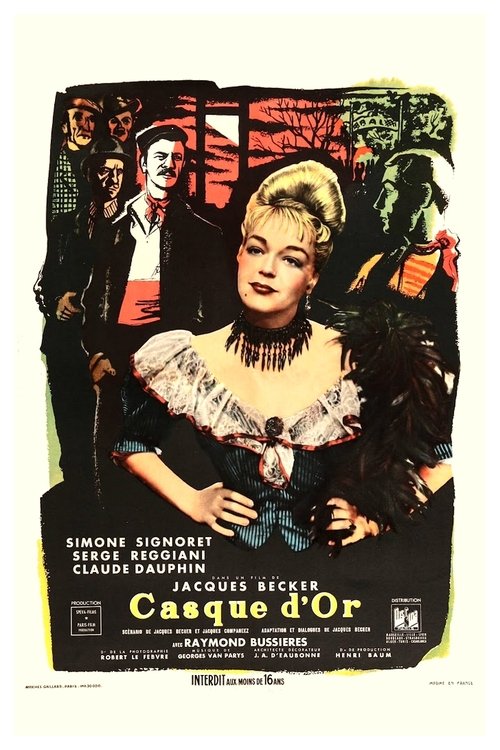
At the end of the 19th century, during a ball in Joinville, on the outskirts of Paris, Georges, a former delinquent working as a carpenter, meets Marie, a young woman connected to a criminal gang.
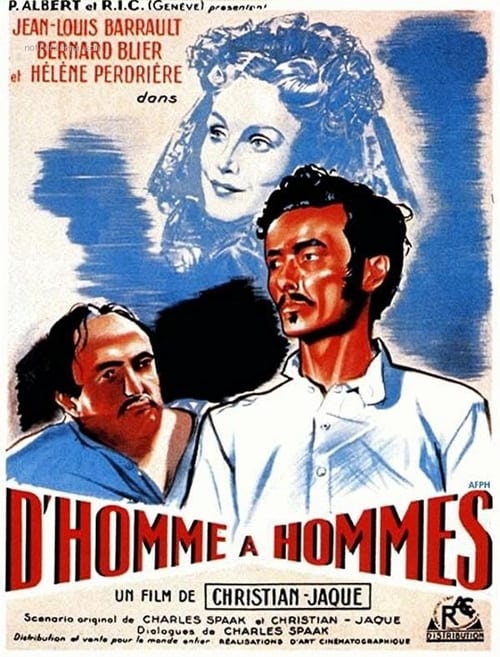
The story of the Swiss soldier, Henri Dunant, who was responsible for the founding of the Red Cross, and who was offered the first Nobel Peace Prize.
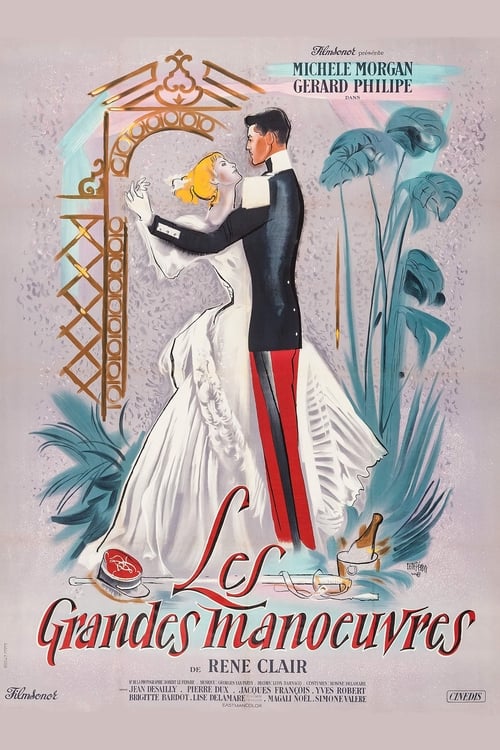
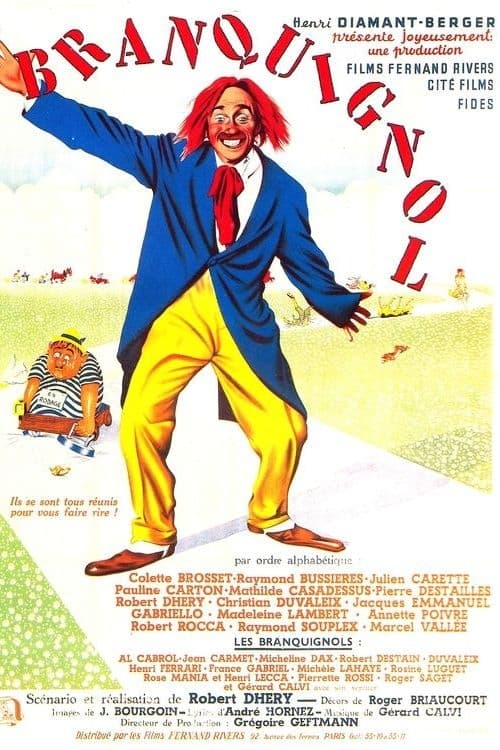
In this sketch comedy compared to the American film Hellzapoppin, a spectacle is put on to celebrate the wedding of a nobleman, but the results are disastrous.
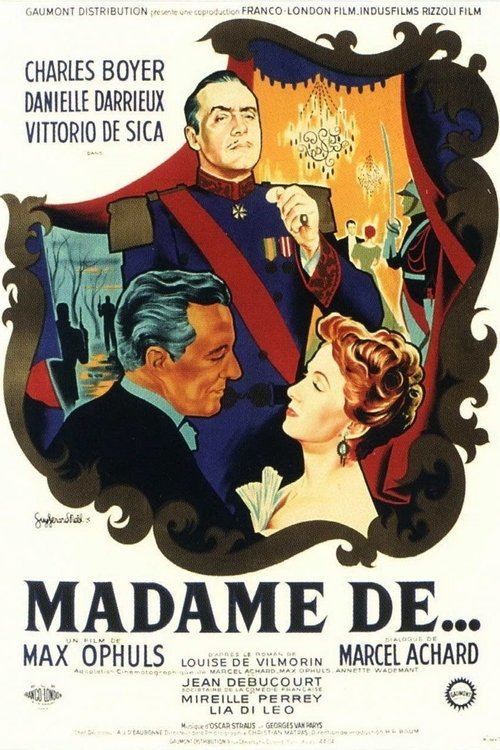
In late 19th century France, the Countess Louise, wife of a wealthy general, sells the earrings her husband gave her on their wedding day to pay off her secret debts, then claims to have lost them. Her husband quickly learns of the deceit, which is the beginning of many tragic misunderstandings, all involving the earrings, the general, the countess, and her new lover, the Italian Baron Donati.
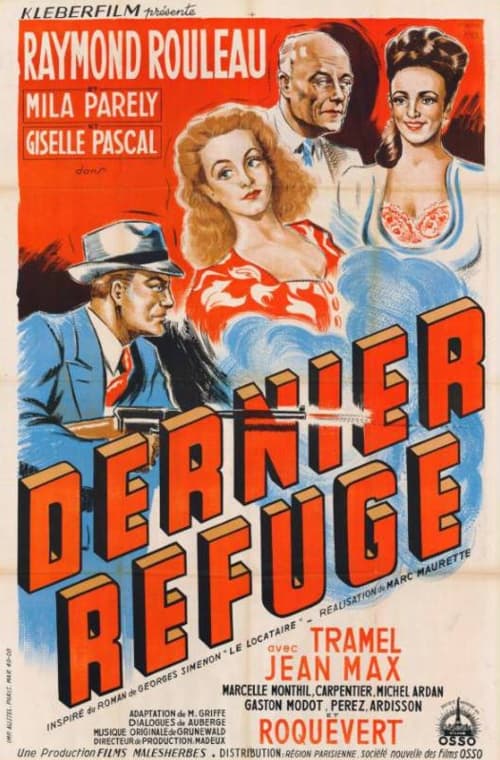
Philippe and Sylvie have to do with Alvarez, a dangerous gang leader. They break up with him and commit robbery and murder. Sylvie suggests that Philippe take refuge in his quiet family. His younger sister Antoinette attracts and charms Philippe and excites the jealousy of Sylvie who informs Alvarez. The police get involved and Philippe is killed during a merciless fight.
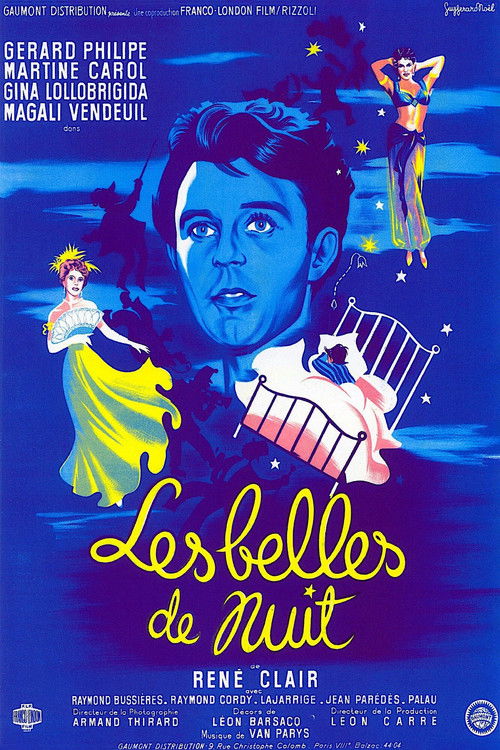
A daydreaming French composer sees himself as a fine figure dashing through history.
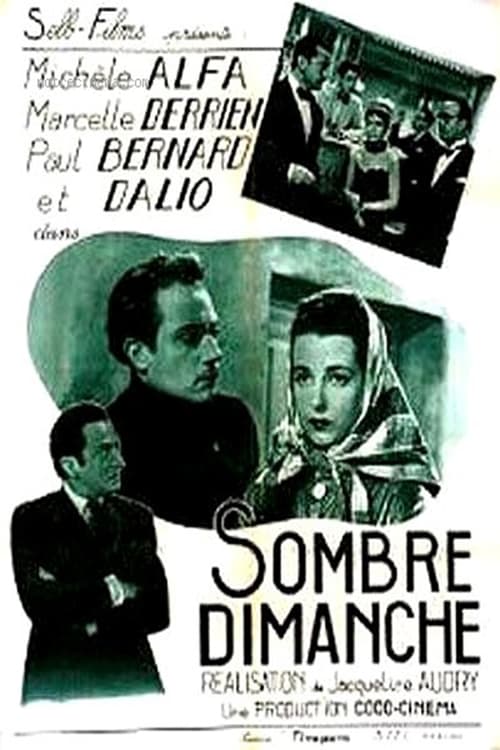
Shortly before the War, Jan Lazlo, a Hungarian musician who has emigrated to France, falls for a young woman. Alas, the lady forsakes him and the poor man tries to overcome his grief by writing "Gloomy Sunday", a song so desperate that it can drive its listeners to suicide. Max, a music publisher, likes the song and decides to launch it by all means, foul or fair. Bob, his accomplice, manages to talk his mistress Michèle into committing a fake suicide. She obeys him and the scheme is a success as a result. On this occasion, Jan gets to know Michèle and the two young people fall in love. Happiness seems to be in store for Jan again but this is without counting with Bob. Jealous of Jan, the naughty fellow indeed tells him that Michèle's attempted suicide was nothing but an advertising pretense.
Four-episode Franco-Italian omnibus film. Four men from different national and cultural background take refuge in a cabin after being sidetracked by bad weather on their way to conference.
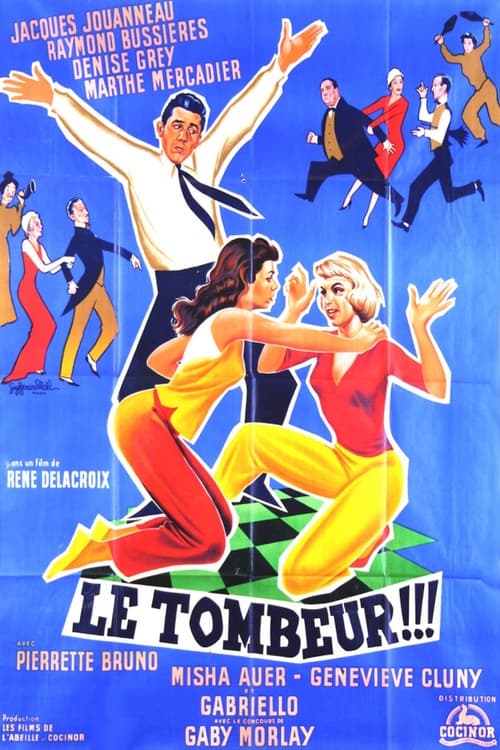
Yes, Doudou (or, more respectfully, Edouard Doucin) is both heir to a big sugar refinery and its managing director but he is also an incorrigibly bashful bachelor, which just exasperates his aunt Agatha. Summoned to marry as soon as possible, Doudou is fortunate enough to meet Babette , an elegant young lady who wishes to introduce him to her parents. When he comes to visit them, he mistakes the floor out of nervousness. In fact,he finds himself at the Lautiers' not the Olivaros'. Now, chance has it that this couple of shopkeepers also have a marriageable daughter. And as Poupette is romantic, passionate and adorable, Doudou can't find the nerve to disappoint her. As a result the young man gets engaged...twice ! How the devil will he cope ?
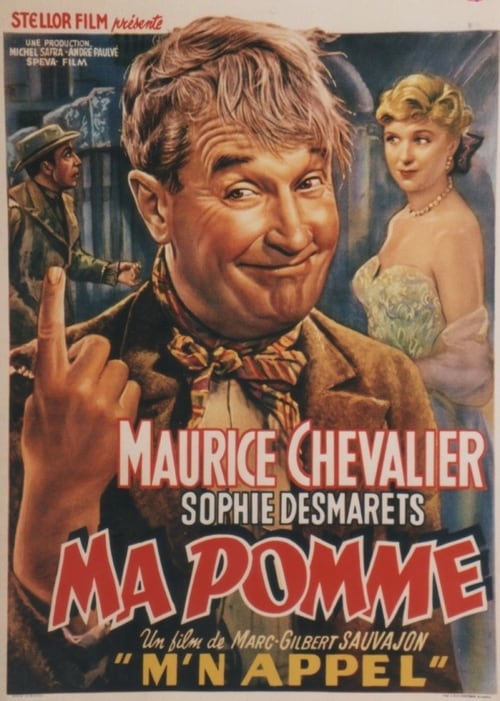
Maurice Vallier, nicknamed "Ma Pomme"(which means "myself" in slang), is a cheerful man, well aware that money does not make happiness and who, of all things, prices freedom. Which is why he has become a tramp and he has never regretted his choice of life. Things go smoothly until the day he inherits a huge amount of money. He first refuses it but changes his mind when he realizes that thanks to the inheritance he can help others. Even more enticing is the fact that he must share the big money with a charming air hostess. However once he deems he has done enough good he gives up the money left and resumes his old lifestyle singing along "Ma pomme c'est moi, j'suis plus heureux qu'un roi..."
Summoned by his mother to plead, a very young lawyer has a trio of pathetic criminals acquitted. The daughter of one of them reveals to the lawyer that the three accomplices hoped to find food and board in prison. For the beautiful eyes of the young girl, Master of La Bastide attaches the three rogues to his service. Disasters, confusion, clumsiness follow one another until the planned wedding.
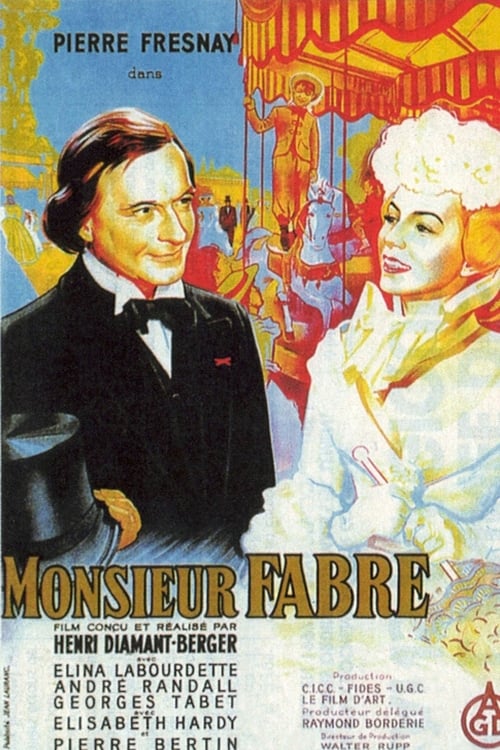
It centres on the life of the entomologist Jean-Henri Fabre and his total devotion to studying insect behavior, travelling from Avignon to Paris, from Paris to his death in Sérignan. He is honoured by the French president Raymond Poincaré and his patience, obstinacy and knowledge are also recognised by Napoleon III, the publisher Charles Delagrave and the philosopher John Stuart Mill. They reach their climax in his book, Souvenirs entomologiques.
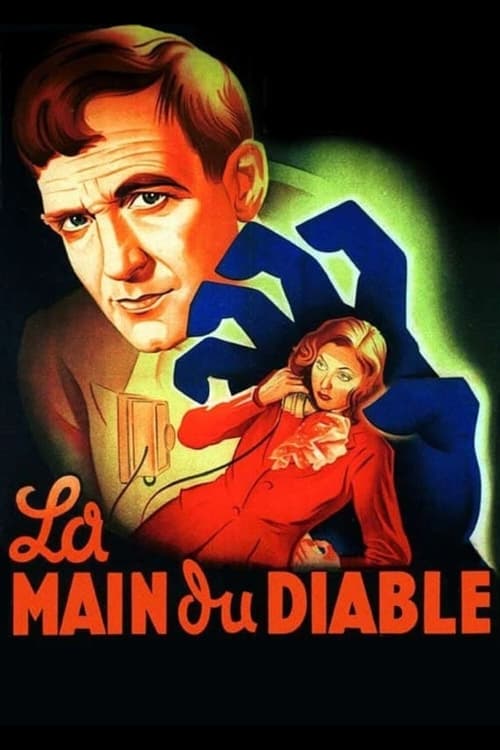
Madame Rose runs a seedy hotel in a suburb of Paris. Strong-minded but without the least moral scruple, she once killed her husband whose honesty was a hindrance to her business. Under a suspended sentence, she now indulges in smuggling. One day, Victor, one of her former accomplices hounded by the police, finds sanctuary with her. During a drinking spree, he has the bad idea to entrust to her a suitcase filled with bank notes, a loot with which Victor hopes to rebuild his life in South America. But Rose, lured by temptation, betrays Victor, who is arrested by the police. However, he manages to escape with only one thing in mind, to take revenge on Rose...
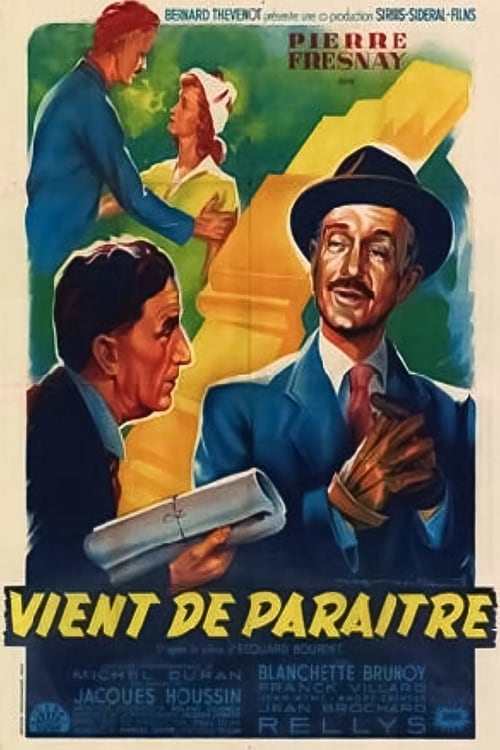
Satire of publishing circles, featuring a ferocious boss, Moscat, a successful but handsome author, Maréchal, another successful but bitter author, Bourgine, a writer plagued with ambition, Brégaillon and the hero, Marc Fournier Zola Prize winner. Naive, the latter quickly becomes formidable, especially since his wife's infidelities have provided him with the material for a new novel.
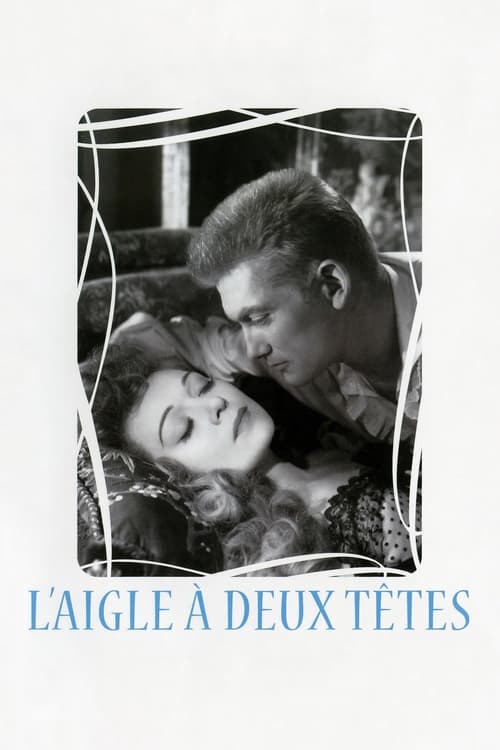
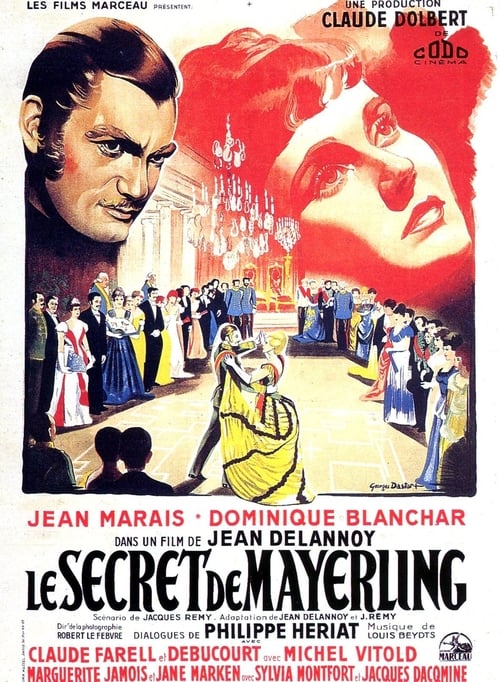
Political intrigue and psychological drama run parallel. The queen is in seclusion, veiling her face for the ten years since her husband's assassination, longing to join him in death. Stanislas, a poet whose pen name is Azrael, is a suicidal anarchist, his imagination haunted into hate by longing for this queen who's drawn apart. He enters her private quarters intent on killing her then himself, but they fall in love, in part because he looks like the king. Stanislas wants her to regain political power by appearing to the public, and she tries to convince him to find hope and escape. All the while, the queen's enemies plot to keep the lovers together but to thwart their plans.
The life of Adrien Wettach, famous in the annals of the circus under the name of Grock, world famous Swiss clown. A series of images from Épinal, retracing the career of a European artist, within the framework of world history. Lots of children, wars, an eccentric Russian countess, Countess Barinoff, who grows old admiring the clown, and a very long quibble about a party wall, all serve to highlight the star's final number.
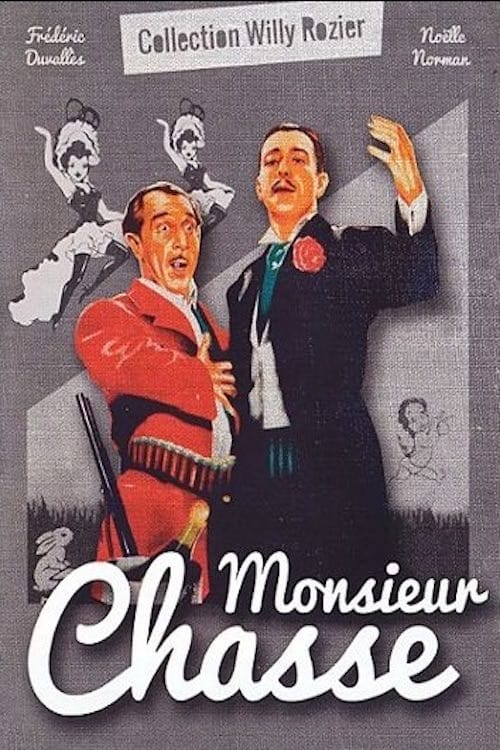
A husband covers his weekly infidelities with the pretext of hunting. His best friend intends to take advantage of the situation and makes an appointment with the outraged wife in a bachelor flat where the situation is resolved, not without morality being undermined.