Acting
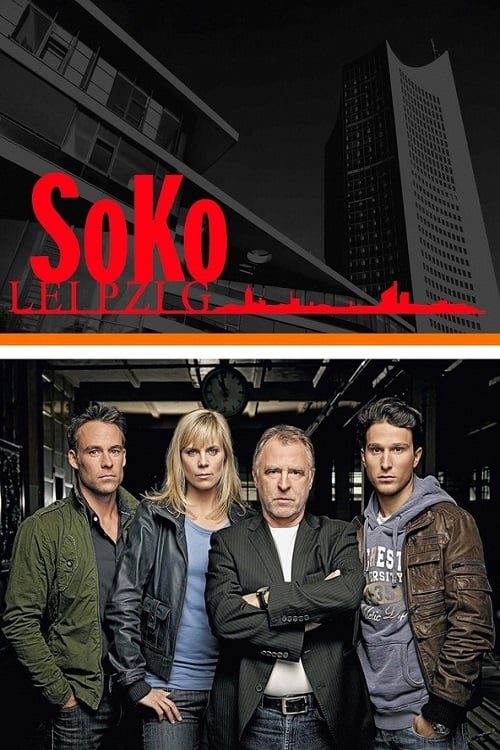
SOKO Leipzig is a German police procedural television programme, a spin-off of the earlier German police programme SOKO 5113. It was first broadcast on 31 January 2001, on German television channel ZDF. On 12 November 2008, the first part of a two-part crossover between SOKO Leipzig and British police procedural The Bill was aired, with the same version being shown on both ZDF and British television channel ITV1.
Polizeiruf 110 is a long-running German language detective television series. The first episode was broadcast 27 June 1971 in the German Democratic Republic, and after the dissolution of Fernsehen der DDR the series was picked up by ARD. It was originally created as a counterpart to the West German series Tatort, and quickly became a public favorite.
No description available.
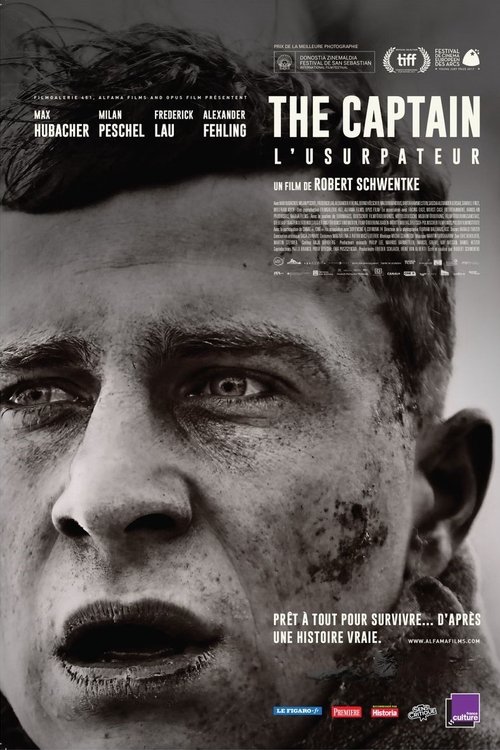
Germany, 1945. Soldier Willi Herold, a deserter of the German army, stumbles into a uniform of a Nazi captain abandoned during the last and desperate weeks of the Third Reich. Newly emboldened by the allure of a suit that he has stolen only to stay warm, Willi discovers that many Germans will follow the leader, whoever he is.
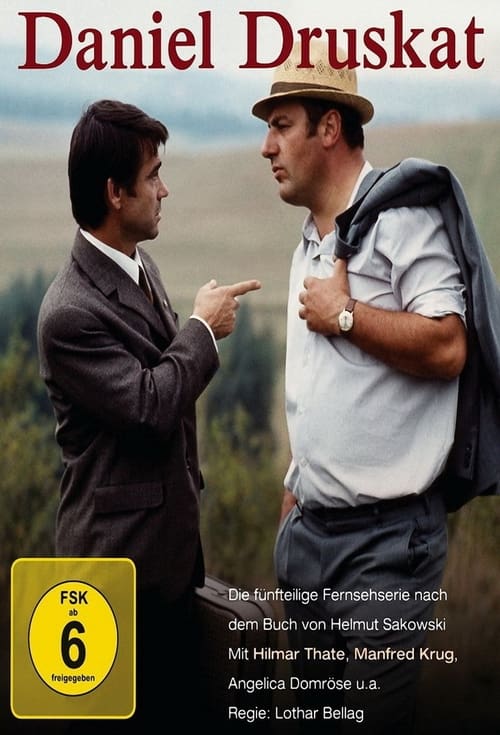
Large-scale, five-part film about the relationship between two men caught between friendship, rivalry and hatred during the first decades of GDR in the countryside.
Oliver doesn’t have a family so he steals one.
Sunny is the singer of a band trying to establish itself in the East Berlin music scene. They play regular gigs in small towns, but Sunny feels out of touch with the audience and with her life as a whole. She begins a relationship with Ralph, an amateur saxophonist and philosophy student, who writes her a very personal song—but his obsession with death and unfaithful lifestyle are not for her. After getting into a quarrel with a band member who harasses her and telling off a show host, she is thrown out of the band. Abandoned, she struggles to regain control over her life.
Dr. Gisa Tonius, a physicist in her thirties who has a nearly adult stepdaughter, cherishes the desire to have her own child. Suddenly, a big interdisciplinary research project threatens to significantly change Gisa′s life. Uncertain whether to look for professional or private fulfillment she asks her family and friends for their opinions. They all have different views on the point at issue. While her husband is afraid of losing her to her profession, her professor thinks that because of her talent she has an obligation towards science. In the end, Gisa reaches a decision: She wants to have a baby as well as take on the research project.
Berlin in the 1960s. Olaf and Horst are two young metalworkers, who provoke their older colleagues with critiques of the antiquated equipment and lack of materials... not to mention their love of leather jackets and motorbikes. Olaf and Horst begin to be targeted in the house newsletter, and the generational conflict escalates.
GĂĽnter has completed his electrical engineering degree and returns to Berlin. His old foreman and his wife welcome him and want to take a Sunday trip to GrĂĽnau, but he wants to visit a mechanical engineering exhibition that is only open that day. The old gentlemen accompany him to Stalinallee, and here something fateful happens: GĂĽnter meets the girl he has always fancied again ...
Russian soldier Grisha escapes from a German prisoner-of-war camp in the spring of 1917. He is caught and is to be shot as a spy. This decision is controversial. The dispute continues. Grisha is executed on the orders of the army high command.
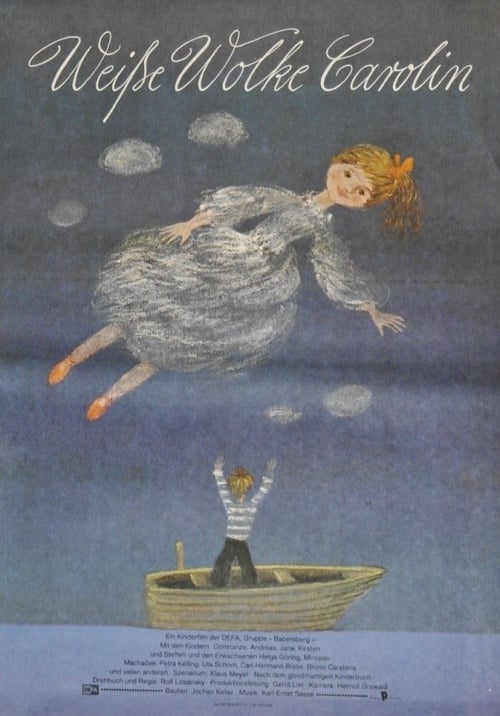
It's no big secret that twelve-year-old Hannes is in love with his classmate Carolin, who he compares to a beautiful white cloud in the sky. But when Carolin spends most of her time exploring the village's history with Benno, Hannes becomes increasingly jealous of his rival. The only person who is happy about this situation is Kerstin, who is in fact interested in Hannes. In order to impress Carolin, Hannes takes her and several others out for a boat ride in the nearby Bay of Greifswald, but his plan takes a deadly turn as a storm approaches.
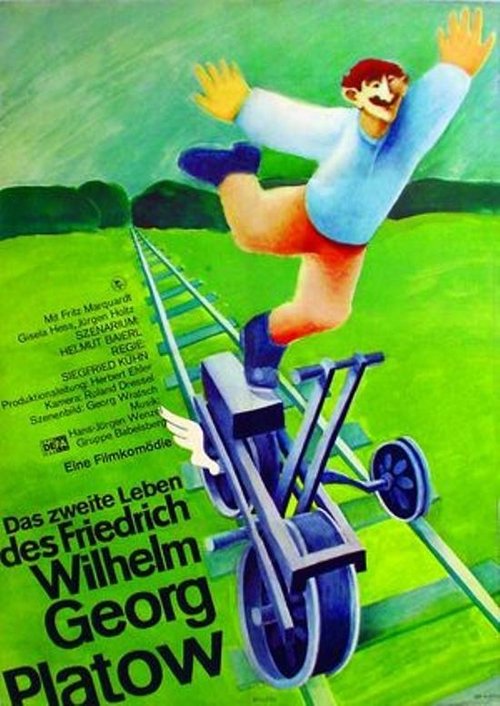
Friedrich Wilhelm Georg Platow worked for the railways his entire working life. He took up service at the small station of Luege 34 years ago. Now, the line is to be electrified and Platow, who cannot cope with the new technology, has to work on a secondary local line. Georg, his son, a railway worker as well, is to attend a training course, but Georg refuses to go. Then his father comes to a surprising and highly unusual decision. He pretends to be Georg Platow, making himself twenty years younger than he really is and registers for the course.
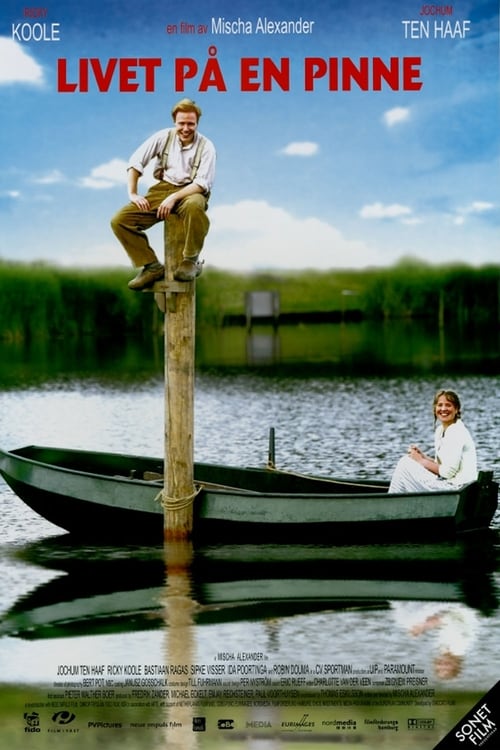
In the year 2000, a jury convenes in Friesland to elect the Sportsman of the Century. One man, Sake Wiarda, tries to convince his fellow-jury members not to nominate a sports hero like Abe Lenstra, but to give preference to the Frisian pole-squatter Taeke Jongsma. In flashbacks, Wiarda tells his audience the life story of this worker's son, who since childhood tries to escape the oppression of the working class in the thirties. Taeke finds out he is a splendid pole-squatter, but his record attempts are repeatedly thwarted by his great rival in love. Against the background of the historical changes in the previous century, the love story gradually unfolds between the pole-squatter and the farmer's daughter.
Experiences and problems of an air squadron: Commander Milan has reached the age limit for pilots and must come to terms with the fact that he will have to give up flying from now on. Lieutenant Lenz loses control of the plane during a flight and is seriously injured during the parachute rescue, in the worst case scenario he remains paralyzed. He doesn't want to tie his girlfriend Anka to him, but she sticks by him. Young Kullas comes into the squadron to replace Lenz. His predecessor's accident makes him afraid and he tries to find out what courage means to him. Lieutenant Herzog loves the teacher Sigrid. She returns his love, but it is difficult for her to choose a "hero" once again. Two years earlier, her husband was killed defusing a bomb. But Herzog does not want to give up his job. The fifth, Captain Wendland, is a party secretary. He takes flying just as seriously as his concern for his comrades.
A young boy fantasizes his way to school into a battle between cowboys and Indians, where the bad guys want to steal some gold medals. Real events and fantasy interacts in his mind.
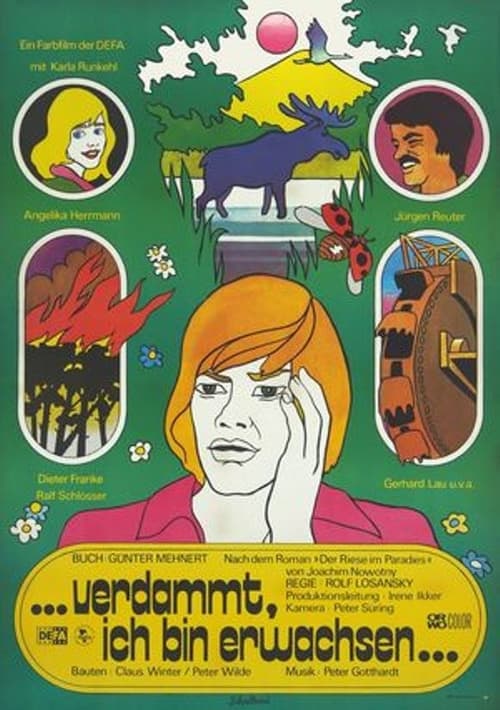
15-year old Klaus Kambor, called Kurbel, is living in a village in Lusatia and already thinks of himself as an adult. He can hold a lot of rhubarb wine and has already kissed a girl. But with his new method of lawn mowing, which he thinks is brilliant, Klaus makes a big mistake: He causes a wild fire in the forest. Then he does not react adult-like at all, but shirks the responsibility, which leads to the break-up with his girlfriend Daniela. Furthermore, Klaus does not realize that several of the places he likes the most in his environment are now going to be sacrificed to mining. When Klaus becomes friends with the teacher Konzak and with the construction worker Jule, he feels understood for the first time and starts to take more responsibility.
Normal everyday life in an apartment building on PlantagenstraĂźe in East Berlin is disrupted when a truck pulls up with the new tenants' furniture. And they include two small children - now, of all times, when old Matuschke's wife has just died and consideration should actually be shown for the widower. Even worse for Mrs. Tillack, however, is the fact that the entire male world seems to be after her 16-year-old daughter Katrin.