FEEL IT.STREAM
Julian Rosefeldt

Julian Rosefeldt

Directing

Biography

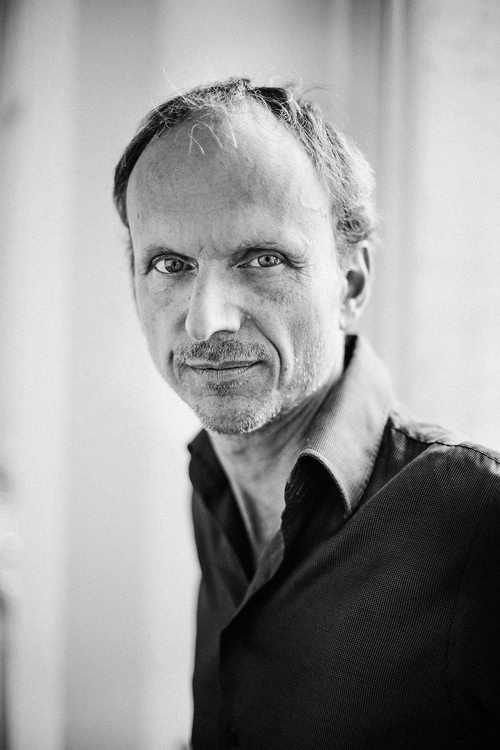
Julian Rosefeldt is a German artist and filmmaker. Rosefeldt's work consists primarily of elaborate, visually opulent film and video installations, often shown as panoramic multi-channel projections. His installations range in style from documentary to theatrical narrative.
Known For

No image

In the three-channel film installation Clown (2005), the absurd and slightly uncanny figure of a clown emerges from the impenetrable lushness of the Brazilian jungle. His red nose contrasts with the green forest. Starting from the right-hand side, he passes through all three screens, stumbling towards us, following a streamlet, before finally disappearing back into the jungle. As often in Rosefeldt’s work, this film’s protagonist is an uncommunicative, self-absorbed monad: a wanderer in a world he either does not understand or – caught up in activities required by the closed circuit of his solecistic, madcap logic – wishes to ignore. As the essence of absurdity, this film work can be read as a metaphor for modern man’s alienation from nature and an epilogue to Rosefeldt’s Trilogy of Failure.

Clown

2005Movie
No image
UpcomingDate TBD

In My Home Is a Dark and Cloud-Hung Land, Julian Rosefeldt critically explores the German term Heimat, which refers to the sentiment of feeling at home, by featuring the forest as a complex motif. While individual figures-recognizable as references to the Romantic paintings of Caspar David Friedrich-interact on three screens in absurd ways with the nature surrounding them, a bizarre stage performance blending a forest setting and an opera hall unfolds on the fourth screen. In numerous quotes and references, literary narratives, fairy tales, and mythology are interwoven with German history, especially in reference to the Nazi period. The forest appears as a projection surface of German identity, ranging from closeness to nature to ideological appropriation.

My Home Is a Dark and Cloud-Hung Land

Movie
No image

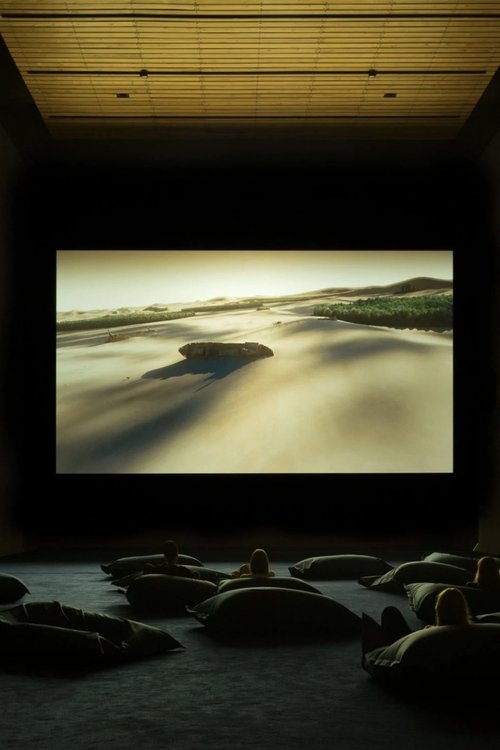
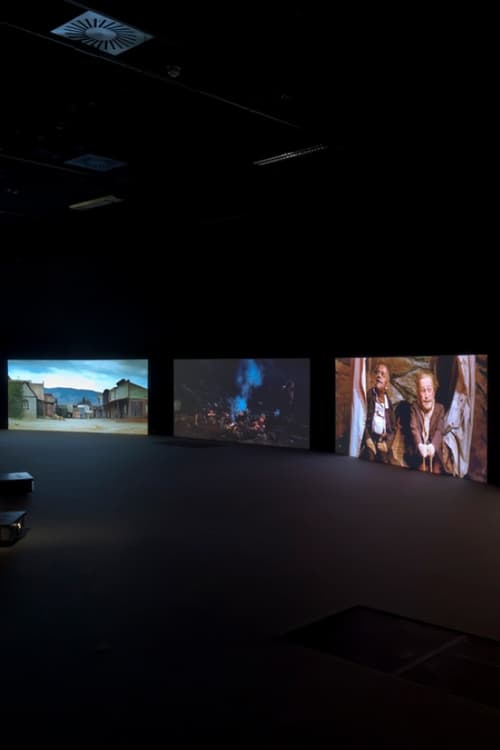
A condensed version of Rosefeldt’s filmic interpretation of Joseph Haydn’s “The Creation”, “In the Land of Drought” (2015/2017) confronts the relationship between man and his impact on the world. Set to atmospheric sounds and a pulsating hum, the 43-minute piece looks back from an imagined future upon the post-Anthropocene: the aftermath of significant human influence on Earth. An army of scientists appear to investigate the archaeological remnants of civilization after humanity has made itself extinct. Shot entirely using a drone, Rosefeldt’s images hover meditatively over the desolate landscape and ruins. Connoting surveillance, the drone’s bird’s eye view removes human perspective with us onlookers kept at a distance throughout. Increasingly, more figures dressed in white lab suits emerge to inspect the ruins of civilization – which are in fact abandoned film sets close to the Moroccan Atlas Mountains.

In the Land of Drought

2017Movie