FEEL IT.STREAM
Julian Rosefeldt

Julian Rosefeldt

Directing

Biography

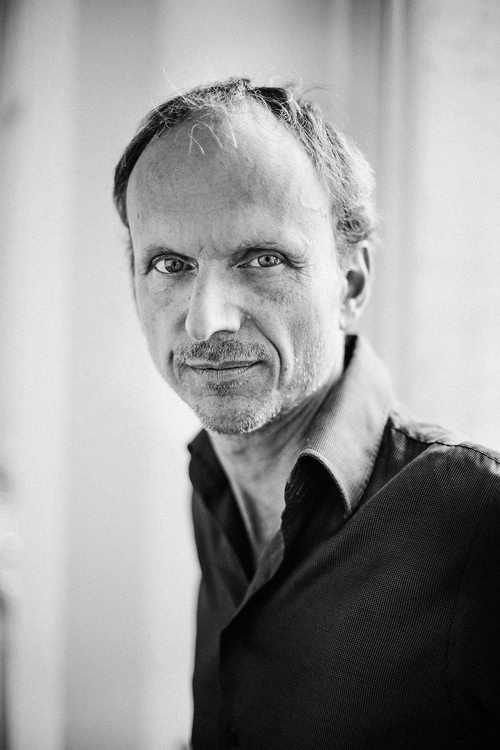
Julian Rosefeldt is a German artist and filmmaker. Rosefeldt's work consists primarily of elaborate, visually opulent film and video installations, often shown as panoramic multi-channel projections. His installations range in style from documentary to theatrical narrative.

Known For

Manifesto
6.8

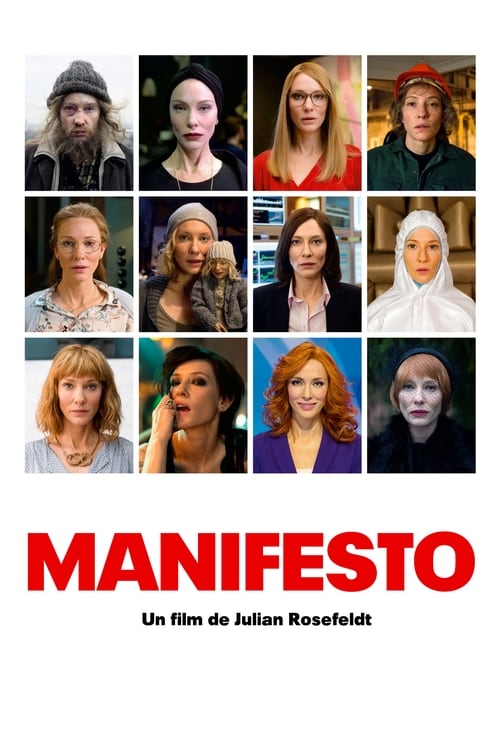
An edited version of Rosefeldt's installation work of the same name, Manifesto is an outstanding tribute to various (art) manifestos of the nineteenth and twentieth century, ranging from Communism to Dogme, in connection with thirteen different characters, including a homeless man, a factory worker and a corporate CEO, who are all played by Cate Blanchett. A striking humorous audio-visual experience.

Manifesto

2017
Euphoria
N/A

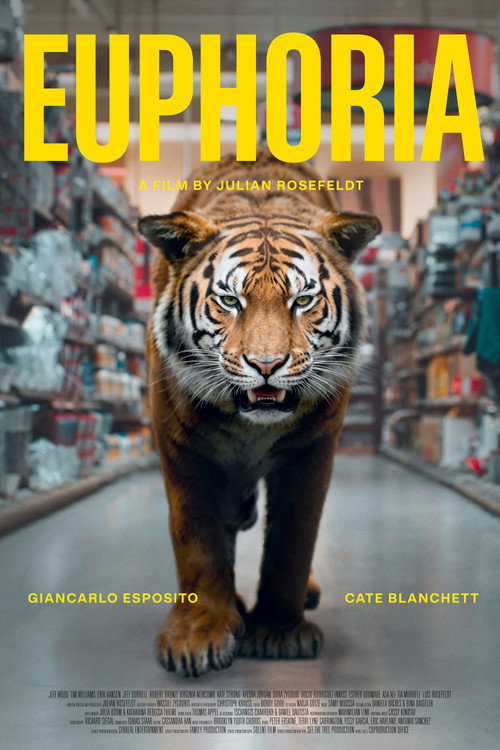
Artist and filmmaker Julian Rosefeldt creates elaborately staged films that investigate the power of language and the conventions of cinema as an allegory for societal and individual behaviors. With the multi-channel film installation Euphoria he continues this examination by exploring capitalism, colonialism, and the influential effects of unlimited economic growth in society.

Euphoria

2022
No image
N/A

Stunned Man (2004) is the second part of Rosefeldt’s Trilogy of Failure (2004/2005) in which three different settings draw a picture of our vain entanglement with everyday rituals. In each case the protagonist is caught up in a microcosm that suggests mental and spatial claustrophobia. As a reaction to the hopeless situation, he plunges into permanent Sisyphean activity – going nowhere and producing nothing. The motifs of perpetual attempt and constant failure find their equivalent in the repetitive structure of the loop. The scenes are allegories of our frantic and ultimately futile attempts to escape the surrounding norms, constraints, structures and rituals by which we are determined.

Stunned Man

Deep Gold
8.0

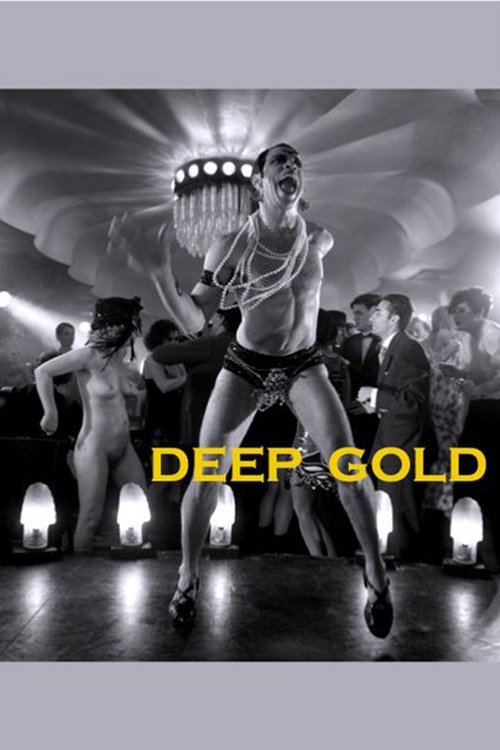
Deep Gold is an homage to Luis Bunuel's surrealist film "The Golden Age" from 1930, which Bunuel made in collaboration with Salvador Dali. In his film, Bunuel confronted the values of the Catholic Church and the hypocritical bourgeois sexual morality of his time. Deep Gold functions like an additional insert in Bunuel's black and white film. It shows a world of desire and lust into which Modot, the protagonist in Bunel's film, is drawn and overwhelmed by the omnipresence of female sexuality.

Deep Gold

2014
American Night
N/A

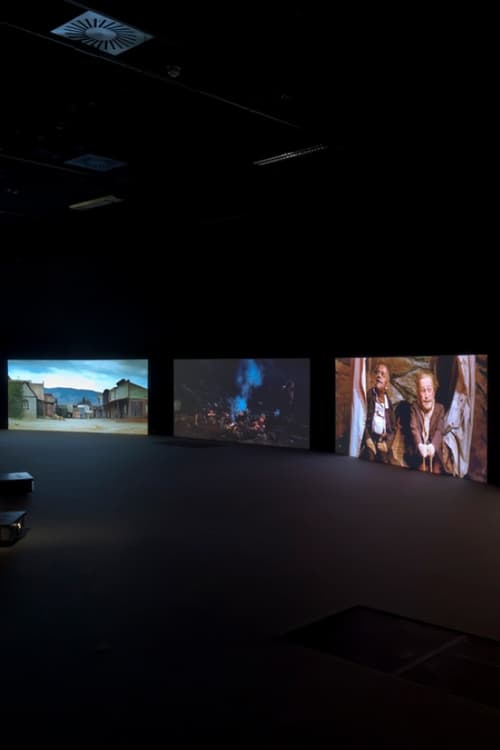
Several scenes showing evening as it turns to night in an anachronistic take on the wild west. 5-channel Installation piece, also presented as a single video.

American Night

2009
No image
N/A

The Perfectionist (2005) is the third part of Rosefeldt’s Trilogy of Failure (2004/2005) in which three different settings draw a picture of our vain entanglement with everyday rituals. In each case the protagonist is caught up in a microcosm that suggests mental and spatial claustrophobia. As a reaction to the hopeless situation, he plunges into permanent Sisyphean activity – going nowhere and producing nothing. The motifs of perpetual attempt and constant failure find their equivalent in the repetitive structure of the loop. The scenes are allegories of our frantic and ultimately futile attempts to escape the surrounding norms, constraints, structures and rituals by which we are determined.

The Perfectionist, Trilogy of Failure Part III

2005
No image
N/A

Indian flower sellers, Turkish trash collectors, Chinese cooks, and Thai prostitutes--Munich-born artist Julian Rosefeldt confronts the viewers of his video project, Asylum, with stereotypical European views of foreigners and ethnic minorities. In his seductively opulent tableaux vivants, he exaggerates and parodies popular conceptions about roles and professions, while embedding his protagonists in strangely surreal scenes and ritual contexts.

Asylum

2001
No image
N/A

Requiem (2007), like Clown (2005), takes place in the Brazilian jungle. Four large projections encircle the viewer, who is transported deep into the rainforest by images and sounds of buzzing insects, singing birds and raindrops falling on vegetation. They seem to emphasise the forest as a sublime, untouched, almost paradise-like space – an illusion that is dissolved when suddenly huge trees start, one after another, to collapse into the tangle of green without a trace of human involvement.

Requiem

2007
No image
N/A

In My Home Is a Dark and Cloud-Hung Land, Julian Rosefeldt critically explores the German term Heimat, which refers to the sentiment of feeling at home, by featuring the forest as a complex motif. While individual figures-recognizable as references to the Romantic paintings of Caspar David Friedrich-interact on three screens in absurd ways with the nature surrounding them, a bizarre stage performance blending a forest setting and an opera hall unfolds on the fourth screen. In numerous quotes and references, literary narratives, fairy tales, and mythology are interwoven with German history, especially in reference to the Nazi period. The forest appears as a projection surface of German identity, ranging from closeness to nature to ideological appropriation.

My Home Is a Dark and Cloud-Hung Land

The Swap
N/A

On the surface "The Swap" appears to parody a scene from a classic gangster film of covert dodgy dealings, yet Rosefeldt's manipulation thrusts it into contemporary reality. Set at a deserted container terminal, two rival mobs pull up in cars, about to perform the familiar briefcase exchange of concealed goods. Clad in leather, guns poised; Rosefeldt plays once again with our stereotypical expectations, luring the viewer into a sense of familiarity until an unpredictable turn challenges our perception and exacerbates seemingly subtle aspects of their behaviour.

The Swap

2015
No image
N/A

Stunned Man (2004) is the second part of Rosefeldt’s Trilogy of Failure (2004/2005) in which three different settings draw a picture of our vain entanglement with everyday rituals. In each case the protagonist is caught up in a microcosm that suggests mental and spatial claustrophobia. As a reaction to the hopeless situation, he plunges into permanent Sisyphean activity – going nowhere and producing nothing. The motifs of perpetual attempt and constant failure find their equivalent in the repetitive structure of the loop. The scenes are allegories of our frantic and ultimately futile attempts to escape the surrounding norms, constraints, structures and rituals by which we are determined.

Stunned Man, Trilogy of Failure Part II

2004
No image
N/A

In the three-channel film installation Clown (2005), the absurd and slightly uncanny figure of a clown emerges from the impenetrable lushness of the Brazilian jungle. His red nose contrasts with the green forest. Starting from the right-hand side, he passes through all three screens, stumbling towards us, following a streamlet, before finally disappearing back into the jungle. As often in Rosefeldt’s work, this film’s protagonist is an uncommunicative, self-absorbed monad: a wanderer in a world he either does not understand or – caught up in activities required by the closed circuit of his solecistic, madcap logic – wishes to ignore. As the essence of absurdity, this film work can be read as a metaphor for modern man’s alienation from nature and an epilogue to Rosefeldt’s Trilogy of Failure.

Clown

2005
No image
N/A

The four-channel film installation The Shift (2008) recalls Rosefeldt’s early inquiries into hidden and forgotten spaces. Once again the protagonist is a lonely wanderer who moves slowly through a science-fiction setting, a giant network of tunnels and various control rooms filled with outdated technology. By changing his clothes he slips into four different roles – a janitor, a security agent, a scientist and a sewage worker – and yet his character does not change. He remains a Cerberus, taking care of an engineered and machine-run environment which long ago started working autonomously, without the need of human interference.

The Shift

2008
Penumbra
N/A

What does the past of a distant future look like? A distant future to which humankind will be driven by the forces of neoliberal capitalism, climate change, populism, and the pervasive intrusion of one’s private sphere through digital technology? Julian Rosefeldt’s film Penumbra is not a work of science fiction. Instead, it points to our current situation, albeit within a fictious framework that paves the way for a paradoxical enigma: who will we be when we are gone?

Penumbra

2021
No image
N/A

The Soundmaker (2004) is the first part of Rosefeldt’s Trilogy of Failure (2004/2005) in which three different settings draw a picture of our vain entanglement with everyday rituals. In each case the protagonist is caught up in a microcosm that suggests mental and spatial claustrophobia. As a reaction to the hopeless situation, he plunges into permanent Sisyphean activity – going nowhere and producing nothing. The motifs of perpetual attempt and constant failure find their equivalent in the repetitive structure of the loop. The scenes are allegories of our frantic and ultimately futile attempts to escape the surrounding norms, constraints, structures and rituals by which we are determined.

The Soundmaker, Trilogy of Failure Part I

2004
No image
N/A

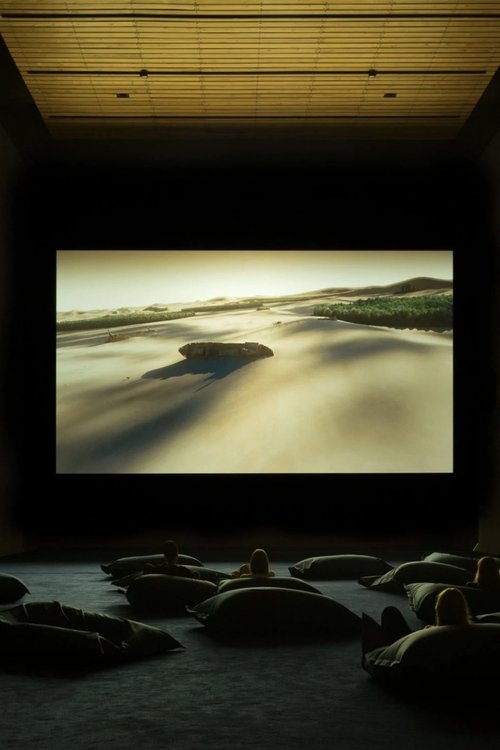
A condensed version of Rosefeldt’s filmic interpretation of Joseph Haydn’s “The Creation”, “In the Land of Drought” (2015/2017) confronts the relationship between man and his impact on the world. Set to atmospheric sounds and a pulsating hum, the 43-minute piece looks back from an imagined future upon the post-Anthropocene: the aftermath of significant human influence on Earth. An army of scientists appear to investigate the archaeological remnants of civilization after humanity has made itself extinct. Shot entirely using a drone, Rosefeldt’s images hover meditatively over the desolate landscape and ruins. Connoting surveillance, the drone’s bird’s eye view removes human perspective with us onlookers kept at a distance throughout. Increasingly, more figures dressed in white lab suits emerge to inspect the ruins of civilization – which are in fact abandoned film sets close to the Moroccan Atlas Mountains.

In the Land of Drought

2017