Acting
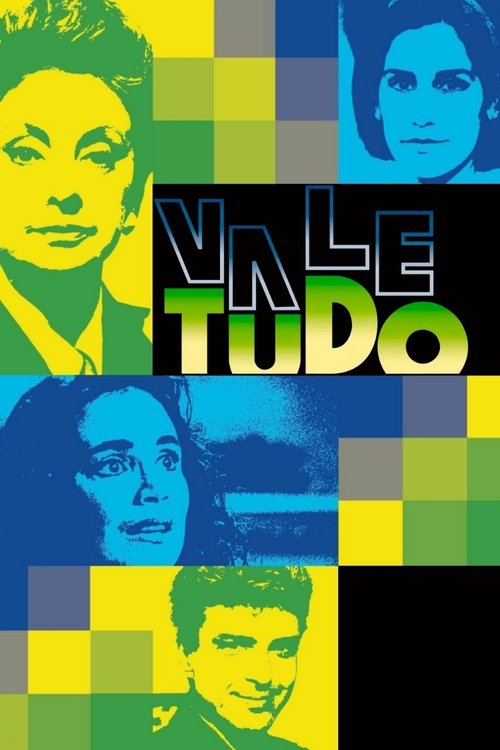
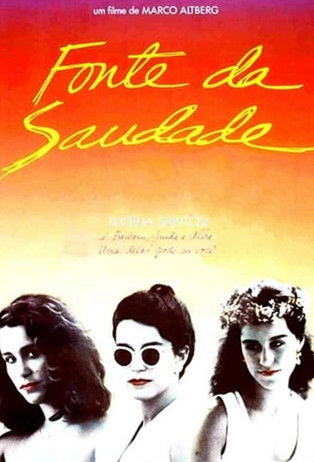
Fátima Accioly is a young, callous woman who wants to be rich and successful at any price. After selling her family's house in the country, she heads to Rio and gets to know dress man César who is unscrupulous himself. Meanwhile, her mother Raquel stays behind without home and money, but finally tries to find her daughter in the big city. Both women come in contact with the rich Roitman family which changes their lives forever.
No description available.
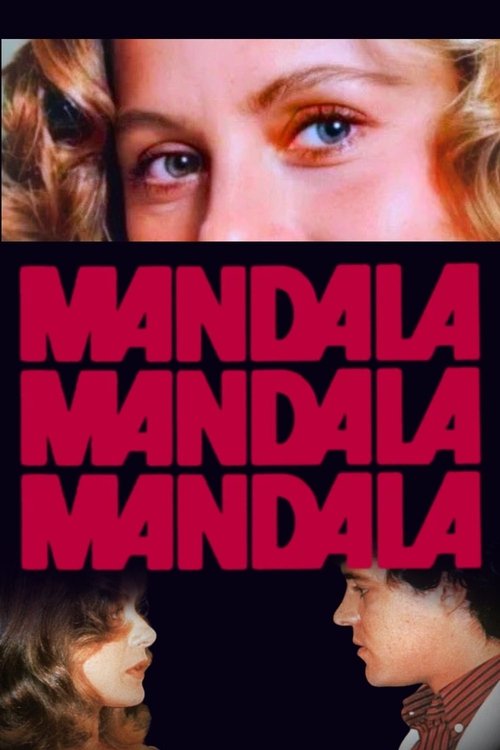
Jocasta, an 18-year-old sociology student and daughter of communist activist Túlio Silveira, is actively involved in the country's political landscape. She is in love with Laio—her polar opposite—a disengaged, esoteric young man who lives off his wealthy father's allowance. A mystic, Laio makes no move without consulting his guru and friend Argemiro, whom he turns to upon learning of Jocasta's pregnancy. The cowrie shell reading reveals that his son is destined to kill him and enter into a romantic relationship with his mother. Terrified, Laio disappears with the child immediately after birth, aided by Argemiro—who loves Laio and loathes Jocasta. Twenty-five years later, Jocasta is a successful yet restless woman searching for her missing son. She is estranged from Laio, who has spent recent years expanding his father's fortune through involvement in underground gambling. On a highway, he encounters Oedipus, unaware that the young man is his son.
Unhappy in her marriage, Rachel decides to separate from her husband, the businessman Virgílio. Determined to turn her life around, she moves from Petrópolis to the southern zone of Rio de Janeiro with her daughter, Clara, and goes to live in her mother Laura's house in Ipanema. There she falls in love with the charming, but gruff, Heitor, owner of a mechanic shop. He lives with his sister, Irene, in an old townhouse, one of the main settings of the telenovela.
The central theme of the soap opera is the struggle for political control in the interior of Bahia between the two most powerful *coronéis* (landowning bosses) of the cocoa region: Sinhô Badaró and Horácio da Silveira. Virgílio, an ambitious lawyer, is summoned to the town by Colonel Horácio but ends up becoming involved with Ester, the colonel's wife. Captain João Magalhães is a card sharp who poses as a military engineer, successfully deceiving the entire town. He falls in love with Sinhô Badaró's daughter, Donana. By the end of the story, he reveals that he had only gotten close to the Badarós out of opportunism. After numerous clashes with Sinhô Badaró, Colonel Horácio secures political power in the town of Ferradas, with the acknowledgment of the local population.
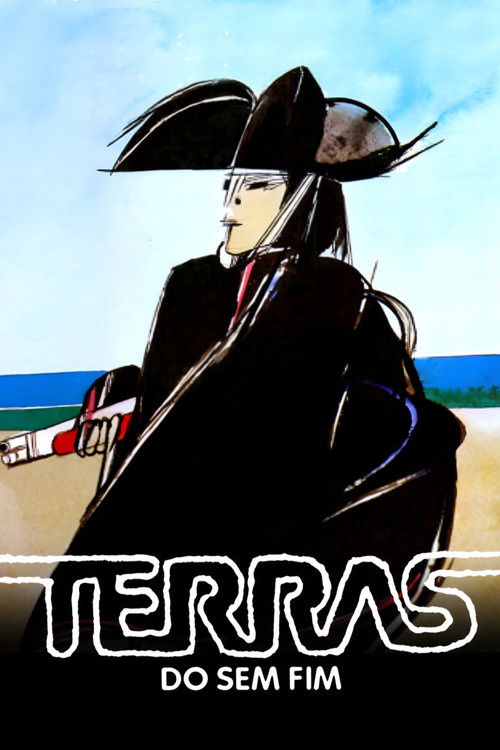
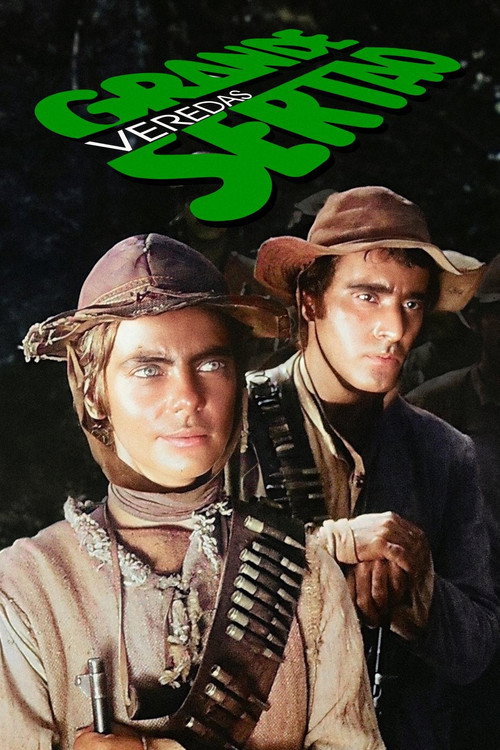
A cowboy narrates his 'jagunço' life of disputes, revenges, loves and deaths, through the years that he traveled central-east Brazil, in the first decades of the 20th century, while federal troops were in conflict with provincial forces.
The story takes place in São Paulo, in the late 1920s, and has Mariano's memories as its starting point. Orphaned, he loses the aunt who raised him and ends up in Madame Iara's brothel, where he meets two people who transform his life: Esmeraldo, a gigolo who loves the good life who becomes his master; and the prostitute Guadalupe, known as Lu, a sweet and extremely sensual woman. Esmeraldo is Lu's boyfriend, whom he loves unconditionally. Mariano enters the couple's lives and ends up falling in love with her, thus forming the love triangle that drives the entire narrative.
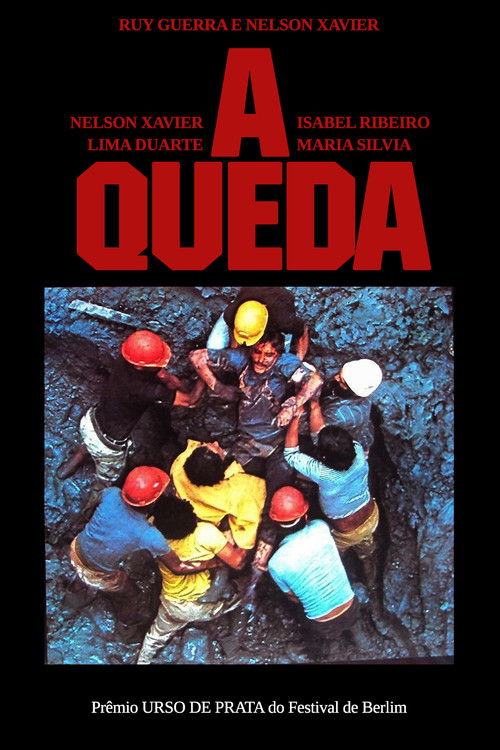
An accident at a construction site, resulting in one death, sets one worker off on a struggle for justice that exposes the mechanisms of exploitation and the class relations of a country that had undergone one decade of fast-paced ‘conservative modernisation’ at the hands of the military. As a sort of sequel to the classic The Guns (1964), following the fate of those characters as they move from enforcers of exploitation to exploited, it offers more than a snapshot of the period: the correspondent time lapses in fiction and reality capture the passage of a chunk of Brazilian history between the two films, and, therefore, also the transformations in cinematographic approaches to the social and political between the two moments. Equally daring in content and form, and in the originality of the adequacy of one to the other, it won the Silver Bear at Berlin.
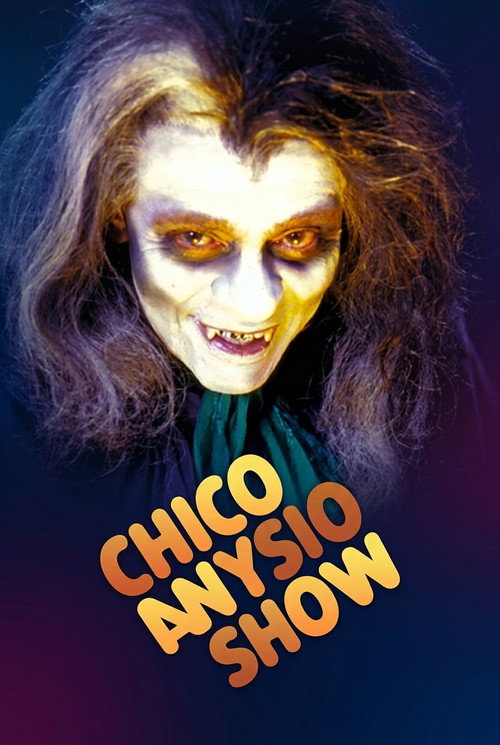
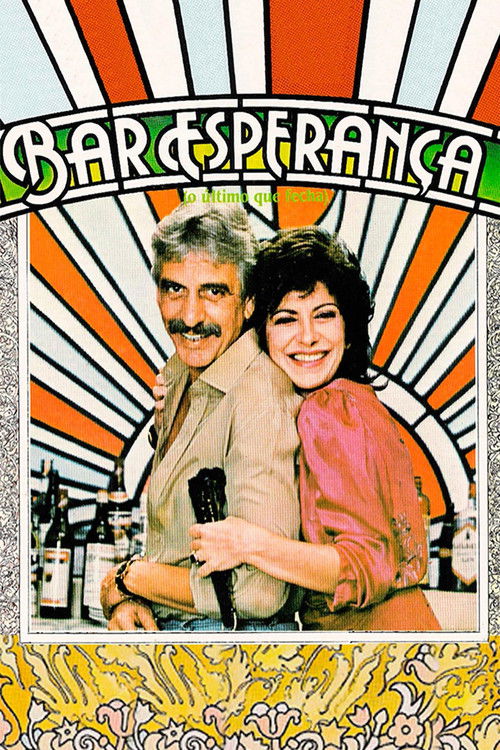
A group of eccentric people gather at a popular bar in Ipanema, Rio de Janeiro.
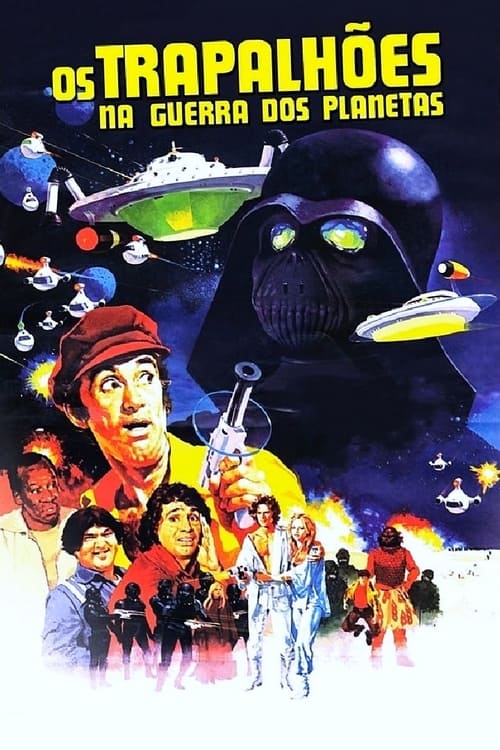
Coming from outer space, Prince Flick asks the Trapalhões to help him free his planet from the domain of evil Zuco and free Princess Myrna, who has been taken prisoner. He offers a reward, the four friends accept the mission and embark in a spaceship driven by a hairy monster called Bonzo. Once on the planet, they they defeat Zuco, but they fail to save Princess Myrna's life. Her place on the throne is then taken by Loya, the girlfriend Didi met on that planet. Back on Earth, os Trapalhões think their adventure was but a dream, but they are convinced otherwise when they find their reward.
A man who works at a nuclear plant is contaminated by radioactivity. On the way to the hospital, the ambulance has an accident, and the man's head disappears. Lost and free from its body, the head goes through many adventures.