Acting
A shipment of gold being flown from Paris to Budapest is robbed in mid-air.
No description available.
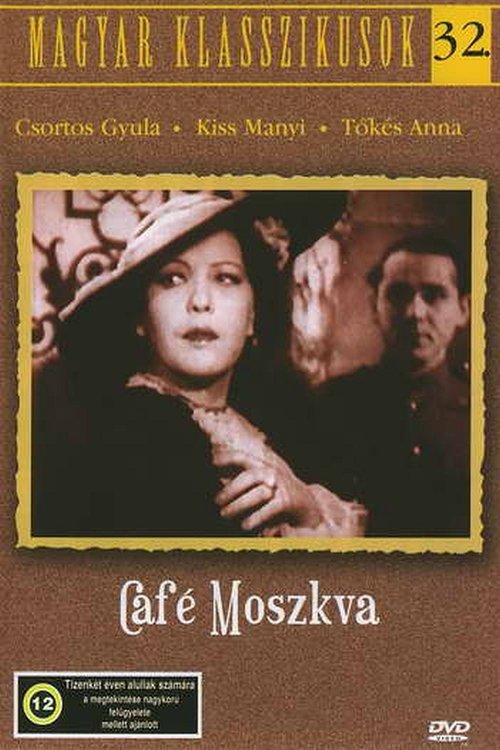
Tóth Manci, a milliner turned dancer, meets Pali, a handsome banker, and falls madly in love. But she waits in vain for a word of encouragement from him, because he loves Lili, the belladonna. So Manci, in her grief, goes to Russia. By the time Pali realizes that he loves Manci too and wants to follow her, war breaks out, and he can only follow her as a soldier.
About a man's disappointment in love, and this provides the foundation for the upcoming trial of a much more significant love. The scene of the fatal meeting, the bar, which is a kind of world-model, and its environment: a fort under siege, from where it's almost impossible to escape...
Young playboy Pál Milkó, nephew of the mill’s powerful CEO, insults and even strikes the company’s venerable accountant, Andor Virág, who quits in anger. To make amends, Pál rents a room in Virág’s home, avoids the old man but courts his beautiful daughter, soon hopelessly falling in love.
The protagonist of the story is Flora, a teacher who wants to teach in the village, in accordance with her vocation and her oath. Her beauty and purity bring her into conflict with the local authorities and with the landowning family of the countryside. Aware of her truth, she defies them, but can only count on the sympathy of the old priest. István Nagy Jr., the idle, dissolute landowner's son, falls in love with Flóra, and love changes him: he takes her side, exposing the lecherous hypocrites.
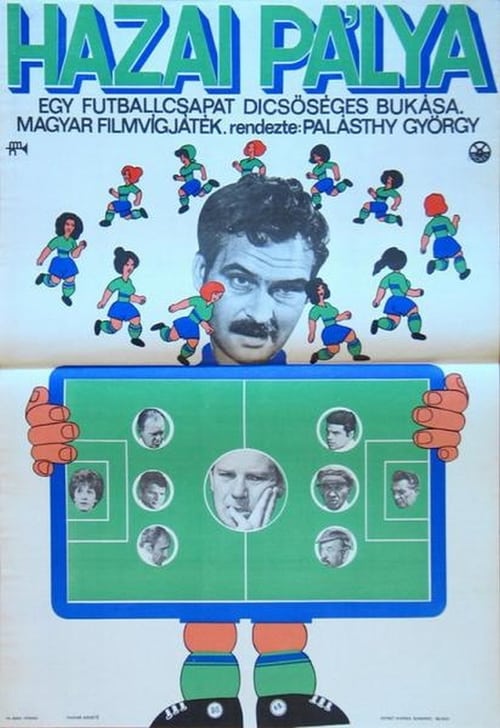
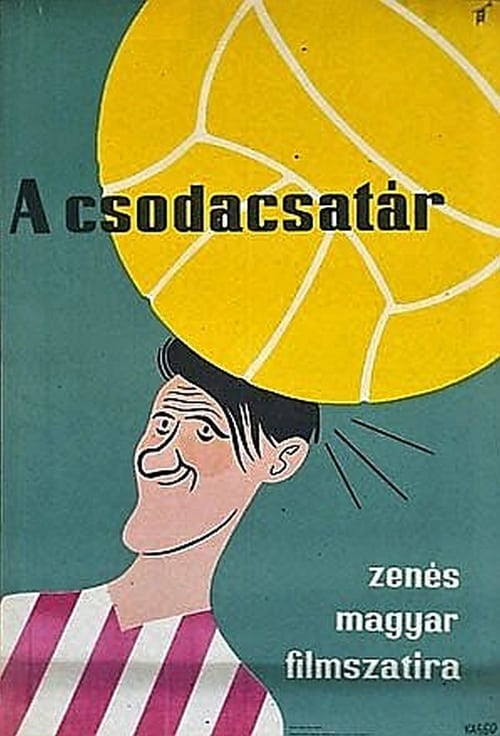
This ironic comedy is set in the god-forsaken Kiskúnbékás, at the end of the fifties. There are no jobs, the town's "golden team", who once were third class national soccer players have scattered
György Bánáth landowner and Miklós Vass the teacher, on the verge of collapse, trudging all the way from Siberia where they have spent more than ten years as POWs, trying to prevent each other from falling from fatigue on the way home. Both become regular visitors to the Pálffy family and they both make amorous advances to Katinka, the beautiful daughter of the local vicar.
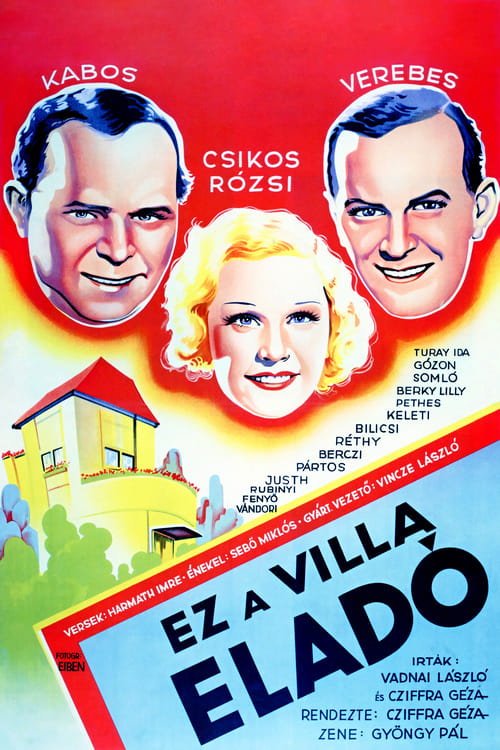
The villa in the story of László Vadnai is for sale. The owner goes away and leaves the house to his butler, who also entrusts its safekeeping to an old friend. The friend immediately moves in with his niece, and two swindlers appear. But who is the seller and who is the buyer, and why the villa has to be sold at all, is a question that is only answered satisfactorily at the end of the film, after a lot of wall-crawling humour.
A 1936 Hungarian drama film, directed by Béla Pásztor and starring Gyula Csortos, Ferenc Kiss, and Júlia Komár.
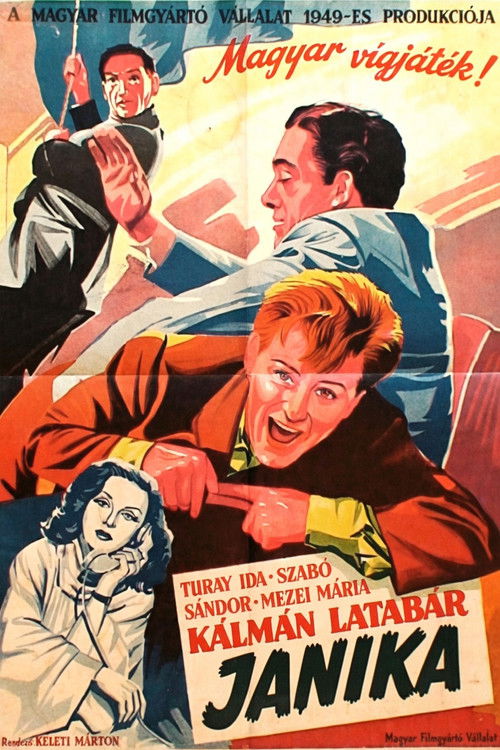
After a 15-year absence, the famous actress' expatriate husband returns to Hungary to settle their divorce. The actress is rehearsing the role of a young boy back home when her husband walks in. Seeing the little boy, the husband thinks that Janika is his child, but the actress fails to inform him of the mistake.
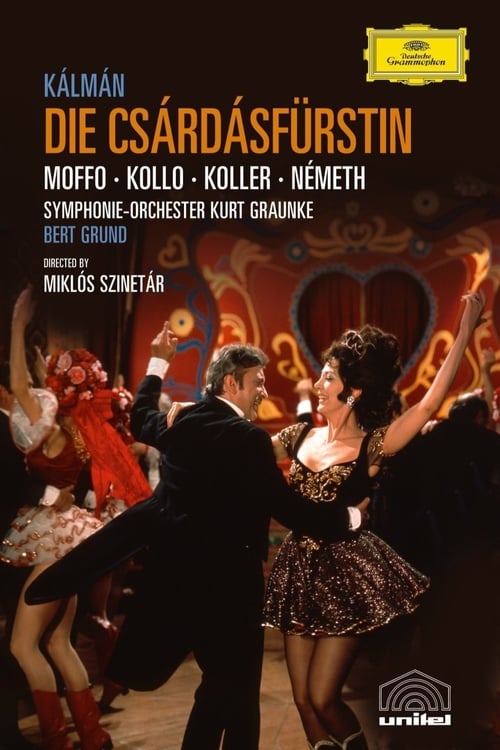
Kálmán Imre's beloved operetta comes to the screen in this comedy of music, marriage and class set in Budapest and Vienna before the outbreak of the First World War, recorded at the Budapest Opera in 1963.
Advertising was already booming in 1933. Rohr, a Berlin soapmaker, was looking for a particularly attractive face to promote his new product. And he finds it in a shot by photojournalist Schmidt, but the problem is that Mr Schmidt has no idea where, when or who he took the photo of. So a private detective agency and the "culprit" himself, the photographer, who is, for understandable reasons, a little "forgetful", start investigating the beautiful lady.
On the Spring of 1945 the Jackson circus is heading towards the border with the clown Peti and Aida, the elephant. They have to play for the Hungarian Fascists, while Peti is hiding the Jew Annuska and Sanyika.
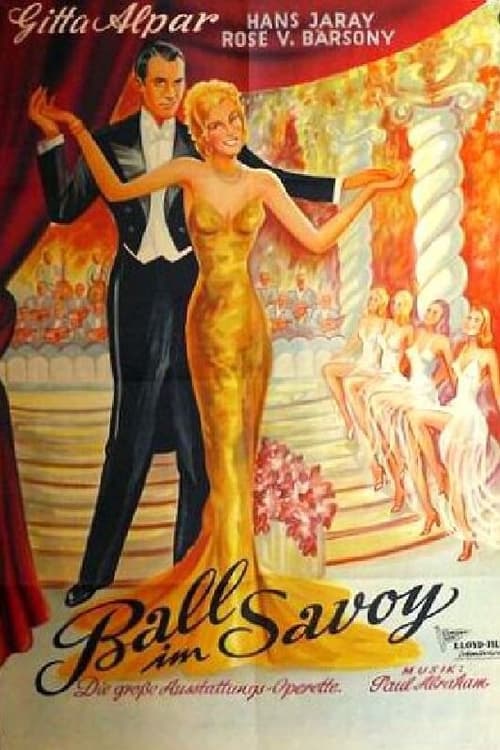
Operetta star Gitta Alpar plays a singer engaged for a performance at the Savoy Hotel, where she mistakes Baron von Wollheim for a waiter. But the baron is content to play the game for a while and changes his role with the real waiter. Of course the singer is quite happy when she discovers the real identity of the baron, but now she mistakes him for a thief, as her necklet has gone missing. Further complications arise when the baron's cousin Mary, a composer, arrives at the hotel and wants a music publisher to listen to her songs.
Cabinet crisis threatens in Futbólia, due to a series of lost matches. The head of state charges admiral Duca with the task, as a last chance, to get hold of the football star of the Hungarian team presently playing in Switzerland.
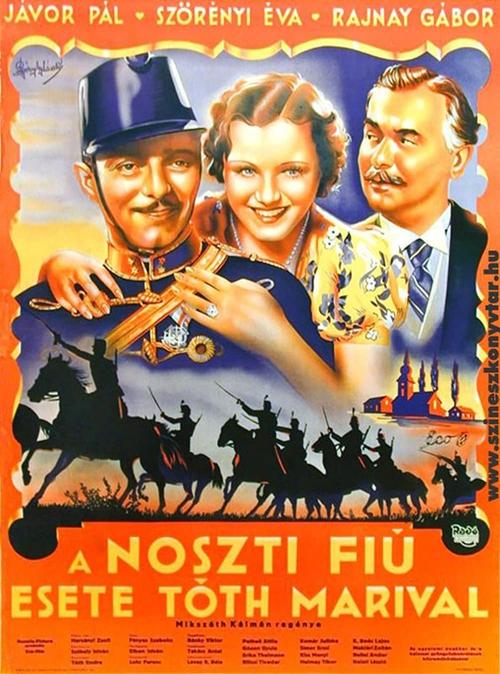
Another winner from Hungarian director Ivan Szekely (aka S.K. Seeley and Steve Sekely), A Nosty fiu Esete Toth Marival was released in English-speaking regions as I Married for Love. Feri Noszty (Paul Javor) is a handsome but irresponsible Hussar officer who prefers a life of wine, women and song to his military responsibilities. Unwilling to bow to family pressure, Feri refuses to marry heiress Mary Toth (Eva Szorenyi) for her dowry alone. But Mary falls in love with the prideful Feri, and to win his affections she poses as her own poverty-stricken maid. Based on a novel by Kalman Mikszath, A Noszty Fiu Esete Toth Marival was filmed simultaneously in Hungarian- and German-language versions.
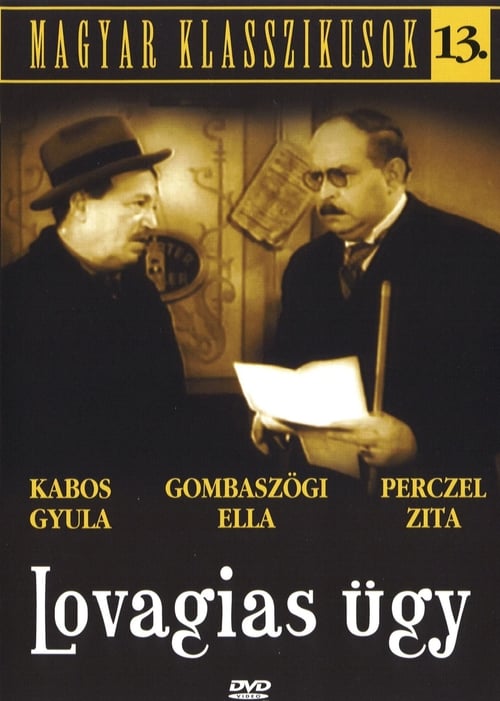
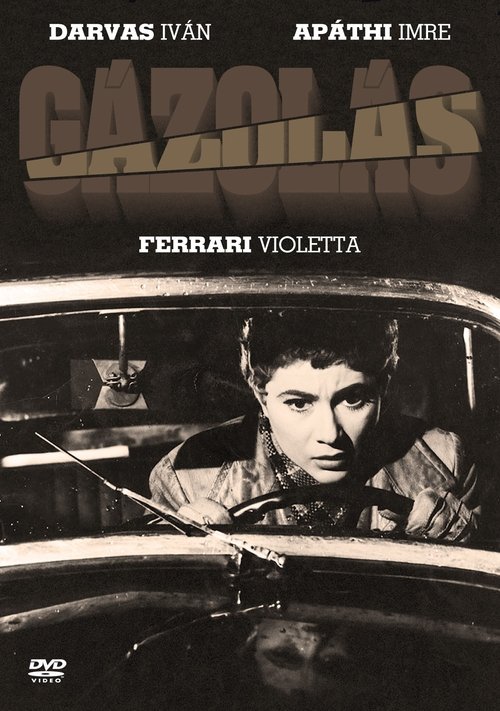
Judge Csanádi András makes a confession to his boss one night: he fell in love with the pretty, modern driver woman, Zenthe Judit in a fencing room. The girl suddenly returned his feelings. One night she confessed to him crying: she hit someone. The case was assigned to Csanádi, who wanted to investigate the circumstances meticulously despite his feelings. Thus the so far hidden life of Judit, which is bound to the past former world and its values is now highlighted. He is confused, asks his boss to absolve him from the assignment, but refuses to do so. Csanádi realises in the court room: Judit kept on telling lies, she played the lover for her own interest. The judge passed his crisis, he will deliver a fair sentence.