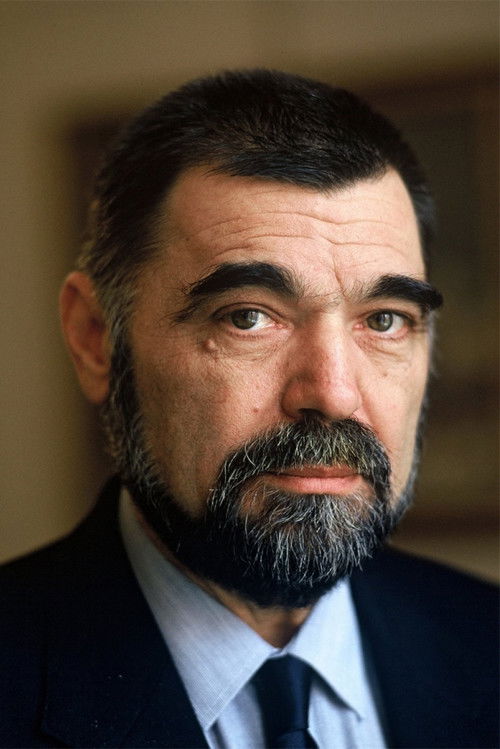
Stipe Mesić
Acting
Biography
Stjepan "Stipe" Mesić (pronounced [stjêpan stǐːpe měːsit͡ɕ]; born 24 December 1934) is a Croatian lawyer and politician who served as the president of Croatia from 2000 to 2010. Before serving two five-year terms as president, he was prime minister of SR Croatia (1990) after the first multi-party elections, the last president of the Presidency of Yugoslavia (1991) and consequently secretary general of the Non-Aligned Movement (1991), as well as the speaker of the Croatian Parliament (1992–1994), and mayor of his hometown of Orahovica. Mesić was a deputy in the Croatian Parliament in the 1960s, and was then absent from politics until 1990 when he joined the Croatian Democratic Union (HDZ), and was named President of the Executive Council (Prime Minister) of the Socialist Republic of Croatia (then still a constituent republic of the SFR Yugoslavia) after HDZ won the elections. His cabinet is, despite holding office before Croatia's independence, considered by the Government of Croatia to have been the first government cabinet of the current Croatian republic. He later resigned from his post and was appointed to serve as the Socialist Republic of Croatia's membership of the Yugoslav federal presidency where he served first as vice president and then in 1991 as the last President of Yugoslavia before Yugoslavia dissolved. Following the breakup of Yugoslavia and Croatia's independence, Mesić served as Speaker of the Croatian Parliament from 1992 to 1994, when he left HDZ. With several other members of parliament, he formed a new party called Croatian Independent Democrats (HND). In 1997 the majority of HND members, including Mesić, merged into the Croatian People's Party (HNS). After Franjo Tuđman died in December 1999, Mesić won the elections to become the next president of Croatia in February 2000. He was the last Croatian president to serve under a strong semi-presidential system, which foresaw the president as the most powerful official in the government structure and allowed him to appoint and dismiss the Prime Minister and his cabinet. This system was abolished in favor of an incomplete parliamentary system, which retained the direct election of the president but greatly reduced his powers in favor of strengthening the office of Prime Minister. He was reelected in January 2005 for a second five-year term. Mesić always topped the polls for the most popular politician in Croatia during his two terms. Description above from the Wikipedia article Stjepan Mesić, licensed under CC-BY-SA, full list of contributors on Wikipedia.