Graeme Arnfield
Directing
Biography
Graeme Arnfield is a British artist and film director. His work explores issues of communication, spectatorship and history and has been presented worldwide at many film festivals. He graduated with a Masters in Experimental Cinema at Kingston University, London, England, UK.
Known For
No description available.
A Vocabulary for the Future
Plato's allegory of the cave is often read as a prefiguration of cinema. Yet this film illustrates how online gaming was born from a network of caves. The reconstruction of one couple's hobby, spending all their time in the world's largest cave system, leads us to the conception of a pioneering video game.
Colossal Cave
A techno driven stroboscopic climate fiction film written in conversation with various Amazon warehouse workers. Initially inspired by the proposed plans for the U.S. government to install their fragile predictive supercomputers deep underground in order to protect them from these upcoming ancient alien invaders, the film uses once costly low-resolution scientific visualizations produced on these supercomputers to speculate on the role of image labour in the subterranean near future.
The Phantom Menace
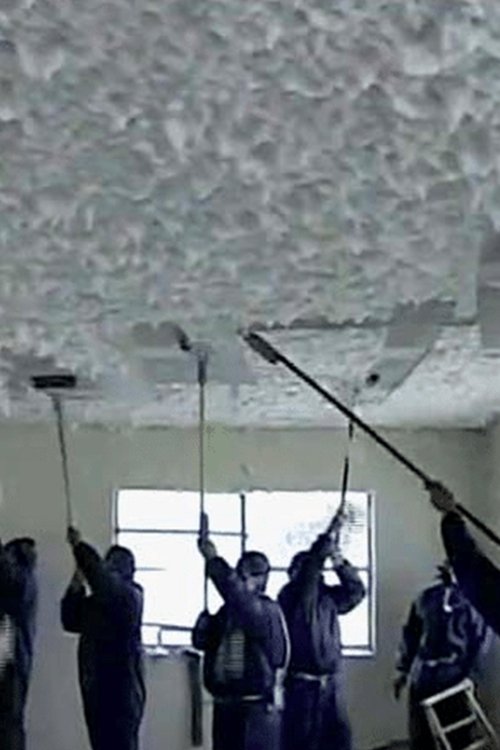
Mined, extracted, and woven, asbestos was the magic mineral. Towns became cities under its patronage, Persian kings entertained guests with its fireproof nature, and centuries of industry raked in the profits of its global application. We now live in the remains of this toxic dream, a dream that with the invention of electron microscopes revealed our material history as a disaster in the waiting.
Asbestos

Pedigree is an animal invasion movie about the stories we tell about dogs and revolutions. Filmed at the factory where Joy was buried by both humans and dogs the film utilises a mongrel mixture of found, produced and processed materials to affectively trace the decentralised & domesticated legacy of the Russian revolution.
Pedigree
Shortly before Christmas 1973, the crew of Skylab, NASA’s first space station, went on strike.
The Case Against Space

In a peat bog in North West England a Spanish woman was murdered, her body buried and subsumed into the treacherously dense ecological matter. A matter which labours have extracted for centuries, selling this fertile material as fuel worldwide; a material which upon burning releases timeless carbon deposits into our increasingly precarious and damaged ecosphere.
Shouting at the Ground
Out of the darkness a sound emerges. It echoes and drones. Terrified people take to the streets in search of its source. They get their cameras out and document the sky, searching for an author. We watch on, sitting in darkness, our muscles contract and our pupils dilate.“I hope the camera picks this up.” Sitting in Darkness explores the circulation, spectatorship and undeclared politics of contemporary images.
Sitting in Darkness

A nightmarish essay film on the history of the doorbell, tracing its invention and constant reinventions through 19th century labor struggles, the nascent years of narrative cinema, and contemporary surveillance cultures.
Home Invasion

Graeme Arnfield’s kaleidoscopic essay film revolves around the story of Dr. Joseph Popp, an evolutionary biologist and architect of one of the earliest known examples of ransomware. In 1989, Dr. Popp distributed 20,000 floppy disks containing what would come to be known as the digital AIDS virus – a malevolent trojan horse that scrambled the contents of the victims’ computers and offered to unlock them only in return for a ‘licensing fee.’ Working with a range of digitally manipulated found footage, Arnfield explores the legacy of Popp’s virus drawing surprising connections to the US invasion of Panama, the construction of a butterfly conservatory in New York and the aesthetics of computational art.