
Al Razutis
Directing
Biography
Al Razutis is a avant-garde and documentary film-maker, multimedia artist, educator and innovator in motion-picture film and video, stereoscopic 3D video, holographic technologies and arts, and web-digital graphics for websites and virtual reality. He has been creating and exhibiting avant-garde and documentary films and video since the late sixties, holographic displays and art since the early 70's, and web virtual reality and stereoscopic 3D video art since the 90's. During this time he developed custom-made film optical printing, video synthesizer, holographic recording and imaging technologies used in his published and exhibited works. He is a 'hands on' creator and technical innovator who freely acknowledges those 60's - 70's innovators (Moog, Buchla, Whitney, Brakhage, Cross, Benton and others) in the technologies and the arts that influenced his creativity. His films have received a number of awards, including a 1988 Los Angeles Film Critics Award, and his media art works are found in a number of international collections and have been exhibited internationally, including a 1997 stereoscopic 3D video showing at the Louvre, a 2002 film-video retrospective at the Electronic Media Arts Festival in Osnabruck, Germany, and a 2004 exhibition of 3D video, film, video at SeNef, Seoul, Korea.
Known For
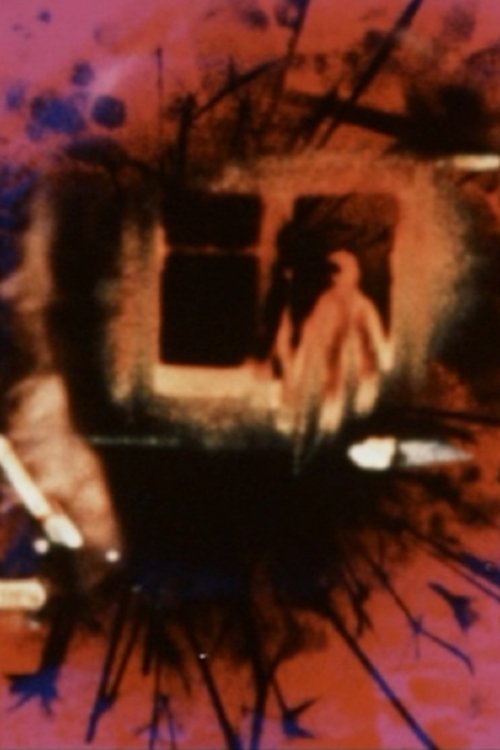
AAEON is based on experiments with dream recollection, and features the first optical printer technology developed in Vancouver and used in many of Razutis’ later films.
Aaeon
No description available.
For Artaud
No description available.
Storming the Winter Palace
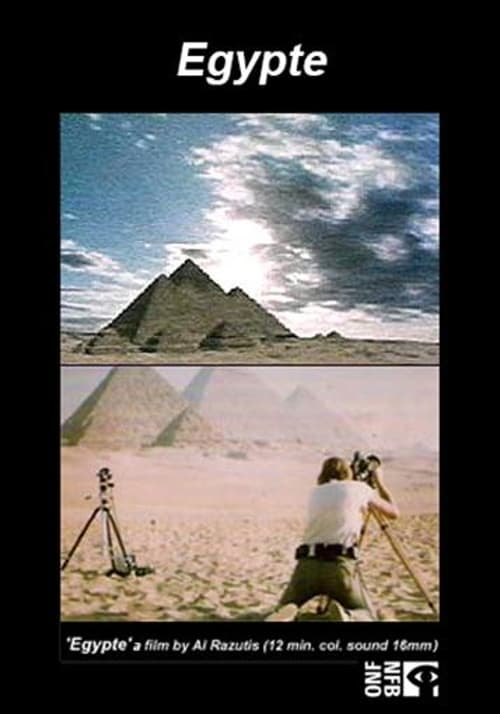
ÉGYPTE is a meditation on ancient time and space. Inspired by the Tibetan Tantric chants of the Lamas (which also comprises the sound track), this impressionistic piece presents the ancient sense of 'mystery' without recourse to narration or didactic (historical) interpretation.
Egypte
No description available.
Ghost: Image
he claustrophobia of media "reality" - compartmentalized into game shows, movies, news reports, commercials - is presented as continuous interchangeable spectacle. This film looks at the ideology of misrepresentation, the turning of facts into icons, history into myth. It analyzes the media's metalanguage, especially the image of woman as spectacle and commodity; and the psychology and economics of male voyeurism.
A Message from Our Sponsor
Reconstructed from turn-of the century footage, an ironic vision of high industrial pomp and pageantry - in substantial shadows of ancient prerogatives engulfed by history. Original historic footage from eras long past is rendered as 'bas relief' in changing sepia tones of photo-textural kind which ends in fiery infernos of image and destruction.
The Cities of Eden
No description available.
Méliès Catalogue
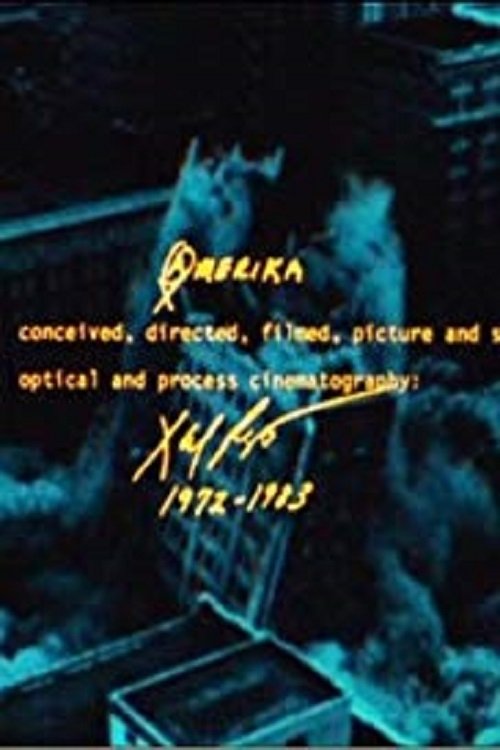
Amerika is a "feature-length experimental film which was created one reel at a time to function as a mosaic that expresses the various sensations, myths, landscapes of the industrialized Western culture (1960's -1980's) through the eyes of media-anarchism and avant-garde film techniques." (A.R.)
Amerika
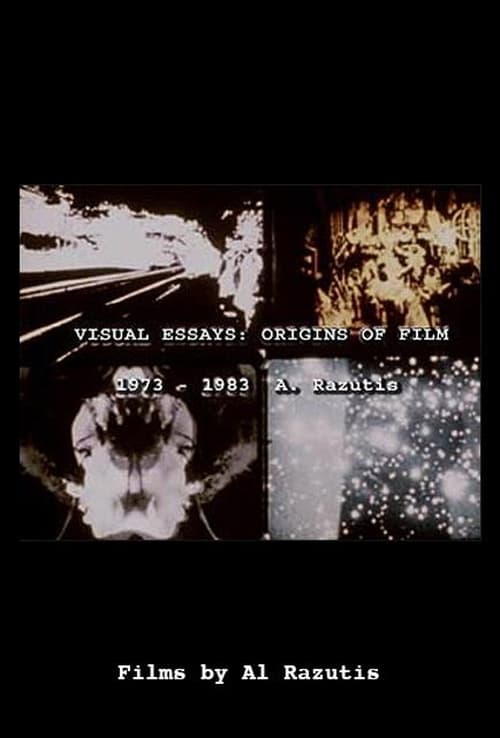
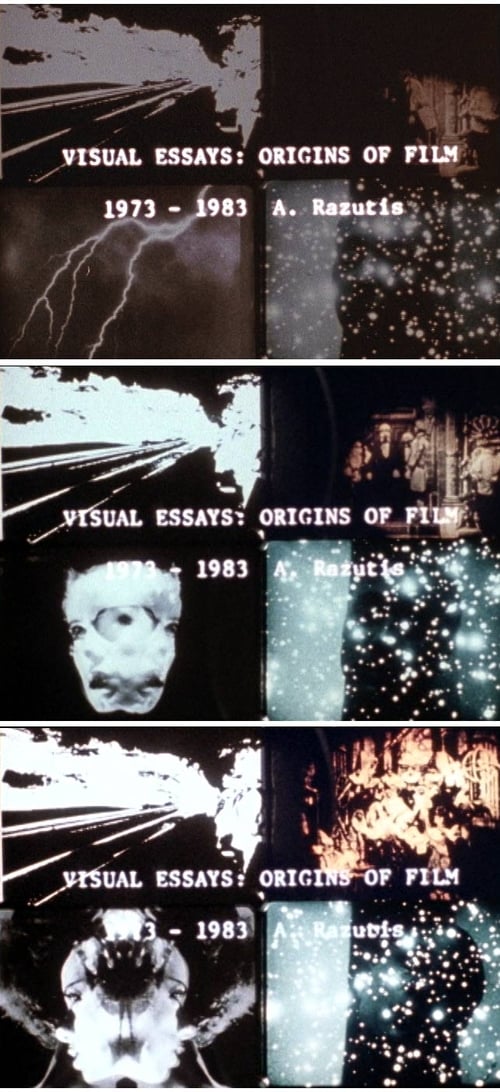
These six essays on film/image history reconstruct cinema history by 're-imagining' its origins, and its poetries, and use historical films themselves (as 'text') to provide the meanings of their creations. Together, these film essays comprise a critical/structural investigation of silent cinema ending with Segei Eisenstein's works (for Stalin) - from Lumiere and Melies through surrealism and horros, to montage and propaganda, we 're-invent' epochs in cinema that became its language and culture.
Visual Essays: Origins of Film
The subject of the first essay is cinema itself: an apparatus of representation wherein fact and fiction are recreated. As such, the pro-filmic facts are necessarily drawn from two of cinema's "pioneers": Louis and Auguste Lumière and Abel Gance (La Roue), with additional material provided from a Warner Brothers featurette, Spills for Thrills.
Lumiere's Train (Arriving at the Station)
Travel as mediated spectacle, a time lapse journey from Vancouver to Reno and Las Vegas Nevada; speed as stasis, abstraction, violence, culminating in a 'televised abduction and police chase at the border' and a 'letter to home'. Within this long, high-speed with time-lapse drive through deserts and neon wastelands of 'Amerika', we can ask: 'Who is the voyeur, who kidnaps who, who is cruising the boulevards, and who is the object of the gaze'?
The Wasteland and Other Stories
Aurora is a analog videosynthetic work incorporating film loops subject to colorization, quantizing and layering and was created by Razutis at the video facilities of Evergreen State College (where he taught in 1972) and Vancouver (Visual Alchemy) utilizing his 'Felix' video synthesizer.
Aurora
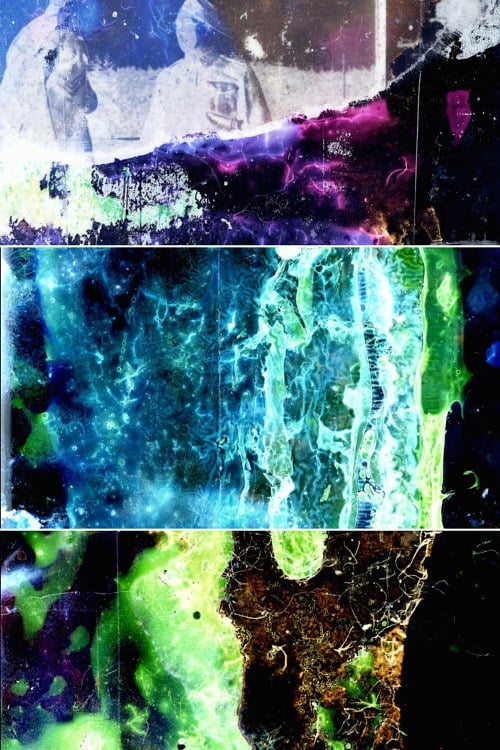
Ephemeral traces of nothingness—rotoscoping farmers, crumbling churches, dying memories as hand-painted layers, decay & collage on film emulsion as incidental traces of nothingness. A work that is aware of its own mechanisms.
Le bulbe tragique
In 'Vortex', the intense subjectivity of techno-psychedelia converges with the technological gamesmanship of the space race. The subject matter, however, is 'space' and extinction.
Vortex
In 'Software', the pixel lights of the industrialized world (electrical power) are re-formed in the speckles and patterned light of the video screen: a metaphor for energy as information transfer, but still at the service of the power structure. This short film is also used as head title of Amerika (1983) and is presented as placeholder, with video screens awaiting programs.
Software
The principle of stillness in Sequels in trasfigured times is like a botanical drying procedure for film which conserves a fixed but superb memory of the shapes.
Sequels in Transfigured Time
Built on the subliminal manipulation of forms and motion, this film's elusive, fiery images flare up and die back into the night void in recurring cycles, like the fixed but fragmentary elements of some forgotten myth or spell. Violent lyricism and lycanthropy - an optically printed spatial/temporal examination of a violent B-grade adventure film with horror-film sound elements. This series of image cycles abstracts and deconstructs the linear (melodramatic) narrative of television.
The Moon at Evernight...
This short film video hybrid, combining film and video processing (colorizing, feedback, mixing, quantizing) saturates the viewer's sensorium with colors and echoes and the burlesque grinds of the 1940 and 1950's dancers as recorded on historical footage. The 'motel' viewer checks out the past, while turning up the dials on the video-synthetic future.
Runway Queens
This silent 9 minute film is like a 'pointillist painting' come to life - where grainy shapes reveal themselves to be part of a visual jigsaw puzzle - an assembly over time - and where the film-maker's daughter serves to be the subject of this painting in time. Razutis uses re-photography and camera movements that mimick the eye's 'saccadic eye movement' in revealing the visual sequence and interaction between daughter and father. The revelation is conducted over repeating sequences whose content is 'sampled' as if in the construction of a memory as puzzle.