Directing
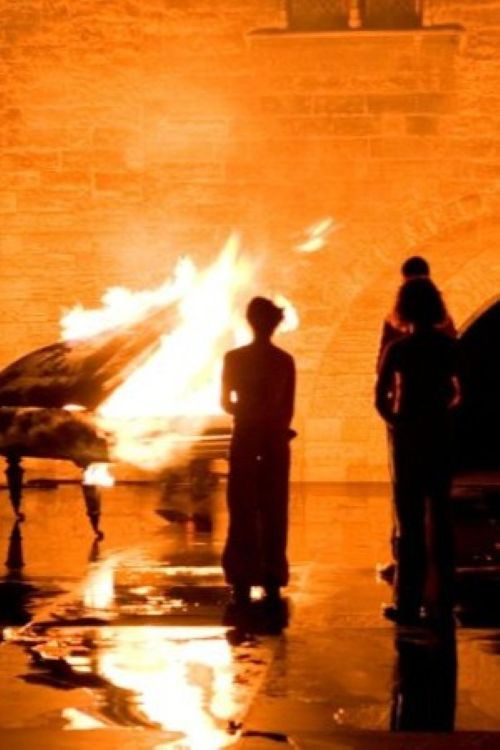
Dante's 'La Divina Commedia' is a poem in three parts about a journey to hell, purgatory and finally, paradise. Romeo Castellucci created his own free adaptation on the gigantic stage of the Cour d'Honneur in Avignon, in the palace where the first French pope, Clement V, resided. The pope allows Dante to descend into the inferno. We are confronted with man's confusion, the fragmentation of the community and the darkness of art.
The man who goes through purgatory – the “song of the earth” – is a curious being, constantly stopped by the concrete nature of the things and objects that surround him, in a depiction of his own life. This material occupies him, blocks his way, attaches him and often torments him. It bears witness to what exactly purgatory is to Romeo Castellucci: human life in its daily repetition, familiarity with everyday tasks, the trap of routine, the experience of the ordinary body, encounters with the finished world, known nature, the substances of life.
No description available.
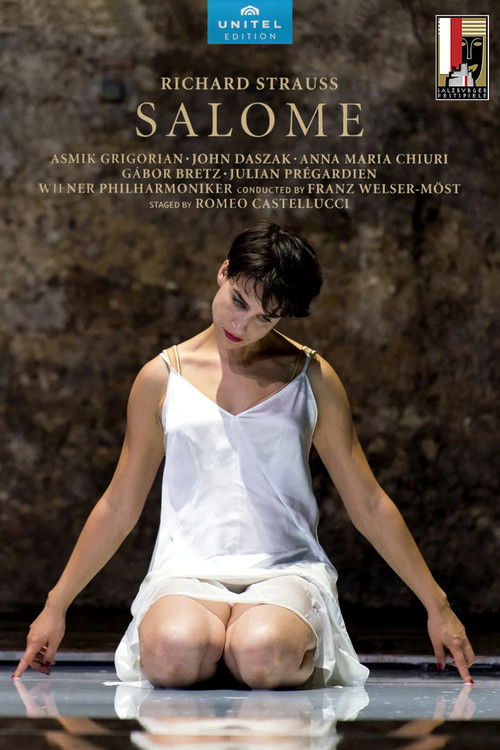
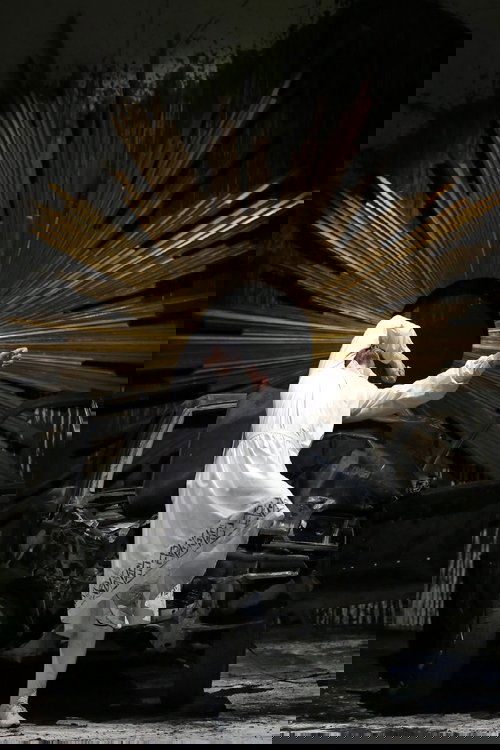
The story is set at the beginning of the Christian era on a large terrace of Herod’s palace, during the reign of Herod Antipas. At night, on a terrace of the palace, Salome, Herod’s stepdaughter, is gazed at passionately by Narraboth, captain of the guard. Jochanaan, a prophet, is imprisoned in a cistern for having slandered Herod. He proclaims the coming of Jesus, but his message is met with incomprehension by the guards. Salome hears the prophet. She manages to convince the guards to bring Jochanaan out so she can see him. Both fascinated and frightened by his prophecies, Salome falls passionately in love with this man. Richard Strauss’s opera at the 2018 Salzburg Festival, directed by Romeo Castellucci at the Felsenreitschule. In her debut in the title role, Asmik Grigorian distinguished herself with her talents as a singer and actress.
Take5* is a filmed series of encounters between 5 artists and 2 guests who meet for the first time in a specific city to speak about Europe, festivals, the arts and their role in society.
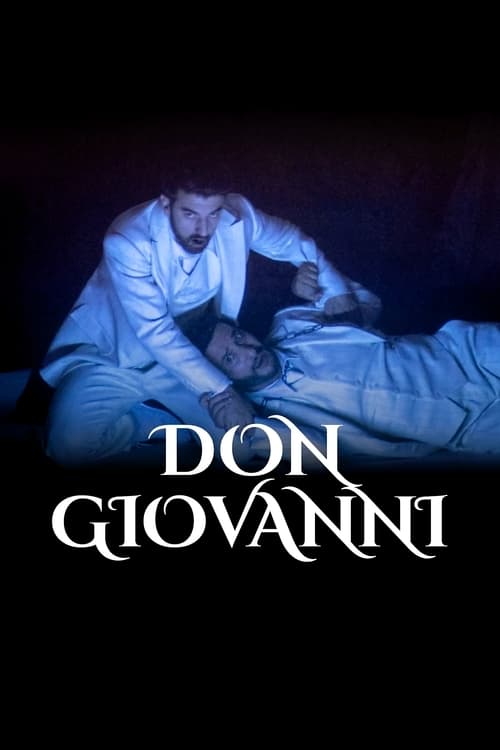
Premiered in 1787, “Don Giovanni” exposes the timeless theme of a man hovering between vitality and destruction. Neither morality nor the law can stop this serial lover in his quest to conquer all women as he places his own pleasure above all other principles. Today, the rich depth of Mozart’s masterpiece still astonishes audiences with its mix of comedy and seriousness, pleasure and love, entertainment and murder. At the helm of this new Salzburg Festival production, in a near-live broadcast from the Great Festival Hall, director Romeo Castellucci promises to focus on the ambiguity and inner turmoil of this serial lover whose immoral behaviour condemns him to a deadly solitude. The exceptional cast – featuring Italian baritone Davide Luciano (Don Giovanni), Russian soprano Nadezhda Pavlova (Donna Anna) and Finnish bass Mika Kares (the Commendatore) – is accompanied by the chorus and musicians of the musicAeterna ensemble, conducted by Vitaly Polonsky and Teodor Currentzis.
In the autumn of 2014, playwright and theatrical director Romeo Castellucci participated in the Festival d'Automne in Paris. Nicolas Klotz resumed the show, questioning its creator in a triptych dedicated to his daring creative process.
Romeo Castellucci is one of Europe’s best-known directors, a firebrand known for productions that are as thought-provoking as they are visually stunning. He returns to Peak Performances with the American premiere of “Democracy in America,” freely inspired by the work of Alexis de Tocqueville. Castellucci conjures majorettes who stir the crowd’s enthusiasm for democracy in America, colonial settlers who confound the native Americans, and a puritan couple who struggle to farm a barren land. He asks us to consider the empty promises of a political system steeped in Biblical egalitarianism rather than the concept of tragedy so essential to ancient Greek democracy, the dangers of majority rule, and the inherent violence that springs from religious puritanism and territorial conquests. His challenging, soul-stirring brand of theatrical magic transposes these painful, profound ideas into an enticing, vibrant, celebratory work of art.
Romeo Castellucci interpretation of Mozart's final work.
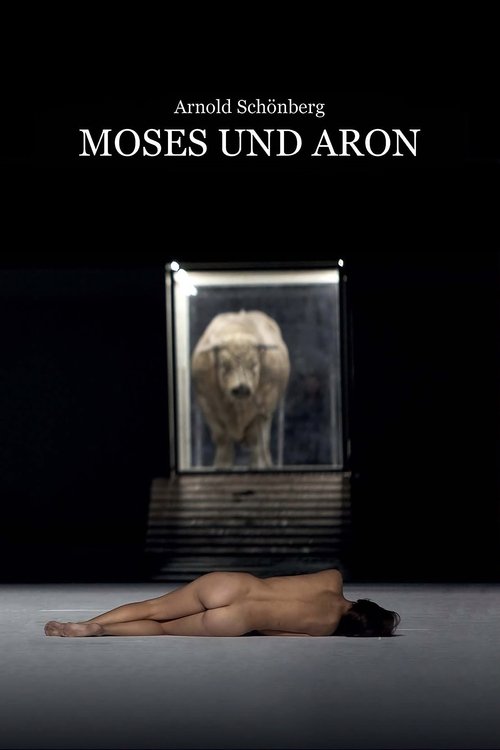
Moses und Aron is a three-act opera by Arnold Schoenberg with the third act unfinished. The 2015 Production was led by Romeo Castellucci in Paris. Moses und Aron was filmed for television by film director François-René Martin, in co-production with the Paris Opera, Bel air Media and Arte, with support from the CNC.
Mussolini is surrounded by pictures torn from a history-generated dream which gradually merge into everyday reality. Harlequin is the servant of two masters. The permanence of the clergy in the Eternal City is placed under a great bell which swings without a clapper.
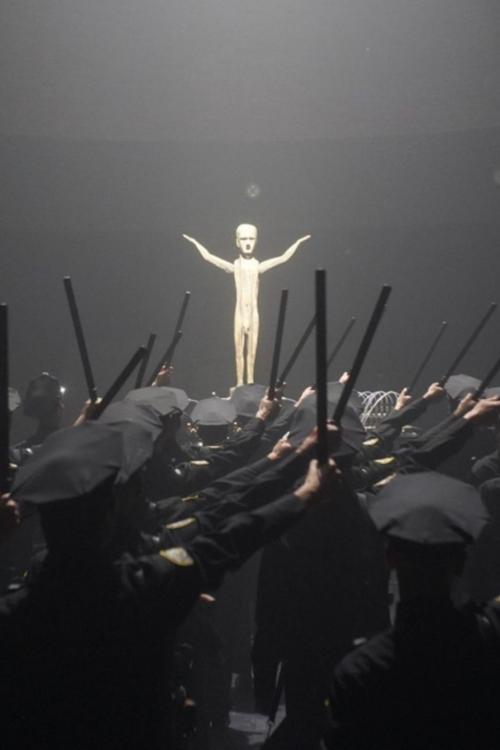
In an environment coloured with talcum powder, the Soldiers of Conception escort a Child-Judge as he walks backwards across the set. When he bumps into the Tables of the Law, reality is overturned and all interiors becomes exterior.
Inspired by Mark Rothko’s refusal to complete commissioned work in New York’s Four Seasons restaurant. A highly stylized, visually stunning exploration of absence, negation, and solitude.
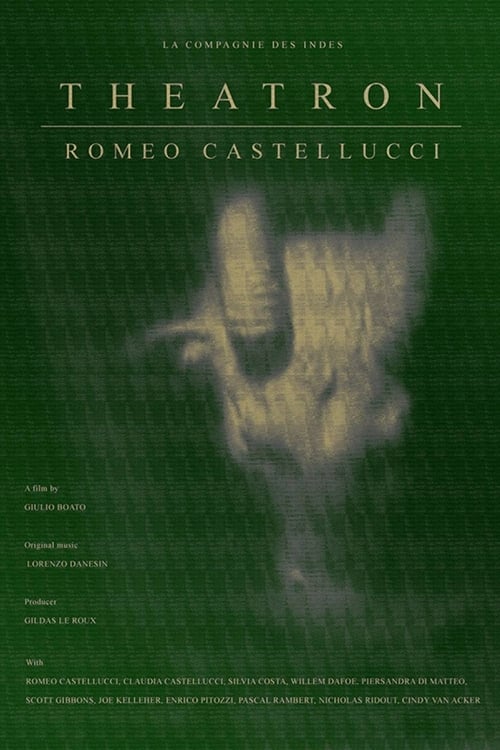
Theatron, the film by the multi-award-winning film-maker Giulio Boato, is an unprecedented portrait of Romeo Castellucci. Castellucci and his theatre company, the Socìetas Raffaello Sanzio, are key protagonists of avantgarde theatre. To a Vivaldi soundtrack, Theatron layers Romeo and Claudia Castellucci’s comments with the testimonies of dramaturgs, composers, choreographers, critics and actors (including Willem Dafoe) who have collaborated with the director. Between rehearsals and international tours, the film is a deep reflection not just on the performances, but also on the connection between the author and the representation of human nature.
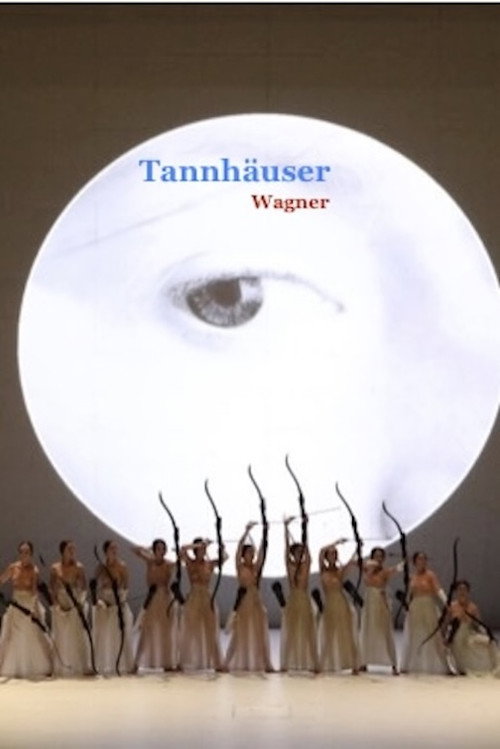
If in ‘Das Rheingold’ the curtain fell with the hegemony of the gods in Valhalla, the second part of ‘Der Ring des Nibelungen’ opens with a mortal who, alone on Earth, faces a raging storm. Siegmund is called the hunted warrior, and when he briefly finds peace in a concealed hut, he meets the beautiful but equally hapless Sieglinde. An ardent and natural passion blossoms, but at the same time a hidden past surfaces that will seal their fate.
A human figure dressed as a woman is anatomically exposed by means of a series of photographic poses. The show is seeped from beginning to end in darkness, an allusion to the photographic negative.
A nightmare which envelops the everyday tranquility of domestic life, turning it into a tragedy. Confusion between man, animal and God.
As the first character to appear – the Mother – enters a square, gold-walled room, she blends so perfectly into the background that all perspective is lost. The visual order is disarticulated by the reflection of the gold to such an extent that even the woman skin loses its “hold” on solidity.