
Louis Guilloux
Writing
Biography
Louis Guilloux (15 January 1899 – 14 October 1980) was a Breton writer born in Saint-Brieuc, Brittany, where he lived throughout his life. He is known for his Social Realist novels describing working class life and political struggles in the mid-twentieth century. His best-known book is Le Sang noir (Blood Dark), which has been described as a "prefiguration of Sartre's La Nausée." Guilloux's father was a shoemaker and socialist activist, a background that Guilloux describes in his first book La Maison du Peuple (The House of the People), which centres on the struggles of a shoemaker called Quéré as seen through the eyes of his young son. The story describes how Quéré's idealistic political activism threatens his small business as he loses custom by pushing against ingrained conservatism. Nevertheless, he manages to build self-help cooperatives on the model of Proudhonism. In high school, Guilloux befriended the philosophy tutor Georges Palante, an anarchist thinker who later killed himself. Palante's despair inspired Guilloux to create the character of Cripure, the anguished anti-hero of Le Sang Noir (1935), which is considered his masterpiece. The name Cripure is a contraction of "Critique de la raison pure" (Critique of Pure Reason). He also commemorated his old tutor in a memoir. Before becoming a professional writer, literary translator and interpreter, Guilloux worked in various trades, including journalism. He was well known for his fluency in the English language. He married in 1924, and published La Maison du Peuple in 1927. The success of the book led to a long series of novels on socially committed themes, usually based in his native Brittany. His masterpiece Le Sang Noir was notable for its departure from his earlier, more straightforwardly socialist literature, since it contains elements of what was later associated with an existentialist or absurdist vision. It centres on the suicidal thoughts of the anti-hero, Cripure, who feels overwhelming disgust at humanity in the destructive circumstances of militarism during World War I. Contrasted with the figure of Cripure is the nominal hero, Lucien, who aspires to work for a better future. But the grotesque and self-excoriating visions of Cripure are repeatedly portrayed as more powerful and compelling than Lucien's idealism. The book was translated into English under the title Bitter Victory. Le Pain des Rêves (Bread of Dreams), which he wrote during the Occupation, won the Prix du roman populiste in 1942. After the liberation of France, Guilloux worked as an interpreter for the American army of occupation. In OK Joe! he explored racial inequalities and injustice in the segregated American army of the time. Guilloux's experiences at this time are described by Alice Kaplan in her 2006 book The Interpreter. His 1949 novel Le Jeu de Patience (Game of Patience) won the Prix Renaudot. It has been described as his most experimental work, "an intricate text demanding patient reconstitution by the reader. Micro- and macro-history collide: the horrors of war, and anarchist and Popular Front politics or right-wing coups, impinge violently on private dramas. It is a haunted kaleidoscope, often hallucinatory." ... Source: Article "Louis Guilloux" from Wikipedia in English, licensed under CC-BY-SA 3.0.
Known For
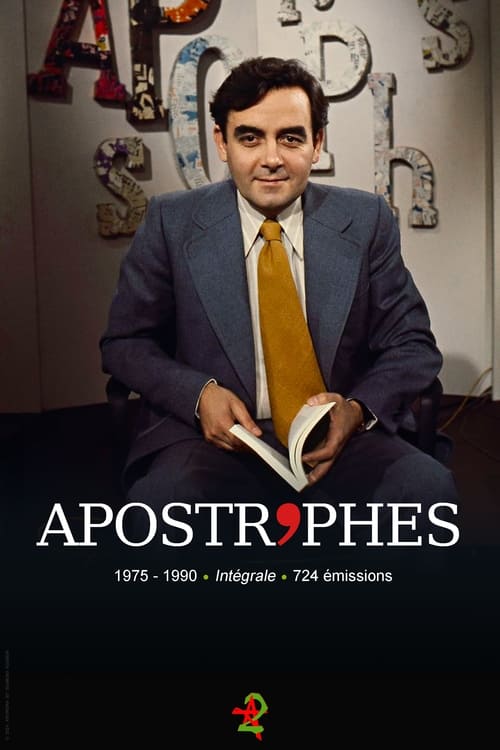
Apostrophes was a live, weekly, literary, prime-time, talk show on French television created and hosted by Bernard Pivot. It ran for fifteen years (724 episodes) from January 10, 1975, to June 22, 1990, and was one of the most watched shows on French television (around 6 million regular viewers). It was broadcast on Friday nights on the channel France 2 (which was called "Antenne 2" from 1975 to 1992). The hourlong show was devoted to books, authors and literature. The format varied between one-on-one interviews with a single author and open discussions between four or five authors.
Apostrophes
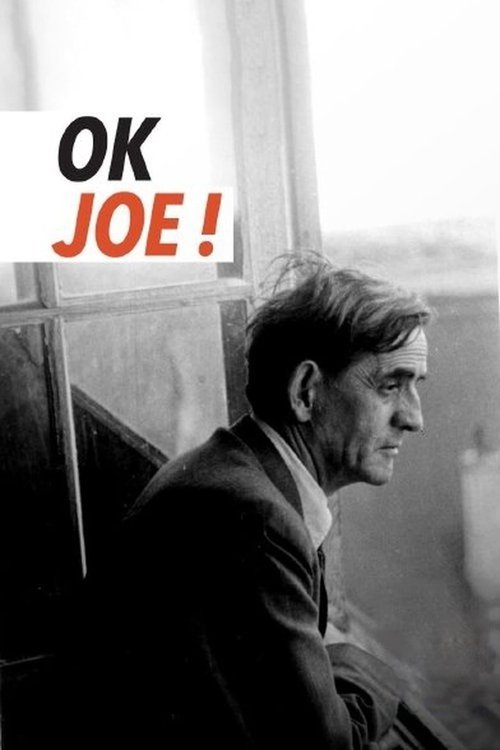
In autumn 1944, during the Liberation of Brittany, writer Louis Guilloux worked as an interpreter for the American army. He was a privileged witness to some little-known dramatic aspects of the Liberation: the rapes and murders committed by GIs on French civilians. He also discovered the racism of American military justice. This experience haunted the novelist for thirty years. In 1976, he recounted it in a short novel, "Ok, Joe", which went unnoticed. This film compares his account with the memories of the last witnesses to these forgotten crimes and their punishments.
Okay, Joe! or the Memoirs of Private Guilloux
Story of a young, inexperienced ship captain named Marlow, who struggles in solitude during the voyage with disease, insubordinate crew and vagaries of weather.
The Shadow Line
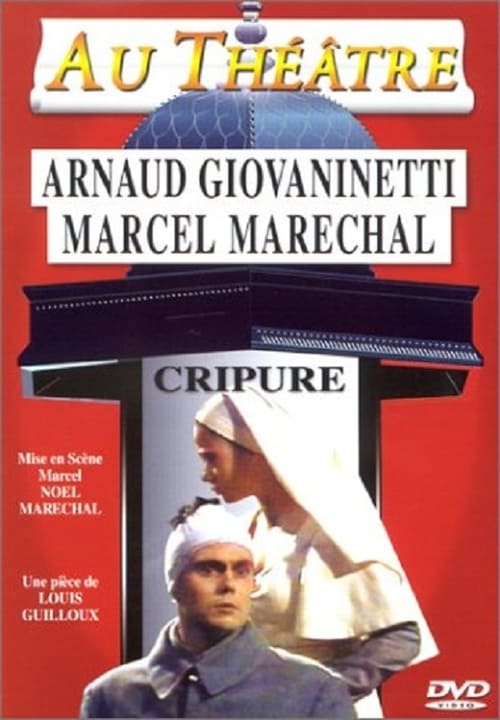
Theatrical recording of the play from "Black Blood": 1917 was the year during the Great War that nearly led to a revolution in France. At that time, Merlin was a modest but passionate professor. Nicknamed Cripure by his students, he spent most of his time reflecting on the human condition, in the light of God, which was supposed to exist. Filmed in Théâtre du Cothurne in Lyon.
Cripure

An adaptation of Joseph Conrad's first novel, taking us to the Malaysian mangrove forests against a backdrop of colonial decadence.
Almayer's Folly
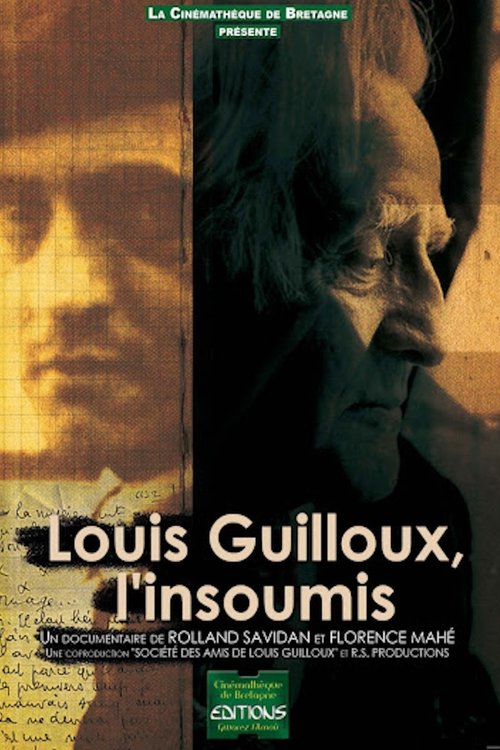
Louis Guilloux (1899-1980) is one of the great figures of 20th-century literature. Rolland Savidan and Florence Mahé's film accurately retraces the writer's career and his commitments to the century, while emphasizing the significance of his work.
Louis Guilloux, the rebel
In August 1944, during the chaotic climate of the Liberation, American GIs committed rapes and murders against French civilians. The U.S. Army set up a court-martial to try them. Almost by chance, it hired the writer Louis Guilloux as an interpreter. Little by little, the novelist discovered that only African-American soldiers were sentenced, often to death. He recounts this in a short story: "Okay, Joe!" By comparing his account with historical reality and the recollections of witnesses and descendants, this documentary reveals several taboos of World War II: the atrocities committed by the U.S. Army against civilians, the rape of women, racial segregation, and the cruel and selective punishments it inflicted on its Black soldiers. The film tells a little-known side of World War II.