FEEL IT.STREAM
Narcisa Hirsch

Narcisa Hirsch

Directing

Biography

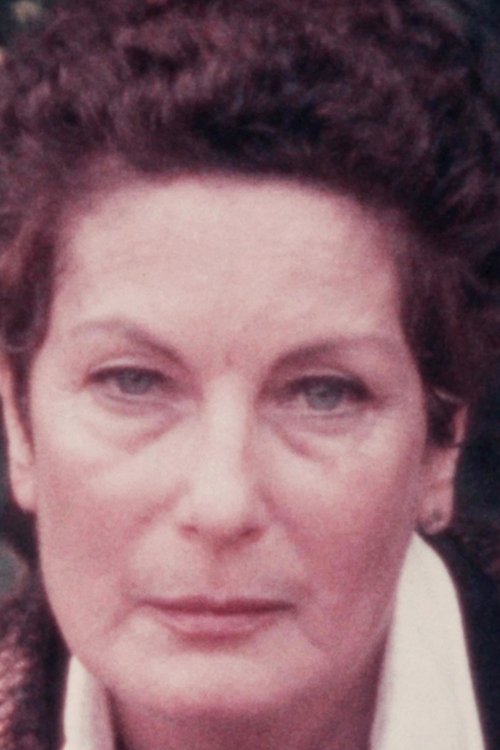
Narcisa Hirsch (née Heuser, born 1928) is an Argentine experimental filmmaker of German birth. Her work centered on themes of the body, love, sex, death, movement, and the female gaze. Despite this focus on women, she has resisted being labeled as a feminist. She began as a painter, and but her later and better known work centers on performance and film, though she has also written several books. She cites Salvador Dalí and Luis Buñuel as influences to her experimental film work, as well as the Bauhaus artists of Germany. During her time as an experimental filmmaker in Argentina, she frequented the Di Tella Institute and the Goethe Institute, a place where many of her works premiered. Recenlty, her work has been honored through several retrospectives at international film festivals, though it was relatively unknown outside of exclusive circles when it first premiered. Description above from the Wikipedia article Narcisa Hirsch, licensed under CC-BY-SA, full list of contributors on Wikipedia.
Known For

Pocos son los que conocen el secreto del amor
N/A

"The secret of love well few know; they feel an eternal thirst and feel an unquenchable hunger" writes Novalis in his poem. In turn, Narcisa converses with Rafael Maino, protagonist of many films in the diary series, opening the way to images of places, objects and music that mark the life and work of the filmmaker.

Pocos son los que conocen el secreto del amor

1976
No image
5.0

The role of men returning from the war; it is the end of the battles and ideologies.

A-Dios

1989
No image
5.0

"Life is a latency that as time and space becomes visible as a figure. But never eat at all, there are other possible lives. Making a life is difficult, filming the impossible itself . with this imago-auto-bio-graphy is an attempt to talk about this ambiguity, where what could be is the possibility of a memory, where what was and what was not, can be remembered in the same way, . always I lived with mixing the imagined thing is chosen in this chancy; go left on the road the other films that might have emerged" -Narcisa Hirsch

El Mito de Narciso

2011
Pradera
N/A

The hands of Narcisa Hirsch, a nonagenarian, open another Super 8 film cartridge to load a camera. In what seems like a ritual of passing on a legacy, the grandmother and her grandson, Tomás Rautenstrauch, watch a film of a meadow that gradually fills the frame.

Pradera

Marabunta
6.0

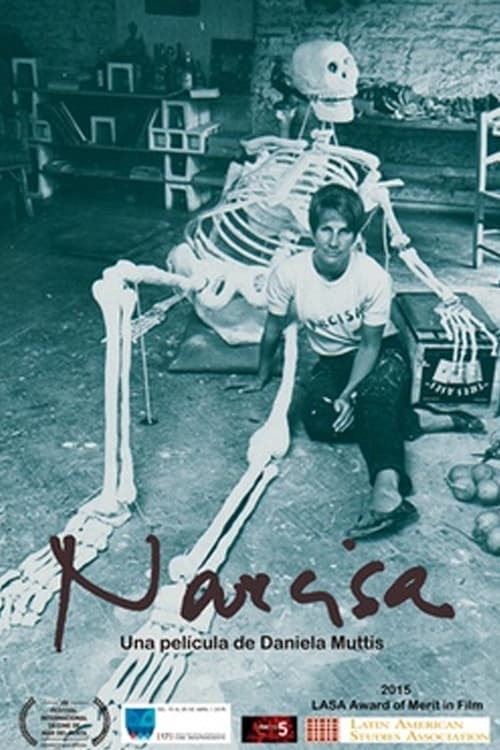
Marabunta, a ceremony in collective anthropophagy involving a six-meter skeleton completely covered in fruit and food, inside of which were live doves and parrots painted with phosphorescent colors that flew out as people were eating.

Marabunta

1967
El Aleph
6.6

The Aleph is the point where diachronic and synchronic times meet, and each second represents a moment in life, from birth to death.

El Aleph

2005
time/ OUT OF JOINT
N/A

With research that spans the work of philosophers Gilles Deleuze and Martin Heidegger to modern mythologies in which time reversal plays a crucial role — such as failed time machines, speed of light travel, and occult practices involving speech — Stracke combines science and philosophy in an attempt to defy death through cinema and the notion of time reversal.

time/ OUT OF JOINT

2015
Butoh
1.0

No description available.

Butoh

2013
No image
6.0

The transformation of an image. A woman suddenly transfigured breast and cut, like the Amazon, making new weapons: the bow and arrow.

AMA-ZONA

1983
No image
N/A

No description available.

El refugio de Narcisa Heuser

2023
Patagonia
N/A

Patagonia reflects Hirsch's close connection to Argentina’s natural world and the people around her.

Patagonia

1972
Yo veo conejos
N/A

No description available.

Yo veo conejos

1967
Pink Freud
N/A

No description available.

Pink Freud

1972
The Bengali Night
N/A

“ Cinema is what happens between frames," said German experimental filmmaker Werner Nekes. A woman and a man are on the ground together but it looks as though they are floating without moving. Silence overruns the scene; she stops and walks away. La Noche Bengalí is a documentary made as part of the seminar that Wernes Nekes held in Buenos Aires in 1980, sponsored by the Goethe Institute.

The Bengali Night

1980
Rumi
7.5

Images from the texts of Rumi, 13th century Sufi poet.

Rumi

1999
Surely Bach Closed the Door When He Wanted to Work
N/A

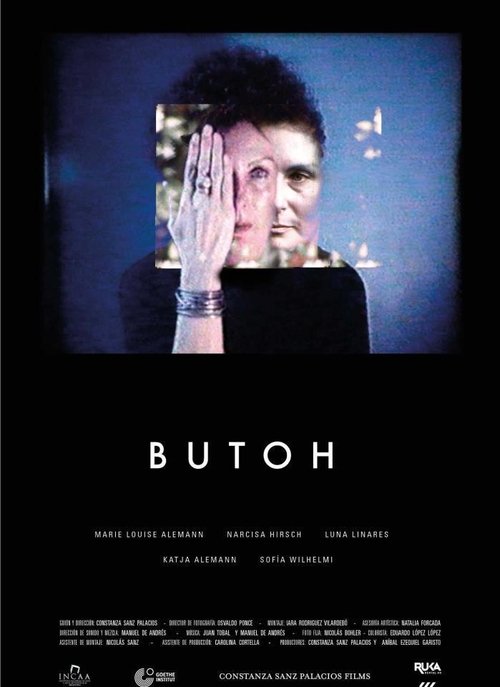
Portrait of women where they look at the images of their own faces and reflect on that experience.

Surely Bach Closed the Door When He Wanted to Work

1979
Ana, ¿Dónde Estás?
7.0

The dialogue of a woman with herself split into two unknown opposites.

Ana, ¿Dónde Estás?

1985
No image
N/A

No description available.

Celebración

2007
Kosmos
N/A

Twins still in their amniotic fluid announce our human condition, our compulsion to walk, move forward, run. When everything moves, we go through the forest of emotions in a dreamlike way. But it is thanks to water and its light reflections, to its transforming power that the infinite “Kosmos” plays with our uncertainty.

Kosmos

2017
Workshop
6.0

on the image of a collage on the wall, the voice of a woman describes a man the interior space of a workshop that is not seen.

Workshop

1975