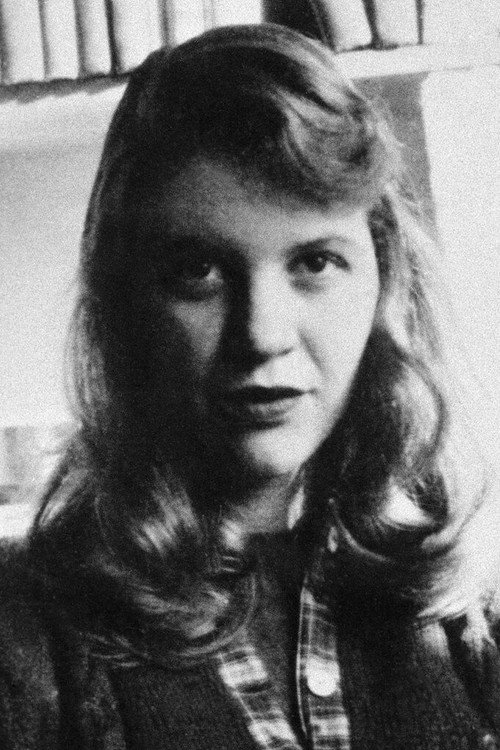
Sylvia Plath
Writing
Biography
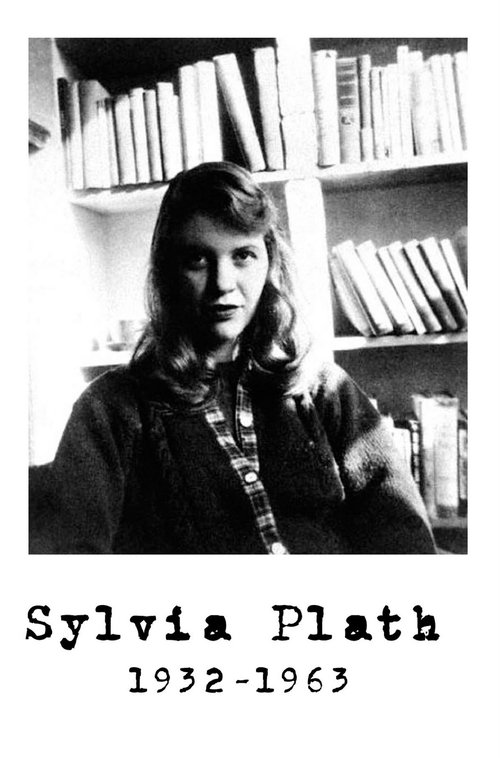
Sylvia Plath (October 27, 1932 – February 11, 1963) was an American poet and author. She is credited with advancing the genre of confessional poetry. She is best known for The Colossus and Other Poems (1960), Ariel (1965), and The Bell Jar (1963), a semi-autobiographical novel published one month before her suicide. The Collected Poems was published in 1981, which included previously unpublished works. For this collection, Plath was awarded a Pulitzer Prize for Poetry in 1982, making her the fourth person to receive this honour posthumously. Born in Jamaica Plain, Boston, Massachusetts, Plath graduated from Smith College in Northampton, Massachusetts and then the University of Cambridge in England, where she was a Fulbright student at Newnham College. In 1959, Plath took a creative writing seminar with Robert Lowell at Boston University, alongside poets Anne Sexton and George Starbuck. Within this seminar, Plath, Lowell, and Sexton, whilst starting with very different writing styles, each gravitated towards a new style of poetry dubbed confessional for its use of personal experience and its tendency to a direct form of address. She married fellow poet Ted Hughes in 1956 in London. In 1957, they briefly moved to the United States, but moved back to England in winter 1959. Letters written by Plath to her therapist, Dr Ruth Barnhouse, reveal allegations that her husband, Ted Hughes, was physically abusive. These unpublished letters, written between 1960 and 1963, also allege emotional abuse. They had two children, Frieda and Nicholas, before separating in 1962. Plath suffered a lifelong battle with severe depression, often characterised as a bipolar-type illness, leading to multiple traumatic treatments with early model electroconvulsive therapy (ECT). She died by suicide at age 30 in London on February 11, 1963. Description above from the Wikipedia article Sylvia Plath, licensed under CC-BY-SA, full list of contributors on Wikipedia.
Known For

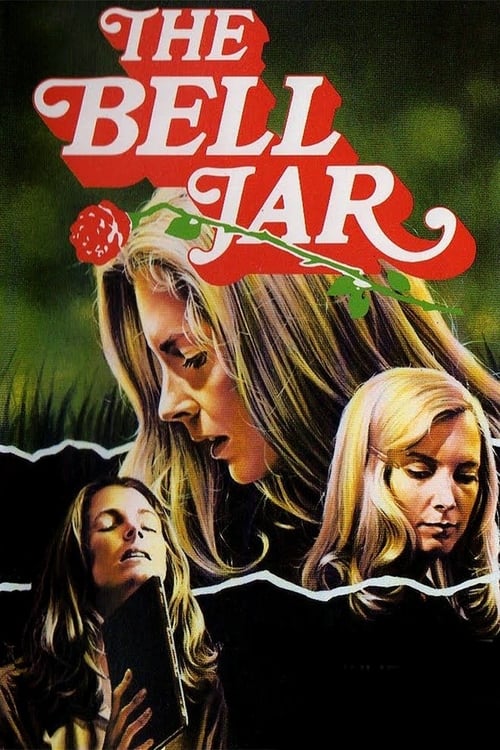
Details a young woman's summer in New York working for a Mademoiselle-like magazine, return home to New England, and subsequent breakdown all amidst the horrors of the fifties, from news of the Rosenbergs' execution to sleazy disc jockeys and predatory college boys.
The Bell Jar

The story of the making of The Bell Jar, the unique, semi-autobiographical novel written by American writer Sylvia Plath (1932-63), published in February 1963, shortly before her death.
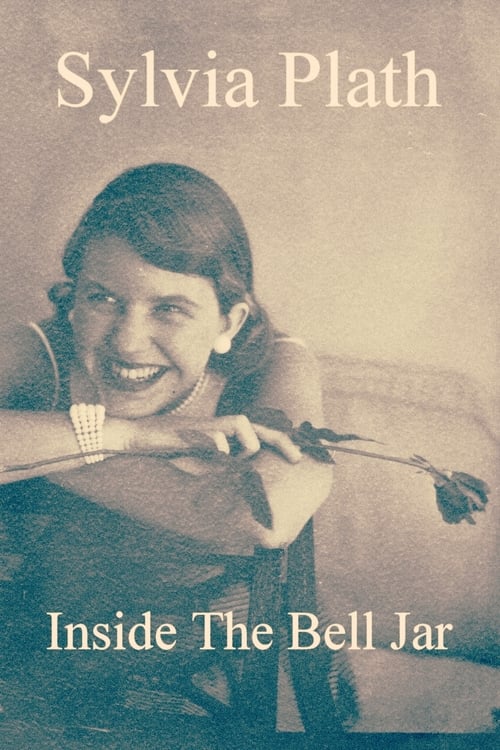
Sylvia Plath: Inside The Bell Jar

Based on the 1963 novel by Sylvia Plath, a young woman's summer in New York sees her working for a Mademoiselle-like magazine, return home to New England, and subsequent breakdown all amidst the horrors of the fifties, from news of the Rosenbergs' execution to sleazy disc jockeys and predatory college boys.
The Bell Jar

A journey into the BBC archives unearthing glorious performances and candid interviews from some of Britain's greatest poets.
Great Poets: In Their Own Words

An adaptation of Sylvia Plath’s seminal novel The Bell Jar.
The Bell Jar

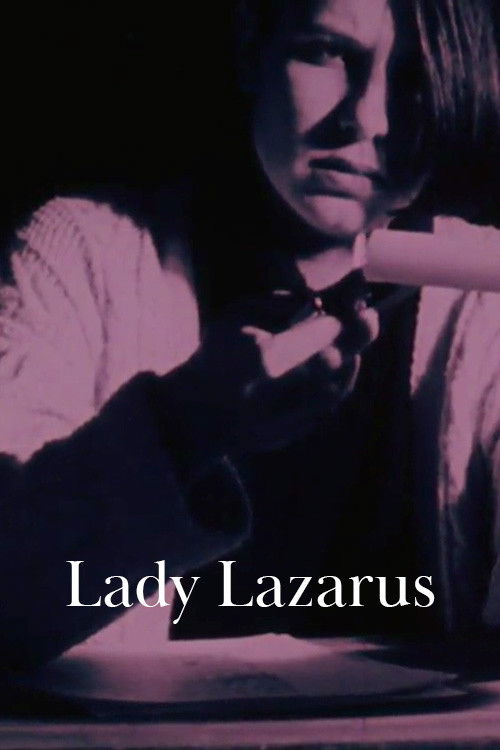
A cinematographic response to Sylvia Plath’s Lady Lazarus with Plath’s own readings of her poetry. A carousel of images in windows, an atmosphere of constant metamorphosis; her poetry as cinema. Audo outtakes of Plath reading from "Cut," "Daddy," "Lady Lazarus," "Ariel," "Ouija," as well as excerpts from a 1962 interview. Mixing images of Plath's obsessions (ouija boards, horses, violent self-harm) with photographs of the poet and her work, the film delves deeply into an existence that Plath herself, in a voice-over interview, calls "living on air."
Lady Lazarus

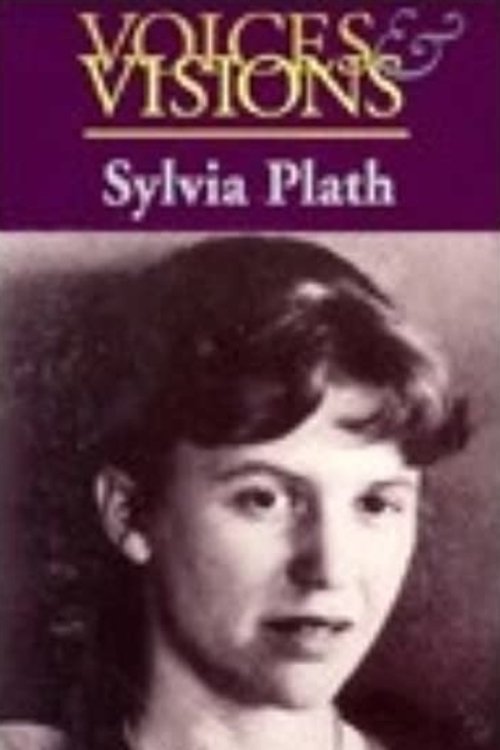
In this documentary you will follow in considerable (and sometimes excruciatingly painful) detail Plath's life from her childhood in Massachusetts to her suicide, at age 30, in London in 1963. Included are the candid recollections of her mother, Aurelia Plath, and such aquaintances as Clarissa Roche and Dido Merwin. Providing perspectives on Plath's work are A. Alvarez, a critic, and Sandra M. Gilbert, a feminist scholar and herself a poet.
Voices & Visions: Sylvia Plath

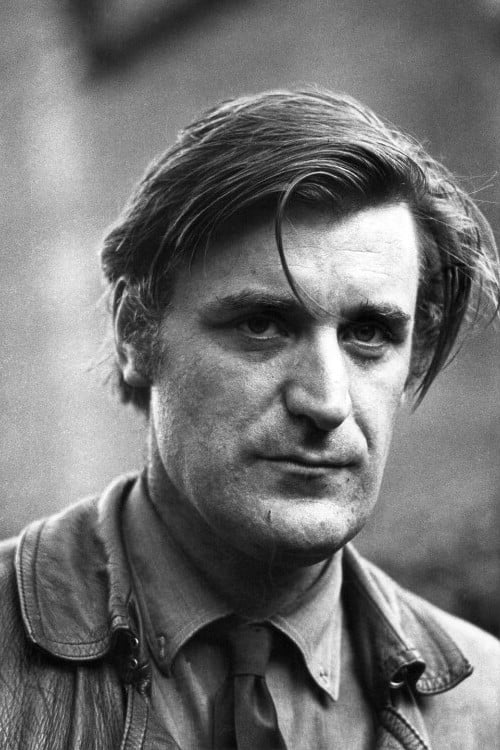
Documentary exploring Ted Hughes, one of the greatest poets of the 20th century, focusing on how his life story influenced his work and vision.
Ted Hughes: Stronger Than Death

Two years together by Le Nemesiache with the psychiatric patients of the former 'Frullone' hospital in Naples. This experience of music and dance had a profound impact on those who took part in it. This film is a testimony that indicates possible alternatives to the inhuman marginalization of the mental hospital institution. The director of the hospital Sergio Piro, operators and nurses from the 6th women's division and the Department for Youth Problems of Naples collaborated in the making of the film.
Follia come poesia

"The Lady in the Book" is Sylvia Plath, a major author of 20th-century American poetry and a feminist icon following her sudden death at the age of thirty. This film offers a glimpse into her world and work, through encounters with women who live today in the places where she grew up.
The Lady in the Book - Sylvia Plath, portraits

Sylvia Plath Read 18 Poems From Her Final Collection, Ariel, in a 1962 Recording
Sylvia Plath reading poems from Ariel

The end of Autobiography.
Epilogue

Based on a poem by Sylvia Plath from her collection Ariel, “I Am Vertical” is a journey into the mind of a young girl who’s lost in this world and dreams of being as stable like flowers and trees
I Am Vertical

In a dark no-place evocative of Superman's own psychic 'Fortress of Solitude' the alienated Man of Steel recites those sections of Plath's writings that utilize the image of the bell jar. Superman directs these lines to Kandor, the bell jar city that represents his own traumatic past, for he is the only surviving member of a planet that has been destroyed. Kandor now sits, frozen in time, a perpetual reminder of his inability to escape that past, and his alienated relationship to his present world. For us, Kandor is an image of a time that never was — the utopian city of the future that never came to be.