Directing
Federico is an architecture student of the University of Palermo. He spends his days walking around the new city looking for modern buildings to photograph and drawing some of their details. In his wandering he meets a guy, Borobudur, who will disclose him the doors of a new urban dimension of the city. In the wake of this magic encounter Federico will abandon his routine to plunge into a city undergoing constant transformation that will drive him towards a personal metamorphosis.
An exchange, between Palermo and Paris, between a director who signs an autograph and his recipient who receives it, while listening to an extract from his favorite film.
Its light, its smoky bars, its vacant land: the characters that we meet here treasure different aspects of Berlin. Vincent Dieutre puts faces and voices on some of the many artists who have settled there since the collapse of the Wall. Questioning each one about their arrival and possible departure, he depicts how Berlin has become part of the personal stories that have, in turn, been infused with a city’s history. What each artist recounts with their own words and sensitivity is also what the city has taught them – the vocabulary of the sentiments in German, the strength to live in the cold or in precarious conditions. Like a playful wink to the tourist guide format, the filmmaker travels from district to district.
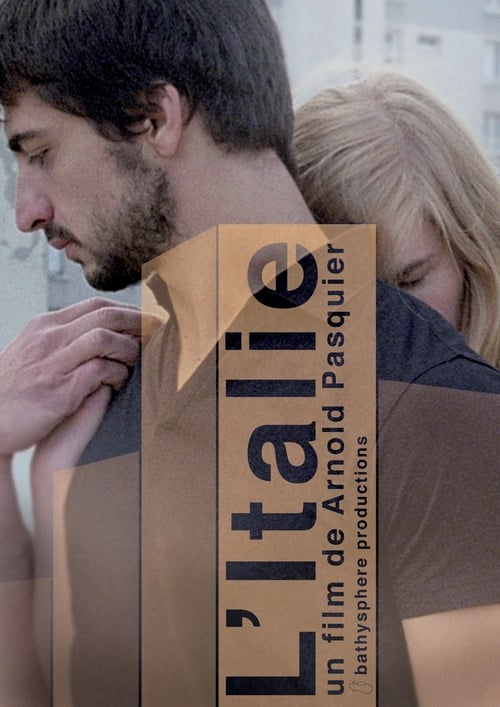
Paolo wants to go to Itlay, to forget his broken heart. Arthur suggests a surprising shortcut: Do all roads lead to Rome?
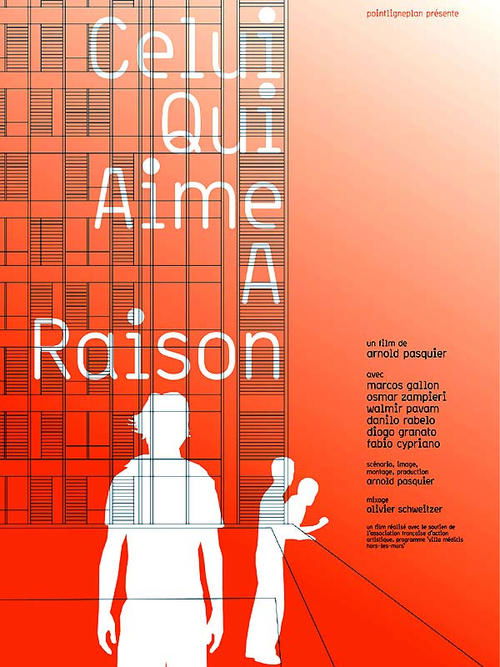
Marcos and Osmar live together in São Paulo. Marcos meets Walmir. The three of them live together. One day, Walmir disappears. His absence spurs Marcos and Osmar to scout out the city in search for him.
No description available.
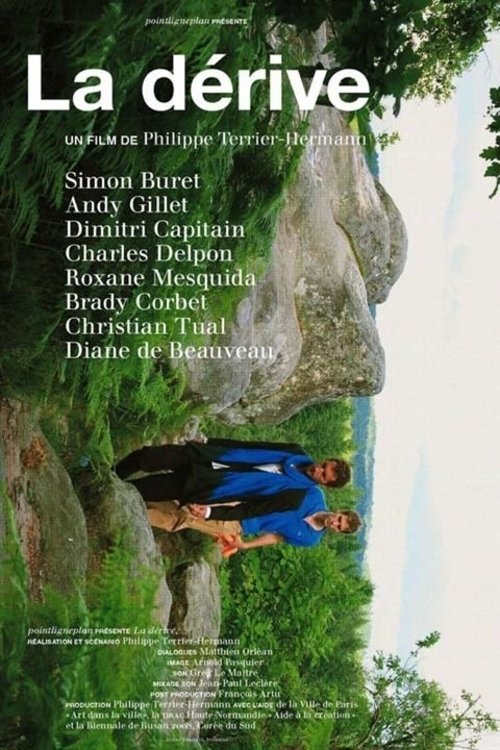
This film proposes the allegory of a social drift with all the power of romantic fascination that it can evoke. It is about a meeting oftwo young people formatted by a culture of success with two men embodying a nihilistic and dematerialized vision of society. This work treads the fine line that separates the hero from the loser.. Are these two men messiahs or a pair of wandering vagrants? Is this descent on the river closer to a descent into the fires of hell or rather an initiatory journey?
Writer Mathieu Riboulet read an excerpt from his work "Le Regard de la source" at home. In this passage emerges a portrait of a woman "neither a close friend nor a relative, but certainly a little like one and a little like the other": Nina. The words read aloud are careful and precious, evoking the woman's recent death and her friendship with the author. Then images from the past emerge, with the smooth, fragile texture of old video tapes, taking us back to yesterday and the past - the Moscow of twenty years ago - to a world that seems more irrevocably lost than ever .
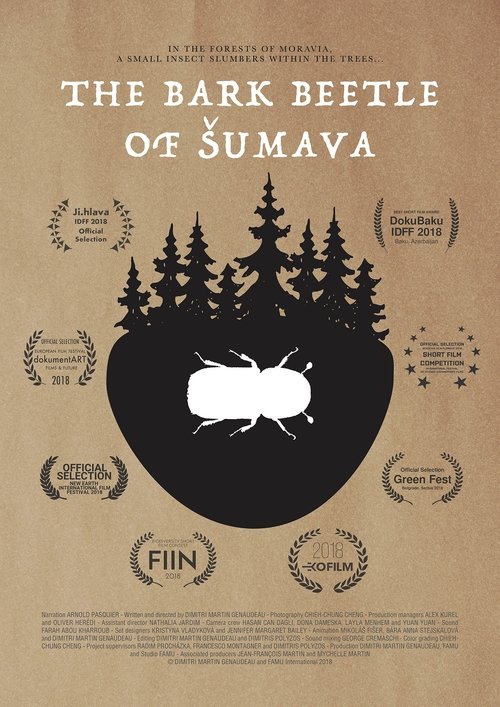
In the National Park of Šumava, in the south of Czech Republic, an invasive species of insect, the bark beetle, is eating the wood of the spruce tree, causing serious damage to the forest since the early 2000s. The forest, already weakened by the intensive spruce monoculture that was going on in Šumava during decades, couldn’t resist to the invasion of beetle. The extent of the destructions leads in 2011 to a large political controversy opposing the administration of the park to some environmental NGOs – two conception of the relation between man and nature were facing eachother. Meanwhile, the beetle gather his strenght and fight for his survival…
After having sex, two foreign men communicate by translating their conversation via a telephone screen. One is Brazilian, the other German and the latter leaves São Paulo the same day. Kiss one more time, then kiss the city in one last hug.
An ogre keeps in his castle two children, whom he intends to eat. A knight and his companion will try to save them, and will be assisted by the ogre's wife, who thus will also get rid of her husband. A medieval story in contemporary settings.
Léo and Kaspard, a young couple, live in Nanterre. Léo is fed up with Kaspar's reproaches and takes to social networks to make their love story public. Their breakup marks Léo's departure for Berlin, a city where he hopes to be reborn through contact with an alternative milieu. But the city's real estate speculation pushes Leo to the margins. Years later, Kaspar's biological daughter, raised by a couple of women, recalls this love story on a theater stage.
Road trips through Los Angeles, famous verses in the Poetry Lounge and love in times of the pandemic: Rendezvous with an old flame, fourty years later. After Jaurès (2012), Vincent Dieutre presents another tender autofictional piece in the Forum.
Contemporary Paris, mid-July. Guillaume arrives in the capital to caretake a large apartment until the end of the summer. Lucie, the apartment’s owner, and a friend of his mother’s, welcomes him… then suddenly disappears.
A woman sitting in front of a screen: we do not know if it is day or night outside. In this place, the light of the screens dominates that of time. The inner voice of this woman recounts a solitary and reclusive life and her confusion in front of an old black and white photograph that she has just e
![L'amour moderne [allemagne]](https://image.tmdb.org/t/p/w500/s8tgOQJ8pihkcOaE15ZZloLhgCm.jpg)