Directing
No description available.
About Aborigines and Australian politics. On 13 March 1978 the Queensland Government announced its intention to take over management of the Aurukun Aboriginal Reserve from the Uniting Church. The people of Aurukun complained bitterly, believing that the Church was more sympathetic to their aims and fearing that the State was merely seeking easier access to the rich bauxite deposits on their Reserve. When the Federal Government took the side of the Aborigines the stage was set for national confrontation. Shows the situation at Aurukun during those crucial three weeks.
Renowned ethnographic filmmakers David and Judith MacDougall explore the many meanings of photography in this profound and penetrating documentary. The film focuses on the photographers of Mussoorie, a hill station in the Himalayan foothills of northern India whose fame has attracted tourists since the 19th century. Through a rich mixture of scenes that includes the photographers at work, their clients, and both old and new photographs, this extraordinary film examines photography as art and as social artifact — a medium of reality, fantasy, memory, and desire.
Constructed as a series of vignettes of station life, the film focuses particularly on the relationship between Sunny Bancroft, the station manager, and a 16-year-old trainee, Shane Gordon. The episodes are linked by Sunny's reflections on learning the hard way from experience, and from the lessons taught him by his father.
The Queen of the Hills is a reconstruction of a film shot and edited in 1988-89 but never completed. It was made as a companion piece to the MacDougalls’ film Photo Wallahs (1991), a study of photography and photographers in the north Indian hill station of Mussoorie. The film is a portrait of the hill station and its inhabitants, focusing on its unusual colonial past and postcolonial present. It has been restored digitally from the faded and damaged 16mm workprint produced in the 1980s.
The story of an Aboriginal stockman, Sunny Bancroft, and his family at Collum Collum and their growing enthusiasm for "picnic races" on bush tracks in New South Wales.
David and Judith MacDougall are exploring the marriage rituals and roles of Turkana women in this ethnographic documentary. The film's biggest part is taken up by talks between the Turkana people. As one of the first ethnographic documentaries "A Wife Among Wives" subtitles these talks so that the viewer can get a better and probably more personal understanding of the life of the Turkana.
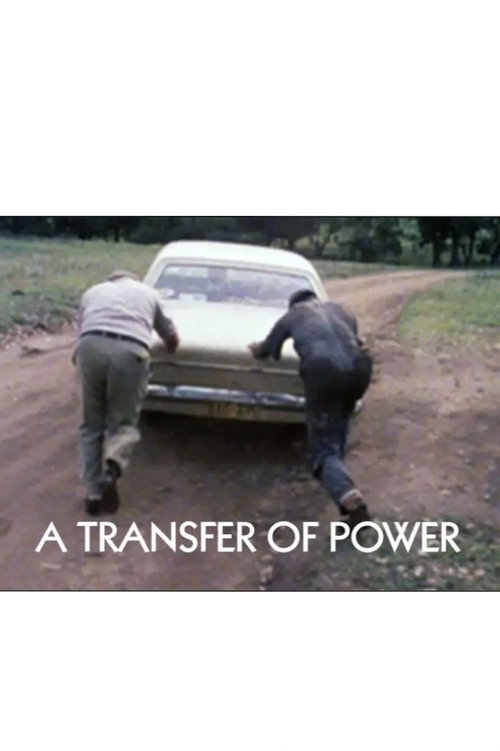
At Jie cattle camps in Uganda men often gather under a special tree to make leather and wooden goods and talk, relax, and sleep. This brilliant ethnographic documentary by renowned filmmakers David and Judith MacDougall captures one particularly riveting discussion one afternoon under the men's tree. The conversation on this particular afternoon becomes a kind of reverse ethnography, centering on the European's most noticeable possession, the motor vehicle. This is a uniquely delicate and intimate film, filled with the humor of the Jie and, implicitly, the ironic wit of the filmmakers.
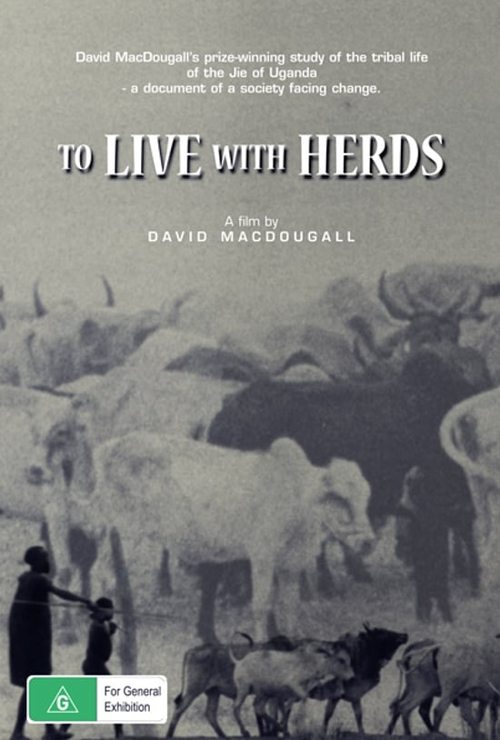
A documentary portrait of the Jie of northeastern Uganda, examining pastoral life during a dry season as government policies and economic pressures challenge traditional patterns of herding, movement, and subsistence.
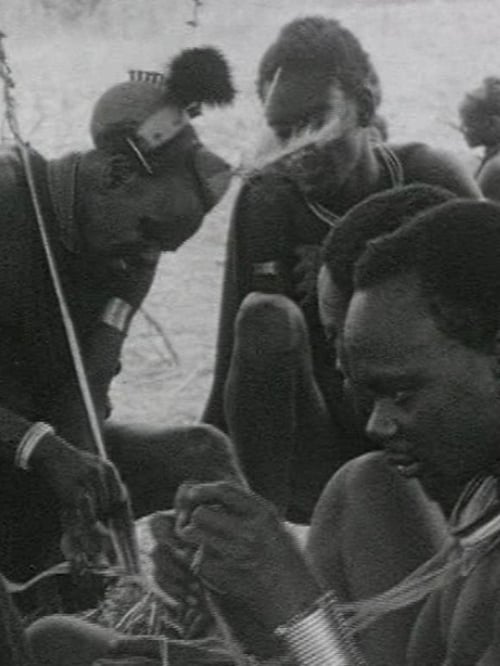
This classic ethnographic documentary, by the renowned filmmaking team of David and Judith MacDougall, explores the nomadic life of the Jie of Uganda. During the dry season the Jie leave their homesteads in large numbers and take their cattle to temporary camps (nawi) in western Karamoja District, where water and grass are more abundant.
Filmed over the course of a summer in the mid-60s, Judith MacDougall’s documentary observes the happenings of the workers of the Los Angeles Indian Center, a Native-run organization offering social services and a community hub for the city’s Indigenous community. It centers the center’s director, Ernie Stevens, as he navigates and negotiates with city politicians and a plethora of local personalities in his attempt to organize an art fair for the Center. Largely unseen in over 50 years, the film offers a unique and indispensable look at urban Native American life in the 60s that is ripe for rediscovery and reappraisal, thanks to a new scan of the film’s original print by the UCLA Film and Television Archives.
When Geraldine Kawanka’s husband died, she and her children left their house at Aurukun on Cape York Peninsula. In earlier times a bark house would have been burnt, but today a ‘house-opening’ ceremony — creatively mingling Aboriginal, Torres Strait and European elements — has evolved to deal with death in the midst of new living patterns. Although sometimes suggesting a party, its underlying purpose is serious. This film records the opening of the house and Geraldine’s feelings about it in her informative and personal commentary.
An ethnographic study of a Turkana family filmed in north western Kenya in the early 1970's.
This observational documentary follows an episode in the routine life on Collum Collum cattle-station in northern New South Wales. But, as the filmmaker notes, it's a story that could have occurred anywhere.
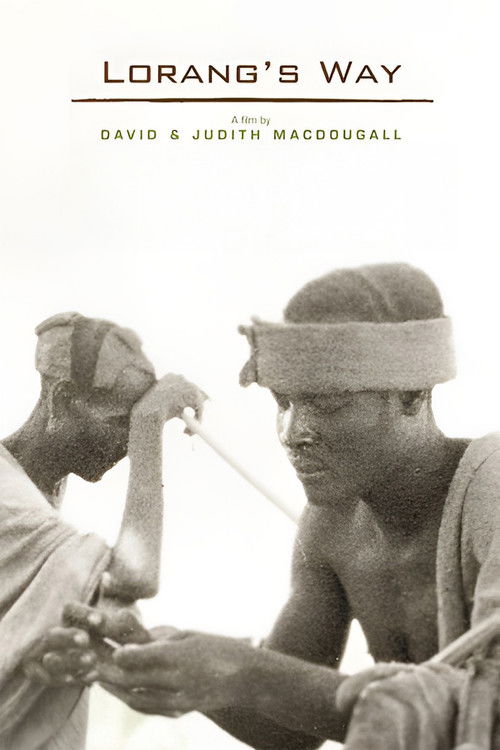
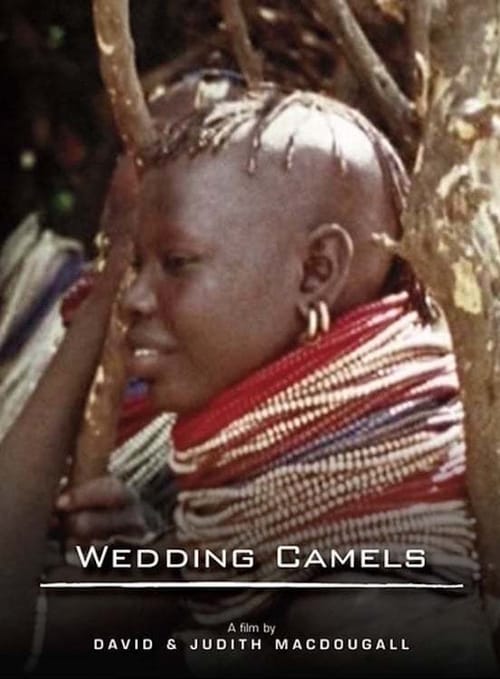
Set among the Turkana pastoralists of northwestern Kenya, the film chronicles the marriage negotiations between Lorang’s daughter Akai and Kongu, a friend and age-mate of her father. Much of the film focuses on extended discussions over the bridewealth—goats and camels to be given to the bride’s family—which draw in relatives from both sides and grow increasingly tense. Filmed in an observational style without narration, the documentary records the negotiations and social dynamics that shape the marriage arrangement.
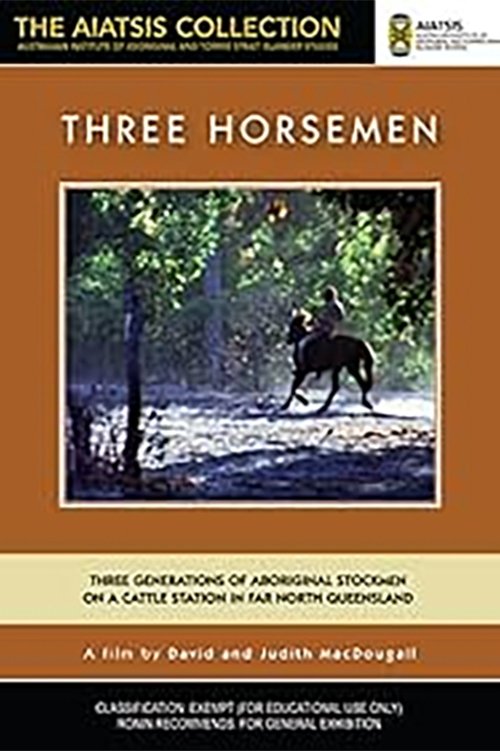
Three Horsemen: 1978/1982 An old Aboriginal stockman, his nephew, and his 13-year-old grandnephew on Cape York peninsula, northern Queensland, try to get an old cattle station going again in their traditional clan country. 54 minutes. Presents the Pootchemunka family and life at the TiTree settlement in Northern Queensland Australia.