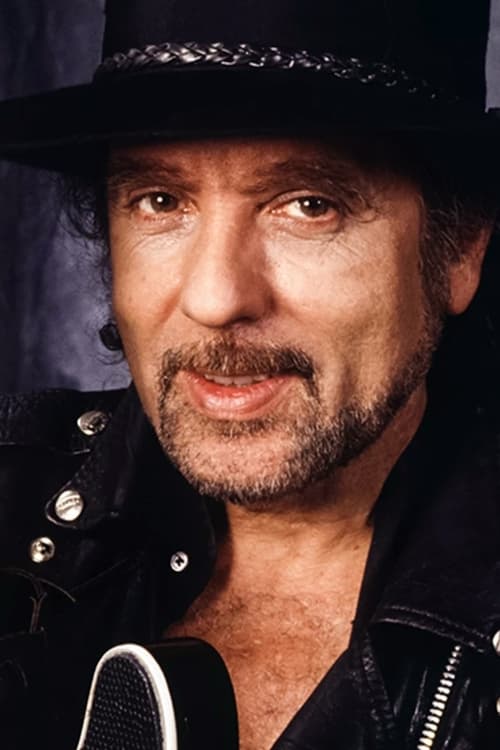
Danyel Gérard
Acting
Biography
Danyel Gérard (born Gérard Daniel Kherlakian; 7 March 1939) is a French pop singer and composer. Gérard was born in Paris, France to an Armenian father and an Corsican mother, but grew up mainly in Rio de Janeiro, in Brazil. In 1953, he returned to Paris and became a choir boy at Notre Dame. Following this he played in the rock and roll band The Dangers. In 1958 he made his first recordings: "Viens" (a cover of the Kalin Twins' hit "When") and "D'où reviens-tu Billy Boy" (adapted from Dorothy Collins' "Where Have You Been, Billy Boy"), making one of the first young French singers to successfully sing rock and roll (his only rivals at this stage were Richard Anthony, Claude Piron (later better known as Danny Boy) and Gabriel Dalar), although his commercial impact was very limited; despite a latter-day, revisionist recasting of him as the French Elvis Presley, he was nevertheless one of France's first rock stars. After cutting a further EP featuring a cover of Don Gibson's "Oh Lonesome Me" ("O pauvre moi") which was buried by a rival version by Sacha Distel and an adaptation of the Fraternity Brothers' "Passion Flower" ("Tout l'amour"), he was drafted and spent from 1959 to 1961 he was a soldier in North Africa. Subsequently, he was a singer and guitarist in various bistros. On his return, he resumed his singing career with the minor 1961 hit "Oh Marie-Line" but by then he had been overtaken by newer singers such as Johnny Hallyday. He also began to write songs, penning tunes for Johnny Hallyday, Sylvie Vartan, Dalida, Richard Anthony, German-based star Caterina Valente, actress Marie Laforêt and Austrian singer Udo Jürgens. After enjoying a major hit with the French version of Pat Boone's "Speedy Gonzales" ("Le petit Gonzalès"), despite competition from a version by Dalida, in 1963 he became to the first signing to the new Disc AZ label, issuing two further EPs for them before unleashing his best recording of the period, a revival of Chuck Berry's "Memphis, Tennessee". Further hits followed but by the mid-sixties his star had waned and he moved into record production, most notably for Michel Corringe. He returned in 1970 with the French hit "Même un clown" but his international breakthrough came in 1971 with "Butterfly", which he recorded in several languages and which has sold seven million copies. It charted across Europe, reaching #1 in Germany, Switzerland, Sweden, and France, #5 in the Netherlands, and #10 in the UK; in the US it peaked at #78. It was awarded a gold disc by the Recording Industry Association of America. It has since become a pop standard, and was also used in the film The Mad Aunts Strike Out. ... Source: Article "Danyel Gérard" from Wikipedia in English, licensed under CC-BY-SA 3.0.
Known For
No description available.
Champs-Elysées
No description available.
Vivement dimanche
No description available.
Die Drehscheibe

Midi Première is a French variety show presented by Danièle Gilbert, directed by Jacques Pierre and broadcast from January 6, 1975 until January 1, 1982 on TF1. The program was generally broadcast between 12:15 p.m. and 12:55 p.m., then giving way to the 1:00 p.m. TV news. However, the broadcast schedule could change, depending on the guests, and the setting where the recording of the program was shot. Certain performances by artists who have become cult like the one where Ringo jostles with a demonstrator in interpretation (1977), that of Dalida with the title There is always a song with the soundtrack that does not start, twice, at the right speed (1978), Claude François and his Clodettes, who, in the provinces, are unable to join "the set" in order to interpret his song, the latter being taken by the crowd of delirious fans (summer 1977) . The group Supertramp performed there with the title "Dreamer" on March 8, 1975.
Midi Première

No description available.
Sacrée soirée

No description available.
ZDF-Fernsehgarten

A talk show presented by Michel Drucker
Les Rendez-vous du dimanche

No description available.
Le monde est à vous
Le Grand Échiquier is a French variety television program created and presented by Jacques Chancel. It aired at 8:30 pm on the first channel of the ORTF from January 12, 1972 to July 12, 1972, then on the second color channel of the ORTF from September 1972 to December 1974, and finally on Antenne 2 from January 1975 to December 21, 1989. The program returned to France 2 on December 20, 2018 and is hosted by Anne-Sophie Lapix.
Le Grand Échiquier
No description available.
Midi trente
No description available.
Die ultimative Chartshow

No description available.
Discorama
The ZDF-Hitparade, or Hitparade for short was one of the most popular and most well-known music television series presenting mostly German Schlager.
Die ZDF-Hitparade
No description available.
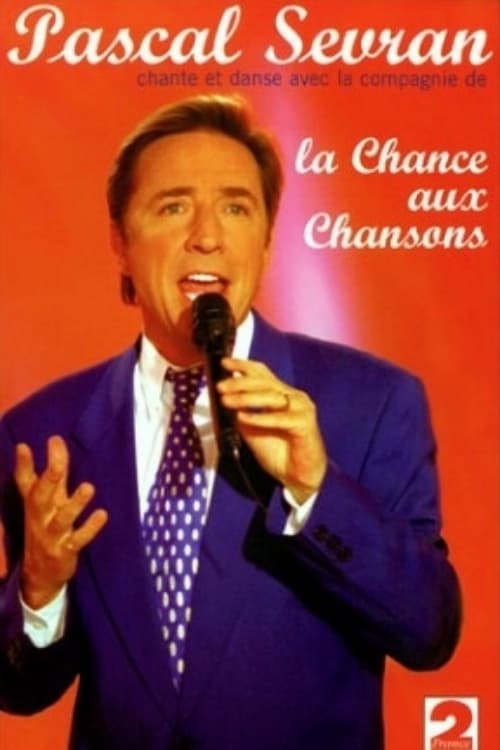
La Chance aux chansons
Disco was a pop music program that aired in Germany on the ZDF network from 1971 to 1982. It generally aired on the first Saturday of each month at 7:30PM, each show running 45 minutes. 133 shows were produced. The show was hosted by German actor and comedian Ilja Richter. Its lesser known predecessor on ZDF, 4-3-2-1 Hot & Sweet was aired between 1966 and 1970, presenters included Ilja Richter and Suzanne Doucet. Disco generally served a younger pop-oriented audience compared to ZDF's Hitparade, and until 1972, its main competitor was Beat-Club, followed by Musikladen, both on ARD. Repeats of Disco have been aired since 1984 on ZDF Musikkanal, after its closedown in 1989 on 3sat. Since 2004, the digital ZDF Theaterkanal aired repeats of the entire series. In 2007, ZDF Dokukanal began to air reruns, starting with episodes from 1975 and also multiple repeats of the series have been shown on hit24 in 2008. The show focussed on chart hits current at the time of airing, giving about equal airtime to international pop music and German Schlager. Despite its name, it did not particularly focus on disco music although it featured many disco hits as long as they were chart relevant..
Disco

No description available.
30 millions d'amis
No description available.
Système 2
The show was meant to compete with those on West German television. To this end it was fairly successful even attracting a following in parts of West Germany which could receive Eastern TV. Its production values were high. Apart from song and dance numbers and appearances from East German celebrities, almost every broadcast featured well-known stars from the west, often after their popularity had peaked in their home countries.
Ein Kessel Buntes
No description available.
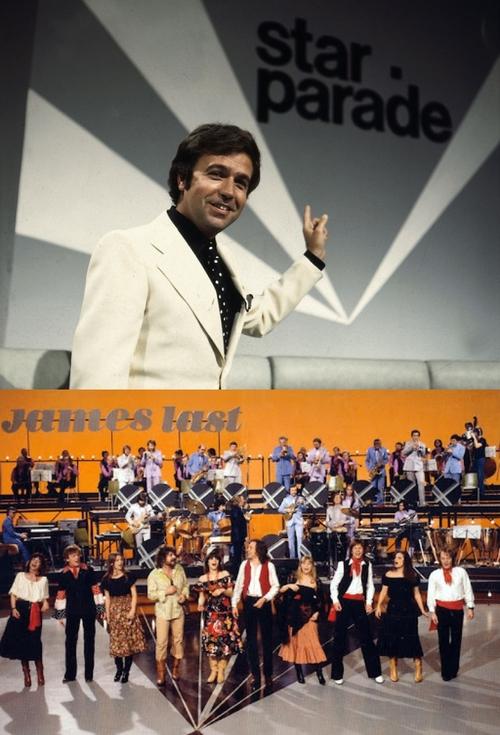
Starparade
No description available.