FEEL IT.STREAM
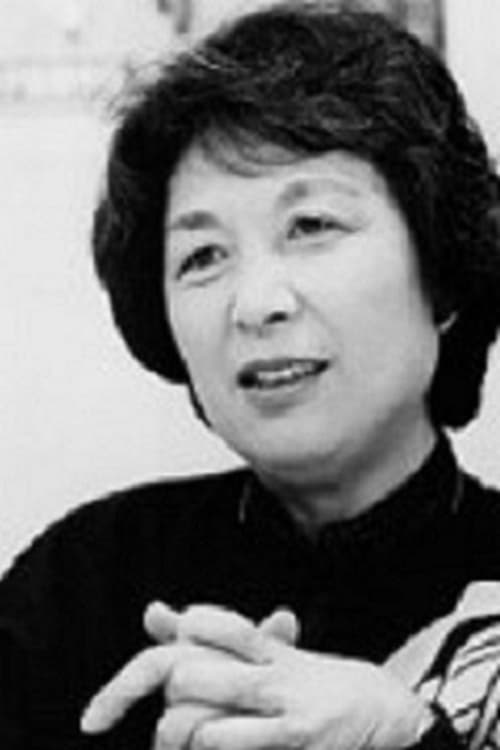
Sumiko Haneda

Sumiko Haneda

Directing

Biography

Born 1926 in Dalian, China, Sumiko Haneda graduated from Jiyu Gakuen, and joined Iwanami Productions at its founding. She has been involved in over eighty documentaries, starting with Women’s College in the Village (1957). After The Cherry Tree with Gray Blossoms (1977) she took to independent filmmaking, and has made over ten films including Ode to Mt. Hayachine (1982), How to Care for the Senile (1986), Getting Old without Anxiety (1990) and Woman Was the Sun—The Life of Hiratsuka Raicho (2001). She participated as a juror in the International Competition in YIDFF ’99.

Known For

Devotion: A Film About Ogawa Productions
10.0

Devotion investigates the extremely complex and heirarchical relationships among a committed group of Japanese filmmakers who dedicated up to 30 years of their lives making films for one man-Ogawa Shinsuke. Members of Ogawa Pro filmed the student movement of the late 60's; the fight by farmers to save their land from government confiscaton for the Narita airport at Sanrizuka; and the village life of a small farming community, Magino Village, in northern Japan. These heartbreaking and sometimes funny stories have never been told on film before. Rare footage, stills, and diaries with interviews with Oshima Nagisa, Hara Kazuo and Robert Kramer make this historical inquiry visually exciting as well as valuable.

Devotion: A Film About Ogawa Productions

2002
The Cabbage Butterfly
N/A

Haneda employed various cinematic and scientific technic to explore the world of cabbage butterfly, and the result was a completely new type of educational film.

The Cabbage Butterfly

1968
No image
N/A

No description available.

The Seas Are Full of Sheep in Love

1961
No image
N/A

Toru Iwakawa is elected mayor of Takanosu on the platform of improving welfare. With the support of a group formed by residents, he aims to develop a "care town" to stop the isolation of the elderly. However, the town council refuses to support his proposal.

Community Welfare that Residents Choose

1997
Island of Loves
6.5

This film depicts the life of the 19th-century Portuguese writer Wenceslau De Moraes by means of nine ancient ballads from China. The writer married a Chinese woman after he left his wife and family to go live in Macao. Later, he moved to Japan where he fell in love with a Japanese woman, staying in Japan for the rest of his life. Mixed in with the career and loves of Moraes is the history of Portugal at home and in its colonies.

Island of Loves

1982
Dedicated Treasures of Horyuji-Temple
N/A

No description available.

Dedicated Treasures of Horyuji-Temple

1971
Into the Picture Scroll: The Tale of Yamanaka Tokiwa
10.0

This extraordinary film presents Japanese classical scroll painting as never before. The Yamanaka Tokiwa comprises twelve scrolls painted by Matabei Iwasa some 400 years ago. Haneda redefines the art documentary and demonstrated that a film about a masterpiece can be equally masterful.

Into the Picture Scroll: The Tale of Yamanaka Tokiwa

2004
The Takanosu-machi Thereafter
N/A

Mayor Iwakawa was voted into office in 1991, promising better welfare for senior citizens. As a result of his efforts to create a town with resident participation, while battling against anti-reform forces of the town council, Takanosu-machi becomes the best welfare town in Japan. In the nationwide local elections in 2003, however, Iwakawa, loses by a huge margin against the opposing candidate who promises the consolidation of local municipalities.

The Takanosu-machi Thereafter

2006
The Cherry Tree with Gray Blossoms
7.2

The poignant focal point for this film is a cherry tree that is over 1400 years old. Beginning with the tree, the director then explores the families and environment around the tree. The editing and music contribute to the sense of a haunting past contained within the solid structure of an ancient natural wonder.

The Cherry Tree with Gray Blossoms

1977
The Poem of Hayachine Valley
7.0

Shot in the foothills of Iwate Prefecture’s mystical Mt. Hayachine, the film records a year in the life of the area’s villages.

The Poem of Hayachine Valley

1982
Getting Old without Anxiety
10.0

The care facilities for the elderly in a small town in Gifu prefecture, and the comparison with the welfare in Denmark, Sweden and Australia.

Getting Old without Anxiety

1990
Women Make Films
N/A

No description available.

Women Make Films

2004
Children in the Classroom
6.0

A short documentary about the behaviour of Japanese primary school students.

Children in the Classroom

1954
How to Care for the Senile
10.0

Shot in a retirement home over a period of two years, this film raises the question of "how to take care". The director films with great tenderness, not only the daily life of patients with senile dementia, but also the work of caregivers. Widely broadcast, the film sparked lively debate on the care and support society in Japan.

How to Care for the Senile

1986
Woman Was the Sun—The Life of Hiratsuka Raicho
N/A

Documentary on pioneer Japanese feminist Hiratsuka Raicho

Woman Was the Sun—The Life of Hiratsuka Raicho

2002
Kabuki Actor Kataoka Nizaemon
8.0

Documentary film from Japan.

Kabuki Actor Kataoka Nizaemon

1992
Beauty of the Ancients
N/A

Commissioned by the Tokyo National Museum, this film, regarded in some quarters as the masterpiece of Haneda’s Iwanami period, is one of several in which she documented Japan’s ancient and classical artistic treasures. Here she focuses on the Tokyo National Museum’s collection of art from the earliest eras of Japan’s (pre)history, including earthenware pottery and the striking terracotta figurines known as haniwa.

Beauty of the Ancients

1958
Far-Away Home: Lushun and Dalian
N/A

Haneda Sumiko, documentary filmmaker who was born in Dalian, Manchuria in 1926 and was there to experience the conclusion of the Pacific War. Following her previous work , she revisits Dalian and Lushun, places where she spent her formative years. Lushun has served as an important naval port in modern times, and in 2009 was finally fully opened to foreigners. Haneda joined a tour organized as part of that opening, and delves into memoires as she visits the house where she grew up and the school she attended.

Far-Away Home: Lushun and Dalian

2011
Akiko: Portrait of a Dancer
N/A

“I have three tasks in my life: to dance, to teach dance, and to create dance,” says the pioneering Japanese performer Akiko Kanda in this intimate portrait of creativity and individuality, After seeing a Martha Graham performance in college, Kanda left her family behind in Japan and arrived in New York City, where she studied under the legendary Graham and became a principal dancer with the troupe. Following the wiry artist as she moves from practice floor to performance hall, and from the cramped single-room apartment she lives in to a trip home to see her aging mother, director Sumiko Haneda reveals a woman who has rebelled against traditional ideals of marriage and motherhood, and who nearly single-handedly brought modern dance to Japan-and kept it alive. “When I die,” Kanda tells the director, “I will be content if I can just say, ‘I danced.'”

Akiko: Portrait of a Dancer

1985
No image
N/A

Short documentary made for the communities at the foot of Mount Hayachine. Not satisfied with it, Haneda expanded it into what eventually became Ode to Mt. Hayachine (Hayachine no fu)

Hayachine Kagura no Sato

1981