Acting
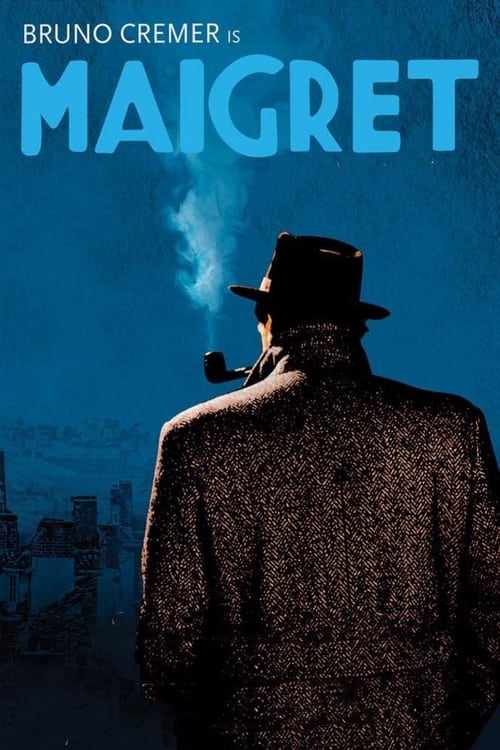
The pragmatic, reserved and refined Maigret investigates murders in his singular unhurried manner and inevitably discovers the truth.
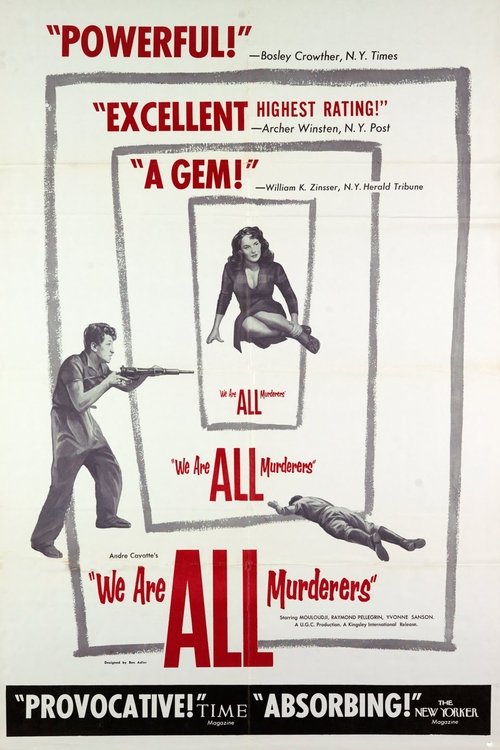
Originally titled Nous Sommes Tout des Assassins, We Are All Murderers was directed by Andre Cayette, a former lawyer who detested France's execution system. Charles Spaak's screenplay makes no attempt to launder the four principal characters (Marcel Mouloudji, Raymond Pellegrin, Antoinine Balpetre, Julien Verdeir): never mind the motivations, these are all hardened murderers. Still, the film condemns the sadistic ritual through which these four men are brought to the guillotine. In France, the policy is to never tell the condemned man when the execution will occur--and then to show up without warning and drag the victim kicking and screaming to his doom, without any opportunity to make peace with himself or his Maker. By the end of this harrowing film, the audience feels as dehumanized as the four "protagonists." We Are All Murderers was roundly roasted by the French law enforcement establishment, but it won a special jury prize at the 1952 Cannes Film Festival.
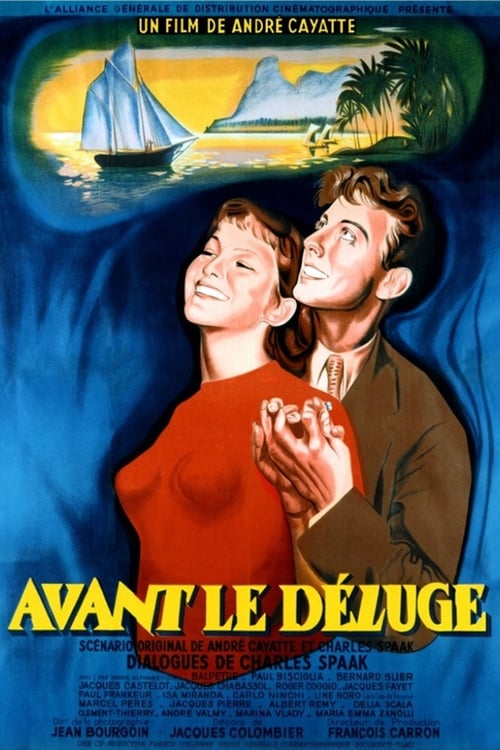
The title of this French "reality" drama, which translates to Before the Deluge, is a play on Louis XVI's famous prognostication, "Apres moi, le deluge." Set in 1950, the film concentrates on five Parisian adolescents. Certain that the next war will herald the apocalypse, the youngster make plans to run off to a desert island and set up a new society. This, however, will require money, which is why the boys decide to pull off a "necessary" robbery. Idealism collapses in the face of cold reality, as the five youths suffer from the consequences of their actions. Avant le Deluge was one of a group of films cowritten by director Andre Cayatte and Charles Spaak which endeavored to explore the touchy social issues of the day: others in the Cayatte-Spaak canon include the euthanasia-themed Justice est Faite and the capital-punishment tract Nous sommes tous des assassins.
In the seacoast town of Boulogne, antique furniture saleswoman Hélène lives with her stepson, Bernard, who's back from military duty in Algiers. An old lover of Hélène's comes to visit, Alphonse, with his niece Françoise; he too is back from Algiers, where he ran a café. Bernard speaks of his fiancée, Muriel, whom Hélène has not met. The past is obscured by guilt, misperceptions, and missed possibilities. Appearances deceive, things change. As Hélène and Alphonse try to sort out a renewal, everyone seems off-kilter just enough to hint that all cannot end well.
A quiet cellist living in the countryside has his life disrupted when he accidentally bumps into a wealthy, temperamental woman in a Rolls-Royce. Angered by his indifference to her charm, she attempts to seduce him, but he resists her attempts to invade his peaceful life.
Paris, 1925. Bénédict Masson, bookbinder and poet, is secretly in love with his neighbor, Christine. Christine works at the strange Coulteray mansion where the marquise accuses her husband of being a vampire. But Bénédict has other preoccupations: six of his apprentices have disappeared without a trace.
No description available.
Boulevard focuses on Georges 'Jojo' Castagnier, an adolescent who lives in a poor room under the roof of a block of apartments in the Pigalle section of Paris. He ran away from home when he realized that his step-mother hated him from day-one. Among Jojo's many neighbors is the gorgeous Jenny Dorr , a nightclub dancer, whose lover he dreams of being. But, to Jojo's disappointment, Jenny becomes the lover of Dicky, a former boxer, who spends his time loafing about the Pigalle cafés. Jojo lacks for steady work, but manages to meet his financial obligations with a series of odd jobs. He tries selling magazines, which is a success for a while, though posing as Narcissus for two gay artists proves to be something of a disaster. Eventually, he woos Marietta, one of his other neighbors and a girl more suited to his age. But when things go really awry, Jojo becomes desperate and tries to commit suicide by jumping off the roof of his building
This telefilm in black and white is diffused on the first French chain the November 6th 1965. It undoubtedly remains the most known adaptation of the Dom Juan of Molière.
In June 1940, during the Dunkirk evacuation of Allied troops to England, French sergeant Julien Maillat and his men debate whether to evacuate to Britain or stay and fight the German troops that are closing-in from all directions.
Based on Sébastien Japrisot's novel, the story revolves around a young girl who suffers from amnesia after surviving a terrible fire.
The short stories of Guy de Maupassant enjoyed a renaissance in the early 1950s, thanks in great part to the Max Ophuls production Le Plaisir. In Trois Femmes, three De Maupassant stories are dramatized, each conveying the central theme of women falling in love. In the first, a black female carnival entertainer causes an uproar when she falls in love with a white soldier. In the second, a young bride is pressured into having a baby to collect a huge inheritance. And in the final episode, a pregnant girl is "adopted" and protected by a small circle of friends. In standard De Maupassant fashion, each of the three stories in Trois Femmes is capped by a surprise twist.
In 1852, the famine on a desolate Britanny's island named Blaz-Mor, off the coast of Finistère. Some residents exalted hold responsible the young Moira, equivalent to a witch. The old Marnez, "head" of the island, is trying to restore calm and opposes Yann Le Heart, the fiancé of his daughter Louise Kermelen, who wants causing a shipwreck to save the island from famine.
Raphaël, a former paratrooper, is unable to adapt to the constraints of social life. One day, he becomes the unwilling accomplice of jewel thieves and falls in love with Electre, the mistress of Alaphène, their boss. Electre gives herself to Raphäel and incites him to run away with her. The couple tries to reach Monte-Carlo, where the diamonds are hidden, but they are chased by Federico, one of the gangsters who craves the loot as well...
On Christmas night, an ex-convict meets a beautiful, married Italian woman who has a lot of things to hide.
A journalist’s six-minute interview with 25 years old former Nigerian sex worker Marta, is conveyed to the audience without any interruption. The suffering that Marta left behind and the wounds present in her soul are being reopened for the young woman during the interview. This life story that fits in six minutes drags the audience into the traces of the young woman’s past life.
In 1822, Toussaint Rouveyre, a former captain in Napoleon's army, returned to his village in the Ardèche after the defeat at Waterloo and a seven-year stay in America. There, he reunited with his family, persecuted by the Restoration regime. In order for his father to give him his share of the inheritance in advance of his permanent move to America, he needs the consent of his younger brother Antoine, a carpenter who is on the Compagnons' Tour de France. When Toussaint learns that his brother, a member of the Compagnons du Devoir (Devoirants) association, has been killed by a companion from the rival association, the Compagnons du Devoir de Liberté (Gavots), he is determined to find the murderer, a certain Tourangeau Sans-Quartier, and avenge his brother. To find this man, he joins the Compagnons du Devoir de Liberté incognito.
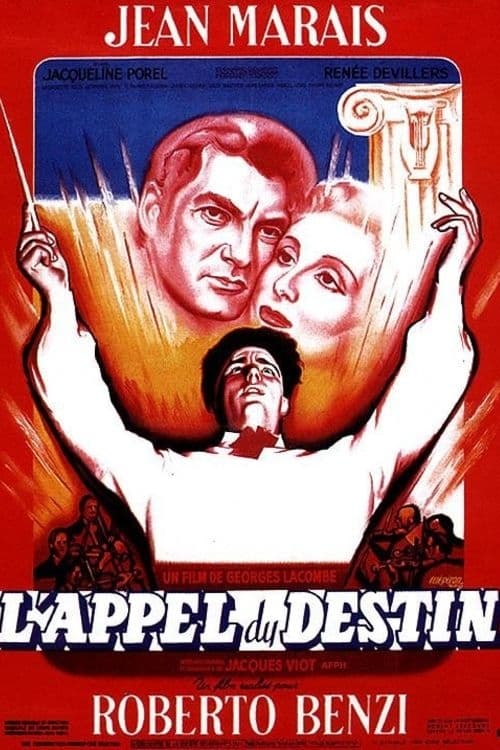
Young conductor Roberto Lombardini has never known his father who is actually a former musician, a failed piano player who has sunk into alcoholism.
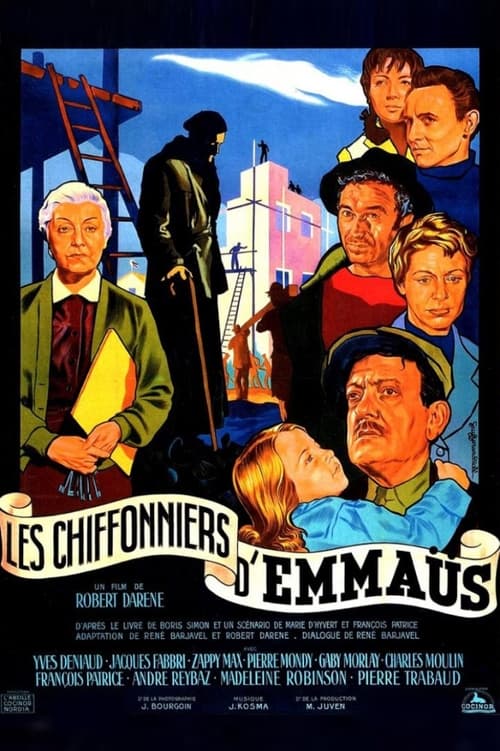
The Emmaüs community opened and functioned thanks to the generous impetus of Abbé Pierre Groues, bringing together a cross-section of the underprivileged: unemployed truck drivers, former paratroopers, young people leaving prison, etc., and underprivileged families. The "ragpickers" manage to make a bit of money by practicing the art of "chine", while the abbé tries his hand at winning radio games. The accident and death of one of them will unite the Emmaus companions even more.
An old man, former clown, comes back in the neighborhood where he used to lived for the funeral of his ex-wife, and finds old friends with whom he had lost contact.