Directing
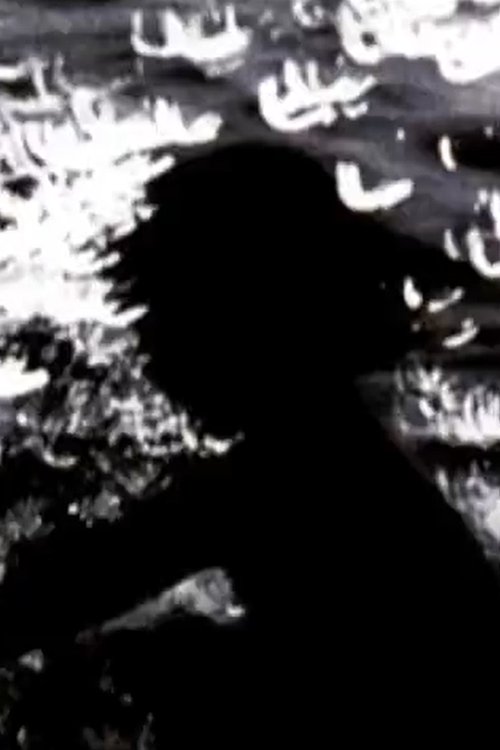
Shot in 1987 in high contrast 16mm, action : study marks the genesis of Kerr’s forays into a process he now refers to as ‘digital sketching’. Action: Study depicts Kerr’s daughter playing on the shores of Georgian Bay, but could easily be mistaken as a work of abstract animation. Kerr combines innovative hand-held techniques with the ultra-sensitivity of the film stock to create a startling wash of jagged, erratic, and constantly dynamic compositions of black and white. Indeed, at times reality seems to melt in front of us.
This abstract travelogue flies just over the surface of the Canadian Shield in Northern Ontario. "Plein Air" is an engrossing sonic and visual trip and a continuation of Kerr's fascination with landscape cinema.
House Arrest is at once literal, metaphorical, and phenomenological. It is a work that Kerr wants read as an open visual text. Being under house arrest provided the content, (home) and structure for the “daily practice” of recording. His intention was to design a camera and apparatus that would break from the conventions of everyday videography; a visual system that would evoke a physical and perceptual impact; an accelerated and experiential cinema.
Experimental film by Richard Kerr.
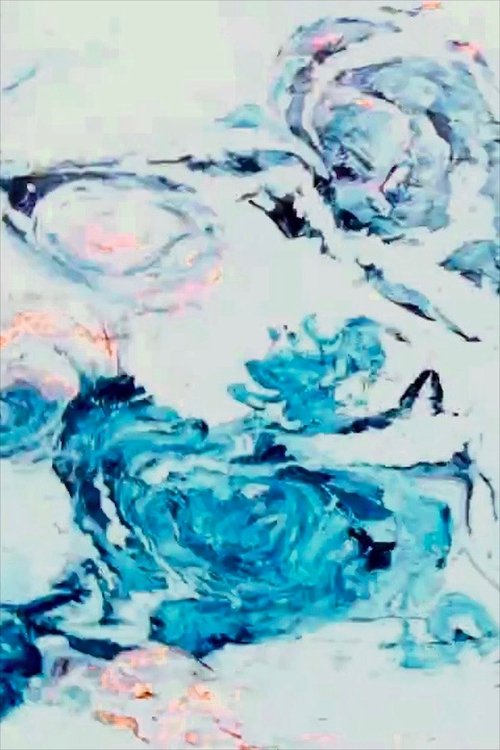
Field Trip is a travel diary on the American social landscape. The images consist of visual research for future film projects and were accumulated during my many location scouting trips to the United States between 1980 and 1995. Over time, I have come to regard this photographic archive as a collection of works of historical and personal value. Over the years, I began to rework the photographs. The more I handled and touched them, the less I thought of them as photographs and the more I saw them as something that could be hand-shaped, altered, transformed and re-imagined. With three voices for Joan LaBarbara, composition by Morton Feldman.
Accompaniment to "Collage d’Hollywood (2003)"
"In cinema one extracts the thought from the image; in literature the image from the thought" (Levinson). This reflection was the catalyst for the photographic and narrative strategies of "On Land Over Water." "On Land Over Water..." was born out of an image-notion of a skid mark on a highway, photographed in close-up, revealing texture and form. The image would be positioned with a voice-over narration, telling the story of a young boy witnessing a fatal auto accident and its ensuing aftermath. Over the following winter months I meditated on the cinematic potentials of that notion, "On Land Over Water..." is the product of working out variations of that meditation. In story discourse, "On Land..."experiments with the possibilities of adopting the characteristics of the short story to the forms of cinema. (RK)
Shot in Hi8 video using a high-speed shutter and a spinning turret camera mount, "Machine in the Garden" is inspired by, and an homage to, apparatus-oriented work such as D. Vertov's "Man With a Movie Camera" and Michael Snow's "La Region Centrale."
As an extension of his INDUSTRIE/INDUSTRY project, Richard Kerr furthers his appropriation of feature film trailers, formally reconstructing their cinematic language. Monochromatic French film trailers from a bygone era provide the source material, and here the actions of the actors are secondary to the physical movement of celluloid. A brilliant formalist montage of wipes creates an awareness of film motion and rhythm.
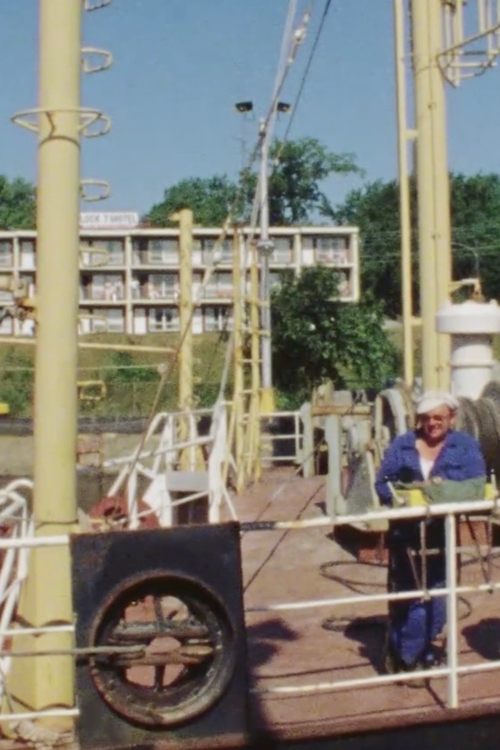
The imagery of "Canal" captures the activity of freighters, ship's crews, dock workers and the historical masonry that the original Welland Canal was constructed from... The film is about going into my "own world of youth" and spontaneously documenting the canal environment as an adult.
In "McLuhan", Kerr recontextualizes a "question and answer period" for design students delivered by media theorist Marshall McLuhan at Sherdian College in 1975. Operating from McLuhan's own aphorism "the medium is the message," Kerr combines footage of the address with two scrolling texts in the borders, in one showing an asynchronous transcript that weaves around McLuhan's dialogue, and in another, reinforcing McLuhan's talking points like a ticker on cable news. It has the effect of sharply reconceptualizing the semantic and rhetorical values of the lecture in particular, yet also provides a fascinating perspective on McLuhan's own ideas and intellectual form of address.
An ecstatic, kinetic formal study of light, colour, and movement shot in the region of the Montreal River which so inspired members of the Group of Seven.
In September 1998, Kerr released "never confuse movement with action," a post-modern biography of Patrick Hemingway (a grandson of Ernest Hemingway). July 1999 was the centenary of Ernest Hemingway. There would be the publication of yet another posthumous novel. The Hemingway family hired a merchandising agent - Ernest Hemingway was now a brand name. The trust fund was secured for future generations.1999 was Ernest Hemingway's year. But when Patrick Hemingway saw "never confuse movement with action," he was less than pleased. Worried about his father's reaction, a lawyer was hired and injunction threatened against the work. In negotiations with the Hemingway lawyer, director Richard Kerr agreed to produce an alternative version, with no promises to cut the objectionable material.
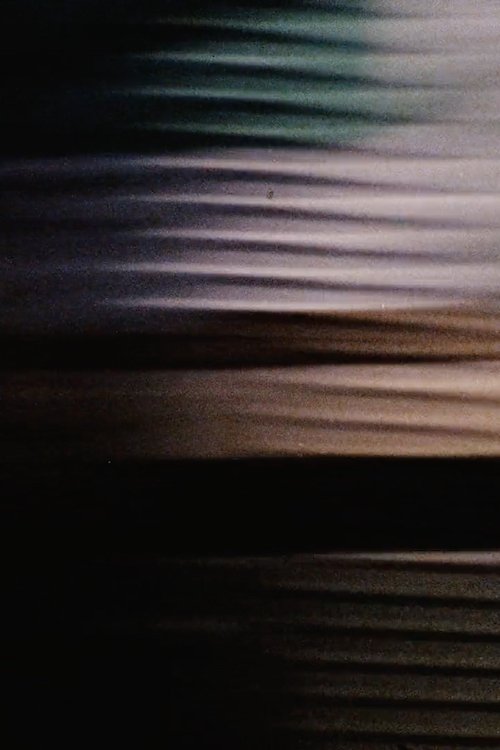
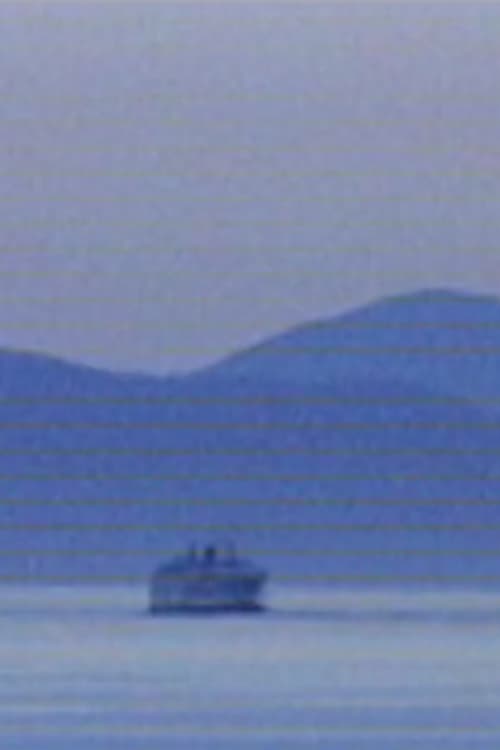
Depicting the coastal islands outside Vancouver, 'Pictures of Sound' is an enigmatic landscape portrait caught by a stationary camera. Reducing land and water into colour gradations on a flat plane, Kerr compresses and fragments temporality to focus on the gradual shifts and rhythms of light. Boats that penetrate the frame serve as reminders of the artificial world, and indeed, of the medium itself. In something akin to invading blips on a radar screen, they are rendered as computer glitches plotting their way systematically across the horizon.
No description available.
A photograph. Two blondes with a past on a train from Washington DC. Their destination is an abandoned train station, with body bags and kids running for their lives. At the station dead bodies are pulled from the basement and piled in the foyer for disposal. Mr. One, the consummate loner, waits. He feels bad about past deeds. He will even the score his way... At the station everyone is obsessed with a photograph titled "Gun Control" that defines the collective consciousness of the times. If everything is a clue, what's the mystery? When the two blondes arrive at the station questions will be asked. They may even get some answers. Certainly things will change.
Shot during the opening stages of the First Gulf War, Kerr's "Cruel Rhythm" revisits the American desert for a cinematic tone poem in the vein of 'The Last Days of Contrition' A canopy of sound bites of media coverage on the build-up toward the war is juxtaposed with the alienness of windmills in the desert, and a startling sequence of drifting faces of a crowd coming towards the camera in slow motion. A thought-provoking piece on media's construction of societal paranoia "Cruel Rhythm" is an attempt to make a public, shared feeling intimate, or conversely, to make a subjective feeling of floating anxiety and dread into a shared representation." Unsettlingly, its ambiance is as poignant today as ever.
this is the last roll of 16mm film i shot