Natan Gross
Directing
Known For
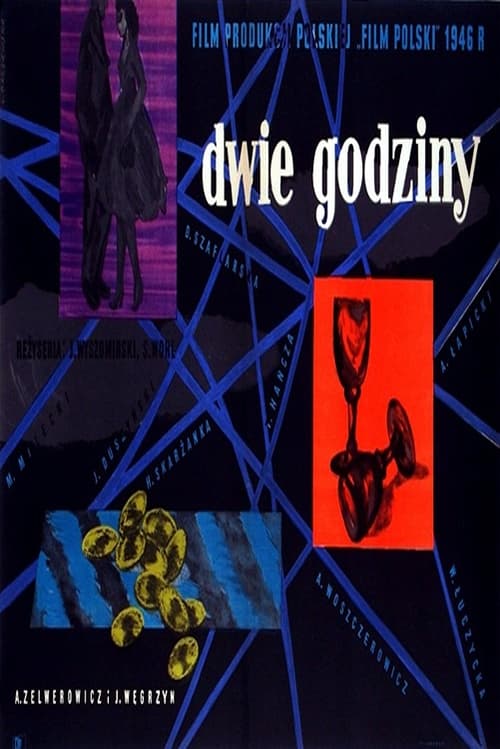
Follows the lives of people shortly after World War 2 as they try to adjust to their new lives. Completed in 1946, it was banned from release by the communist government of Poland until 1957 in edited form.
Two Hours
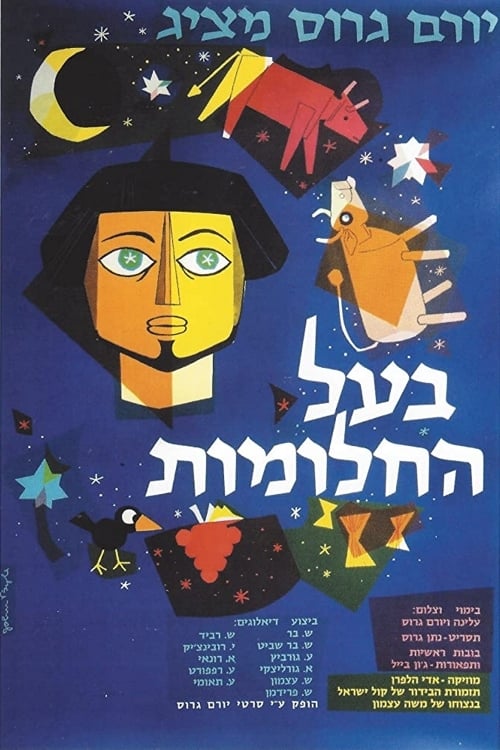
Created in stop-motion animation, this dramatic retelling of the biblical story of Joseph and his coat of many colors tells of a young boy with the talent of seeing the future in his dreams.
Joseph the Dreamer
A Prime Minister’s Office’s Minhal Ha’hasbara documentary about Israel’s fishing industry. Twenty three fishing trawlers leave Israel’s ports every day, and many fish ponds operate inland, but some fishermen still use primitive fishing methods. To increase the total quantity of fish farmed and caught in Israel, the Ministry of Agriculture researches fishing methods and trains new fishermen. The film’s camera moves from the Fisheries Research Institute’s labs in Haifa to the classrooms of the fishing school in Mikhmoret, sails aboard the trawler Nakdimon, and eventually returns to the canning factories and fish markets in Israel.
Fishing in Israel

About a year after the [Adolph] Eichmann trial, director and local industry pioneer, Natan Gross, explores the traumas of the Holocaust for the first time in Israeli film. Actor, Shimon Yisraeli, himself a pioneer of one-man shows on Israeli stages, wrote and spearheaded this one-man film which tells the story of Holocaust survivor, Emmanuel, who works as a security guard on a construction site where he grapples with all the memories of those dark times that come flooding back: the train journey, the Dachau death camp, his murdered paramour, and his former friend, Hans, who joined the Nazis and killed his father. He shows up at his childhood home where Hans now lives: following an encounter with a vicious dog, Emmanuel finds shelter in the house cellar where he bides his time – remembering, hallucinating, and working up an appetite for revenge. The Cellar won the Best Feature Film Suitable for Young People award at the Berlin International Film Festival.
The Cellar

This semi-documentary film (and Poland’s last Yiddish feature) features the comedy duo Shimon Dzigan and Israel Shumacher who had recently returned from the Soviet Union, and Jewish children who had survived the Holocaust. Directed on location by Nathan Gross and Shaul Goskind at at the JDC-supported Helenowek Colony, an orphanage and school near Lodz, this film includes Dzigan and Shumacher's virtuoso turn as all the characters in Sholem Aleichem's Kasrilevke Brent (Kasrilevke is Burning), and an exchange of roles where they become the children's audience. Reversals continue during the performers' visit to the children's residence, as the children teach adults about the healing possibilities of music, dance and storytelling.
Our Children
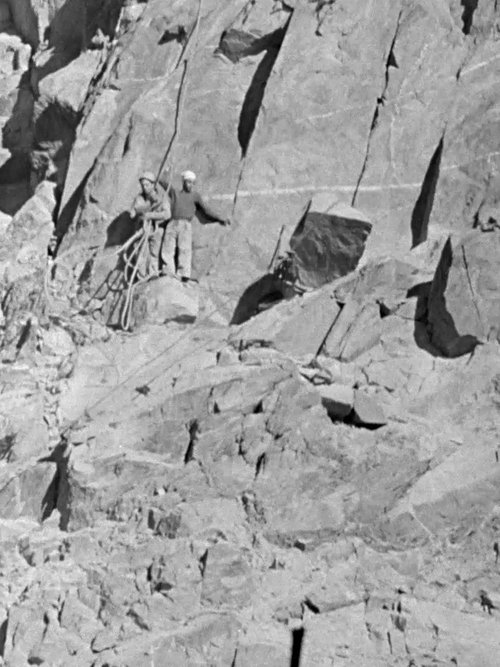
A short documentary, produced by United Israel Appeal. Its residents number only 500, its fishermen use primitive methods, and its industry is in its infancy. But Eilat’s planners, including architect Theodor Kisselov, are already dreaming of the small village becoming one of Israel’s major port cities. This film documents the early days of Israel’s southmost settlement and Kisselov’s visit to it.
Eilat
A portrayal of the remnants of Polish Jewry and Jewish institutions shortly after the Holocaust.
Mir lebn geblibene
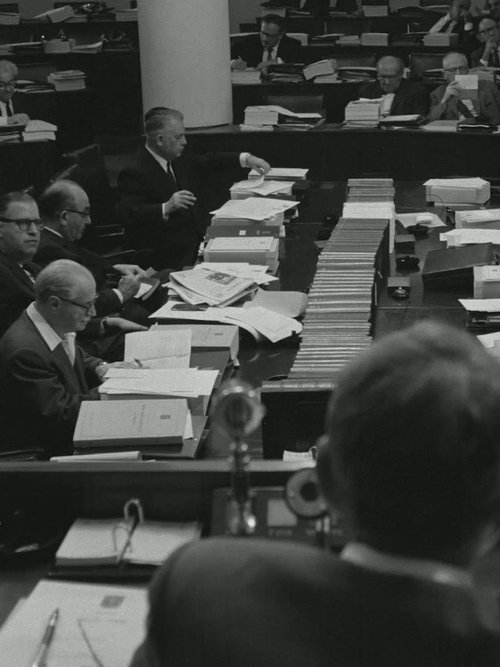
A promotional film that presents the legislative body and all of its various roles. (filmed during the sixth Knesset term). The work routine of the government, the presidency of the Knesset, the positions of the coalition, the opposition and the various committees. The discussions are taking place at Beit Frumin, shortly before the move to the new permanent residence. The film shows the prominent MKs of those years, headed by Prime Minister Levi Eshkol, Chairman Kaddish Luz, Foreign Minister Golda Meir. At the center of the film is an extensive discussion of the question of Arab Refugees.