Cleo Sylvestre
Acting
Biography
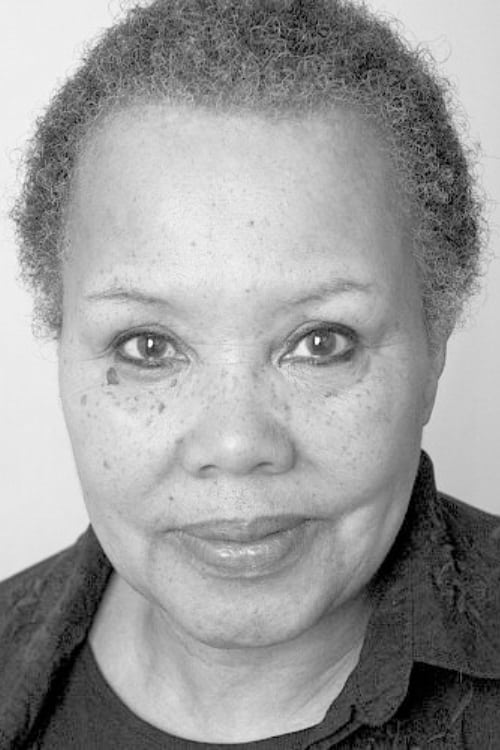
Cleopatra Mary Palmer (née Sylvestre; 19 April 1945 – 20 September 2024), known professionally as Cleo Sylvestre, was a British actress. She was the first black woman ever to play a leading role at the National Theatre in London, and the first woman to record with The Rolling Stones. Sylvestre was brought up in Euston, north London, by her mother, Laureen Sylvestre (née Goodare), a cabaret artist at the Shim Sham Club in Wardour Street, who was born in Yorkshire in 1911. Laureen was of mixed English and African' heritage, and married Owen Oscar Sylvestre, from Trinidad, in 1944. Owen was a Flight Sergeant in the Air Force and had been awarded the Distinguished Flying Medal; he and Laureen divorced in 1955. Sylvestre always understood Owen to be her father; her daughter Zoë discovered many years later - whilst working in Sierra Leone - that her biological father was Ben Lewis, a lawyer from Sierra Leone whom the family called Uncle Ben, and that she had 15 half-siblings. Aged eight, she made her film debut in Johnny on the Run. Sylvestre was educated at Camden School for Girls and also attended the Italia Conti Academy of Theatre Arts. In 1964 she released a single, "To Know Him Is to Love Him", under the name "Cleo", produced by Andrew Loog Oldham and backed by The Rolling Stones. After Brian Jones left the Rolling Stones in 1969, she agreed to rehearse with his new band but abandoned music to concentrate on her theatre and television work. Her West End debut was at Wyndham's Theatre in Wise Child (1967) by Simon Gray, in which she starred alongside Sir Alec Guinness and was nominated most promising new actress. She was the first black actress in a leading role at the National Theatre in The National Health (1969) by Peter Nichols. She did several seasons with the Young Vic Company, including Molière's Les Fourberies de Scapin on Broadway and a tour of Mexico. She subsequently worked in many regional theatres, including the Theatre Royal, Lincoln, the Theatre Royal, Brighton, the Theatre Royal, York, the Derby Playhouse and the Belgrade Theatre, Coventry. She played Phaedre at the Edinburgh Fringe in 2007 and Rosa Parks, Josephine Baker and Wangari Maathai in Alison Mead's A Century of Women at Leicester Square Theatre (2011). She appeared with Antony Sher in his play ID (2003) at the Almeida Theatre, toured with English Touring Theatre in Far from the Madding Crowd (2008) and with Northern Broadsides in its 2010 production of Medea. She also appeared with Michael Sheen in Under Milk Wood (2021) at the Royal National Theatre. Children's theatre work includes seasons at the Unicorn Theatre and the London Bubble Theatre Company. Her television appearances include: Ken Loach's Up the Junction (1965), Doctor Who (1965), Cathy Come Home (1966) and Poor Cow (1967), as well as appearances in the original Till Death Us Do Part, Z-Cars, Callan, Doctors, New Tricks, The Armando Iannucci Shows, Chambers, The Bill, Who Do You Do and A Bird in the Hand, a Tube Tales episode directed by Jude Law. After a brief appearance as a factory worker in soap opera Coronation Street in 1966, she became the first ever regular black British female character on British TV, in the original series of Crossroads, playing Meg Richardson's adopted daughter Melanie from 1970 to 1972.
Known For

The residents of Coronation Street are ordinary, working-class people, and the show follows them through regular social and family interactions at home, in the workplace, and in their local pub, the Rovers Return Inn. Britain's longest-running soap.
Coronation Street

The adventures of The Doctor, a time-traveling humanoid alien known as a Time Lord. He explores the universe in his TARDIS, a sentient time-traveling spaceship. Its exterior appears as a blue British police box, which was a common sight in Britain in 1963 when the series first aired. Along with a succession of companions, The Doctor faces a variety of foes while working to save civilizations, help ordinary people, and right many wrongs.
Doctor Who

A team of exceptional forensic pathologists and scientists investigate heinous crimes and use their skills to catch the people responsible.
Silent Witness

Roguish comedy drama following the misadventures of small-time crook Arthur Daley.
Minder

Children's drama series following the lives of students and teachers at Grange Hill comprehensive school.
Grange Hill

New Tricks is a British comedy-drama that follows the work of the fictional Unsolved Crime and Open Case Squad of the Metropolitan Police Service. Originally led by Detective Superintendent Sandra Pullman, it is made up of retired police officers who have been recruited to reinvestigate unsolved crimes.
New Tricks

An anthology series of television plays which aired on BBC1 from October 1964 to May 1970. The plays were usually written for television, although adaptations from other sources also featured.
The Wednesday Play

The heartwarming and humorous adventures of a young country vet in the Yorkshire Dales in the 1930s. A remake of the 1978 series.
All Creatures Great & Small

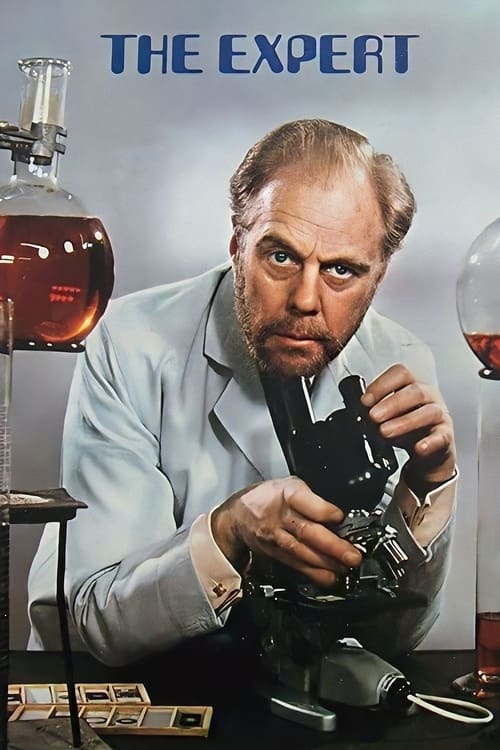
The Expert is a British television series produced by the BBC between 1968 and 1976. The series starred Marius Goring as Dr. John Hardy, a pathologist working for the Home Office and was essentially a police procedural drama, with Hardy bringing his forensic knowledge to solve various cases. The Expert was created and produced by Gerard Glaister. The series was also one of the first BBC dramas to be made in colour, and throughout its four series had numerous high quality guest appearances by actors such as John Carson, Peter Copley, Rachel Kempson, Peter Vaughan, Clive Swift, Geoffrey Palmer, Peter Barkworth, Jean Marsh, Ray Brooks, George Sewell, Anthony Valentine, Bernard Lee, Lee Montague, Geoffrey Bayldon, Mike Pratt, Edward Fox, André Morell, Brian Blessed, Nigel Stock, Philip Madoc and Warren Clarke.
The Expert

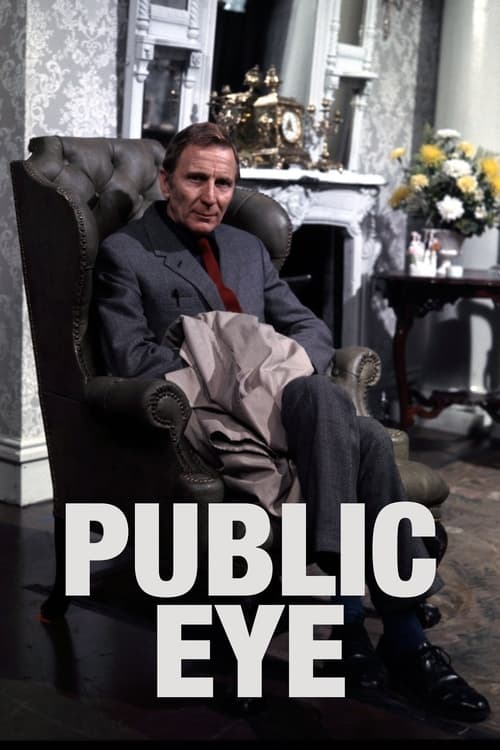
Public Eye is a British television drama broadcast from 1965 to 1975 on ITV1. Produced by ABC Television for three series, and Thames Television for a further four, the programme follows the investigations and cases handled by the unglamourous enquiry agent Frank Marker.
Public Eye

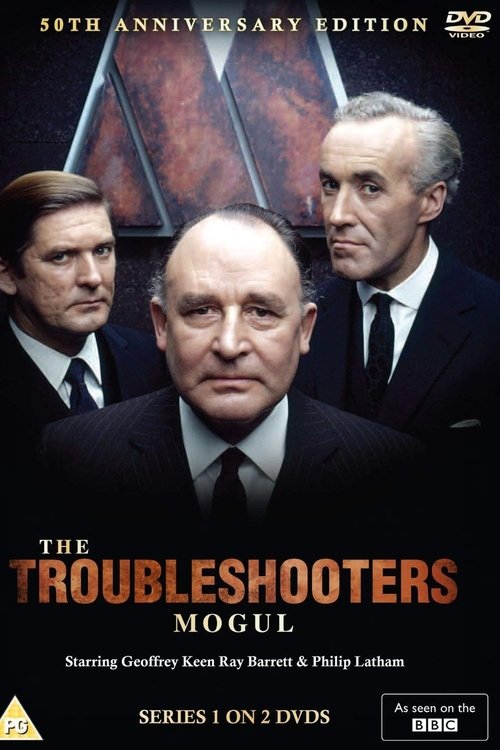
The Troubleshooters is a British television series made by the BBC between 1965 and 1972, created by John Elliot. During its run, the series made the transition from black and white to colour transmissions. The series was based around an international oil company – the "Mogul" of the title. The first series was mostly concerned with the internal politics within the Mogul organisation, with episodes revolving around industrial espionage, internal fraud and negligence almost leading to an accident on a North Sea oil rig.
The Troubleshooters

A young Peruvian bear travels to London in search of a home. Finding himself lost and alone at Paddington Station, he meets the kindly Brown family, who offer him a temporary haven.
Paddington

Lisa, after witnessing a cataclysmic event on Platform 7 of a railway station, finds her own fragmented memory jogged to reveal a connection between her own life and that of the event she has just witnessed.
Platform 7

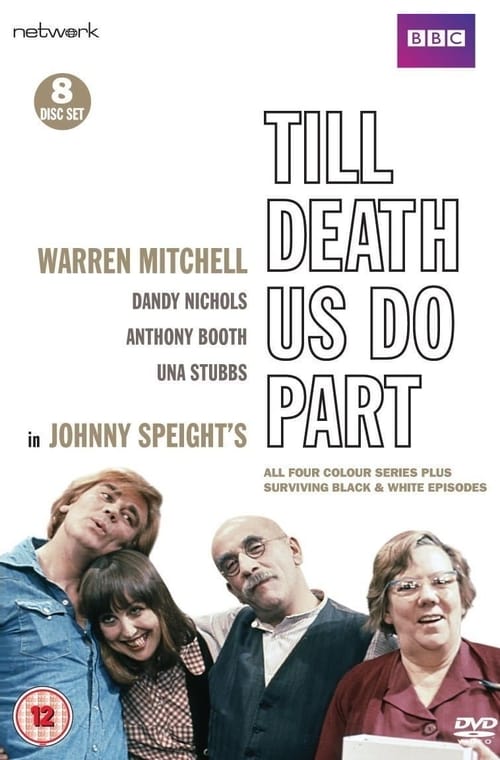
This English follows the East End working-class Garnett family, headed by patriarch Alf, a reactionary working-class man who wields racist and anti-Socialist views. His long-suffering wife Else manages to keep things in control... for the most part. Their progressive daughter Rita lives with them, as does her Irish husband Mike, who, with an array of liberal worldviews, often quarrels with his father-in-law. It inspired the American show "All In The Family" and several other international variations on the same theme.
Till Death Us Do Part

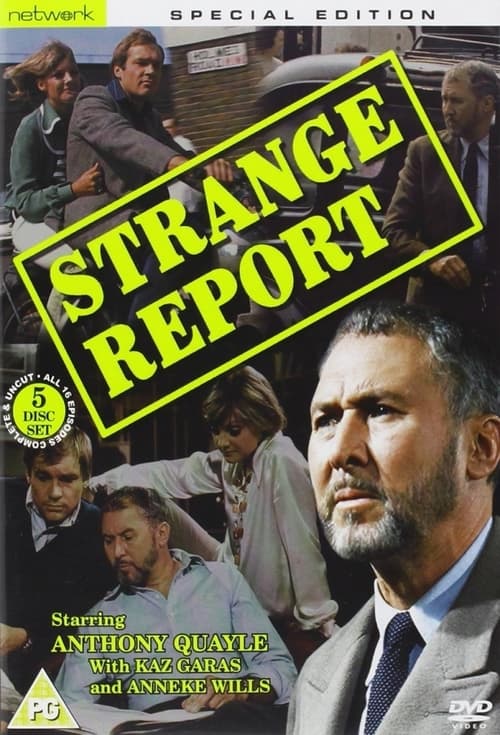
Adam Strange, a retired Home Office criminologist, solves bizarre cases – which have been marked "Open File" by various government departments – with the help of Hamlyn Gynt, Evelyn and Professor Marks. He employs the latest techniques in forensic investigation, which he undertakes in his own laboratory in his flat in Warwick Crescent in the Maida Vale/Little Venice area of Paddington.
Strange Report

Rockliffe's Babies is a British television police procedural devised by Richard O'Keefe, and starring Ian Hogg as maverick Detective Sergeant Alan Rockliffe, who is assigned to train seven young recruits to the CID, all fresh out of uniform. Under his irascible guidance, it is hoped that they will blossom into full-blown detectives. But Rockliffe is human – so human that he makes more mistakes than the 'Babies' he's supposed to be training. A follow-up series, Rockliffe's Folly, follows Rockliffe through his relocation to Wessex, dealing with rural crimes as part of a new team of investigators. The seven episode third series proved to be the last, with many citing a change in the programme's formula for the heavy ratings decline. Many viewers stated that the success of the two Babies series came not from Rockliffe himself, but from the popular ensemble cast.
Rockliffe's Babies

Orphaned in Africa as a child, Lilly escapes to England as a refugee, fleeing civil war in Ethiopia. Lost in this cold new world, Lilly embraces the immigrant community in London, attempting to reunite people with their scattered families. But as her friend Amina discovers, Lilly's mission isn't purely selfless: a passionate lost love affair is revealed.
Sweetness in the Belly

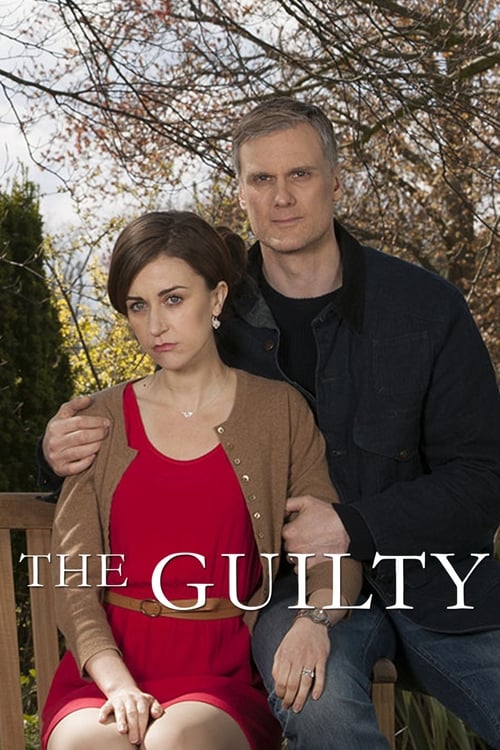
Lives are torn apart and relationships fractured forever when a young child goes missing. Five years later, DCI Maggie Brand leads a new investigation and puts at risk her own happy family life.
The Guilty

Following a freak accident, Godfrey Spry develops a 30-second attention span, causing him to take ad slogans literally and leading to chaotic behaviour.
If You See God, Tell Him

A woman deals with an unhappy marriage, the death of her lover, and her son's involvement in a crime.