Camera
Ambitious Nice seeks social advancement through Rodrigo Medeiros, but ends up truly falling in love with him. This is the second version of the telenovela, originally aired in 1976.
The planning of the city, linking its architecture to its topography and the reasons that allow it to have normal and continuous traffic, eliminating the circulation problems of all major cities. Details of the buildings destined for the Government, the residences and the commerce. (Brazilian Cinematheque)
Middle-class teenage girl has a serious boyfriend that her parents approve of. Suddenly, she meets another boy with whom she is shown to have a greater identification.
No description available.
Guia de Filmes indicates: "melodrama addressing the massification of large urban centers and the contradictions of consumer society and advertising. It is the first independent production by the firm of Vera Fischer and Perry Sales, and also, the first film directed by Englishman Michael Sarne in Brazil; however, he retired before completion and the film was finished by Perry Salles, marking his directorial debut ".
After years lost in a ingrate job, Hugo decides to take a drastic measure: to compensate for the time he lost, he will rob the bank in which he worked all his life. Everything goes well in the execution of the plan, but the appearance of the firm's cleaner can put everything to waste.
Four love stories which portray a wide gamut of emotions and desires against the backdrop of Rio de Janeiro. "Elephant's Stomp" : the story of a highway patrol officer who is infatuated with a mulatto dancer at a local nightclub. "Drao" : a publicity man and a boutique owner who face a crises in their marriage. "You Are Beautiful" : two homeless teenagers seek love amidst their personal misery. "Samba of the Great Passion" : a book maker who is charmed and captivated by the voice of a female singer coming from a building across the street. Characters in search of love in order to escape from the boredom, loneliness and helplessness of their lives.
The painter Tino, in professional and political crisis, receives a telegram from his mother-in-law, Selma, announcing her return from Europe. After his wife's death, Tino continues living with Selma, with whom he had ambiguous relations, which he now wants to sever. Weak at this impossible love, he asks the maid Enedina to lock him in his room. There, he revives memories through letters, notes and photographs. Selma's son João is waiting for her at the airport and dreams of loving fulfillment in his own mother's arms.
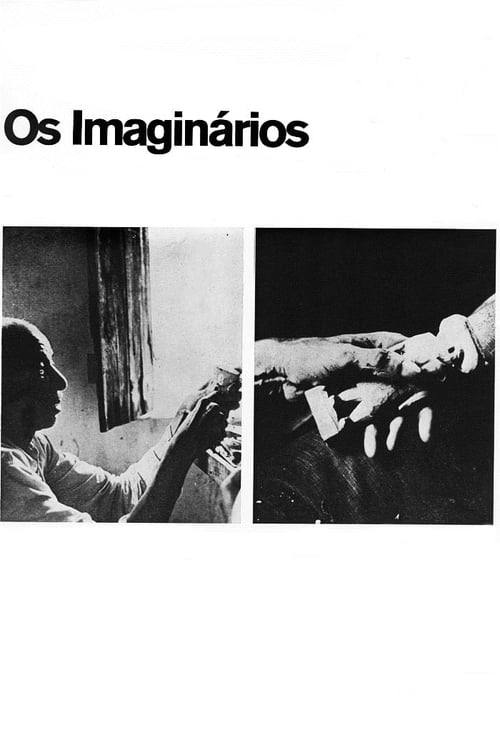
Pilgrims from the Northeast have the habit of buying images of characters in whom they identify exemplary behavior. By carving wood to shape these figures, the imaginary artists, artisans who make images of typical characters from the traditional Northeast, perpetuate a tradition that has changed over time. The ways of the traditional artist adapt to the demands of the tourism market and the dissociation between their conscience and the real meaning of the work to which they dedicate themselves.
Willing to do anything to succeed in an artistic career, and roused by her own mother, the TV go-go girl Zelinda tries to seduce the director of the studio where she works.
João-Sem-Direção knows Carvalhaes that proposes a blow to him. John does not accept the proposal, but ends up earning a hefty cash in the game.
In rural Brazil, villagers battle wealthy land barons for the sake of their own survival.
It is the first film produced at the extinct ICA (Instituto Central de Artes), in a co-production between UnB (Universidade de Brasília) and the also extinct INC (Instituto Nacional de Cinema). Held at the Festa do Culto ao Mito do Divino Espírito Santo in Pirenópolis, state of Goiás, in 1968, it was completed in 1969, in Rio de Janeiro. The film is extremely important for the memory of Brazilian popular culture and the state of Goiás, as it is a work of art about this popular festival, and not just a documentary record, as it reflects its cultural character. Today the party is considered Cultural Heritage of Brazil by IPHAN.