
Helga Piur
Acting
Known For

Polizeiruf 110 is a long-running German language detective television series. The first episode was broadcast 27 June 1971 in the German Democratic Republic, and after the dissolution of Fernsehen der DDR the series was picked up by ARD. It was originally created as a counterpart to the West German series Tatort, and quickly became a public favorite.
Polizeiruf 110

No description available.
Riverboat
The show was meant to compete with those on West German television. To this end it was fairly successful even attracting a following in parts of West Germany which could receive Eastern TV. Its production values were high. Apart from song and dance numbers and appearances from East German celebrities, almost every broadcast featured well-known stars from the west, often after their popularity had peaked in their home countries.
Ein Kessel Buntes

The film is set in the 1930s in Germany. Maria Rheine and Mark Löwenthal, two young actors working in a small theater, are in love with each other. Their love affair is interrupted by Nazi racial policies; Mark is no longer allowed to perform in German theaters because he is a Jew. In order to continue acting, he joins the newly formed Jewish Theater in Berlin. Maria, who is not Jewish, faces no restrictions on her career, and she becomes a successful actress at a big theater in Munich. But her love for Mark eventually leads her to decide to sacrifice both career and security to remain close to him. She fakes a suicide, assumes a Jewish identity and, as Manja Löwenthal, joins the Jewish Theater.
Schauspielereien

Blaulicht is a German crime television drama series, whose 29 episodes were based on crime case files.
Blaulicht

No description available.
Aerolina
A man who has just become unemployed kills his closest relatives before he judges himself. Commissioner Schimanski determined.
Zahn um Zahn

No description available.
Klein, aber Charlotte
No description available.
Familie intakt
No description available.
Kanzlei Bürger

No description available.
Leute sind auch Menschen
No description available.
Der Millionär

Co-pilot Horst Schubert is a braggart and a true Don Juan. Thus, he tells young Ilse that he is in fact an "aircraft commander". This assertion brings about an embarrassing situation, for he suddenly meets her onboard his new work place, an IL-14 charter plane where Ilse acts as a stewardess. It gets worse, however: During a stop in Varna the police appear because Horst’s former lover Madelon has vanished. At home, meanwhile, his landlady has her hands full with her lodger’s current and former playmates. Ilse decides to put an end to this mixup and since the dull captain of the plane, Richard, makes no move to confront his co-pilot about his unstable private life, the smart stewardess appeals to the rest of the crew to help her teach Horst a few lessons in love.
Die Liebe und der Co-Pilot

A film about the experiences of a cab driver who drives a young, heavily pregnant woman who has collapsed in a store to hospital. The encounters during the subsequent search for the future father so that he can take the expectant mother's things to the hospital are shown. The GDR leadership argued that the film should be banned.
Monolog für einen Taxifahrer

Professor Heger's son was shot by the Gestapo during the war. Dr. Bram was also responsible for his death. After the war, working in Heger's clinic, Bram tells the professor about his guilt. Considering Bram a traitor, Heger refuses to work with him. Bram flees to West Germany. Soon the professor, who has decided in his heart to stay in the FRG forever, leaves for Munich for the congress. But his meeting with Bram in Munich and the reality surrounding them dispelled his illusions, and they both return to their homeland.
Ärzte
No description available.
Der Teufelskreis
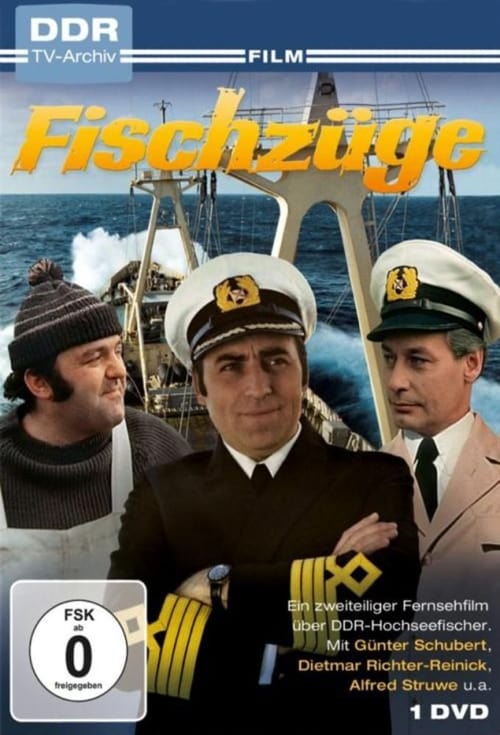
A ship from the GDR fishing fleet is on its way home. The work is done, the hold full of fish. Captain Nipmerow could be satisfied with that, but he has a completely different problem to deal with - a matter about which he also owes the shipping company a statement.
Fischzüge

This musical comedy based on an opera by Jacques Offenbach incorporates a twist on the classic Greek myth: Orpheus, a music teacher at a girls’ school in the ancient Greek city of Thebes, actually does not miss his wife Eurydice that much – until the gods and Offenbach himself pressure him to retrieve her from Hades.
Orpheus in the Underworld
No description available.
Wenn du denkst, der Mond geht unter
In San Marengo, master thief Cesare Giovanini’s heists leave local merchants profiting from hefty insurance claims. When captured, he’s granted luxury prison comforts, and even nightly “private visits”, in exchange for continuing his work under police supervision. Bored, Cesare escapes, only to be recaptured with an unexpected offer: a lucrative board position instead of bars.