FEEL IT.STREAM
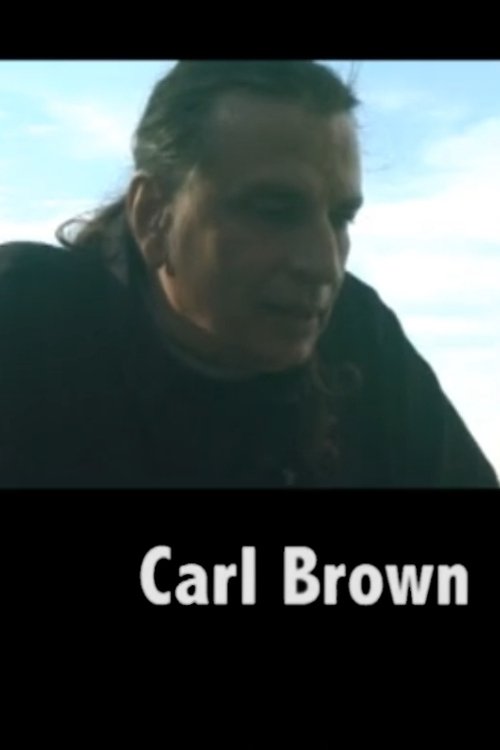
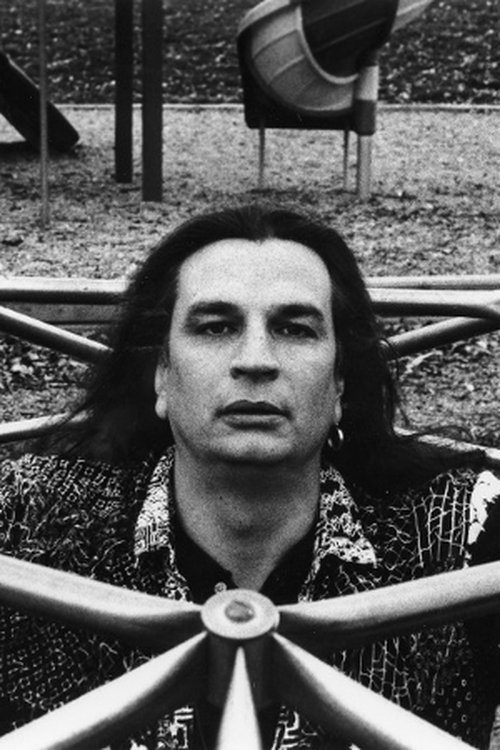
Carl E. Brown

Carl E. Brown

Directing

Biography

Carl E. Brown (b.Toronto, 1959) is a canadian filmmaker, photographer and writer. After two years at the University of Toronto where he studied philosophy and psychology, he decided to study filmmaking, completed in 1982 at Sheridan College. He's completed nearly twenty films which have been screened in many festivals in America, Europe and Asia, and were part of the retrospective Experience chromatiques le cinema contemporain at the Louvre in 1995.
Known For

The Red Thread
5.3

Second part of Brown's Air Cries 'Empty Water' trilogy.

The Red Thread

1993
L’Invitation au Voyage
N/A

the fishing boats are out in the water the fish are caught. brought into shore the men haul the catch off the boat. the boat once again goes out to catch and the cycle continues. for centuries this pattern has repeated it's cycle like the tides which roll in and out a story which draws its energy from the sun the moon draws the tides the men work and die and it continues take a moment stretch your eyes and imagine just imagine all stories are true. (CB)

L’Invitation au Voyage

2003
To Lavoisier, Who Died in the Reign of Terror
8.1

To Lavoisier Who Died in the Reign of Terror (1991) is a collaboration with filmmaker Carl Brown, who specializes in homebrewed chemical film development. In a series of tableaux, people perform everyday tasks — sleeping, dining, reading, card-playing — as the camera arcs past and over them (the replete set of positions recalls La région centrale’s movements). Brown abraded the film stock, creating a continuous dynamic surface-effect tension with the comparatively static views and cueing the soundtrack, the crackle of fire. The physics and chemistry of combustion were the scientific focus of Lavoisier, the 18th-century savant.

To Lavoisier, Who Died in the Reign of Terror

1991
Triage
N/A

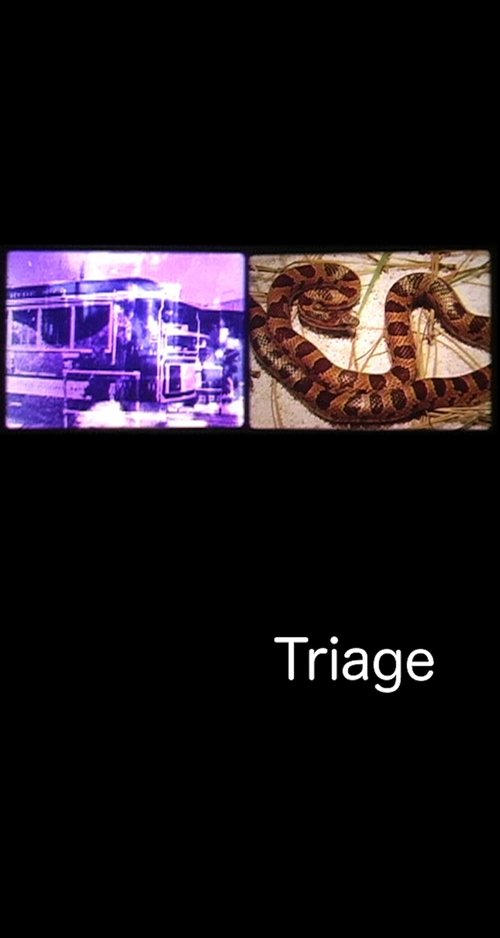
A dual-projection film where each director made 30 minutes of film without knowledge of what the other was making. Snow's side is a visual encyclopedia of natural and man-made objects. Brown's side transforms footage of a San Francisco cable car.

Triage

2004
Quiet Chaos of Desire
6.0

"A good friend of mine died at 9:10 a.m. Saturday, July 21, 2007... my film piece is called "Quiet Chaos of Desire" it comes out of my experience in a sideward glance at my father in-laws passing and the resulting pain for my wife, then the resulting understanding and strength that has arisen from this between us. The flow of blood which creates the bond that is family was broken, bandaged, then coagulated...Life without suffering is impossible. Scars have the power to remind us that the past is real...and although this event is past the sound of death's rattle never leaves." (C.E.B.)

Quiet Chaos of Desire

2007
No image
5.2

Cindy was asleep under a maple tree/ Rolled over and said to me/ I dreamt of Air Cries/ I turned over, we were lying on the the/ dry cracked mud of a river bed/ Empty Water/ Puppies, Air Cries Only/ They don’t make a sound/ My eyes on fire with nothing/ to quell them/ A piece of steel in the heart/.

Misery Loves Company

1993
Full Moon Darkness
N/A

A painful but enlightening film on the controversial subject of mental illness - or more particularly, the myth of mental illness. It is a frightening piece of work in that it asks us to assume responsibility for ourselves, our actions. How, after listening to Dr. Thomas Szasz, can we blame someone else anymore? Equally frightening is the realization that mental illness could touch our lives, not just someone else's. Without attempting to give an answer, "Full Moon Darkness" raises many valid questions - questions we should ask ourselves at least once.

Full Moon Darkness

1985
Memory Fade
N/A

"The images of “Memory Fade” are not lost… they are spectral and the dance steps repeated over and over in time fights the Fade – a falling down that breaks the spine of the book of life (mankind)."

Memory Fade

2009
Two Pictures
4.0

Canada's king of visual alchemy teams up with France's mistress of minimalism to fashion a photo-based work of cinematic abstraction. Tactile and textured, luscious and luminescent, Two Pictures is a singular statement embodying a powerful dichotomy. This is a film that is simultaneously about nothing and about everything.

Two Pictures

1999
Carl Brown
N/A

A short video documentary by Barbara Sternberg, approximating the dual-screen approach of the titular filmmaker. Brown speaks candidly, is shown in a studio; An excerpt from his film Memory Fade (2009) follows the footage. One of many of Sternberg's interviews with fellow artists.

Carl Brown

2010
Blue Monet
N/A

Monet is an artist that I have always greatly admired. His use of colour through water and sky to convey his emotional state has had a great influence on me. Whether it was the first rays of light glinting the water's edge or the magic time just before nightfall, Monet's sense of colour and colour conveyance has always been perfect. I have used my techniques of alchemical film to translate onto film my impressions of Monet's sense of colour, water, sky and his most powerful icon the water lily. Using my toning, liquid emulsion, reticulation, dried crystal bleach formations and stacking techniques to just name a few I have translated the Monet experience onto the surface of my film.

Blue Monet

2006
Fine Pain
N/A

"This two-screen dual projector film extends Brown's use of chemically tortured celluloid to the breaking point. A collaboration with his long-time sound colleague John Kamevaar, 'Fine Pain' is an extended dialogue between image and sound - like a prolonged riff of free jazz between two masters. The discordant tensions of this film will keep you on the very edge of your seat, astonish you with the mesmerizing range of colour and abstraction and the over-modulated sound vibrations." (Pleasure Dome program notes, Toronto, March 2000)

Fine Pain

1999
Cloister
N/A

As the wheel turns, the religion of the body moves to and through the physical into the psychological. We see the feared, all is moved. There is a hint of seclusion, an idea from the past re-worked and still dangerous. The participants unsure choose a convent and are still revealed. Through a window there appears a tree, and then a forest. Too many options. The monastic life, safe and sure. We cluster for the cloister.

Cloister

1989
neige noire
N/A

"Carl Brown makes celluloid dance. [His] new film work will burn colours so deeply into your brain, you'll be watching a light show inside your eyelids for hours. Titled Neige Noir ('Black Snow'), a name that conjures up Toronto winters but actually refers to the trenches of the First World War, the piece is a visual feast. It opens with a calming sequence of manipulated representations of a swimmer and the sea set to a lulling jazz tune, and then crashes into a steady techno and white noise assault with pulsating images. Brown radically alters the celluloid itself, experimenting like a mad scientist to create gorgeous colour patterns. He sometimes refilms an image up to eight times to bring its dance of distortion to a climax. Any single still from this film could bring you to a stop in an art gallery, and Brown gives us some 86,000 of them." (Thomas Hirschmann)

neige noire

2003
Re: Entry
10.0

Re: Entry is a film in which fear and anxiety are transplanted with techniques of relaxation. This cross-connection gives birth to a field of unexplored emotion. Through the colour and the movement, we move on this wave of feeling released, by nature, the nature of time, of terrain familiar and not so, and as the film progresses our conception of unrealized or felt vision becomes less solid, more fluid. A retention of water. (Carl Brown)

Re: Entry

1990
Drop
N/A

"'Drop' restages Newton's celebrated encounter with the heaviest and most voluptuous fruit of the vegetable kingdom. It tracks the eye's apple from the graceless decline of the primal couple to our own fall into the orbits of applied science. Begun at a crossroads soon abandoned, Drop's anxious recollection services this passage from orchard to orison, reminding us of Toto's immortal quip from 'The Wizard of Oz': the less the firma, the more the terra." (Mike Hoolbom)

Drop

1989
Urban Fire
5.0

A child is given birth in the womb of its dead mother. Child’s eyes perceive the death of a city. The last birth combined with the fire and destruction.

Urban Fire

1982
Mine's Bedlam
N/A

Life is like a gigantic phonograph record fifty feet across. Or like one of those whirling discs at the old amusement park. You get on the disc and it's spinning and the faster it goes, the more centrifugal force builds up to throw you off it. The speed on the outer edge of the disc is so great you have to hold on for dear life just to stay on. The closer you get to the center of the disc, the slower the speed is and the easier it is to stand up. In fact, at the very center there is a point that is completely motionless. In life, most people don't get on the disc at all. They shouldn't get on. They don't have the nerve. They just sit in the stands and watch. Some people like to get on the outer edge and hang on and ride like hell. Others are standing up and falling down, staggering, lurching toward the center. And a few, a very few, reach the middle, that perfect motionless point, and stand up in the dead center of the rearing whirligig as if nothing could be clearer. (CB)

Mine's Bedlam

1980
Sheep
N/A

A man counting sheep as he sleeps. I have never seen sheep as I sleep. The sheep relax the man, he falls into a deep sleep. You are wide awake, moving through the man, maybe sleeping counting sheep. The alchemy, the dream, the scene. (CB)

Sheep

1991
Air Cries 'Empty Water'
N/A

These images are oxidized residues, fixed by light and chemical elements, of living organisms. No plastic expression can ever be more than a residue of the experience. Yet, that residue is recognition of an image that has somehow survived the experience, recalling the event, like the undisturbed ashes of an object consumed by flames. When I began working with film and photography in a materially oriented way, I thought that by working with the surface altering and affecting it I could leave my identity, my personality." - Carl E.Brown

Air Cries 'Empty Water'

1993