Directing
A dangerously disturbed Vietnam veteran struggles with life 15 years after his return home, and slowly falls into insanity from his gritty urban lifestyle.
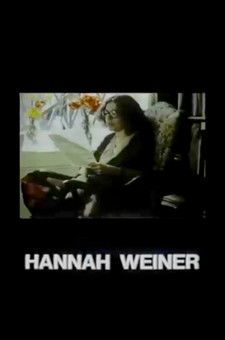
Another short film by Niblock which consists simply of Hannah Weiner reading from one of her texts, initially in close-up and then over footage of her in her office and then in her armchair..
Asylum inmate dreams of freedom before medial reality steps in.
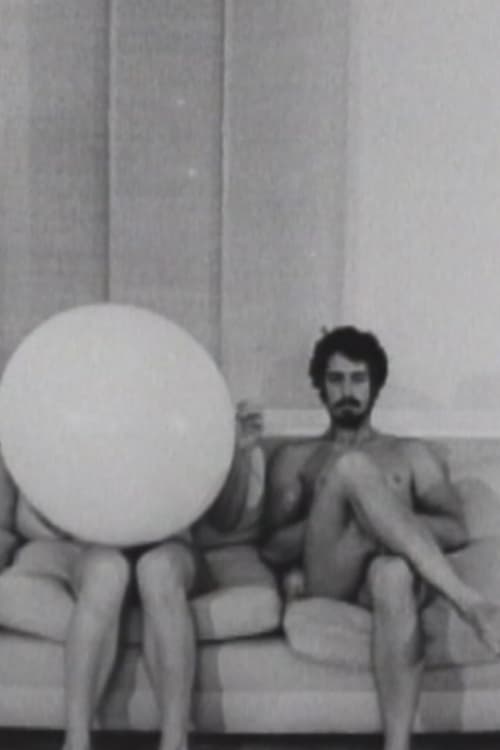
Two nudes, a man and a woman, interact with each other and a large balloon in a white living room. Performed by Steve Paxton and Becky Arnold. Camerawork by Phill Niblock.
Morning begins with performers dressing and preparing for their day to the accompaniment of clashing male and female internal monologues, and subsequently depicts various characters going about their daily business while we listen in on their thoughts and anxieties.
A compilation of non-narrative films shot in the 1970s and 1980s by Phill Niblock concerned with the movement people make when they do menial tasks.
Speaking of Neuhaus, he's the subject of the next film, 'Max', which pairs another of his soundscapes against a succession of processed images and heavily edited, percussion-based performance footage.
A 30 minute extreme close-up long take of the flow of sand trickling from the upper to the lower glass chamber of and hourglass to Phill Niblock's composition "Feedcorn Ear".
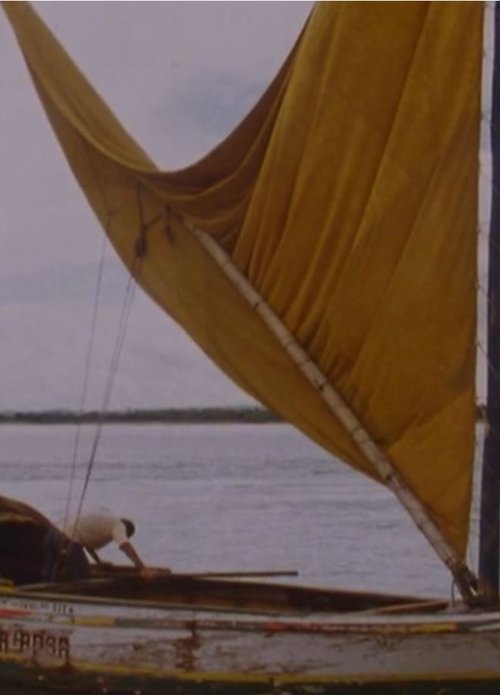
"In 1984, I returned to Brazil, deciding to travel the coast, closest to the ocean, from Salvador, Bahia, to as far north as I could get in the time I had. That turned out to be Natal, 1000km away. I was the sole film crew, carrying the camera bag and tripod, loading the film, reading the light and occasionally applying sun screen. The film from that trip is the material on this DVD. And it was beautiful to see that country and those people.” —Phill Niblock
Dog Track (1969) : For Dogtrack a deeply unsettling, bestiality-themed found text is read aloud with alarming detachment by Barbara Porte while Niblock intercuts between static location shots of urban and natural locations.
A 59 minute extreme close-up long take of ice cubes slowly melting until they become just water in a stainless steel sink to Phill Niblock's composition "Stosspeng".
The series of films ‘The Movement of People Working’ portrays human labor in its most elementary form. Shot by Niblock between 1973-91, on 16mm color film and later video, and in locations including Peru, Mexico, Hungary, Hong Kong, the Arctic, Brazil, Lesotho, Portugal, Sumatra, China, and Japan, the series comprises over 25 hours of footage. It focuses on work as a choreography of movements and gestures, dignifying the mechanical yet natural repetition of laborers’ actions.
Niblock's portrait of the dancer Ann Danoff set to the soundtrack of a concrète collage by Max Neuhaus.
Rounding off the collection is 'Raoul', whose subject is the painter Raoul Middleman, captured at work in the studio using time lapse photography while an improvised soundtrack (performed by the filmmaker and subject in collaboration) accompanies the rapid influx of images.
Original 16mm footage was shot on location in central New York within a 100 mile radius of the town of Clinton. Converted to NTSC video using a Rank Cintel scanner.
An irreverent take on Mozart's relations with the three Weber sisters: Louisa, whom he loved, but who didn't love him; Constanza, whom he loved and married; and Sophie, who loved him but whom he didn't love. An anthology of arias from Mozart's operas, in which art comments on life through a cheeky use of back-projection and miming to records.
Original 16mm footage was filmed on location in China, mostly in the mountains around the city of Luding. At 33:15, the locale switches to the environs of Shanghai, the area around the delta of the Yangtze River. At 38:00, the location is the vicinity of Ningbo, along the East China Sea. Converted to NTSC video using a Rank Cintel scanner.
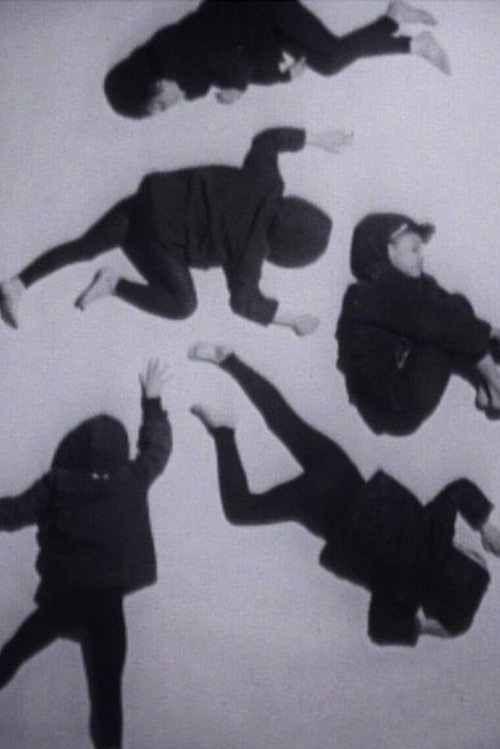
Children play. First shown normally, then shown in reverse.
A 46 minute extreme close-up long take of a knife point counting grains of white rice, one by one, on a white surface, to the orchestra piece "One Large Rose".
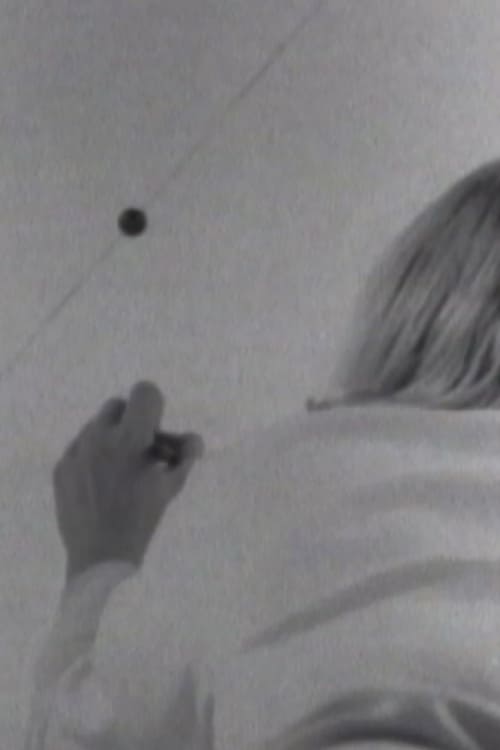
A blond woman (Susan Marshall) in white pants and shirt interacts with a moving round object and the camera. Camerawork by Phill Niblock.