Laura Kraning
Directing
Biography
Laura Kraning's experimental documentaries explore secret worlds hidden beneath the surface of the everyday that traverse the border between the objective and the subjective, the real and the imaginary. Navigating landscape as a repository for memory, cultural mythology, and the technological sublime, her work has been described as a form of “esoteric archeology,” delving into an experience of the subconscious of a landscape. Laura's work has screened widely at international film festivals and venues, such as the New York Film Festival, International Film Festival Rotterdam, Ann Arbor Film Festival, Edinburgh International Film Festival, Visions du Réel, Festival du Nouveau Cinema, Rencontres Internationales, Antimatter Media Art, National Gallery of Art, and REDCAT Theater, among others. She is the recipient of the 2010 Princess Grace Foundation John H. Johnson Film Award, Golden Gate Award nomination at the 2012 San Francisco International Film Festival, and Jury Awards at both the 2010 and 2015 Ann Arbor Film Festival. Laura currently resides in Los Angeles, where she teaches in the Program in Film and Video at California Institute of the Arts.
Known For

In the fictional city of Santa Teresa, located on the border between Mexico and USA, the researcher Juan de Dios Martínez straddles the line between journalism and detective work. Based on an unfinished book by Roberto Bolaño, his character investigates a handful of crimes and abuses perpetrated on women and workers of the zone.
Santa Teresa & Other Stories

A short documentary about Suzan Pitt and her animated films, Asparagus (1979), Joy Street (1995) and El Doctor (2006).
Suzan Pitt: Persistence of Vision

A short experimental documentary is filmed at the last drive-in movie theater in Los Angeles, located in a desolate area called the City of Industry. Floating within a backdrop of smokestacks, beacon towers and passing trains, dislocated Hollywood images filled with apocalyptic angst are re-framed and reflected through car windows and mirrors as the displacement of the radio broadcast soundtrack collides with the projections upon and surrounding the multiple screens. In VINELAND, the nocturnal landscape is seen as a border zone aglow with dreamlike illusions revealing overlapping realities at the intersection of nostalgia and alienation.
Vineland

Landforms unearths the physical remains of past and future geological strata. The film explores two landscapes, an industrial rock quarry turned recreational fossil hunting park, in which 380-million-year-old fossils were discovered beneath the rocks where once flowed a shallow sea, and a public waterway whose shore is dispersed with brightly colored fragments of consumer waste in the form of microplastics. Both landscapes reveal a process of digging and gathering, of collecting evidence of earth’s pre-historic past or intervening in humanity’s toxic futures. The forms, of ancient sea creatures and broken plastic, mesh and intertwine into a meditation on deep time and a reflection on extinction.
Landforms

Footage of Devil's Gate Dam insterspersed with text occultist text by Jack Parsons, co-founder of the Jet Propulsion Laboratory, who some believe opened a portal for dark energy nearby.
Devil's Gate

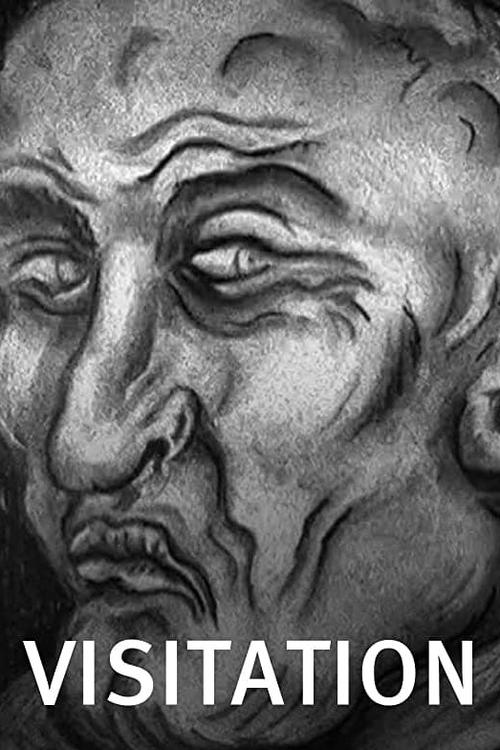
In an outer-world night, creatures that live beneath human consciousness emerge and take hold of the narrator, dissecting his spirit and dismembering his thoughts. He beholds a mythical eternity filled with shadowy industrial scenes and monochrome textures—a heavenly hell of unending life and death.
Visitation
This conceptual short examines three of the world’s remaining six tar pits and how human beings have exploited one of the Earth’s most limited resources.
Las Breas

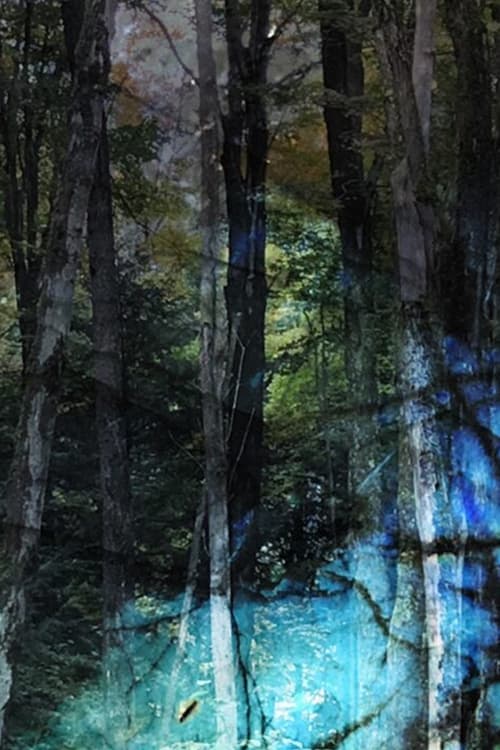
"Fracture" mines the slips between stillness and motion, as cracks and fissures of bark and stone are spliced and layered, frame by frame, intersecting slices of time. Gathered and assembled over two years, the scarred surfaces of tree limbs and stratified rock collide with slabs of marble and clusters of moss, crystallizing into a flickering mirage of radiating branches and splintered veins of iridescence.
Fracture

In the Mojave Desert, fields of solar panels follow the sun’s daily journey in perfect synchronicity.
Irradiant Field
Within the machine landscape of Terminal Island, the textural strata of a 100 year old boat shop provides a glimpse into Los Angeles Harbor’s disappearing past. Often recast as a backdrop for fictional crime dramas, the scenic details of the last boatyard evoke imaginary departures and a hidden world at sea.
PORT NOIR

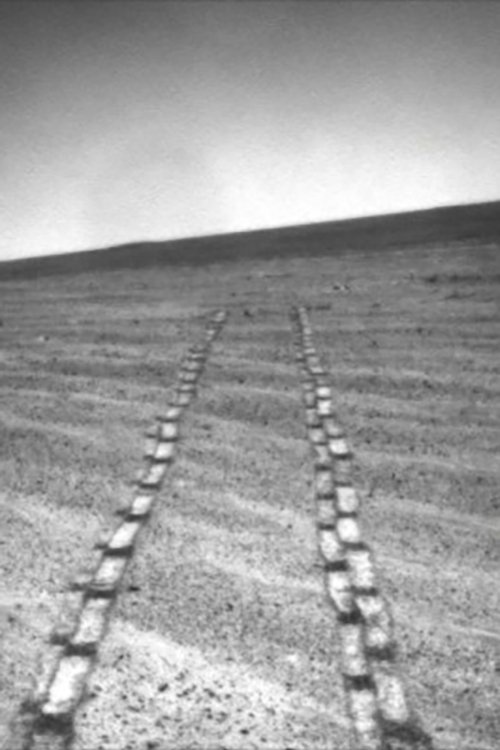
In the unique landscape film Meridian Plain hundreds of thousands of photos – from panoramas to macro shots – chart entirely unknown territory. Fabulous editing by Kraning brings the ostensibly dead, semi-desert to life in this short documentary revealing a possible scenario for the future. Meridian Plain is an exciting first-hand report of an expedition into a dusty terra incognita.
Meridian Plain

A textural macro collage of a rust belt landscape—scratched, splattered, dripping, cracking and bursting to the surface. Photographed and meticulously edited over one year in Buffalo NY, the reverberant tones of the New York Central rail line provide the rhythmic pulse to a rapid cascade of multi-hued material decay and metallic de-composition.
de-composition

A brutalist monument to the Empire State as manifested by a malfunctioning inkjet printer. Chroma and luminance are made audible as architectural and printed lines converge and dissolve into pattern and noise. Photographed in the Capitol City of Albany, New York.
ESP

Language of Memory is a hand-processed, optically printed film composed of rayographs of my grandmother’s still negatives from the early 1900s, strips of her old lace casting abstract patterns on high contrast film, and the overlapping gestures of sewing and splicing film, related techniques historically attributed to women. It is both homage to my grandmother’s creative influence and a deconstruction of memory through fragmentation and the accretion of associations surfacing from the tactile processes of the film’s making.