Julia Stuart
Acting
Known For

A man rises from rags to riches, first by boxing, then as a saloon owner, freight contractor, and eventually dockyard boss. However, the man's brother-in-law complicates things with his dockworker union activism. The film is presumed lost.
The Boss

Based on the Novel by Robert W. Chambers of New York City life among the upper-crust, Valerie West , artist/model and philosopher, undergoes much sorrow and joy, many trials and tribulations, and final triumph on her journey to become the living personification of sweet and noble womanhood.
The Common Law

When Lois Folsom's continual complaints about her husband Roger's sloppiness finally drive him out of the house, Lois seeks solace in the company of their friend, Henry Carter. Roger's brother Tom, angry at Lois because of her interference in his courtship of Dorothy Halstead, the ward of Jewish storekeeper Abe Guth, informs his brother that Lois has kissed Carter. This knowledge propels him to accept Jack Harkness' invitation to join in a gold mining expedition of Arctic City in Alaska. Unaware that his wife is pregnant, Roger leaves, and Lois, who is now desperate, accepts Carter's care. In the meantime, the Guth's store is destroyed by fire and Tom sustains the family by stealing food, but is jailed for his efforts. After Lois' baby is born, Carter ventures North to inform Roger. After an initial confrontation between the two men, Roger returns to his wife and frees Tom from jail. Tom, realizing the damage that his lies have caused, confesses his deceit and wins Dorothy's heart.
The North Wind's Malice

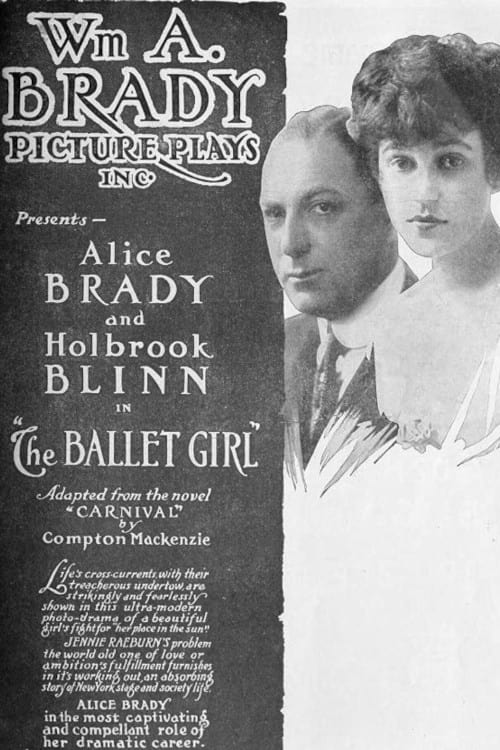
Aerial dancer La Syrena, whose jealous husband kills her while she performs in midair. Her daughter, Jennie Raeburn, soon orphaned, grows up unaware of her mother's occupation, but nonetheless feels the urge to dance.
The Ballet Girl
A lost film. "The Beaten Path" was a 3-reel 3000-foot film produced by the Eclair company in the United States. The film was directed by O.A.C. Lund, and starred Barbara Tennant, O.A.C. Lund, Alec B. Francis, Julia Stuart, Will E. Sheerer. It premiered in August of 1913. Plot summary from "Moving Picture World", August 23, 1913: "This three-reel picture has many big situations in it. In the cast are some of the company's best players: Alec Francis, Julia Stuart, Barbara Tennant, Will Sherer, O.A.C. Lund, Hector Dion, and others. The story is of a family feud between two families, the heads of which quarrel over a boundary line. The main scenes are laid about large mansions, but there are others in an atmosphere of the Northwest, in primitive surroundings. "The Beaten Path" is a real feature."
The Beaten Path

James Rallston, facing financial hardship, marries a wealthy invalid widow with a daughter, Jean, and plots to control her fortune. He orchestrates her confinement in a sanitarium by drugging her and falsely claiming she is insane, with the help of a conniving doctor and sanitarium keeper. Fifteen years later, Rallston has lost Jean's fortune through speculation and seeks help from John Bigelow to recover it, offering Jean as a reward. Bigelow, suspicious of Rallston, discovers the truth about the widow and Jean's father, and rescues the widow from the sanitarium.
The Master Hand
Perpetua is a rich little orphan with a kind but absent-minded dreamer of a guardian, Thaddeus, who is very much older than herself. Perpetua wants to live in Thaddeus's house but instead is sent to her eccentric animal loving Aunt's, Miss Majerdie. Unhappy Perpetua runs away to Thaddeus’s. He endures her for a time and finally ships her back to his Aunt Majerdie's. Pursued by several suitors whose ardor cools when the rumor goes round that she is penniless. Her wealth having intimidated him before Thaddeus steps in now and declares his love for her.
The Arrival of Perpetua

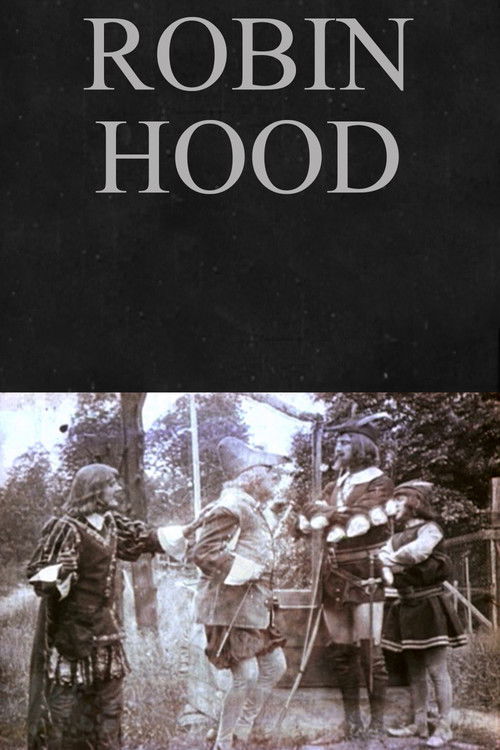
Robin Hood is a 1912 film made by Eclair Studios when it and many other early film studios in America's first motion picture industry were based in Fort Lee, New Jersey at the beginning of the 20th century. The movie's costumes feature enormous versions of the familiar hats of Robin and his merry men, and uses the unusual effect of momentarily superimposing images different animals over each character to emphasize their good or evil qualities. The film was directed by Étienne Arnaud and Herbert Blaché, and written by Eustace Hale Ball. A restored copy of the 30-minute film exists and was exhibited in 2006 at the Museum of Modern Art in New York City.
Robin Hood
A hunchback, sworn to revenge against a woman who rejected him, lures her stepdaughter Elaine to the stage and assists her to become a dancer. Her stepmother goes to see her dance where the hunchback murders her goes mad and falls off a cliff to his death. John Butler, who is loved by Elaine, is accused of killing him, but Elaine clears him of the charge by proving the hunchback was the murderer of her stepmother.
The Butterfly

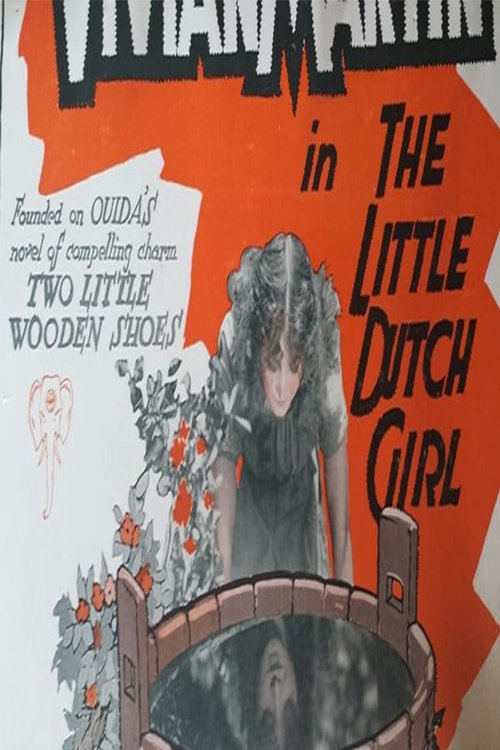
The old gardener, attracted by the ducks' antics, goes to the lake to find a basket with a baby in it. He becomes her guardian but passes away when she is fourteen, leaving her the house and garden. Beloved by the woodsman Jean, one day Lionel, a famous painter, approaches her to be his model, and she accepts. Eventually she finds herself torn between the two men.
The Little Dutch Girl

Eight years before the release of Erich Von Stroheim's Greed, Frank Norris's 1899 novel McTeague was adapted to the screen by World Film. The basic story pretty much follows the book: McTeague (Holbrook Blinn) is a coarse young man who becomes a dentist, after a fashion. He is rivals for the hand of Trina Sieppe (Fania Marinoff) with his pal Marcus Schuller (Walter Green). McTeague weds her and she wins the lottery. But she refuses to let go of the money, and her miserly attitude destroys the marriage.
Life's Whirlpool

Wealthy Joshua Anson expects his son Chadwick to marry a woman of their class, but much to his chagrin Chadwick falls in love with factory girl Mary McClintock. Anson schemes to break up the romance by framing Mary in a compromising situation, but she outsmarts him and marries Chadwick. Not to be defeated, Anson offers his daughter-in-law $100,000 to divorce his son, but Mary outfoxes him once again by accepting the money, getting a divorce, and then remarrying Chadwick. Mary's last trick wins her father-in-law's respect, and he finally offers the couple his blessings.
Moral Courage

Mark Truitt dreams of becoming a steel magnate, so he leaves his home in the country and his sweetheart Unity and settles in Pittsburgh. He starts out as a laborer in the steel mill but soon becomes a foreman and then a superintendent. Mark lives with the shop foreman, whose daughter Kazia falls in love with him. Truitt, however, returns alone to his hometown and builds his own mill. Wealthy now, he marries Unity, but money changes her, so the couple gets a divorce. In the end, Mark goes back to Pittsburgh, finds Kazia, who has never stopped loving him, and marries her.
Fruits of Desire

Because of the loss of three generations of women in her family during childbirth Ellen Locke is frightened to have kids. Frustrated by her decision, her husband John finds himself drawn to his old love, Constance, now a widow with a child who bears her name. After her sister Marion dies in childbirth, Ellen becomes more obsessed, however one day when Ellen is driving little Constance home they have a car accident. An incident in the hospital changes her perspective leading to a reconciliation with John.
Maternity

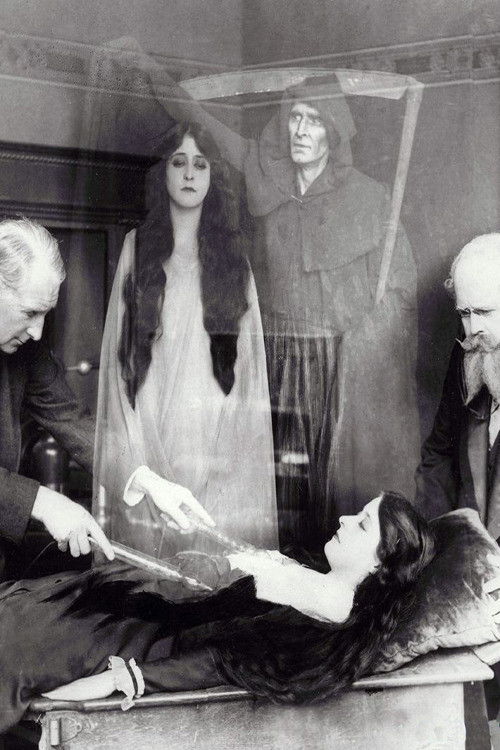
A scientist resurrects his dead daughter, only to realize she now lacks a soul.
Lola
Betty Brown is an egregious coquette and flirt. She fools a pair of lovers, and her indecision lands her in a pretty mess at a Hartford hotel, where she is cajoled into passing herself off as the wife of a man whose real wife is on her way to meet him. Betty just butts into a sea of trouble, for the man and his wife are to receive some money from the former's uncle on condition that the wife meets with his approval. The general mix-up at the hotel caused by the meeting there of all these opposing interests is the cause of a great deal of fun and confusion, the central figure of which is always Little Miss Betty Brown.
The Little Miss Brown

A young woman tells her parents and fiance (in flashback) about the recent sinking of the Titanic and her experiences as a passenger during the disaster. Her intended marriage now faces a new hazard because her fiance is a sailor and her parents have just been reminded of the dangers of the sea. Premiering in the United States just 29 days after the event, it is the earliest dramatization about the tragedy.
Saved from the Titanic

A jealous mother is envious of the affection shown toward her future daughter-in-law by her husband.
Through Jealous Eyes

A man traveling home for Christmas gets stuck in a small town and finds romance with a woman operating the telegraph.
The Traveling Salesman

Successful author Dane Ashley learns he has inherited an estate in a small village. Traveling to see his property Dane sees a crowd of children tormenting a young girl. He rescues the girl, but she vanishes through the door in the separating wall between his house and the next. Intrigued he investigates and learns that she is a Miss Virginia Carlton and rumored to be crazy. Disbelieving the rumors as to Virginia's insanity, Dane contrives a meeting and in time they fall in love. Virginia confides that it is her twin sister Helen who has had a mental breakdown after a traumatic incident and the loss of her beloved. In time all is made aright.