Directing
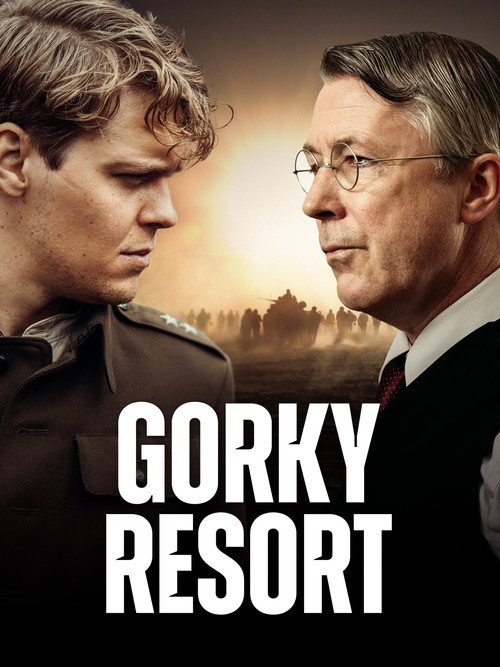
The year is 1939. The world is falling into chaos. Thousands of Poles, held by the Russians in a former monastery, are subjected to brutal indoctrination. An ambitious enemy agent makes it a point of honour to break the resistance of one of them. He is a young, world-famous pianist, respected by his fellow prisoners. His capitulation may result in winning many others over to the enemy's side. An insidious game begins, full of sophisticated manipulation, threats and promises. Can the young artist, a loving father and husband, win a duel with an agent backed by the power and perfidy of the Russian system?
Another transport arrives at the Auschwitz-Birkenau concentration camp. Former prisoner no. 181970, a member of the Sonderkommando, recounts years later how the gassing and burning of corpses took place. The film ends with the song "El Malei Rachamin" for the souls of the dead.
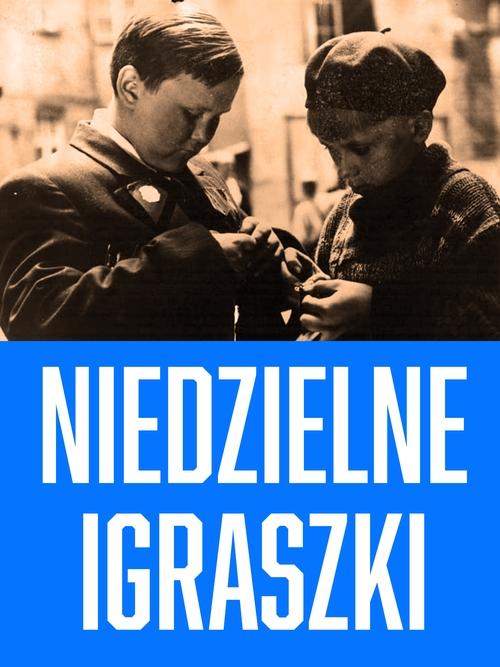
A chilling tale about kids playing in a bombed-out Warsaw courtyard on the day of Stalin's death, while their parents are away at the church or a memorial procession.
A young woman and a man considerably older than her head off to a holiday cottage. The idyllic atmosphere of a carefree Saturday gives no indication of the drama that is about to unfold between them.
A young Varsovian talks about discovering his origins and the new identity he is building, Jewish culture and religion. He is supported by an old Jew, a Hebrew teacher.
Tomek is 14 and a good student. He's interested in astronomy and plays football to please his father. The only thing is, he lives in a poor little border town plagued by unemployment, whereas across the river lies Germany with all its relative affluence. Tomek meets Marta at a disco and falls in love with her. He starts to think up ways of earning money in order to keep her interested. He approaches a pimp who seeks out local boys for his German clients. Tomek has no idea of the brutal fate which awaits him.
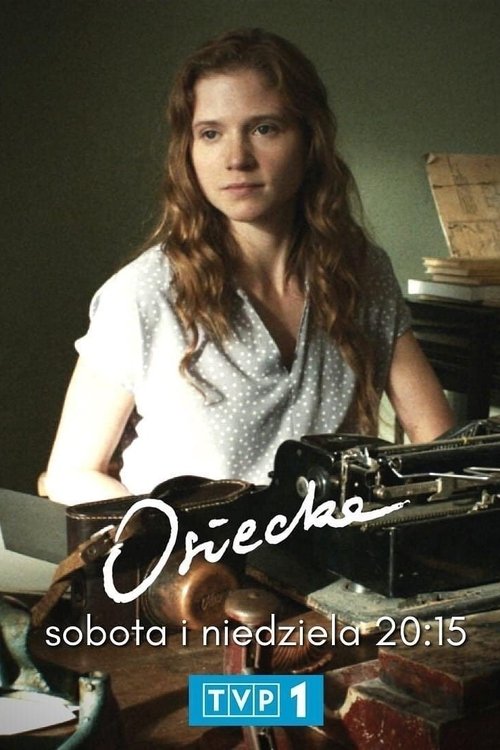
A fascinating biography of the poet Agnieszka Osiecka. The series presents her life from her early youth in the 1950s until her death in the 1990s. The background of this biographical story is the artistic, moral and political realities of those times, starting with education in a communist school, through studies at the Film School in Łódź, and the colorful world of student theaters - Warsaw's STS and Gdańsk Bim-Bom. It is a story about Osiecka's spectacular successes and failures, both in the fight against censorship and as a result of difficult life choices. The photos were taken in Warsaw, but also in Masuria, Kraków, Tricity, Łódź, Kazimierz Dolny, Opole and Zakopane.
The story takes place in the second half of the 1950s. A young journalist wants to establish himself in his profession and sort out his personal life, but he is unable to distance himself from the grim events he witnesses. He manages to get a job at a popular newspaper. The editor-in-chief sends him to a village near Warsaw, which is to be absorbed by the city, to write a report on the civilizational changes taking place there. The journalist learns the story of a young prisoner awaiting execution on death row and becomes involved in the convict's case.
After discussions with Schwartz, a producer from the West, screenwriter Stefan comes back to Poland. Everybody reminds him of his previous success: “The Flame”. The tired protagonist goes back to his wife, actress Ewa, who is eagerly awaiting him. Ewa goes to an audition which doesn’t turn out too well. On the next day, Stefan and his collaborators are wondering what to write a scenario about. Meanwhile, Stefan has a tooth ache. He decides to visit a dentist but is scared away by the price he has to pay for the treatment. Stefan still can’t find an idea for a scenario, and Ewa is not being cast. They decide to sell the car, but a man who takes their car out for a test drive doesn’t return. Stefan is changing ideas for the scenario constantly, he can’t make up his mind… at home, a pipe goes off… the wine he keeps in gallons blows up… the milicia (People’s Republic of Poland’s police) comes and general chaos ensues, as they are drowning in water and wine… which gives Stefan an idea…
They are in love. They are together. They are building their happiness. Not in ‘another way’. In the same way. Polish gays and lesbians living in permanent relationships do not confirm the stereotype of life filled with hundreds of sexual partners. Faithfulness and normality are the most important for them although the reality they live in does not make their every day existence easier. Homo.pl is a warm portrait without pity or a patronizing approach. ‘They’ are some of ‘us’.
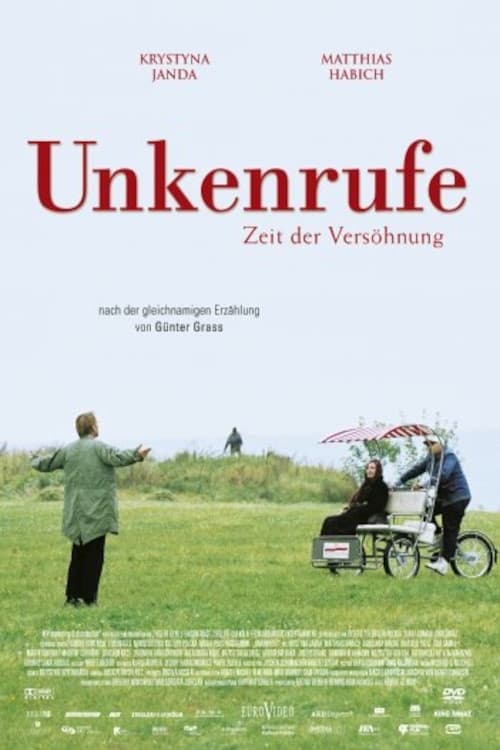
A Polish woman and a German man fall in love against the odds and decide to set up a cemetery for exiles. But can their daring venture survive the call of the toad? Adapted from Gunter Grass’ novel.
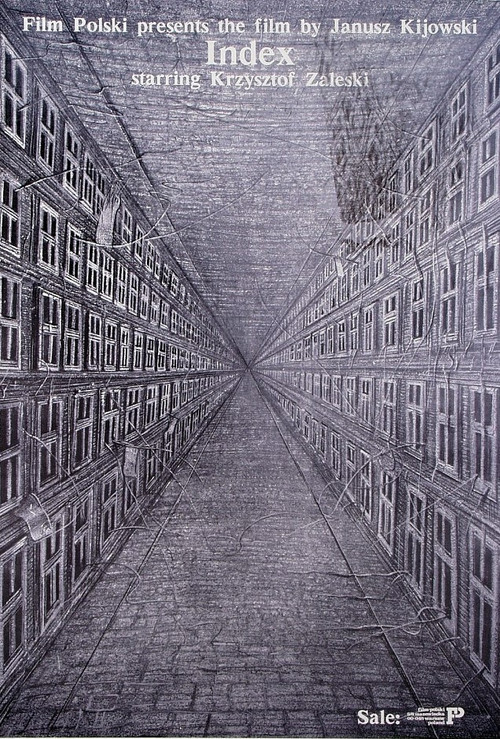
The story begins in March of 1968, the days of students protests. A hot- headed student protests the Dean's decision to expell a fellow student on fake accusation charges, upon which he drops out of university rather than make a compromise. He loses everything in the process: his girlfriend, housing privileges - he becomes a coal deliverer. On the job he witnesses an accident that causes death of a fellow worker. He decides to write a story, which is good and a publishing house wants to print it, but only after some corrections are made. He refuses again and the story is not printed. Finally, a story is commercialized and made into a succesful film and brings fame to the original author.
A student who works part-time as a milk carrier, conducts a private investigation into the mysterious death of an old woman. While riding the elevator, he feels as if he saw the face of an elderly woman who died that particular day. Unfortunately, the police and ORMO quite effectively discourage the student from seeking the truth.
A documentary about a teenage girl living in a youth foster center and taking care of sick children
No description available.
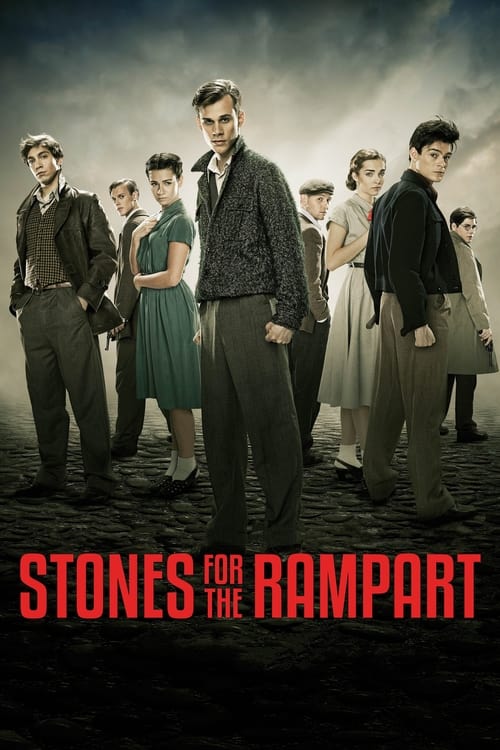
To be defeated and not be - a victory. This is the motto that life is guided by three young friends: Alek, Sophy and Rudy. Scouts, high school graduates high school in Warsaw drifting ambitious plans for the future broken through September 1939. Entering adulthood in a very dramatic times, which puts them a choice - to survive at any cost, or to join the fighting for a free homeland, risking everything. The boys brought up in patriotic homes, shaped by the ideals of scouting, they decide to fight. They become soldiers, and although every scrape with death, they can live a full life.
Leon Goldring, a Polish Jew living in the United States, comes to Poland after several decades and visits the Auschwitz-Birkenau Museum. He tells about the shocking details of his stay in the concentration camp. His account is accompanied by the song "Mein sztetełe Bełz".
Barbara leads a stable life, is fulfilled professionally and has a loving family. Her foster daughter Alicja, who learns that she is adopted, decides to find her biological mother. When Alicja finds the real mother, the life of the main characters changes, and the positive relationships that linked them become blurred.
The short film takes place on the set of a costume drama. The main character is an extra—one of the soldiers climbing a pile of earth in full uniform. The emaciated man steals a hare, for which he is fired from his job. The director believes that he could only play dead people. The former extra lives with a wanted criminal and a stray dog. When the men are ready to throw out the dog, which they have to feed, the director decides to hire him for the film.
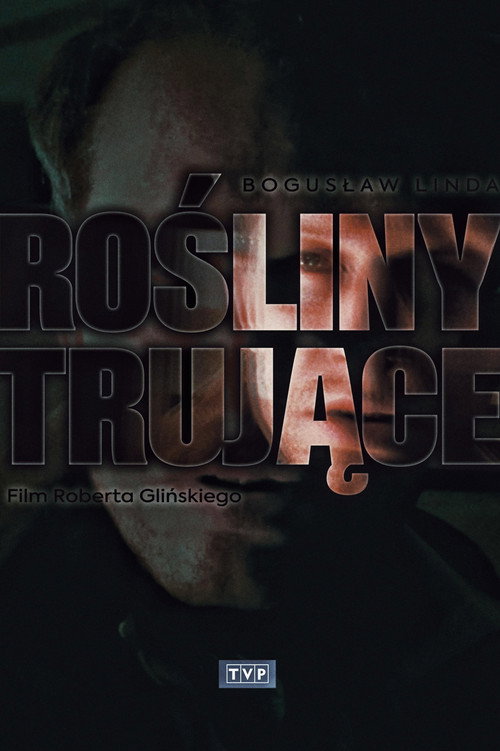
Budny, a secret service officer, secretly surveils Bishop Karol Wojtyla for 20 years. An unreciprocated bond forms between Budny and the unaware Wojtyla, leading to an obsessive, pathological relationship from Budny's perspective.